


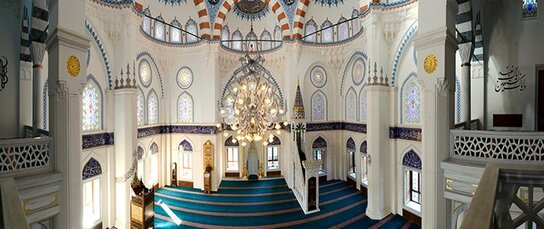
Islam and Japan: Closer Than You Think
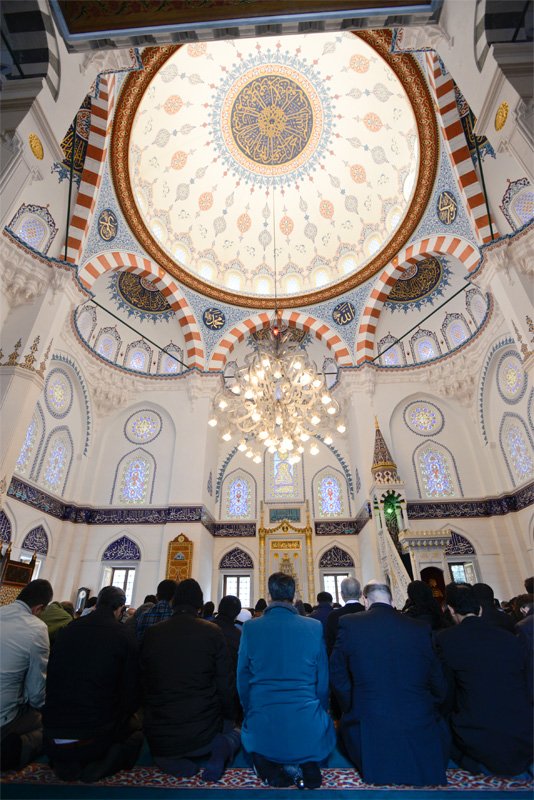
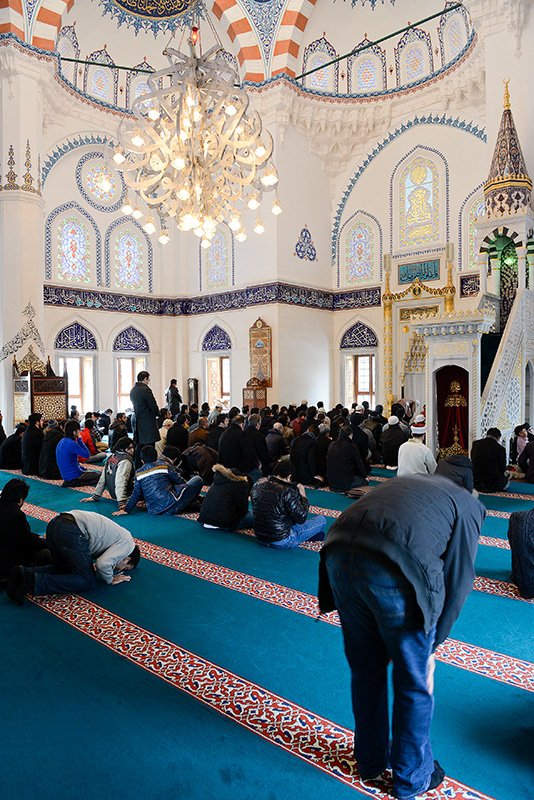
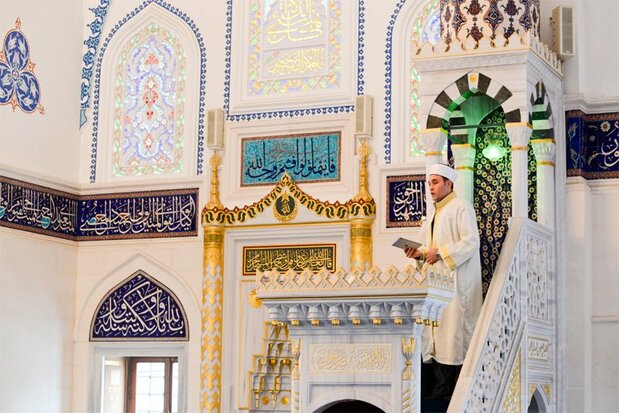
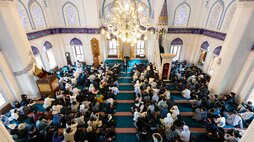
Friday prayers at Tokyo Camii are well attended by a growing congregation, most of them foreign-born. With the recent increase in the number of Muslims from Southeast Asia in particular, the Friday sermon is now given in Turkish, Japanese, and English rather than Arabic.
Despite a widespread image in Japan of Islam as a “desert religion” with its roots in the culture of Arabia and the Middle East, Egypt is the only Arabic-speaking country among the world’s five most populous Muslim countries, ranking fifth—behind Indonesia (250 million), Pakistan, India, and Bangladesh, in that order. In this sense, it would be no exaggeration to say that Islam is already on Japan’s doorstep.
Imam Nurullah says he wants Japanese people to feel comfortable and welcome in the country’s mosques.
“We try to give visitors a simple explanation about Islam. We give them a quick run-down on the etiquette when visiting a mosque. For example, women cover their head with a scarf (called a hijab) before they enter the mosque. We have head cloths available at the entrance for people to cover their hair and any exposed skin. Men cannot enter the mosque in short trousers that expose the legs. And people should refrain from conversation while prayers are in progress. Photography is not allowed without special permission. Otherwise, there aren’t really any rules that people need to worry about.”
One courtesy that Nurullah does want people to follow is to respect people at prayer by not cutting across in front of them. “The idea is that there should be nothing between you and Allah when you are praying. Cutting across people is tantamount to breaking that connection between the worshiper and Allah.”
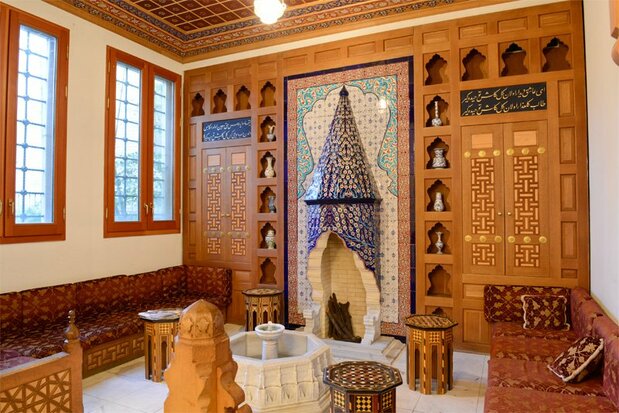
 The reception room on the first floor, near the entrance to Tokyo Camii, is similar to the interior of a Turkish home. The central fountain and impressive tulip-motif tiled fireplace are typically Turkish.
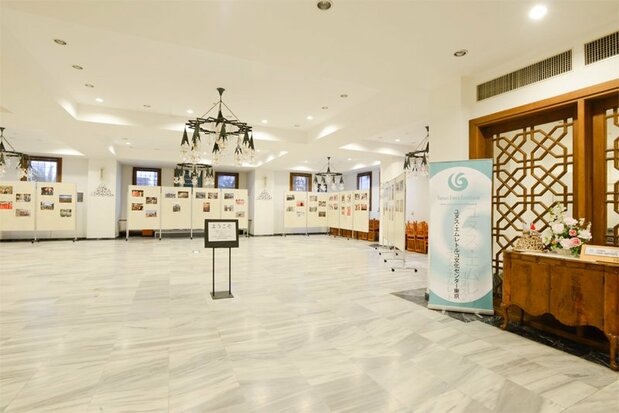 The multi-purpose hall on the first floor, where lectures on Islam are held, along with various events and parties.
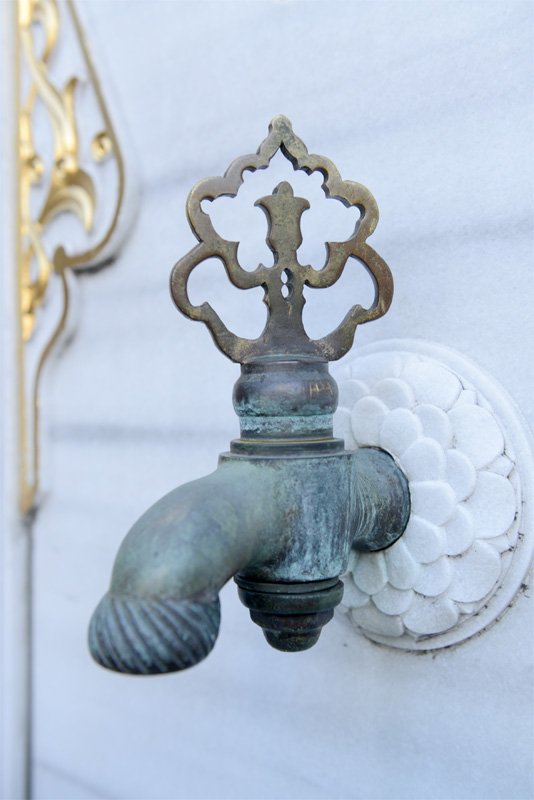
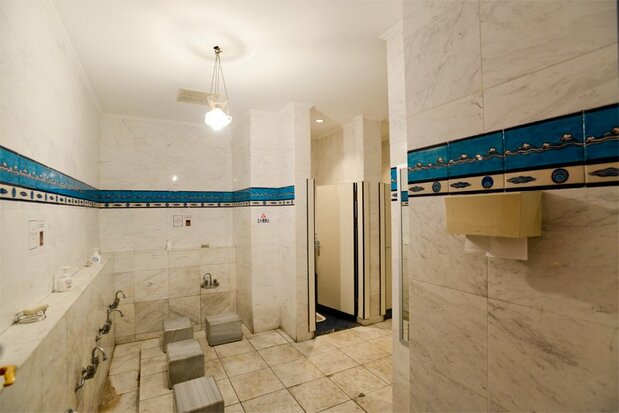 Muslims wash their face, hands, and feet in these ablution areas to purify themselves before prayer.
Met at Tokyo Camii
We talked to several visitors to the mosque.
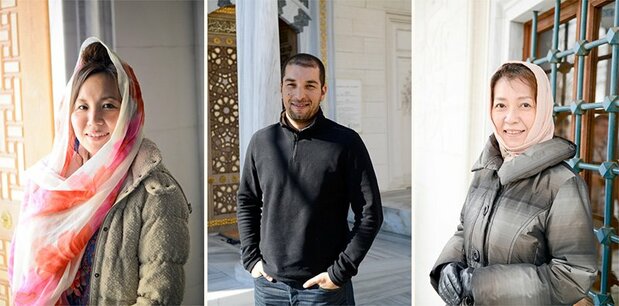
Aromatherapist Okabe Yoshiko (left) says she has wanted to visit the mosque for some time, since she often passes it on her walks around the neighborhood. For some reason people often speak to her on their way out of the mosque, and today she decided to stop in and have a look around. “Unfortunately, today’s Japan is cut off from the universe. Coming to a sacred place like a mosque steadies the spirit. Your heart becomes calm and at one with the universe.”
Nasser from France (center) was visiting Japan from Dubai, where he now works. “I found out about Tokyo Camii on the Internet. As well as Tokyo, I’ve also visited Kyoto and Hiroshima. Everywhere’s been great. I was especially moved by the Atomic Bomb Dome in Hiroshima. I think Japan is a particularly spiritual country. People are kind and respectful of the values of others; everything feels very natural.”
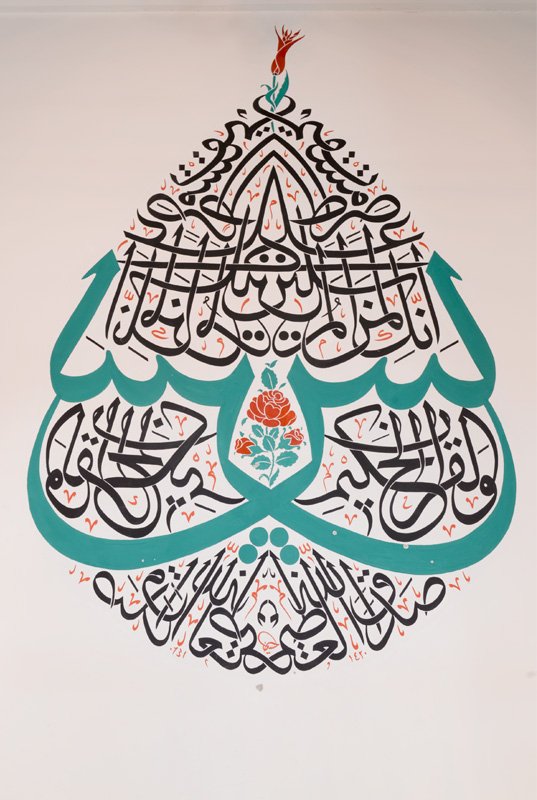
Sagawa Nobuko (right) is an Arabic calligrapher. She was struck as a young girl by the calligraphy on the flag of Saudi Arabia, and resolved to study Arabic calligraphy.
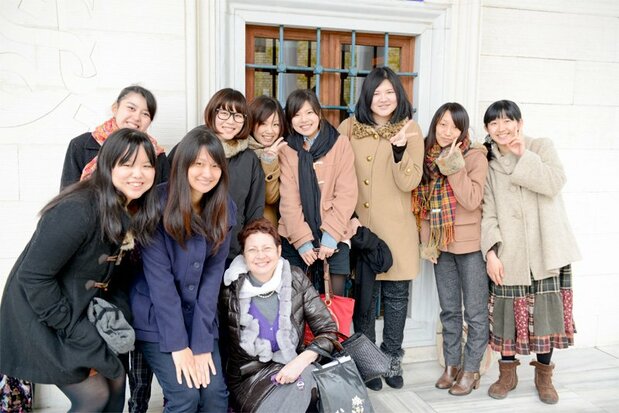 This group of students from Atomi University was visiting the mosque as part of a cultural studies program. “Islam is a religion where God has no form, and there’s nothing like the Buddhist images one sees in a Japanese temple,” one student said. “It’s a religion where there is direct dialogue between the individual and God. That’s one of the things that really made an impression on me during my visit today.”
(With thanks to Tokyo Camii and Turkish Culture Center. Photographs by Kodera Kei.)
▼Further reading
 The Wind-Up Bean Chronicle: Living as a Vegetarian in Japan |  The Japanese World View: Three Keys to Understanding |  Feeling Japan: A Blind Sudanese Man Shares His Experiences |








 Read in other languages