


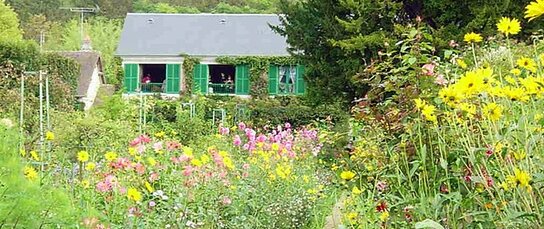
Today art from Japan has worldwide cultural impact and is a familiar part of the global artistic scene. Up through the early modern era, though, Japanese art was a bolt from the blue—something entirely new to viewers overseas, who saw it as something fresh and surprisingly sophisticated. This was the dawn of Japonism.
Japanese Art and Artisanship’s European Debut
The first products of Japanese art and artisanship to capture extensive demand in Europe were ceramics. Chinese porcelain had become popular with members of royalty and the aristocracy across Europe, but the collapse of the Ming dynasty (1368–1644) interrupted China’s exports of ceramics. Japan’s Nabeshima clan, which controlled what is now Saga Prefecture, moved to capitalize on the opportunity. The clan fortified its already well-established ceramic industry and began exporting large volumes of porcelainware to Europe under the names Nabeshima, Imari, and Kakiemon. It exported some 1.9 million items of porcelainware over the 32 years from 1652 to 1683. Japan’s porcelain exports subsequently declined sharply, however, as producers in Meissen, Germany, and Sèvres, France, absorbed the Chinese and Japanese production techniques and began supplying high-quality porcelain made with locally mined kaolin.
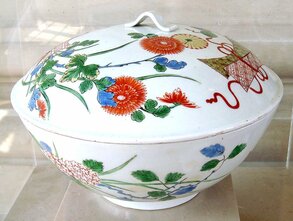
 Imari porcelain, around 1680, Sèvres—Cité de la céramique (Sèvres City of Ceramics, photo © World Imaging).
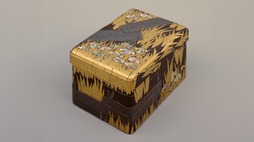
Lacquerware is another product category where works of Japanese art and artisanship earned European favor in the mid-seventeenth century. The European Christian missionaries in Japan took a liking to Japan’s lacquerware, especially items embellished with maki-e gold-sprinkled decoration. They employed lacquerware in such items as frames for religious paintings and bible stands. Others perceived more-worldly potential in Japanese lacquerware, and the Dutch East India Company was soon handling a large volume of exports to Europe. So ubiquitous did the imports become that “japan” became a common term for lacquerware, irrespective of origin.
Ukiyo-e Wrapping Paper
Japanese refined the woodblock printing technology that engendered the multicolored prints known as ukiyo-e around 1765. Isaac Titsingh (1745–1812), who headed the Dutch trading house in Nagasaki, dispatched the first exports of ukiyo-e prints to Europe. Later the German botanist and physician Philipp Franz von Siebold (1796–1866), who cared for Nagasaki’s Dutch contingent, took home several ukiyo-e by Katsushika Hokusai (1760–1849) when he repatriated.
A description of a salon decorated with Japanese artwork appears in an early entry in the Journal des Goncourt (1851–96). That journal, coauthored by the French brothers Edmond (1822–96) and Jules de Goncourt (1830–70) and by Edmond after the death of Jules, is a revealing chronicle of its era. The description cited above confirms that a Japanese aesthetic had taken hold in France in the Second Empire (1852–70). France’s love affair with Japanese artistry gained momentum with the extensive Japanese exhibits at the Paris Exposition (Exposition Universelle) of 1867 and was still waxing when Paris again hosted an international exposition in 1878.
A lot of ukiyo-e reached France, curiously, as packaging. Japan was awash with ukiyo-e in the mid-nineteenth century, and discarded prints frequently became packing material for ceramics and other items destined for Europe. Thus did the graphic artist Félix Bracquemond (1833–1914) discover drawings by Hokusai in 1856 on paper packing in a box of Japanese ceramics. The works were on pages from the multivolume collection Hokusai manga (Sketches by Hokusai).
Bracquemond was startled at their sophisticated artistry and called attention to the drawings. Six years later the orientalist Madame Desoye and her husband opened Paris’s first shop devoted to imports of Japanese artwork. That shop attracted a clientele of artists and others who figured prominently in fostering French and European interest in Japanese aesthetics.
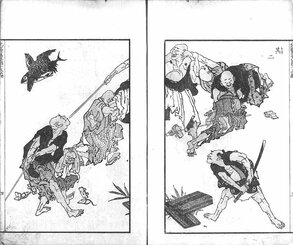 A work from Volume 15 of Hokusai manga, published in 1878 by Tōhekido. (Photo courtesy of the National Diet Library.)
Ukiyo-e famously gained global stature as an important art form after winning recognition from prominent painters in Europe. Claude Monet (1840–1926) hung several ukiyo-e in his house in the Paris suburb of Giverny. Edmond Goncourt, meanwhile, published a collection of ukiyo-e by Kitagawa Utamaro (1753–1806) in 1891 and another of ukiyo-e by Hokusai in 1896, both at the urging of the Japanese art dealer Hayashi Tadamasa (1853–1906).
Other modes of Japanese art also captured the attention of leading impressionist and postimpressionist painters in Europe. A painted Japanese screen is prominently visible in the background in the Portrait of Emile Zola by Edouard Manet (1832–83), and Claude Monet exhibited a painting of his wife in Japanese costume at the Second Impressionist Exhibition in 1876. Among the other prominent painters who absorbed powerful influence from Japanese art were Vincent van Gogh (1853–90), Edgar Degas (1834–1917), Paul Gauguin (1848–1903), and Henri de Toulouse-Lautrec (1864–1901).
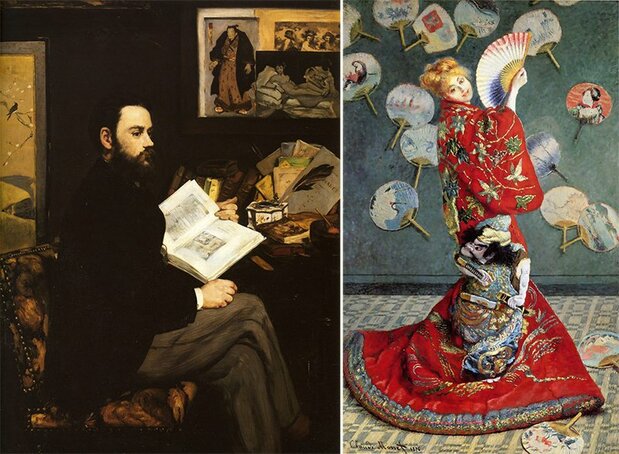 Left: Edouard Manet (1832–83), Portrait of Emile Zola, 1868, Musée d’Orsay; right: Claude Monet, Madame Monet in Japanese Costume (La Japonaise), 1876, Museum of Fine Arts, Boston.


 Read in other languages