


Toyosu Market is not yet as famous as the Tsukiji facility it replaced, but it has visitor’s tours, tuna auctions, and shops for professional cooks that make it well worth a visit.
Right Off the Train
In October 2018, Japan’s central wholesale food distribution center was relocated from Tsukiji Market in Chūō, Tokyo, where it had stood for the preceding 83 years. The new site, Toyosu Market in the neighboring city of Kōtō, is already a popular tourist attraction, offering free visitor’s tours from 5:00 am to 5:00 pm every day except Wednesdays, Sundays, and holidays.
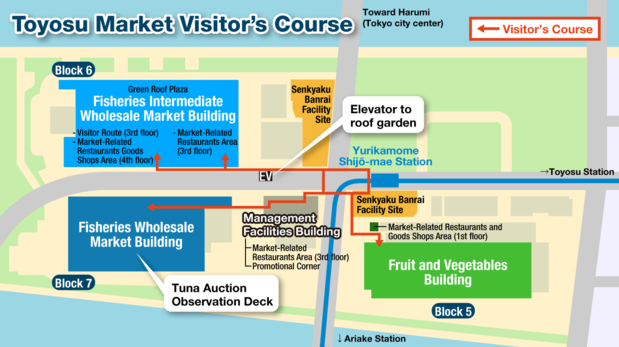
Prospective tour-takers are recommended to get an early start and ride the Yurikamome train line (which leaves Shinbashi beginning at 5:45 in the morning) to Shijō-mae Station, two stops before the Toyosu terminal station. A series of modern-looking buildings spread away on either side of the station. The market is segmented by roads into three distinct areas: the produce complex, including the Fruit and Vegetables Building, in Block 5; the Fisheries Intermediate Wholesale Market, with its rooftop plaza, in Block 6; and the Fisheries Wholesale Market and management facilities in Block 7.

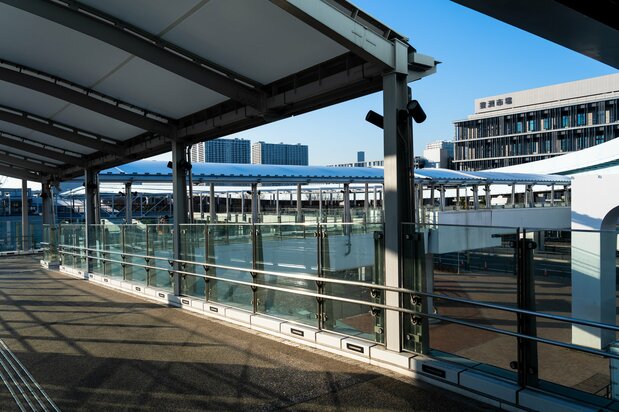
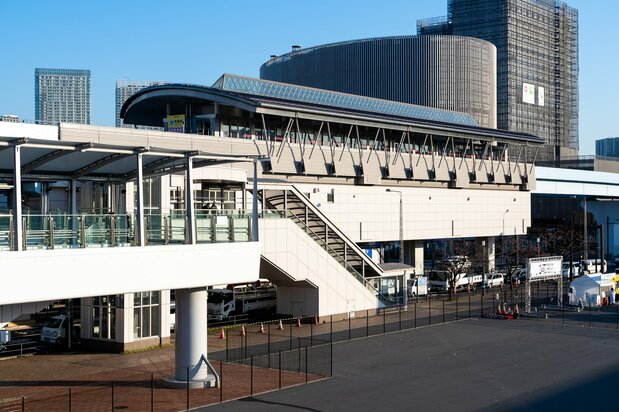 Shijō-mae Station on the Yurikamome train line. Visitors can go to any of the Toyosu Market complexes via covered pedestrian walkways, making it easy to sightsee in any weather.
 Ahead and to the left as one exits the ticket gates is the Management Facilities Building (at far right in photo), lying along the route to the Fisheries Wholesale Market, where the tuna auctions take place.
Dedicated elevated walkways connect the various complexes at the level of the station’s ticket gates. Ahead and to the left out of the ticket gates is the third-floor entrance of the Managerial Office Complex in Block 7. This structure houses the restaurant area, with six sushi shops, other restaurants serving tonkatsu (deep-fried breaded pork cutlet) and Italian cuisine, and coffee shops, among other dining options. Market staff and other personnel can often be found having breakfast in these restaurants. Beyond is the PR space, offering presentation panels and photographs where visitors can find out about the history and organization of the country’s wholesale markets, as well as aspects that set Toyosu Market apart.
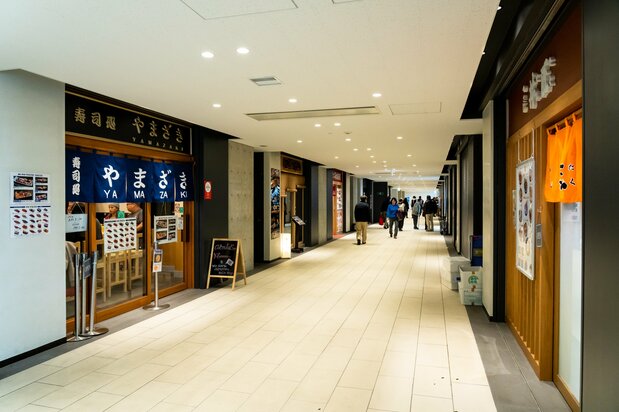 The restaurant area in the Management Facilities Building. The sushi shops can sell out of popular varieties early in the day, so don’t be late.
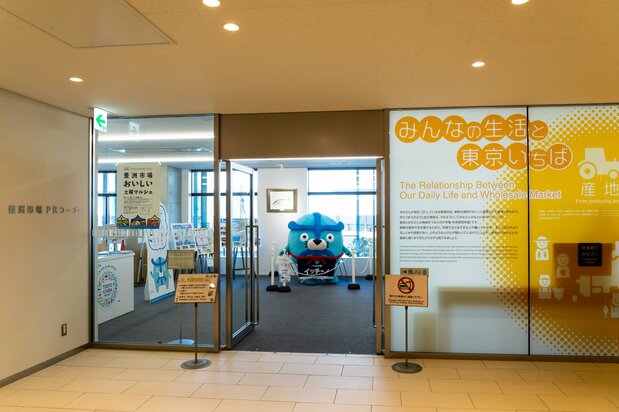 Entrance to the Toyosu Market PR space, where visitors can find out about the organization of the wholesale market.
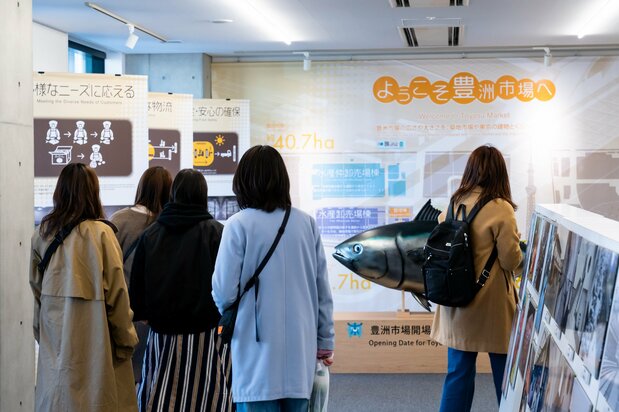 The exhibits in the PR space include photographs dating back to the opening of Tsukiji Market more than eight decades ago.
The Tuna Auctions
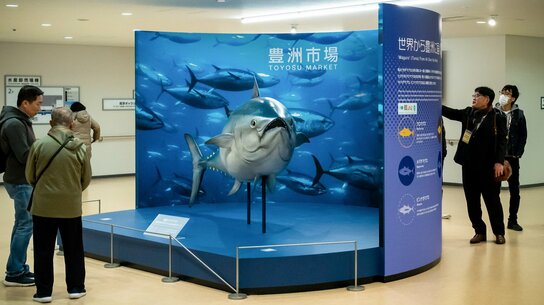
Another connecting walkway leads from the third floor of the Management Facilities Building to the second floor of the Fisheries Wholesale Market Building. On display here are a 500:1 scale model of the entire market and a replica of a giant bluefin tuna—a scale reproduction of the largest tuna sold at Tsukiji Market, which was 288 centimeters in length, weighed 496 kilograms, and was delivered in April 1986. Many visitors crowd around this item, resulting in frequent delays as people wait to have their picture taken with it.
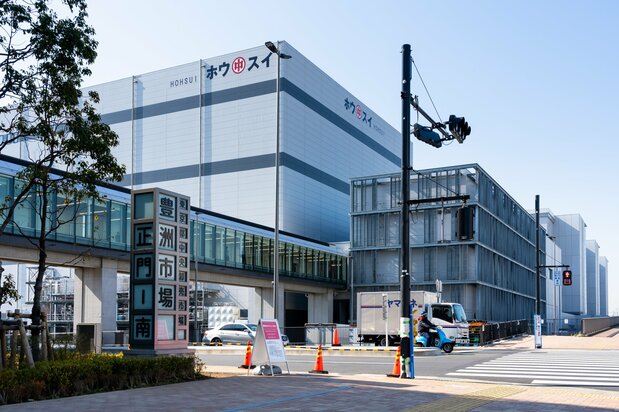 A walkway takes visitors from the management complex to the Fisheries Wholesale Market.
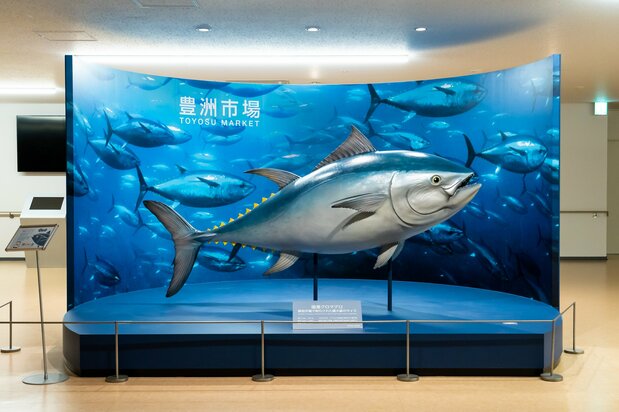 The giant tuna replica is a popular spot for souvenir photographs.
Just past these attractions are displays on market history, including photographs showing how the Nihonbashi Market was relocated to Tsukiji following the widespread descruction of the Great Kantō Earthquake of 1923. Windows in the left-hand wall of this area afford a view of the tuna wholesale floor, where white frozen fish are arrayed in regular formations first thing in the morning. Visitors are rooted to the spot, watching as closely as they can as tuna are auctioned off one by one.
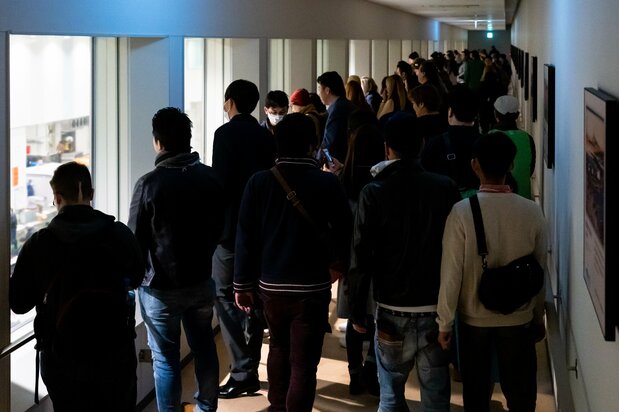 The second-floor walkway provides an observation deck for the tuna auctions. On the right-hand wall are photographs illustrating the history of the market.
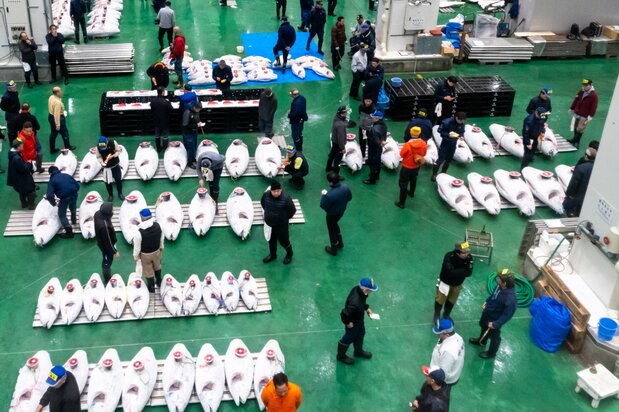 From the walkway, visitors can see rows of frozen tuna arranged on pallets for the daily tuna auction, which begins around 5:30 am. It is recommended that those who want to see an auction get there early (taking a taxi before the Yurikamome line begins running is one option), as the tuna get snapped up quickly once the bidding starts.
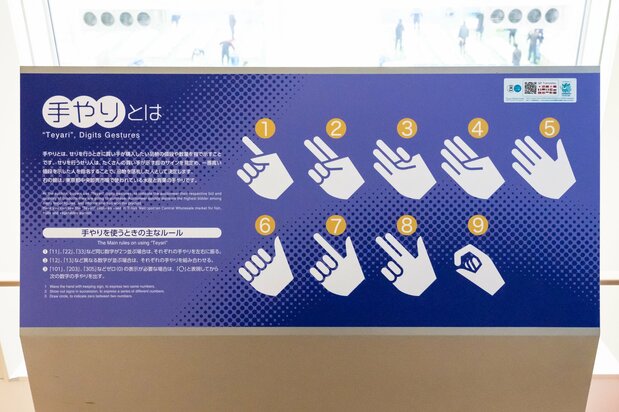 Bilingual information boards provide explanations of such procedures as the te-yari hand signals used by tuna buyers to place bids, further enriching the experience.
In addition to the observation deck on the walkway, another deck was opened just off the first floor in January 2019. Here, visitors can get an up-close look at the frozen tuna and other elements of the auction floor. Unlike a similar structure at Tsukiji, which was made available on a first-come, first-served basis, visitors wishing to use this deck at Toyosu will have to apply for spots on a reservation website (see the English link at the bottom of the page) set up for the purpose. Visitors enter their names and the dates they want to visit, typically at least two weeks in advance. If there are more than 120 applications for a given date, winners are determined by lottery. Visiting times are 5:45 to 6:15 am, with visitors allowed on the deck in two groups of 60 members each.
The deck is roughly 2 meters off the floor, allowing visitors to watch the auctions in even closer proximity than on the second-floor walkway. The front face of the first-floor deck is similarly partitioned off with glass, albeit with a small gap at the top. This gives observers a more up close and personal experience, allowing them to hear the sound of the bell that signals the start of an auction and the calls of auctioneers and bidders, as well as to smell the distinctive odors of the place.
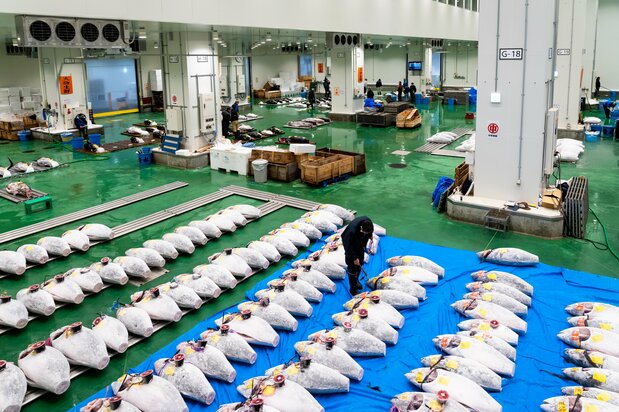 The view of the tuna auction floor from the first-floor observation deck. At far left are fresh tuna, not visible from the second-floor walkway.
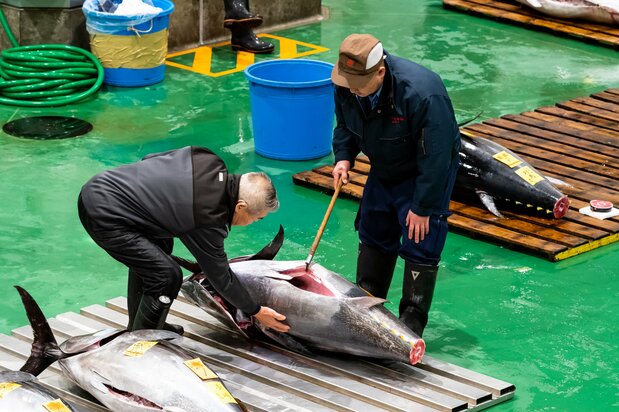 Brokers and dealers inspect the tuna with care prior to the auction.
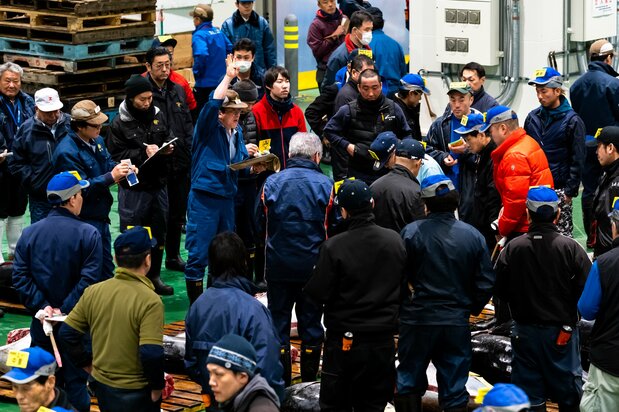 The auctions are lively: the price of a fish is typically decided every few seconds.
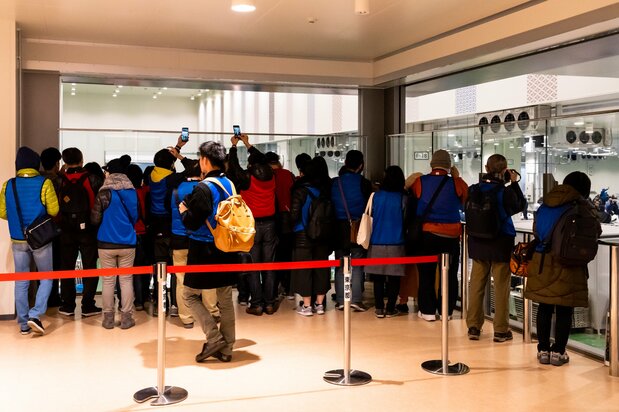 The glass on the first-floor observation deck does not extend all the way to the top, giving observers access to the sounds and smells of the auction.







 Read in other languages