


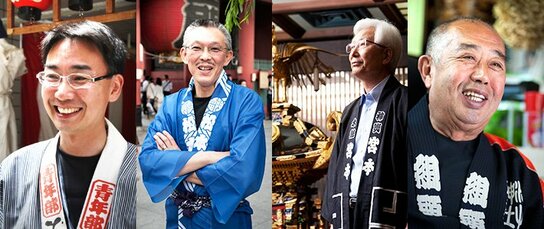
The crowds, the clothes, the colors, the communities . . . We take a look at six of the key elements that make the Sanja Matsuri one of Japan’s biggest and most exciting festivals.
Ujiko: Keeping Local Traditions Alive
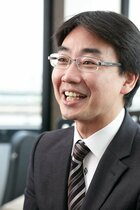

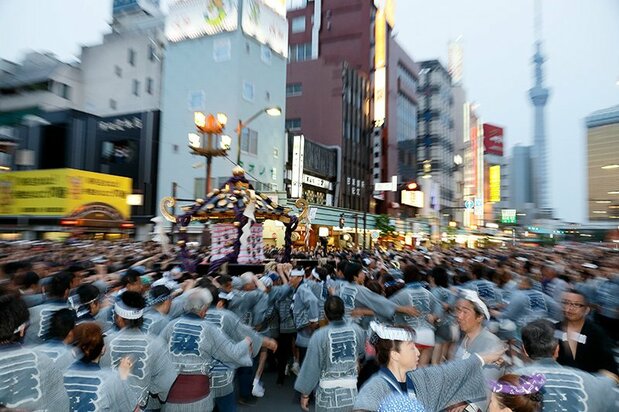
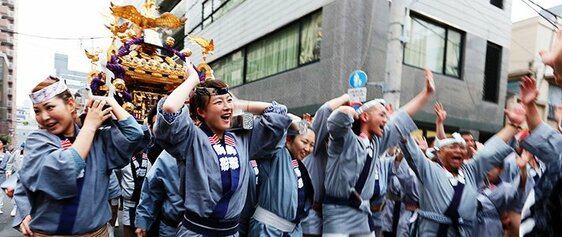
The ujiko are the local parishioners in each of the 44 neighborhoods that make up the Asakusa area. It is the ujiko who are responsible for the most important part of the festival: carrying the mikoshi, or sacred palanquins. Nakajima Kōta, third-generation owner of the local restaurant Asakusa Mugitoro, was in charge of festivities this year for one of the neighborhoods close to Kaminarimon, at the very heart of old Asakusa.
“I was a young man of around 20 when I helped carry one of the three main shrine mikoshi for the first time. It was a wonderful experience. I was amazed to see hundreds of people cooperating and moving together in response to the shouted instructions.
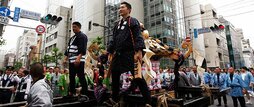
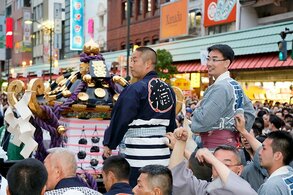 Nakajima at work as the San no Miya “mikoshi” is paraded through the streets.
“A matsuri is essentially a religious festival. So it’s important to preserve the traditions. But it’s also important to give as many people as possible an opportunity to experience the fun and excitement of the festival for themselves. Soaking up the atmosphere is an important part of what it’s all about. That’s a big part of our job: helping locals and visitors alike get the most out of the matsuri experience."
Asakusa Mugitoro (Address: Kaminarimon 2-2-4, Taitō-ku, Tokyo; Tel. +81 3-3842-1066; open daily; English menu available.)
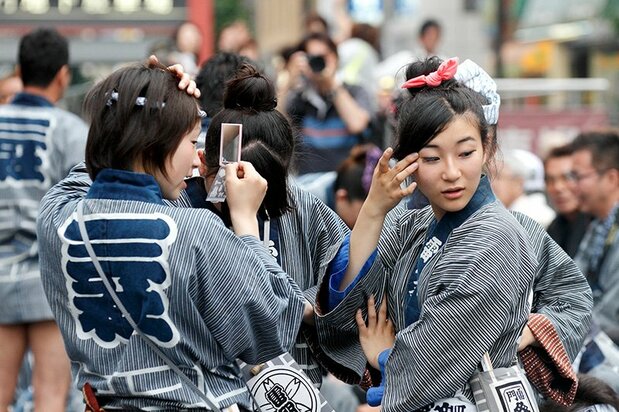
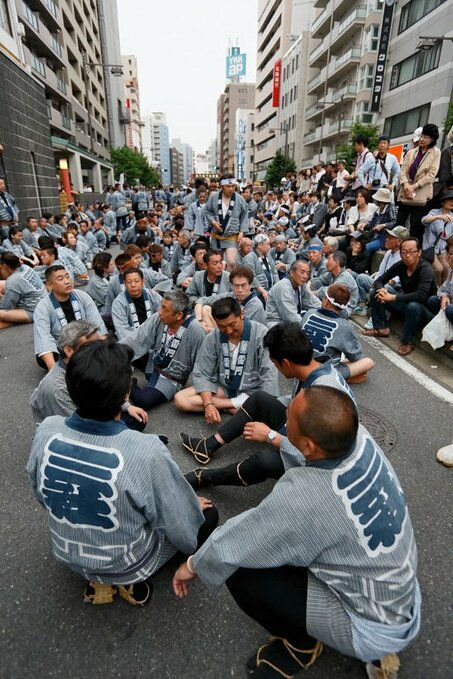 Shrine-bearers wait for the San no Miya to arrive in the Kaminarimon Higashi district.
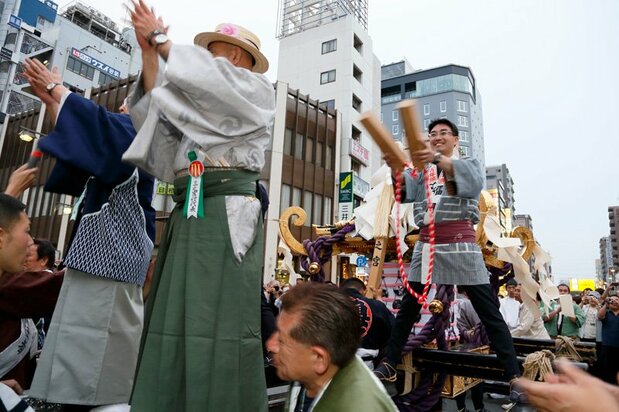 Nakajima on top of the San no Miya.
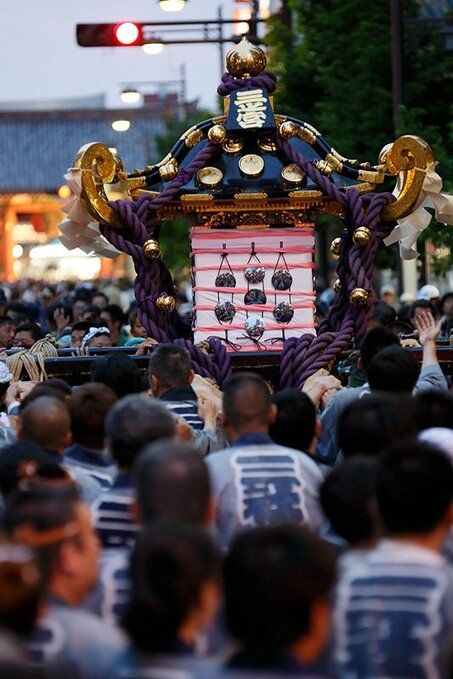
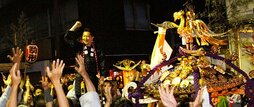
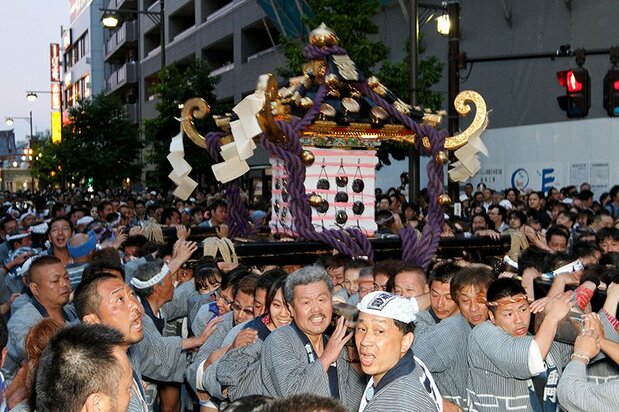 The “mikoshi” sets off just after six in the evening.

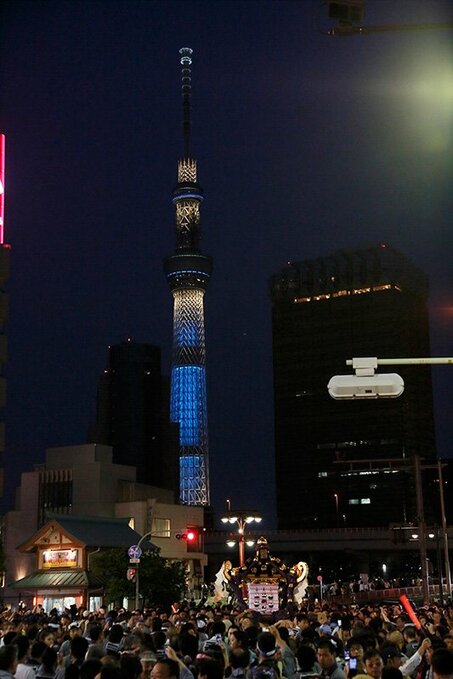 The Tokyo Skytree lit up against the evening sky.
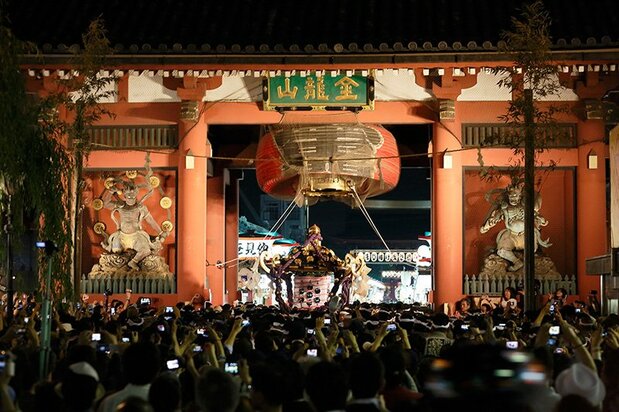 The San no Miya arrives at the Kaminarimon Gate.









 Read in other languages