



Emergent Destruction
Doubts will certainly arise at this point as to whether Japan really has leaders capable of steering the country in this new direction. My response is that there is no longer any need for highly charismatic leaders. As research on complexity has shown, complex ant colonies function properly without queen ants issuing any orders. Indeed, the queen ants devote themselves exclusively to laying eggs, while worker ants carry out such tasks as transporting food and other ants specialize in keeping the anthill clean. Highly complex and functional ant colonies are created when all ants undertake their designated work within the overall design.
In the study of complex systems, the term “emergence” is used to indicate how the sum of relatively simple actions can result in a power that exceeds the imagination. This is the sort of power seen in the Jasmine Revolutions of Tunisia and Egypt, where change occurred in the absence of revolutionary leaders or organizations. Aspiring for freedom and democracy, people individually took small steps whose power was amplified when communicated via Twitter or Facebook, resulting in the collapse of regimes once thought to be indestructible. In these revolutions, information, especially video footage, evoked favorable responses among countless young people. What is needed in Japan today is a quiet jasmine revolution of this type.
I call such power “emergent destruction.” Joseph Schumpeter used the related term “creative destruction,” saying it was indispensable for innovation. Without doubt, one cannot expect a new cycle to begin within the context of an old order. But when one sees the mechanism of change in terms of creative destruction, one immediately supposes that powerful entrepreneurs or leaders must be the key agents. But this is not the case when we speak of emergent destruction. I would add, however, that revolutions to come will not actually be that destructive; instead, they will be emergent affairs born from the large waves of change set in motion by the small declarations and innovations of assorted individuals.
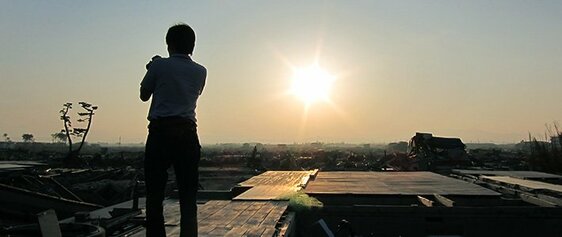
Japan’s natural disaster has provided an opportunity that is bound to initiate a fundamental remaking of the nation. To be sure, those clinging to the old paradigm or those with vested interests are bound to regard this as a pipe dream. In the ashes of Tokyo and Hiroshima in 1945, however, how many people could have imagined that Japan would grow into the world’s number-two economic power? In Japan at the time, there were no charismatic leaders. The future business leaders were people like Kawasaki’s Nishiyama Yatarō, who during the purge was promoted from non-managing director to president and was regarded as a third-class executive spouting nonsense; or those with no more than an elementary school education, like Panasonic’s Matsushita and Honda’s Honda Sōichirō. These entrepreneurs had sensed the needs of the nation and were just taking their first steps.
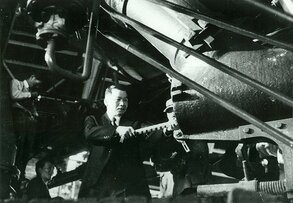
 Nishiyama Yatarō, the first president of Kawasaki Steel Corporation. Nishiyama played a leading role in Japan’s postwar recovery. His idea of creating a cutting-edge, integrated steel mill a few years after the end of World War II was greeted with opposition for being “unrealistic,” but he was convinced that steel was crucial to Japan’s recovery and went ahead with the construction of a steel mill in Chiba Prefecture for Kawasaki Steel. (Photo: JFE Steel Corp.)





 Read in other languages