


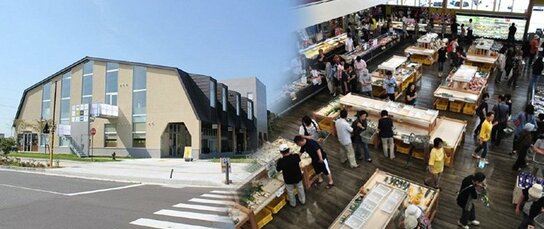
Commercially Oriented Development of Public Spaces
Publicly held assets are also a potential resource for business-based economic revitalization. Thanks to the relaxation of regulations regarding public land use, communities have begun opening up city streets and other public facilities to private vendors and event organizers. One example is Ōdori Suwarō Terrace in Sapporo, Hokkaidō. Sapporo Ōdori Machizuri Corp., a designated urban development corporation, has helped revitalize the city center by setting up open-air cafés. It has also made use of public thoroughfares for events featuring food vendors, art exhibits, and so forth. This is another way to take advantage of underutilized resources and break the cycle of dependence on public grants and subsidies.
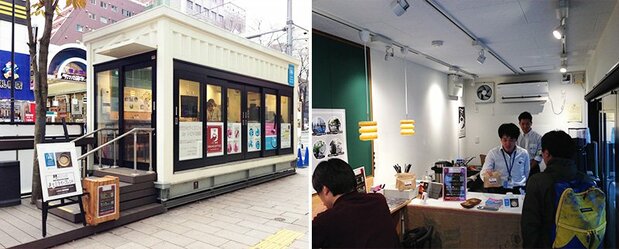
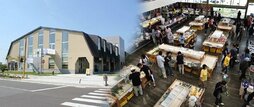
 The café at right is one of the businesses taking advantage of the commercial development of public land in Sapporo’s Ōdori district.
A second project in this category is Arts Chiyoda, a privately operated arts center set up in a vacant school building in Chiyoda City, one of Tokyo’s special wards. The center has found a way to pay for its activities by renting out shared offices as well as art space, exploding the myth that support of the arts depends on public investment. Instead of receiving money from Chiyoda City to establish and operate the center, the organization is actually paying the municipal government to rent the facility.
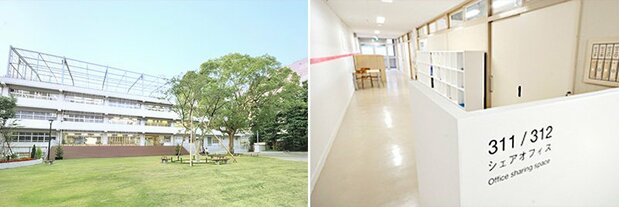 A once abandoned school building in Tokyo now houses Arts Chiyoda, a privately funded culture center that rents out shared offices.
Areawide Facility Management
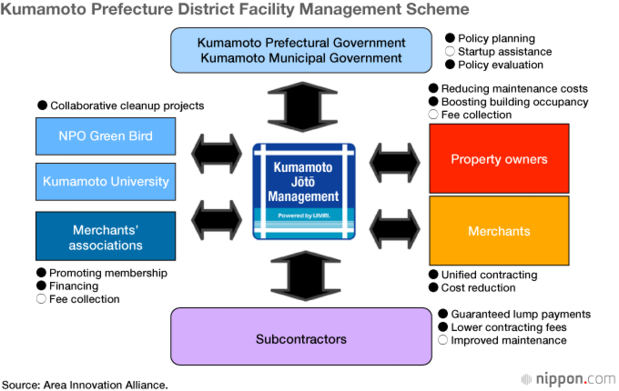
When the population of a community declines, its commercial buildings inevitably lose income. This makes reduction of building maintenance costs an urgent priority. Kumamoto Prefecture has realized significant savings by contracting with a private company, Kumomoto Jōtō Management. Set up to serve as area-wide property management agent, the company negotiates and oversees maintenance contracts on behalf of small- and medium-sized merchants and buildings in the prefecture’s downtown districts. To save on costs, it partners with a wide range of organizations in the public, private, and nonprofit sector. As of the end of 2014, savings realized by the 168 participating establishments totaled more than ¥15 million, and the quality of property maintenance had improved as well. One-third of the profits go into a fund that helps finance urban revitalization projects.













 Read in other languages