


A Principal-Agent Model for PPPs
Japan has been pursuing so-called private-public partnerships for some time, but almost always with government agencies retaining full control and responsibility. What we call a “principal-agent PPP” takes the partnership concept a step further, transferring leadership, responsibility, and risk to the private sector. Under this model, private entities are delegated as agents and entrusted with the management of public assets. In this capacity, they plan and implement programs designed to contribute to the sustained development of the local economy.
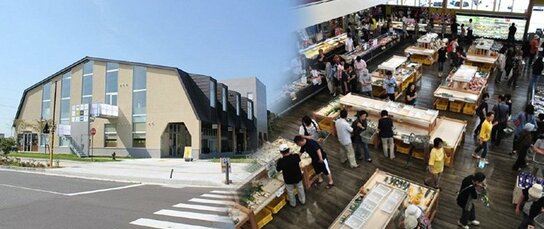
A successful example of such a PPP is the Ogal project in Shiwa, Iwate Prefecture, a town with a population of about 33,000. At the heart of the development is Ogal Plaza, a multi-purpose community center combining public and private facilities. With this center as a nucleus, the development has rapidly expanded into what is now known as the Ogal area, which includes a soccer training ground, a business hotel with volleyball practice courts, and other facilities. With some 800,000 people visiting the site annually, the Ogal project has drawn nationwide interest as a new and promising model for regional community development.

 Outside Ogal Plaza in Shiwa, Iwate Prefecture, a model of successful local development based on public-private partnership.
An important aspect of the project is the fact that it was funded by private bank loans instead of taxpayer money appropriated at the national or local level. At the time of the project’s inception, the Shiwa municipal government was facing a fiscal crunch and lacked the resources to build the public library for which it had already purchased the land. The town eventually decided to build the library as part of a larger PPP development managed by a private entity. A special purpose vehicle, Ogal Plaza K.K., was established to develop the unutilized public land, with a municipal library as the anchor. With more than 100,000 visitors projected to visit the library annually, we were able to attract private-sector tenants and develop a plan for a combined public-private community center.
The plan made economic sense for everyone. The town wanted a public library, but libraries are not money makers. However, by leasing part of the center to private businesses, the town government would be able to support the library with the rent collected from the tenants. The presence of the public library would guarantee customer traffic for the businesses, and the businesses would generate profits, so that the center as a whole could operate in the black. On the basis of this integrated development plan, we were able to obtain financing from banks and private investors to complete the project.
To ensure a return on investment, we budgeted backwards from revenue estimates after first lining up our private-sector tenants, and we found ways to keep building costs low, below the norm for public construction projects. This approach to construction also translated into savings on building maintenance, which have benefited the library as well as the commercial facilities. Meanwhile, the property taxes and rents collected from the commercial tenants add significantly to the municipal government’s revenues. In this way, the project aptly illustrates the importance of designing regional revitalization projects—including those involving public facilities—as money-making ventures.
A New Standard for Public-Private Partnership
Of the four approaches examined here, the last one, exemplified by the Ogal project, has the greatest potential as a model for future public development projects in Japan. It is a shining example of a public-private partnership adapted to a new era, a project that has succeeded in developing new public assets using the logic of the market instead of relying on government grants.
The site of the project is a 10.7-hectare tract of land that the Shiwa municipal government originally purchased in 1997 at a cost of ¥2.85 billion in connection with a major community development plan. But local tax revenues plummeted after 1997, and the government found itself unable to fund construction of the development for which it had made the land purchase.
As the municipal plan floundered, the mayor came to the conclusion that the local government could no longer foot the bill for community development, and he instructed the town administrators to draft a basic public-private partnership plan. Ultimately, they transformed a public development project into a successful business venture in which a private entity assumed responsibility for everything from financing to design and construction.
This is not just a success story for the town of Shiwa. Local administrators throughout Japan are plagued by plummeting revenues, some to the point where they are unable to budget for essential capital improvements. These local governments have much to gain by studying and incorporating the new model of public-private cooperation embodied in the Ogal project.
Here is a public facility that generates new economic growth and development instead of just absorbing tax revenues. The Shiwa Public Library in Ogal Plaza has actually outstripped original projections, drawing more than 300,000 visitors annually. In ordinary situations, each of those visitors would simply return home after using the library. But we realized that many of those library users would be happy to patronize a café, a healthcare facility, or a farmers’ market while they were in the neighborhood. In this way we were able to draw a variety of energetic young businesspeople from the region, who in turn drew other budding entrepreneurs to the district. The project stands as living proof that public facilities, if properly planned, can be engines for sustained local economic growth and redevelopment instead of costly boondoggles.
Under the Ogal project, public facilities in the plaza are owned and managed by the municipal government, while the private businesses are owned and operated by their respective owners. However, the center as a whole is planned, developed, and operated by Ogal Plaza K.K., ensuring efficiency and cost effectiveness. As a result, the return on investment is very high. The key to high returns is no secret: it boils down to maintaining adequate revenues while keeping down costs. And this means building cheaply.
Money-making facilities like Ogal Plaza can generate new wealth, new jobs, and new sources of government revenue for regional communities. Businesses in Japan have come to take government assistance for granted, but the new model of regional business development reverses this relationship. To private business, we now say, Ask not what your community can do for you; ask what you can do for your community.
(Originally published in Japanese on April 1, 2015. Banner photo: Ogal Plaza in Shiwa, Iwate Prefecture, a hybrid public-private facility that offers a promising new model for regional revitalization. Photo courtesy of Kinoshita Hitoshi, Area Innovation Alliance.)













 Read in other languages