


How Should We Assess China’s Intentions?
TAIRA I agree that China is indeed a factor to note when considering the issue of the bases in Okinawa. How should Japan assess China? Is it acting within the framework of the current international order centered on the United States? Or is it thinking of destroying this order? I believe it’s important for us to discern its intentions. But in practice it’s extremely difficult to determine whether a country is seeking to maintain the status quo or destroy it. This ties in closely with the idea of establishing an East Asian Community. So what should we think?
ENDŌ My view is that our only option is to continue dealing with China while withholding our judgment for the time being. Diversity exists within China, the United States, and Japan. In each of these countries, different people have different assessments of the other countries. In the United States, some see China as a country that wants to maintain the status quo, while others see it as aiming to destroy this order. Those who take the former view believe that it is possible to bring China into the existing international order as a responsible great power, and they favor keeping up dialogue for this purpose. Meanwhile, those who take the latter view believe that, inasmuch as the Chinese are fundamentally aiming to destroy the current US-centered order, dialogue will not work; they think some sort of containment is necessary. These two camps are in rivalry, with neither commanding a strong lead. Then there are those who believe China will act to maintain the status quo for the time being but that it is also necessary to consider the risk that it will turn against it at some point. So we can expect the United States to keep an eye on both possibilities.
Here in Japan we see a stronger tendency than in the United States to view China as seeking to destroy the status quo, partly because we get more coverage of remarks from Chinese voicing that sort of sentiment. My own view is that, while China’s growing power is a source of problems, there are also problems that might arise from internal governance issues. Both a China that’s too strong and one that’s too weak present serious problems for the countries around it. Instead of looking exclusively at the “China as an international superpower” aspect, we need also to note the country’s weaknesses. Otherwise we can’t get a proper view of China’s future prospects.
As I currently understand it, President Xi Jinping’s administration has been successful in establishing its authority over the political forces around the Communist Party of China, so in that sense the situation is stable, but over the long term, as it becomes harder to keep up economic growth, it will also become difficult to deal with the social issues that have already emerged, and even the legitimacy of the party’s rule may be questioned. I believe that the Communists themselves are deeply worried about whether the party will be able to stay in control on into the future. They’ve been using nationalism as the basis for asserting the CPC’s legitimacy, but this makes it increasingly difficult to take a soft line on the external front. So we hear repeated hard-line statements from Beijing, which inevitably make neighboring countries more wary.
Turn Okinawa into a Go-Between for Regional Détente
MIYAGI What’s the outlook for the issues relating to Okinawa?
ENDŌ I personally believe that the issue of the bases in Okinawa can be resolved. We need to move beyond the current framework, where proper dialogue is impossible, and find solutions that will satisfy more people. And for this purpose we need to have a vision for the regional order in East Asia accompanied by a consistent vision of Okinawa’s place in this order. If we can come up with this sort of vision, I think we can find the way to resolution of this issue.
In order to accomplish this, we need to have a stable international order in East Asia. I formerly thought that if we could relax the tensions between countries in the region while building a stable order, it would become possible to reduce the US military presence in Okinawa, and that we could eventually reach a point where rather than having US forces stationed permanently, we would arrange for them to be stationed only when necessary to deal with contingencies. I thought we could create this sort of setup allowing us to manage international relations in the region.
But now, with Sino-Japanese relations having become so antagonistic, and with China exhibiting the sort of unilateral behavior that we see in the South China Sea, tensions have also arisen in the relationship between Washington and Beijing, making it difficult to progress in this direction.
So what should we do? I would like to see Okinawa play a positive role in contributing to regional détente. For example, there’s a drive to turn Okinawa into a logistical hub for aviation linking Japan and the rest of Asia. This could be extended to the cultural sphere, with a view also to profits from the promotion of tourism, based on the strengthening of frameworks for economic exchange and of people-to-people cultural interaction. The idea would be to have Okinawa serve as a regional base for diverse people from around the Asia-Pacific region to confirm the importance of mutual trust.
This way, even if Japan and China were squabbling at the national level, it would still be possible to go to Okinawa and see all sorts of people from the Asia-Pacific region mingling and getting along with each other. The island prefecture could serve as a venue for interaction among many people from various places around the region: Taiwan, Hong Kong, and mainland China; the United States; the Pacific island nations; and Japan. While recognizing their differences, they could deepen their mutual understanding. And by building up this sort of experience, Chinese people could learn that the basic way of dealing with disputes in international relations is by resolving them while they are still minor rather than letting them escalate into tests of strength.
But the current administration in Tokyo isn’t moving in this direction; on the contrary, it’s heading toward the heightening of political tensions in the region. For example, it’s pushing ahead with the construction of a new US base in Henoko to replace the Futenma facility. This will seriously exacerbate the mistrust Okinawans feel toward mainland Japan, and it will leave the Americans with a base that’s not accepted by the local population; it will thus create an unstable situation. It will also deepen Chinese people’s suspicions that Japan is stepping up its military role for the purpose of containing China. In these respects I believe the results will be severely negative.
A Shift from the Policies of the Postwar Period
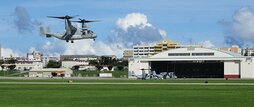
TAIRA I think the biggest problem for Okinawa now is the US Marines’ presence. The Marines account for 75 percent (17,550 hectares) of the total area of the US bases in Okinawa and for 57 percent of the US military personnel stationed there. They are also the prime source of local incidents involving US forces.
If we consider the issues of Japan’s sovereignty and status as a democratic state, it seems to me that we need to seriously examine whether the Marines truly need to be stationed in Japan. If not, we should aim to have them move out. And if they really must be stationed in Japan, then it is only fair for the mainland to host them.
But if, as I noted earlier, the persistence of the security-treaty setup is keeping Japan from asking the Americans to move their forces out of our country, then we need to break away from this setup. That will represent a true move beyond the postwar legacy. And if mainland Japan were to agree to host US forces now stationed in Okinawa, this would also be a major switch from the postwar course.
In any case, as I noted at the beginning of our discussion, the situation Okinawa now finds itself in is emblematic of the course Japan has taken over the seventy years since the end of World War II. This means that if we want to change Okinawa’s situation, we need to fundamentally reconsider Japan’s postwar course. As I see it, the Okinawa problem has deep roots and is actually an extremely important problem for Japan as a whole.
The Okinawa Problem as a Key Test for Japanese Politics
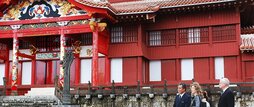
MIYAGI Listening to what the two of you have said, I strongly sense that thinking about the issues relating to Okinawa really means thinking about Japan’s domestic politics and foreign policy. And these issues serve as a mirror of Japan’s path over the twenty-plus years since the end of the Cold War. When the Cold War ended, initially the focus was on Asia’s economic rise, and we saw frequent references to Okinawa’s potential as Japan’s gateway to the rest of Asia, hearkening back to its role as a major trading center in the days when it was the Ryūkyū Kingdom. But at a certain point the spotlight shifted to Okinawa’s geostrategic location and security role.
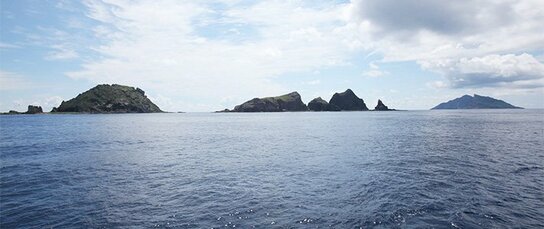
Today’s Asia has two contrasting aspects: an economic sphere where integration is progressing and a security situation where latent tensions continue. The biggest question for the period to come will be how to manage these two aspects without failing. And Okinawa will present the key test of our ability to do so. In the field of tourism, for example, we can see that affluent visitors from other Asian countries are the most promising target for the future. But in the context of dealing with China’s claim to the Senkaku Islands, Okinawa is seen as the front line for Japan’s security. This contrast is a reflection of the “two Asias” that we must deal with.


In the domestic political sphere, over the past two decades various leaders have undertaken efforts intended to help Okinawa. But as you’ve noted during our discussion, the result has been to make the situation extremely intractable. The politicians in Tokyo are clearly suffering “Okinawa fatigue,” feeling that nothing they might try to do for Okinawa’s benefit offers hopes for success.
The situation also involves our relationship with the United States, and this makes it even more difficult to find a way out. The Abe administration is not coming up with any sort of new initiatives to resolve the issue. Instead it’s insisting on implementing the existing plan [to relocate the Futenma facility to Henoko]. I believe this represents a lack of political acumen and creative thinking. And I think we can say that Okinawa presents a key test of the ability of Japanese politics to deal with the problems we face.
(Translated from a roundtable discussion conducted in Japanese on June 19, 2015, and edited by the Nippon.com editorial department. Banner photo: The Senkaku Islands, part of the city of Ishigaki in Okinawa. China has been pressing its claim to these currently uninhabited islands in the East China Sea, and this has led to heightened tensions in the area. © Jiji)
 Read in other languages