


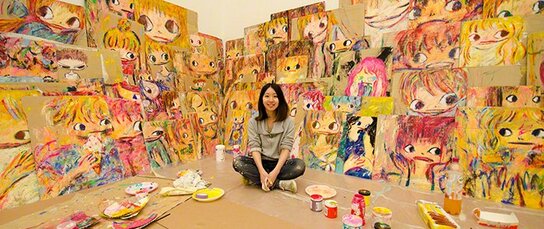

Pop Sensibility Paired with Raw Emotion
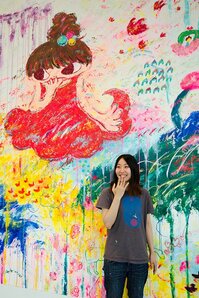
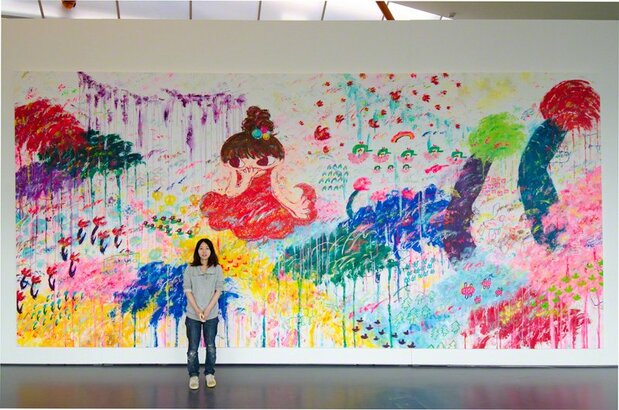
Recently, Rokkaku has branched out into more ambitious works on huge 350cm × 700cm canvases. Have there been any major changes in her work since she started to attract international attention?
“When I’m painting, it’s exactly the same as it was ten years ago. Nothing’s changed at all.”
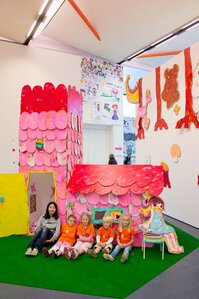
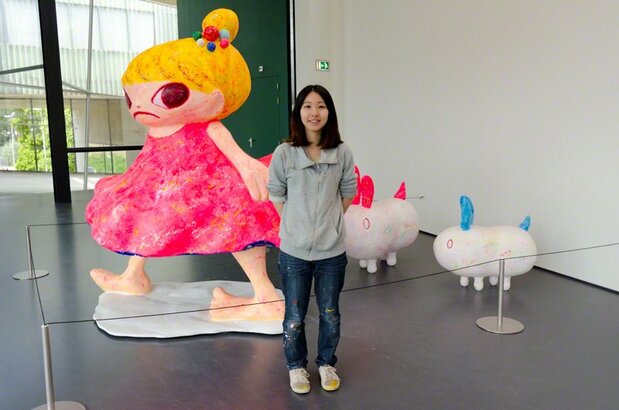
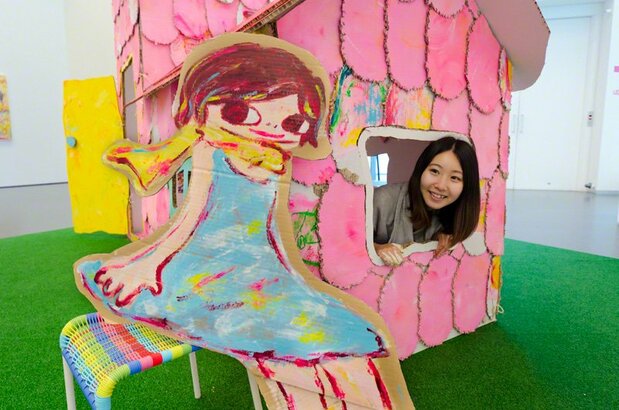
The simple desire to draw, the joy of creation, of being alive... Rokkaku likes to follow her instincts. All her works are untitled—and free of unnecessary adornment or portentous significance. This simple urge to create speaks powerfully to everyone who sees her work. Little barefoot girls with big eyes full of curiosity, long arms stretched out wide as they explore the world beyond the clouds on spaceships... flowers, animals, and mythical beasts—these are the common motifs of Rokkaku Ayako’s art. Her work encompasses refreshingly innocent, childlike drawings, huge houses made of cardboard, and statues of giant girls and ghostly rabbits. The exhibit in Rotterdam also featured a screening of an animated film she worked on called “about us.”
Many people have discerned a distinctly Japanese sensibility in Rokkaku’s cute and colorful paintings, and have suggested that the anime and manga she grew up with must have influenced her work. But Rokkaku herself says she is not aware of any particular influence from Japanese popular culture.
“Of course I was influenced by the environment I grew up in. But some people see my paintings and immediately assume, ‘Oh yes, Japanese animation.’ And I always think: Well no, not really. I think children’s picture books have had a bigger influence on my work. A lot of my pictures have a strong narrative element to them, as if they are taken from the middle of a story. There’s a sense of movement in them—like you’re looking at one frozen moment of motion.”
The narrative element of her paintings perhaps parallels the story of the artist’s own life. Besides their poppy sensibility, her works are also imbued with an element of something raw and untamed.
“You can’t live your life being happy and cheerful all the time,” she says. “It’s not about good or evil—but there’s a darker side to my personality too. I want to get both aspects of it into the painting. I mean, I like cute stuff too—but I feel that a painting needs to contain something raw if it’s going to speak to people on a meaningful level.”
Spurring People On
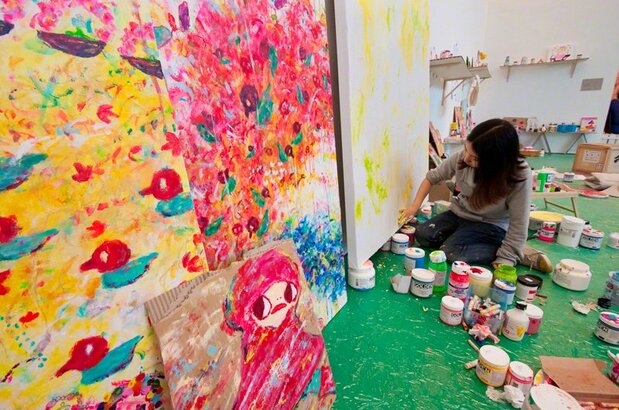
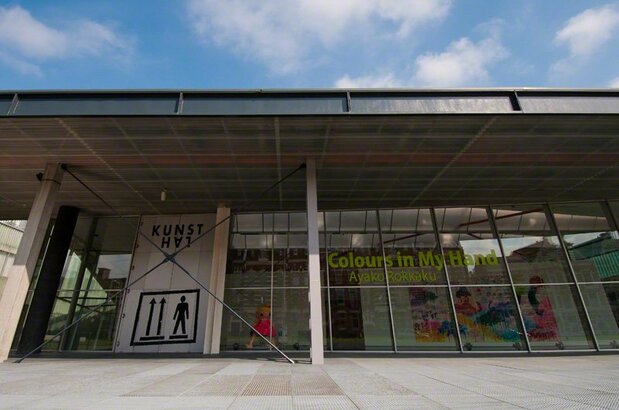
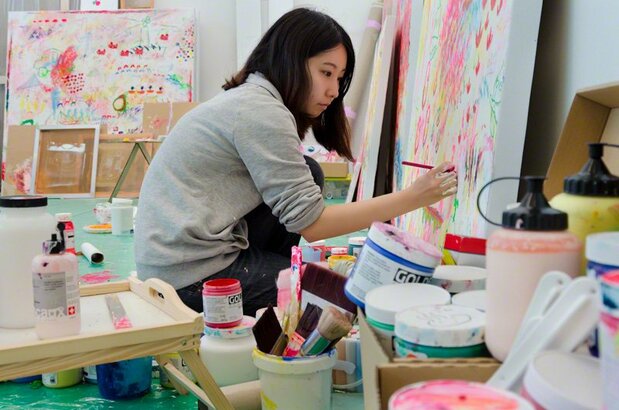
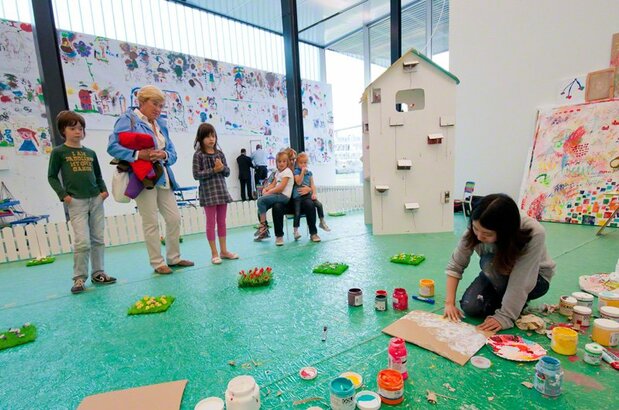
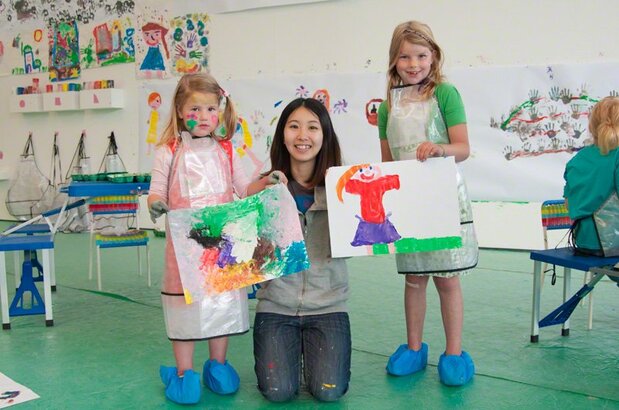
Rokkaku’s live painting performances are another characteristic aspect of her work. Spectators are fascinated by the opportunity to watch Rokkaku at work, crouching on the gallery floor and improvising without hesitation as she summons a new painting into existence before their eyes. During this summer’s show in Rotterdam, a corner of the Kunsthal was given over to “Ayako’s Studio,” where the artist produced new paintings every day for three weeks and broadcast live “performances” over the Internet. She also organized workshops for local children, painting and laughing with the children on their own level.
At the museum, a long line of people waited patiently for a chance to ask the artist about the images in her paintings. Many were eager to have her sign a copy of the exhibition catalogue, or pose for a souvenir photo. Not many art exhibitions offer visitors so many hands-on opportunities to get involved.
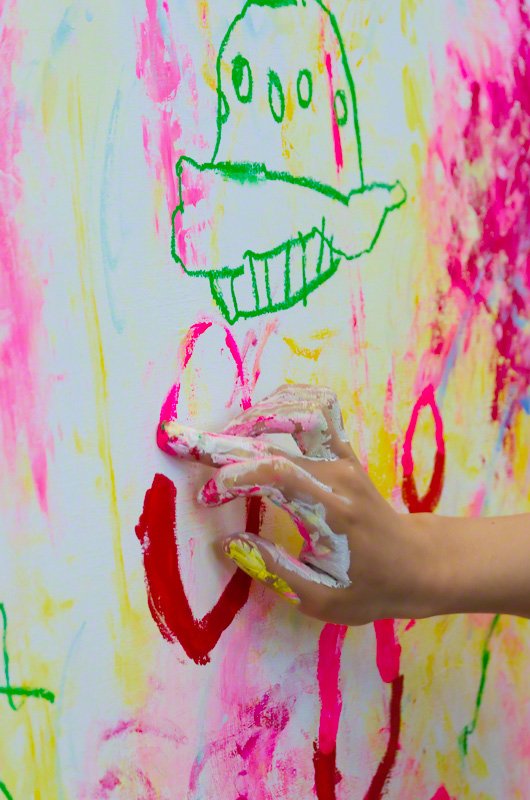
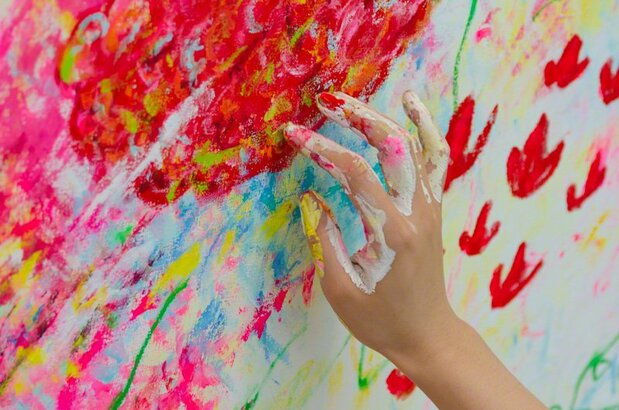
“My aim is to convey a sense of that original urge to paint—the thing that got me started in the first place. I want to achieve a kind of improvised live painting that can bring a sense of freedom to children and grownups alike. And for that, painting with the hands is much better than using a brush and trying to explain what it is I do. I want people to see me at work and think, ‘Hey, I could do that.’ Whether they remember the actual painting itself is not so important. But if they remember how they felt when they saw the painting, then maybe that can encourage them to take a step forward.”
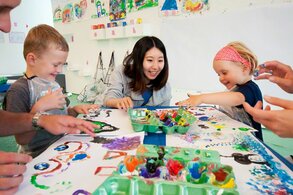
A decade ago, Rokkaku Ayako discovered her own identity through painting. Today, by laying her artistic process open for the public to see, she is trying to give encouragement and support to the people who come to look at her work. Perhaps this is the source of her remarkable artistic energy.
“Art is not an experience that should come to an end with just one person. An artwork should leave an impression in many people’s hearts. That’s what art is all about for me.”
Rokkaku speaks with a gentle smile, but her words convey a sense of strength and conviction. At the moment, she is planning workshops for children in Tokyo and the Tōhoku region. And then? “After that, I just want to go on painting and exhibiting. I want to take my paintings as far as they can go.”
With her unique style of finger painting, Rokkaku Ayako has created a vibrant world of lines and colors. Art-lovers will want to keep a close eye on Rokkaku’s work as her career develops.
(Originally written in Japanese by Somese Naoto, freelance writer. Photographs also by Somese Naoto with permission from the Rotterdam Kunsthal, the Netherlands.)
 Rokkaku Ayako
Contemporary artist. Born in Chiba Prefecture in 1982. Started off as a street painter in 2002, and first caught the public eye by winning the “Scout Prize” at the Geisai #4 art festival in 2004. Now based in Germany, Rokkaku continues to display (and create) new paintings in galleries around the world. http://www.rokkakuayako.com


 Read in other languages