


Western Tokyo Dramas
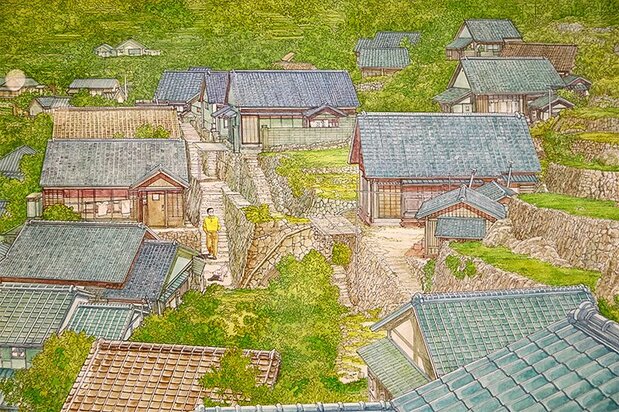
 Aruku hito (trans. The Walking Man) is another of Taniguchi’s 1990s works. A story told mainly by the pictures rather than the text, it has an atmosphere redolent of both bandes dessinées comics and the films of Ozu Yasujirō.
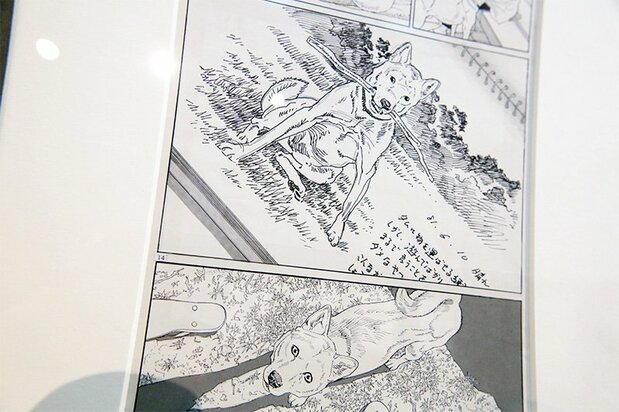 A kind of holy text for dog lovers, Inu o kau (Owning a Dog) warmly depicts the relationship between pet and owner.
From the late 1990s to the 2000s, Taniguchi’s talent bore fruit in works like Ikaru (Icarus)—written by Mœbius—and A Distant Neighborhood. He won fans in France with his painstaking, detailed style in which he spent time to get each picture right rather than zipping on to the next panel.
The text for Kamigami no itadaki (trans. The Summit of the Gods) came from a recent hit mountaineering novel by Yumemakura Baku. Taniguchi adapted the large-scale work to the comic format. In the autobiographical Fuyu no dōbutsuen (trans. A Zoo in Winter), he traced his path from salaryman to mangaka.
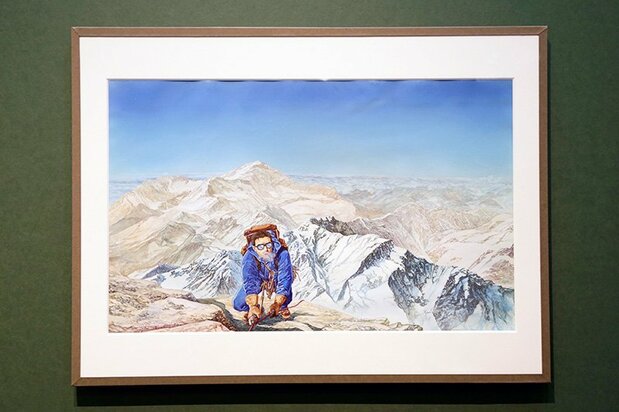 The original picture for the cover of the mountaineering manga K.
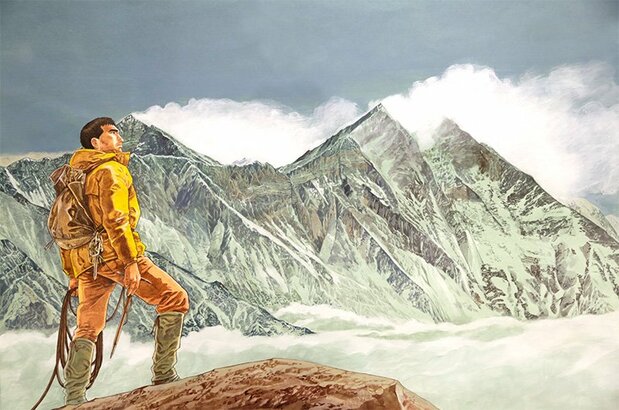 The original picture for the cover of Kamigami no itadaki (trans. The Summit of the Gods) has a power almost three-dimensional in nature.
In his major works of the 2010s, Furari and Sennen no tsubasa, hyakunen no yume (trans. Guardians of the Louvre), he put an imaginative historical spin on the themes of The Walking Man in a fusion of Franco-Belgian bandes dessinées and Japanese manga styles. If only we could have seen more of this distinctive Taniguchi expression in further works.
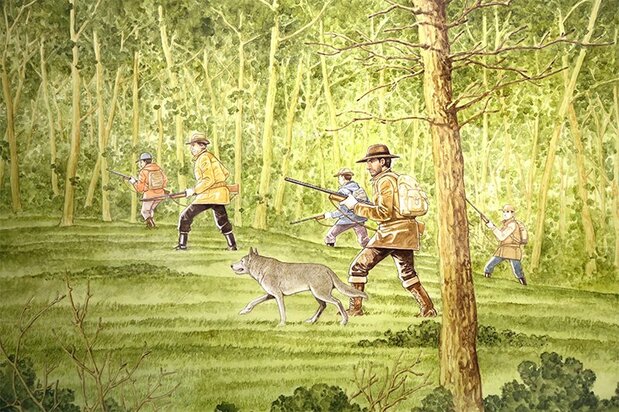 Taniguchi was eager to adapt to manga Ryōken tantei (Hunting Dog Detective), a hard-boiled and heart-warming novel of man and dog written by Inami Itsura.
The Tokyo exhibition displayed Taniguchi’s great ability and range. Yonezawa Shin’ya of the organizing Fondation Papier offered hints on how to enter the world of the mangaka.
“Taniguchi went to work in Kyoto after graduating from his Tottori high school, but left after six months and headed for Tokyo. He lived in the western suburbs of the capital for the rest of his life. Perhaps this is why you can sometimes see suburban Tokyo scenery in the background of his manga. You almost never see shitamachi low-town neighborhoods. While some of his works are set in his hometown, you could say his later output is drama that emerges from the scenery of west Tokyo. In this newly settled area, there are not the same strong ties to the neighborhood and land, so this is what gives his works their universal themes.”
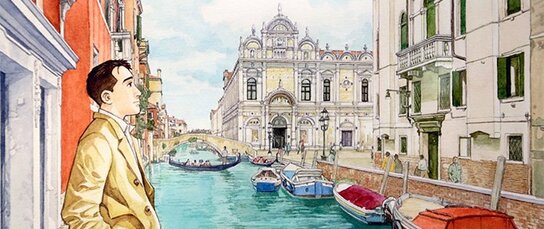
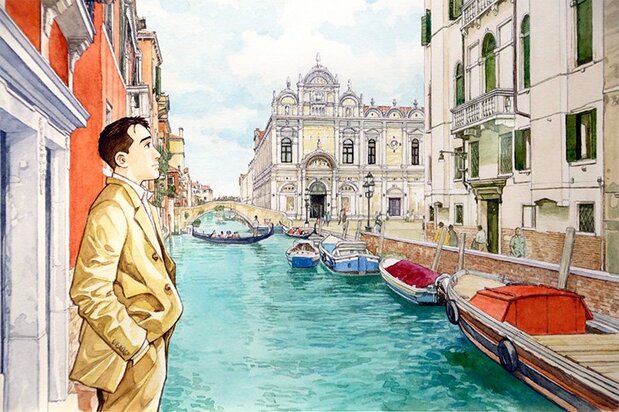 The original picture for the cover of Venezia.












 Read in other languages