


Extinction Crises
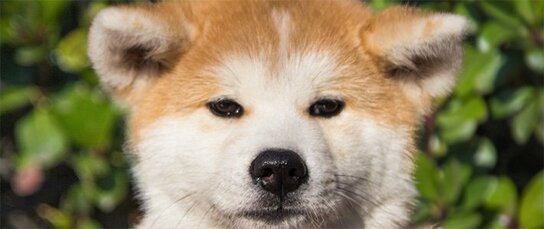
Akita-inu come originally from the city of Ōdate in the north of Akita Prefecture. Traditional bands of matagi hunters have operated in the northern Tōhoku region for centuries, using dogs to chase down prey like bears and deer. The Akita matagi-inu was an ancestor of the Akita-inu.
There are now some 2,000 Akita-inu across the country, but the breed has faced numerous extinction crises. When dog-fighting was in its heyday in the Edo period (1603–1868), Akita-inu were often cross-bred with larger dogs. During World War II, the government gave an order to hunt down dogs to use their fur in winter clothing and equipment for the military. German shepherds were the only dogs exempted from the order, which encouraged more hybridization. Members of the postwar occupation forces and administration took the cross between the German shepherd and Akita-inu back to the West. Further breeding of this hybrid led to a larger animal, often known as the American Akita or great Japanese dog.
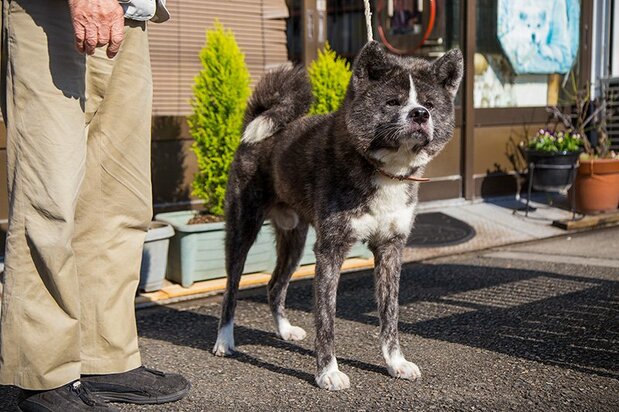
 Ryūfū-gō, a male with brindle fur born in July 2014.
The Akita-inu Hozonkai was founded in 1927 to preserve the breed. Akita matagi-inu were used in breeding to remove traits of other dogs. In 1931, the Akita-inu was designated as a national natural monument and a large variety of dog.
JKC standards set the height of male Akita-inu at 67 centimeters from the ground to the tallest point of the back, and females at 61 centimeters. In both cases, three centimeters of variation is allowed either way. Fur color may be red fawn, brindle, white, or sesame.
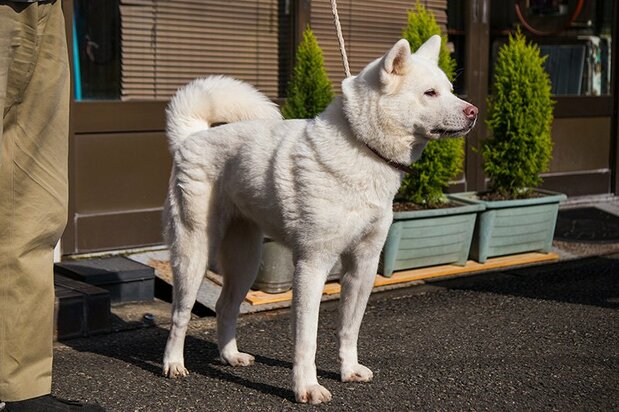 Umeko-gō, a female with white fur born in April 2011.
Dignified Like a Samurai
There are still many Akita-inu shows held around Japan. They are more about preserving the breed than competing over individual beauty. Judges assess such factors as body and eye size, fur color, and whether teeth are all in place. The closer the dogs are to the standard, the higher they are ranked. A qualified judge, Nakagawa explains how the dogs stand for assessment.
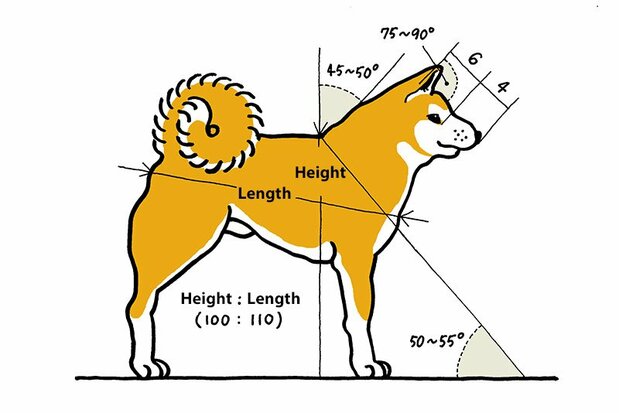 The standard measurements for an Akita-inu encompass the following specifications. The muzzle and the rest of the head should be in a 4:6 ratio. Ears should stand up at an angle of 75–90 degrees. The height and length should be in a 100:110 ratio.
“First of all, the two front legs should be in parallel descending from the chest. The hind legs should also be in parallel. If the dogs are bowlegged or knock-kneed, this is seen as indicating lack of exercise, and they are marked down. Exercise builds muscles, giving a dog a more composed stance.”
Akita-inu have a high level of basic athleticism. In Japan, it is generally forbidden to let dogs run loose, so it can be difficult to ensure sufficient exercise. Nakagawa keeps his dogs in shape with running training.
 Kōgyoku-megō displays her graceful stance.
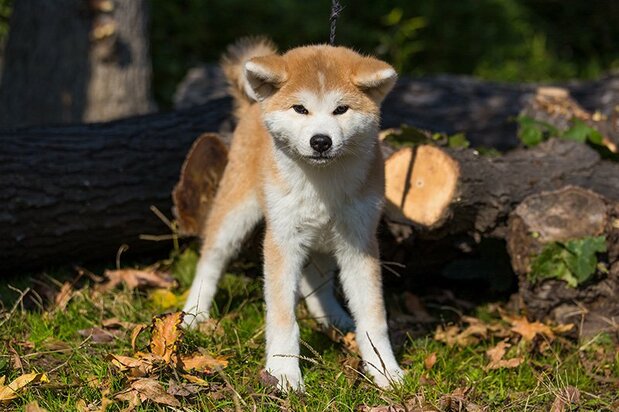 Suzuyo is nervous on her first visit to the park. Her legs are spread apart, and her ears have fallen flat.
Nakagawa has spent two-thirds of his life with Akita-inu. “I was drawn by their natural beauty. I believe it’s important to draw out dogs’ inherent strengths rather than try to eliminate any faults. This is why the Akita-inu that clearly display the breed’s characteristics are rated highly at shows. They shouldn’t have their tails docked like other dogs, and it is best for them to remain natural. Their dignified appearance, like a samurai, leaves me lost for words. This is why people can’t keep other dogs after they’ve had an Akita-inu.”
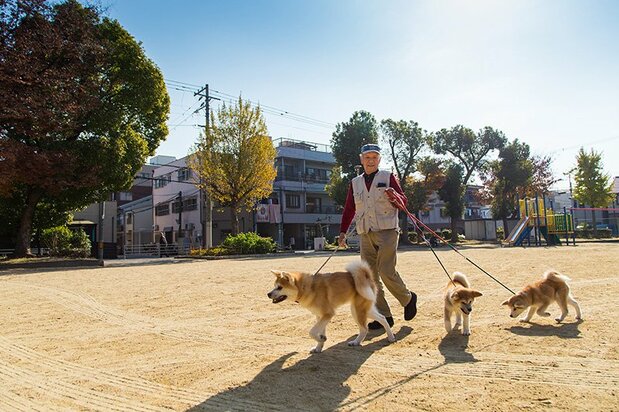
Nakagawa Chikuken
- Address: 2-12-9 Nishikagaya, Suminoe-ku, Osaka, Osaka Prefecture
- Tel: 06-6681-2436
- Website: https://www.akita-inu.jp/








 Read in other languages