


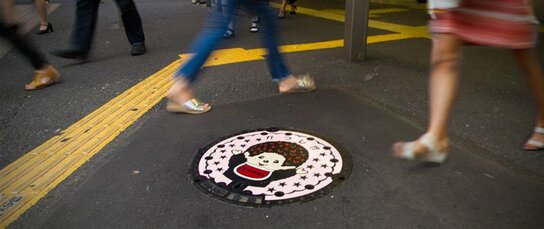
Manhole Cards
Japan’s first manhole covers with pictorial designs were made for Expo ’75 in Okinawa. They had a simple fish pattern. Today, sometimes elaborate designs can be seen across Japan, expressing local pride.
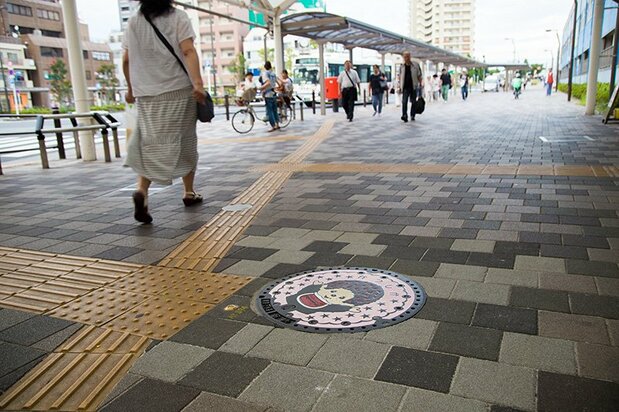
 A design manhole in Katsushika, Tokyo, where the company that manufactures Monchhichi is located. Photo by Nippon.com editorial department.
Attractive manhole covers have been drawing attention as people share particularly appealing examples on social media. Yamada Hideto, a worker at a sewer PR organization, thought of producing “manhole cards” to spread the fun further.
The idea was based on his own experience as a child of being engrossed in collecting stickers and cards. Distribution began in April 2016.
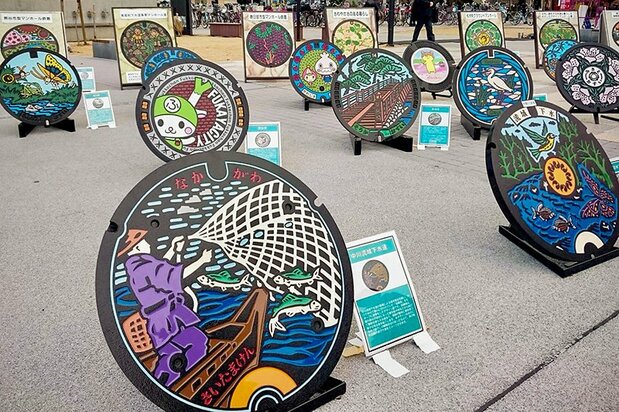 A manhole summit was held in January 2017 in the city of Kawagoe, Saitama Prefecture. Visitors were welcomed by 58 different design manholes from within the prefecture.
The front of the cards shows a photo of a manhole cover and information on its location, while the back gives an explanation of the design and its origin. The cards are free, but are only distributed at city offices, waterworks offices, or tourist information centers near the location of the manholes. In other words, possessing a manhole card is evidence that you have visited the place.
The cards also have pictograms that show the serial number, regional block number, and design category. This way fans can collect cards however they please, such as first collecting only cards in the Kantō block or getting all the cards with a local mascot character.
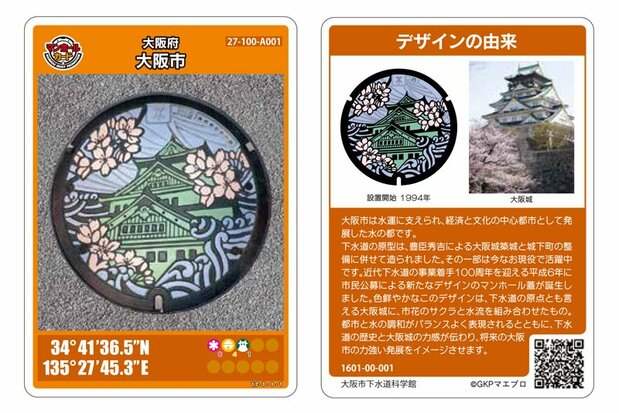 The front of a card is shown on the left, and the back on the right.
There are now 222 varieties of card from 191 local governments, and about 1 million have been issued to date. New cards are created each year.
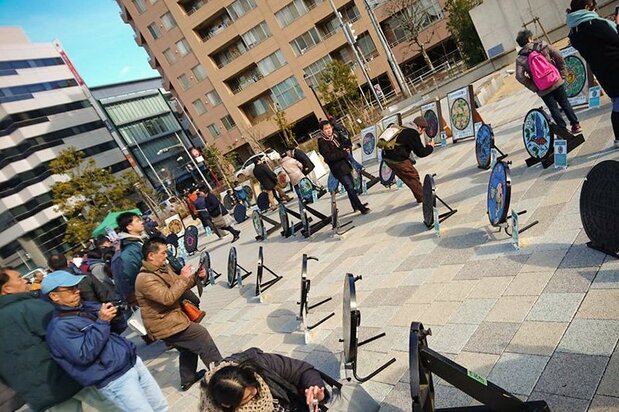 About 3,000 people attended Saitama Prefecture’s manhole summit in 2017.







 Read in other languages