


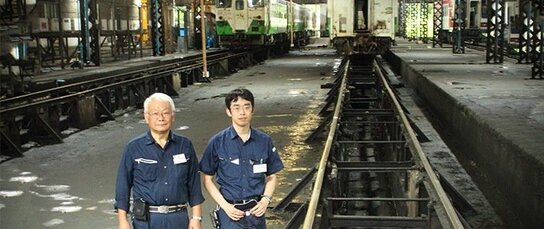
Japanese rail experts are providing technical support for the modernization of Myanmar’s railways. An all-round approach, including training on proper maintenance of equipment, is essential to the project’s success.
An Upgrade After 60 Years
Yangon Central Station, a major hub for Myanma Railways, does not look much different from when it was built in 1954. Four towers, reminiscent of Buddhist stupas, line up along the splendid three-story station building. At the same time, however, the wear of more than six decades is clear, and ticket sales and gates still rely on staff rather than machines.
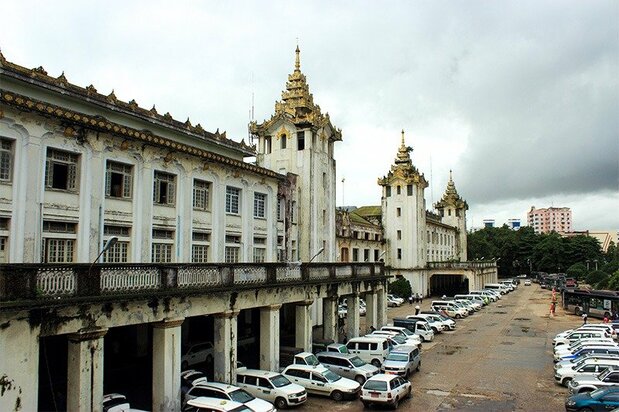
 The Yangon Central Station building with its stupa-like towers.
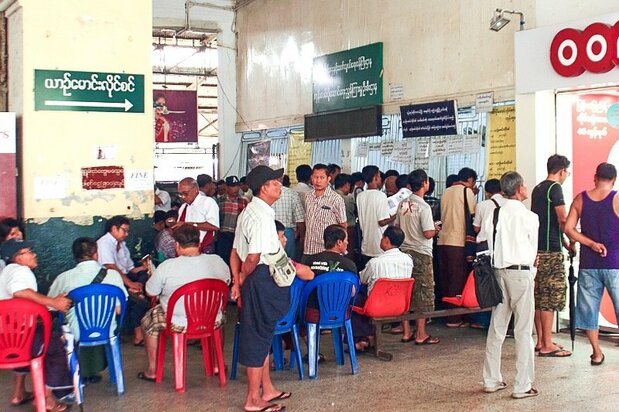 People line up for long-distance train tickets.
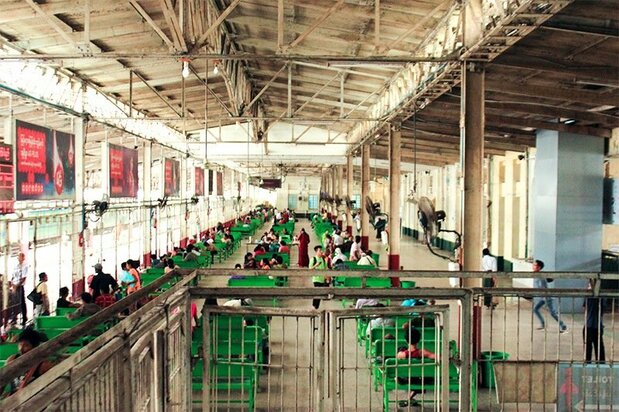 The long-distance passenger waiting room.
Time may appear to be standing still at Yangon Central, but Matsuo Nobuyuki, deputy general manager of Japan International Consultants for Transportation, identifies recent changes. “That’s a new point, installed with Japanese support,” he says, gesturing in the direction of the track. “If you take a good look around, you can see the kind of signaling equipment that’s common in Japan. All the systems in the station were upgraded through a Japanese grant, changing over on the night of May 26.”
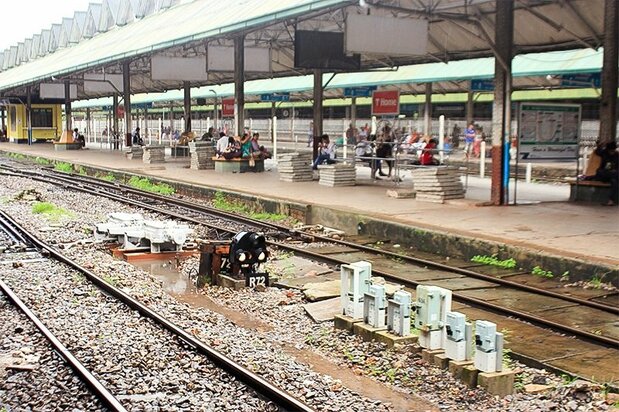 The new point here is part of the upgraded signaling system at Yangon Central Station.
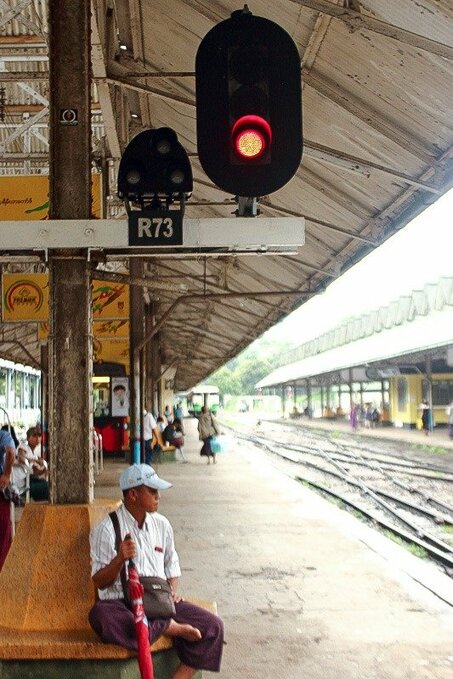 A new color-light signal attached to the old platform.
A huge system for adjusting points has just finished its active life. It remains in the former traffic control room on the third floor of the station building. Built by the British firm Westinghouse Brake and Signal Company, it has an array of dozens of levers. Zaw Myo Sann, a junior engineer for Myanma Railways, says, “There used to be four or five station workers lined up in front of the machine, following orders to move the levers by hand.” The levers sent electrical signals to move the points, which was cutting-edge technology 60 years ago. “It was so dilapidated,” he continues. “It took considerable effort to keep the electrical system working.”
Today, two station workers sit in front of a big liquid-crystal display, controlling the points by mouse. There are 81 points, around the same as large regional stations in Japan like Ōmiya or Sendai. Even if someone makes a mistake, the computer automatically prevents two vehicles entering the same section of track, thereby eliminating this kind of accident.
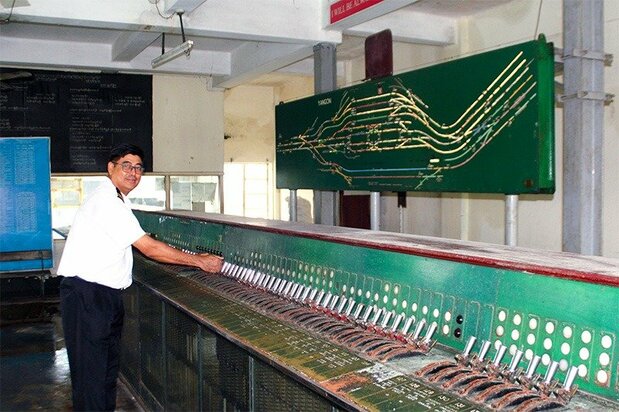 The complex control system has at last been retired after more than 60 years of service.
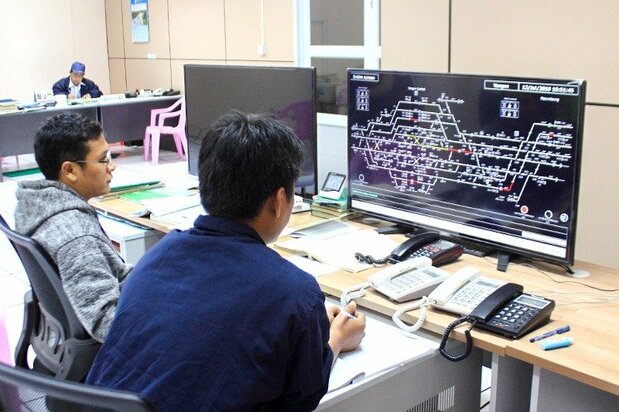 Station workers control the points by computer now.
There is also a room where workers can use a simulator to master the system. Instructors can give repeated training on dealing with problems, making it the ideal place for new hires to learn. Matsuo says, “It’s not just about slotting in a new system. Japanese technical support always considers training for the people who will use it. These new machines will undoubtedly be installed at many other places across Myanmar, not just at Yangon Central.”







 Read in other languages