


Deneuve: The Grande Dame of French Cinema
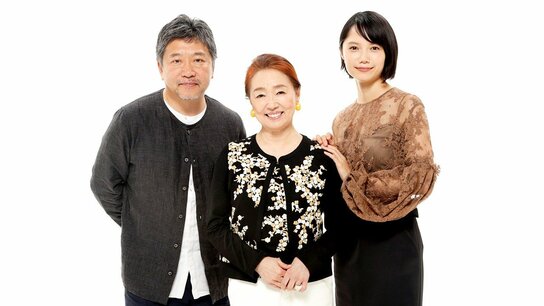
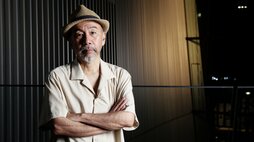
The Truth is a finely drawn human drama that unfolds through the dialogue of its characters. Making this possible is the tour de force performance by Deneuve. Her character is a typical prima donna, a great actress interested only in her craft—and herself—who speaks her mind with little thought to the feelings of those around her. Her saving grace, though is her dry humor that makes it impossible for the audience to resent her completely. Koreeda spoke about Deneuve’s role in the new film. He was joined in the interview by Miyamoto Nobuko and Miyazaki Aoi who voiced the parts of Fabienne and Lumir, respectively, in the Japanese-language version.
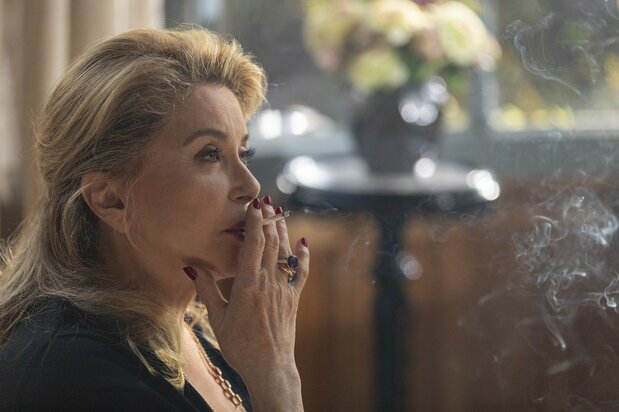
 Catherine Deneuve. (photo L. Champoussin © 2019 3B-Bunbuku-MI Movies-France 3 Cinema)
INTERVIEWER The film opens with Fabienne being interviewed about her new autobiography, a scene that lays bare the personality of the great star. How much of this draws on conversations you had with Deneuve?
KOREEDA In the film, the journalist asks Fabienne whether she sees evidence of her DNA in other actresses, and she answers: “Not in France.” That’s a line I took directly from my interviews with Deneuve. In the actual interview, I followed up by asking her if she thought there was anyone in other countries. Her reply: “Kate Winslet and Naomi Watts.”
Those are words that only a person like Deneuve, who has been at the forefront of French cinema for nearly 60 years and has total confidence in herself, could speak.
INTERVIEWER Fabienne believes that as long as she gives convincing performances as an actress, she is entitled to be a terrible mother and friend. What do you make of this view of the world?
MIYAMOTO It’s all right to have a few people like that—you wouldn’t want too many of them, though. I can understand that way of thinking, even though I’m normally quite reserved.
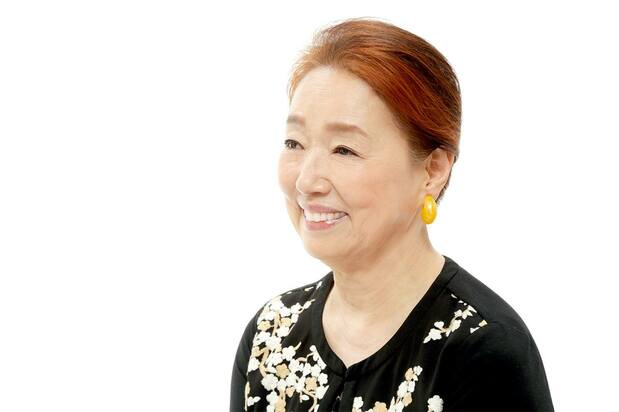 Miyamoto Nobuko, who voiced the role of Fabienne in the Japanese-language version of The Truth.
Shooting with an All-French Cast
INTERVIEWER Fabienne and Lumir have an interesting mother-daughter relationship. How was it voicing the frank way they speak to each other?
MIYAZAKI I was struck by the cultural differences. In Japan, people tend not to be so blunt. I certainly never experienced anything like it in my own life, anyway. It was a completely new and surprising way to communicate, although I was a little taken aback to think that there are really people who speak their minds so directly.
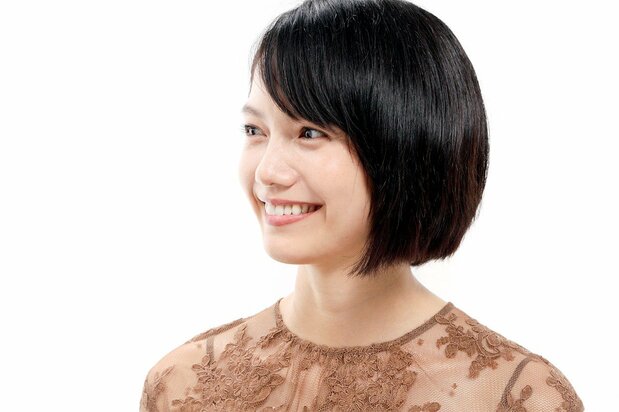 Miyazaki Aoi, who voiced the role of Lumir in the Japanese-language version of The Truth.
INTERVIEWER What aspects of the film were influenced by the French cast and crew?
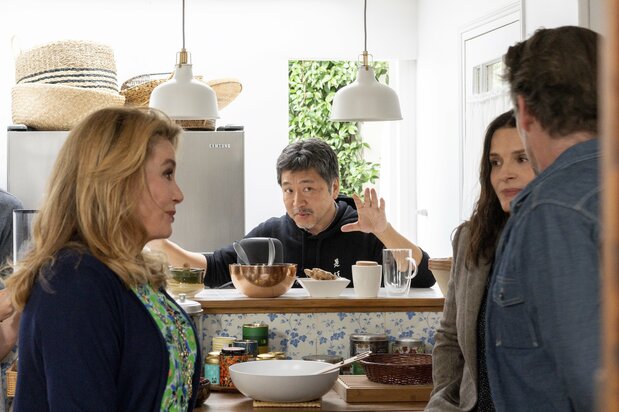
KOREEDA Sometimes while shooting, a member of the team or one of the actors would come up and tell me, “A French person would do it this way.” I always tried to incorporate their advice into the scene. For example, in Japan, most couples would not sleep in the same bed while staying with their parents. But when I spoke with French people about it, they just shrugged their shoulders and seemed to think it was normal, so that’s how I filmed it. At one point Fabienne even asks her daughter Lumir, “So, how many times did you do it last night?” You’d never write lines like that in Japan, but in France, no one even batted an eye.
INTERVIEWER What did you make of Manon Clavel, who plays the young actress who is described as the second coming of Fabienne’s late rival?
MIYAMOTO I was struck by her wonderful voice. Unforgettable.
KOREEDA When she auditioned for the part, I knew she was perfect as soon as I heard her speak. I even changed the name of the character to her name, and rewrote the script to give her character the same husky voice.
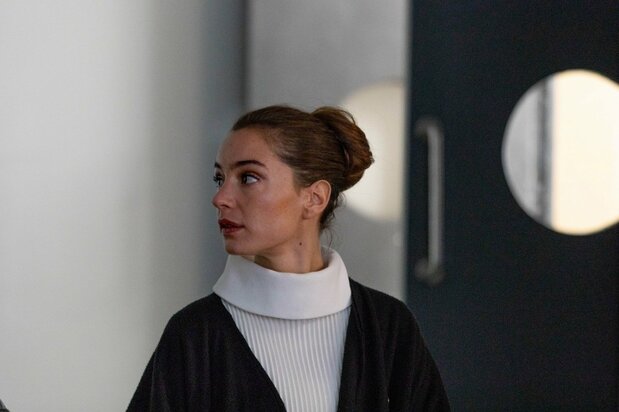 Manon, played by Manon Clavel. (photo L. Champoussin, © 3B-Bunbuku-MI Movies-France 3 Cinema)
MIYAMOTO She’s this incredibly strong presence, and she needs to be or a great actress like Fabienne wouldn’t be affected by her. I can understand the feelings Fabienne has toward this new arrival.
KOREEDA The most important thing when casting is the voices. When possible, I like to meet the actors before writing the script, so that I can get their voices in mind. Learning to write convincing dialogue in that voice is vital. We brought the actors together to read through the script, and even though I couldn’t understand the dialogue in French, it was important to hear the timbre, nuances, rhythms, and cadences of the voices. I needed to get a feel for how these women from three generations were going to sound together.
INTERVIEWER What was it like voicing the Japanese for The Truth?
MIZAZAKI I love Koreeda’s films and was thrilled to be involved. Watching the finished product in Japanese was an interesting experience. The face on the screen is Juliette Binoche, but she’s speaking with my voice, so it felt a bit strange at first, but enjoyable. Normally I watch foreign films with subtitles, but seeing a film dubbed into Japanese provides a different experience. Because I can listen to the dialogue, I am able to concentrate entirely on the expressions of the actors.
MIYAMOTO I normally watch with subtitles as well, so that I can hear the actors’ voices. In fact, I wondered if it was all right for me to be working on a dubbed version of a film. I felt an enormous sense of responsibility, but I understood Fabienne’s emotions as an actress and identified with her words in the script. Koreeda is a director who understands actresses really well, I think.
KOREEDA Actually, the dialogue in the dubbed version is closer to the original Japanese script I wrote before having it translated into French. We had to do quite a lot of pruning in the Japanese subtitles to make them fit, so the original script is quite different from what you see in the subtitles.
 Juliette Binoche (left) and Catherine Deneuve. (photo L. Champoussin ©3B-Bunbuku-Mi Movies-FR3 Cinema)
INTERVIEWER What struck you most about working with two such global stars as Juliette Binoche and Catherine Deneuve?
KOREEDA They have very different personalities and I needed to understand and maintain a balance between them. Binoche refused to call it a day until she was completely satisfied with every scene. Even after I called a wrap, she would come over and say she wanted to do one more take. I quickly learned I had to do more to keep her satisfied. Deneuve was the opposite. “That was the one,” she’d say. “We won’t get any better than that, even if we stay here all day.” She’d make the decision before I did. And she was always right. My role was to maintain equilibrium between the two actresses, but I didn’t really need to intervene much. Working with Ethan Hawke was a great help, too. He kept things calm and moving along smoothly. I owe him a lot. Having a child actor on the set was also beneficial. As long as she was around, I knew things would somehow be fine.
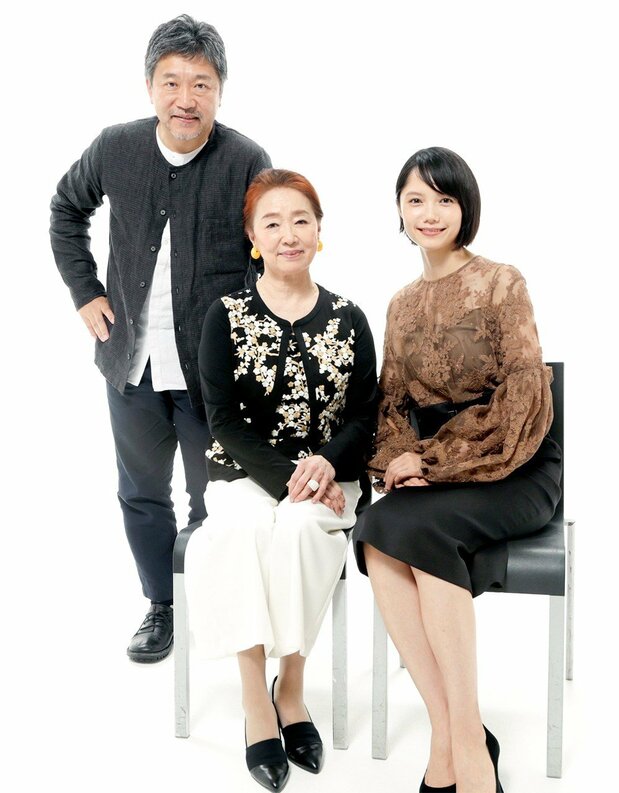
(Originally published in Japanese. Interview photos by Nagasaka Yoshiki.)





 Read in other languages