


Improving Oyster Farming
The population of Minamisanriku has fallen by around a third since the disaster, and as residents age and the birthrate remains low the downward trend is unlikely to change. This is bad news for the town’s fishing cooperative, which needs more young people to take up the trade if it hopes to grow and sustain itself into the future. To attract newcomers, it has joined hands with the tourism association as well as prefectural and national governments on various projects, including a program that provides people looking to resettle in rural areas a chance to experience local fishing and aquaculture.
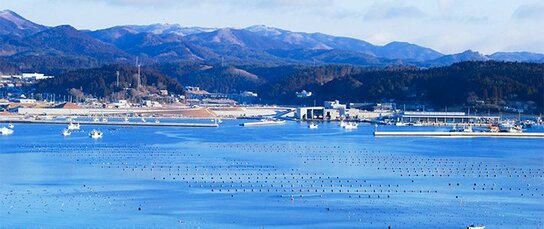
Gotō Kiyohiro, an oyster and wakame seaweed farmer in the town’s Togura district, has been active in boosting the appeal of aquaculture. Gotō came close to folding his operation when the tidal wave carried off his home and the rafts he used for cultivation. Three months after the disaster, though, he took over as regional representative of the prefectural fishery cooperative. With funds from the central government he began work to reform cultivation techniques by reducing the excessive number of oyster platforms.
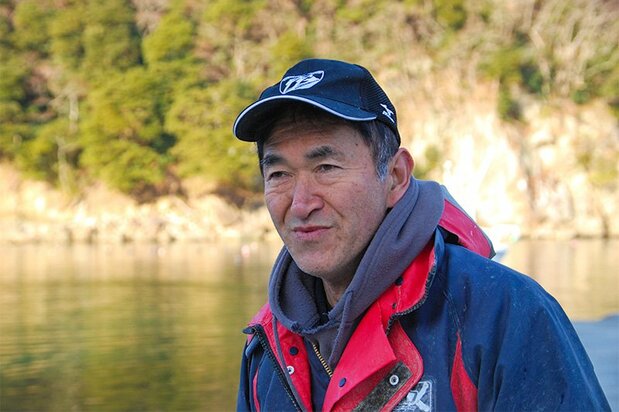
 Oyster and seaweed farmer Gotō Kiyohiro says sustaining the fishing industry requires improving how marine resources are managed.
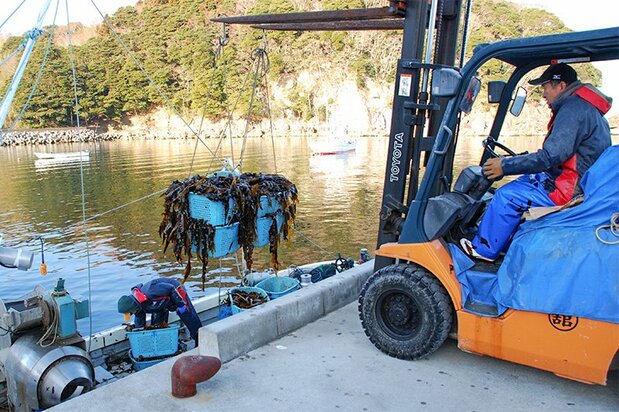 Gotō (on forklift) unloads freshly harvested wakame.
Gotō says overcrowding stemmed from farmers looking to maximize production. “Before the disaster there were concerns that it was affecting the quality of our oysters,” he explains. “I felt reducing the number of platforms would improve growing conditions by keeping waste from building up and ensuring even distribution of nutrients.” Gotō notes with a sense of irony how the tsunami also served as an agent of change. “Having to start over from scratch made it easier to introduce the necessary reforms.”
The plan disrupted long-established fishing rights and many in the industry opposed the proposal at first out of fear they would see their incomes fall. Gotō focused on the benefits of his plan, though, eventually winning the support of around 40 oyster farmers. In the end he succeeded in reducing the number of platforms by nearly a third from their predisaster level.
Although farmers grow smaller batches of oysters, output has remained steady as the mollusks can now be harvested in one year instead of the previous two to three. Improving production has also lowered costs and decreased labor hours by around a fifth, helping lift profits by 15%–20%.
Two years ago, the Holland-based Aquaculture Stewardship Council recognized the efforts of the Togura fishery and awarded it certification, giving an added boost to the local oyster-growing industry.
Gotō says he can see a ripple effect in the community as younger residents who might have moved away for work or to attend school are choosing to remain in Minamisanriku. “In the past parents encouraged their children to move to the city, but there is renewed confidence in the industry. Now that young people have a chance to manage their own farms, they are starting to see a future for themselves in growing oysters.”



 Read in other languages