


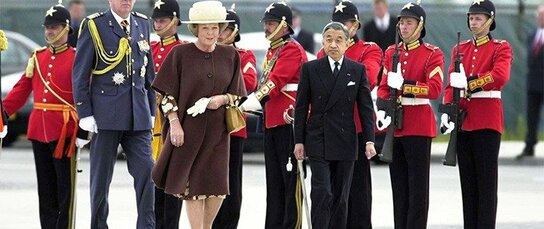
The Positive Effect of the Visit to the Netherlands
NOJIMAThe imperial visit to the Netherlands also seems to have had a major impact as a historical milestone. The Dutch ruled what is now Indonesia as a colony for more than three centuries, and during World War II Japan incarcerated some 40,000 Dutch troops and 90,000 civilians as prisoners of war there. In addition, some Dutch women claimed to have been forced to serve as “comfort women”—prostitutes for the Japanese military. In preparing for the visit, didn’t you have a hard time dealing with local public opinion?
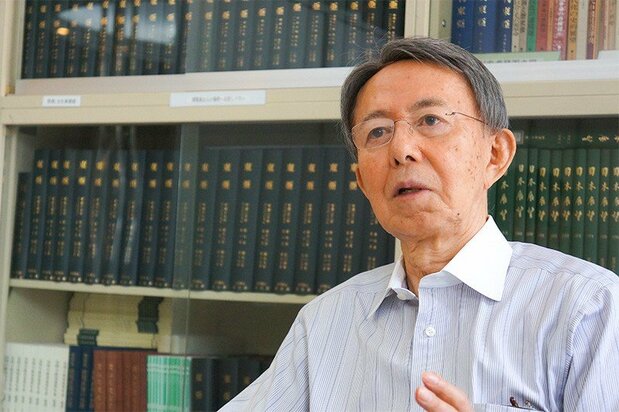
 Photo by Takahashi Ikutomo of Nippon.com.
IKEDA As a diplomat, I served in five different countries, as well as in Taiwan and Hong Kong. Ordinarily the assignments were for about three years, but I spent five years in the Netherlands. And for about four of those five years, preparations for the imperial visit were on my mind. The year 2000 marked the four-hundredth anniversary of exchanges between Japan and the Netherlands—the Liefde, the first Dutch ship to reach Japan, drifted ashore in Kyūshū in 1600. And the Dutch were permitted to trade with Japan through Dejima, an island in Nagasaki, even during the period of national seclusion imposed by the Tokugawa shogunate from the early seventeenth through the mid-nineteenth century, when contact with other European countries was forbidden.
As ambassador I initiated three activities in connection with this four-hundredth anniversary. The first was dialogue with organized anti-Japanese protesters. The San Francisco Peace Treaty and the 1956 bilateral protocol between the two countries(*2)settled the issue of private claims by Dutch nationals against Japan for suffering caused by agencies of the Japanese government during World War II. But some Dutch citizens who considered this agreement to be morally unacceptable had formed a group and were conducting monthly demonstrations outside the embassy, holding placards demanding the payment of compensation by Japan. Most of the protesters were in their seventies or older, and the demonstrations were not violent. Shortly after I became ambassador, I started inviting a few of the leading members of the group to come inside the embassy for tea and conversation in my office after they concluded their quiet protest activities.
The second initiative was each year to invite something over twenty of the victims to take paid trips to Japan, for which we secured budget appropriations. The program continues to this day, though its name has been changed, and I believe that some six to seven hundred people have participated. The guests stay for about ten days to two weeks, taking in various sights and meeting with Japanese people. Though this initiative is not in the public eye, it represents a steady, patient exchange program.
Third, we arranged for a Dutch nongovernmental organization to establish a confirmation panel to look at the issue of the “comfort women.” This panel concluded that there had been seventy-nine such women, and the Asian Women’s Fund provided them with compensation on the order of three million yen per person, including beds and chairs for the elderly women.
Thanks in part to these activities conducted in advance, at the time of the visit there were some small-scale demonstrations but nothing on the major scale that we had feared. And during the course of the emperor’s stay, Dutch public opinion toward Japan took a major turn for the better.
At the time I was fully prepared for the eventuality of having to resign if the visit did not go well. But after the visit, none of the major dailies in the Netherlands carried front-page stories relating to the hostilities with Japan. When I completed my tour of duty and returned to Japan in 2001, a Dutch newspaper wrote, “Ikeda accomplished the ‘mission impossible.’” On the individual level, of course, some people probably still harbor mixed feelings toward Japan, but in terms of general public sentiment, the war seems to have ceased to be an issue. In that respect I believe that the emperor’s visit was an event of great historical significance.



 Read in other languages