


Photographer Ōsaka Hiroshi visits a sacred site in Miyazaki in Kyūshū, which is the setting for ancient legends about the sea princess Toyotama-hime and her son Ugaya-fukiaezu, father of Jinmu, Japan’s legendary first emperor.
A Cave Sacred to a Mother’s Love
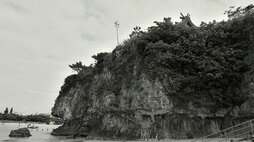
From Aoshima and its associations with the legend of Hoori or Yamasachihiko, great-grandson of the sun goddess Amaterasu, it is a 40-minute drive down the Nichinan coast to Udozaki, where the saga continues. This is a place of wild, dramatic scenery, dominated by huge cliffs and gnarled, otherworldly rock formations that stretch along the Pacific coast. Since prehistory, this dramatic scenery has inspired feelings of reverence and awe. Nestled amid the cliffs along this rocky shore is Udo Shrine.
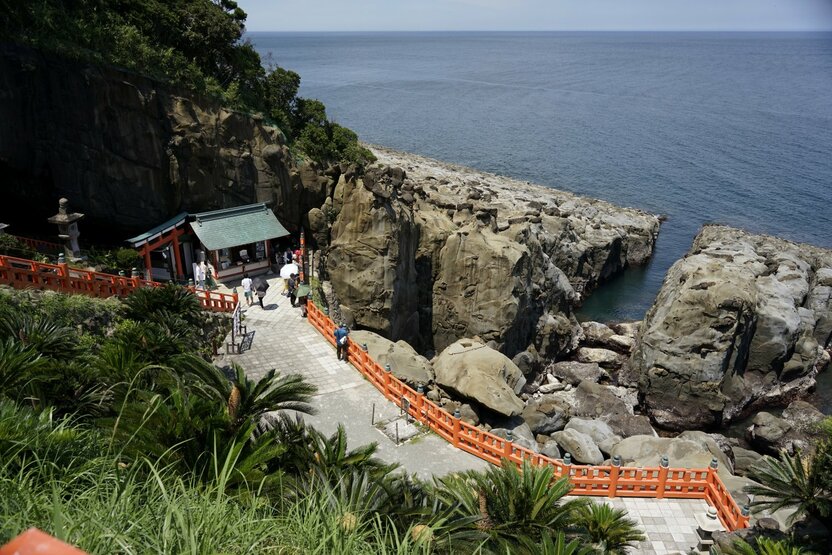
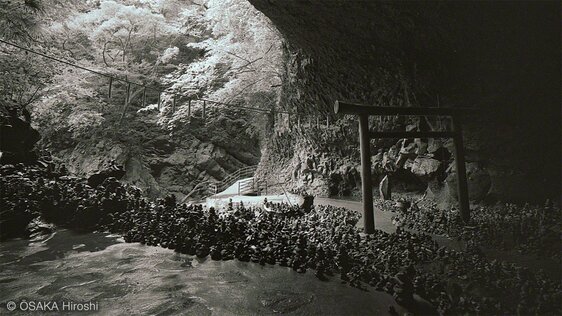
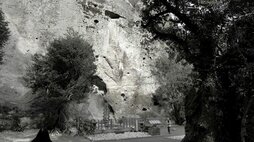
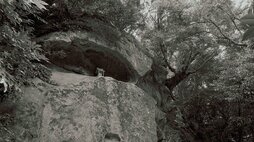
 The main shrine building stands inside a cave just out of shot, guarded by the shrine gates, or torii. (© Ōsaka Hiroshi)
The main shrine building (honden) stands inside a low cave carved out of the cliff-face over millennia by the erosion of the waves. The enshrined deity here is Ugaya-fukiaezu, the son born to Hoori and Toyotama-hime, daughter of the sea god. As you step into the cave, the vivid red of the honden emerges from the darkness, brilliantly decorated with paintings and carvings.
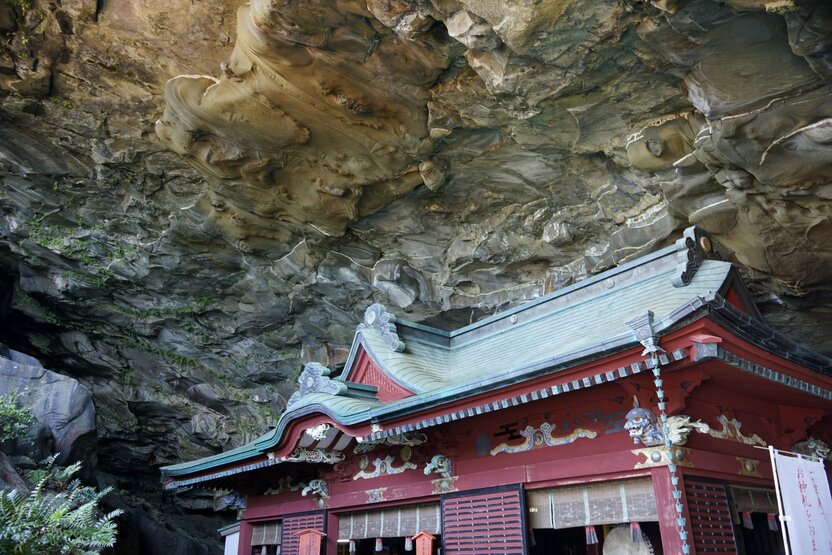 The shrine precincts attract a steady stream of parents who come here to pray for safe birth and health for their children as they grow up. (© Ōsaka Hiroshi)
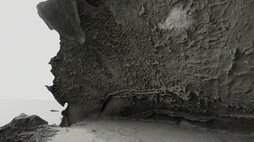
Hanging from the roof of the cave are two round, bulbous formations. Legend says that when it was time for Toyotama-hime to return to the Palace of the Sea God, leaving her newborn behind, she left her breasts in the cave to nurture her child. Small beads of water still trickle silently from the mammiform protuberances in the rock.
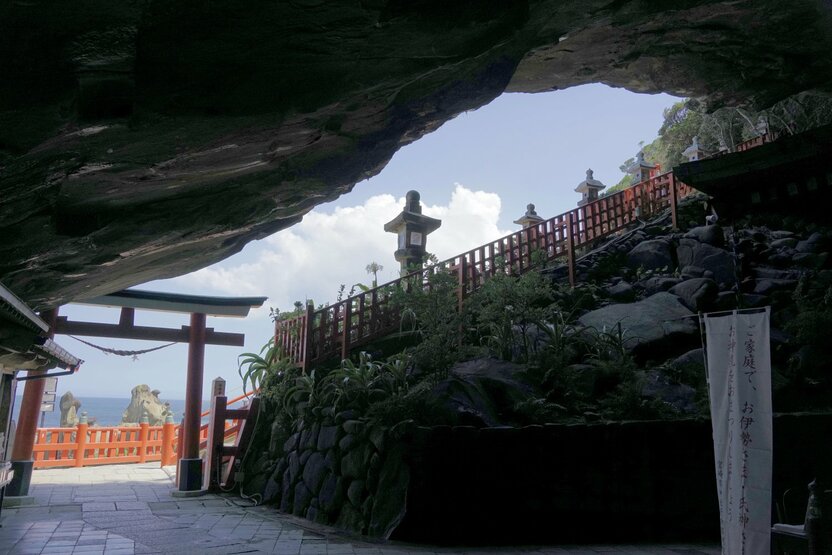 Looking out to sea from the cave. (© Ōsaka Hiroshi)
The Wish-Granting Turtle Rock
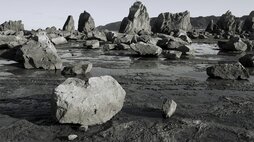
We emerge from the cave to find the sea glinting in the brilliant southern light. Oddly shaped boulders and jagged rock formations line the shore. One in particular stands out: a giant stone known as Turtle Rock (Kameishi), believed to be the giant turtle that carried Toyotama-hime from the Palace of the Sea God when she came here to give birth to her child.
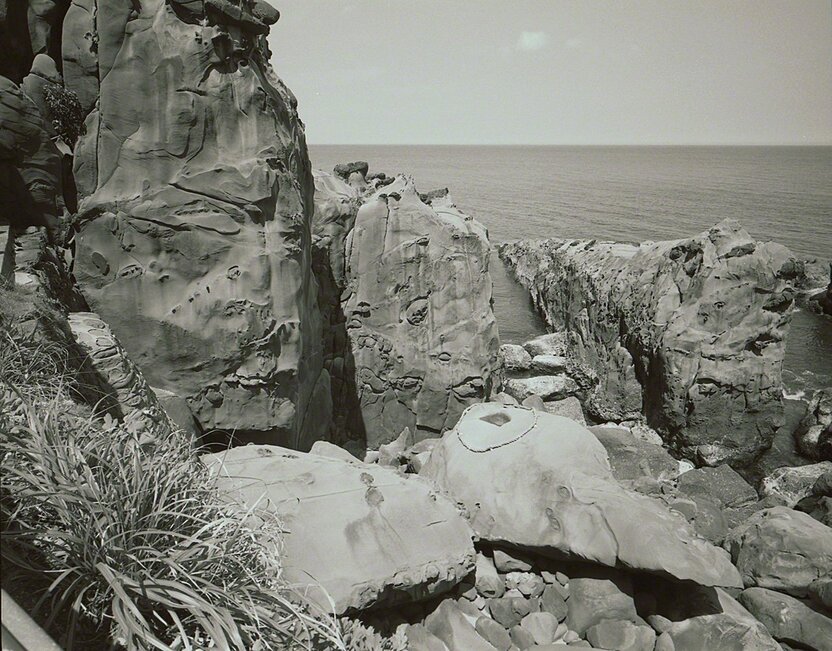 The strange-shaped rocks and boulders in front of the honden. In the center is the “turtle rock,” marked off by the shimenawa rope as a sacred spot. (© Ōsaka Hiroshi)
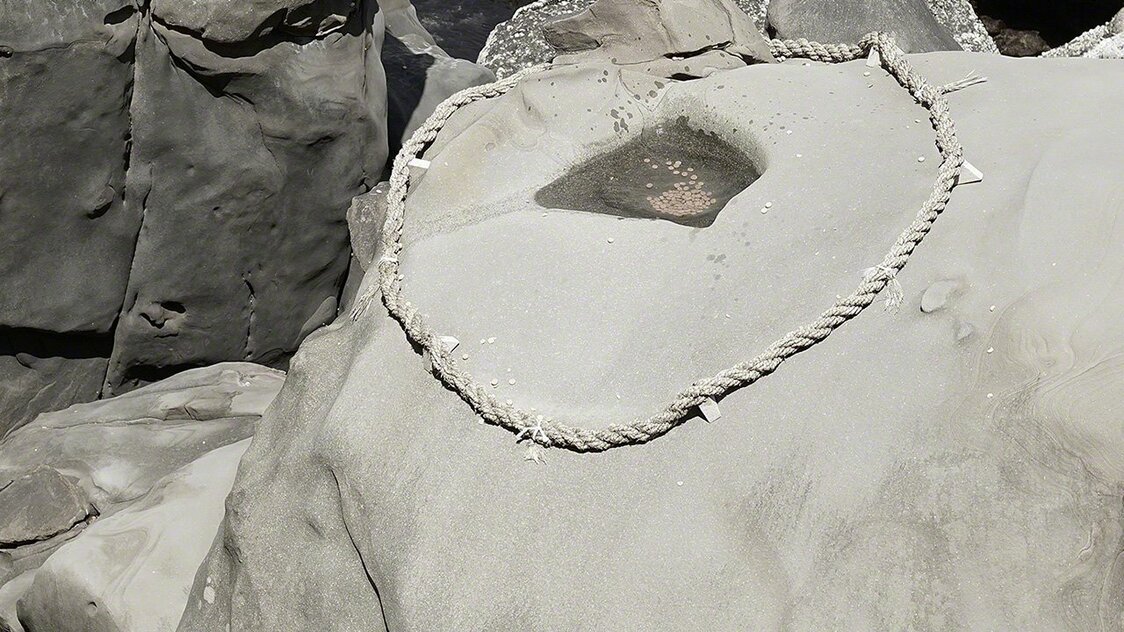
On the “back” of the turtle is a square indentation, encircled by a thick white shimenawa rope marking the presence of the divine. The tradition here is for visitors to throw “undama” or fortune stones—men with their left hand, women with their right. You make a wish before each throw; if your stone lands in the indentation, it is said, your wish will be granted. The stones are handmade by local schoolchildren, and proceeds from the donations go back to school fees and other expenses.
In the legend, Ugaya-fukiaezu grows up to become the father of four children, among them Kamu-yamato-iwarebiko, who as Jinmu Tennō is revered as the legendary first “emperor” of Japan. Various theories exist about his resting place, but a large burial mound at Ahirayama, close to Udozaki, has been a site of prayer and reverence since ancient times.
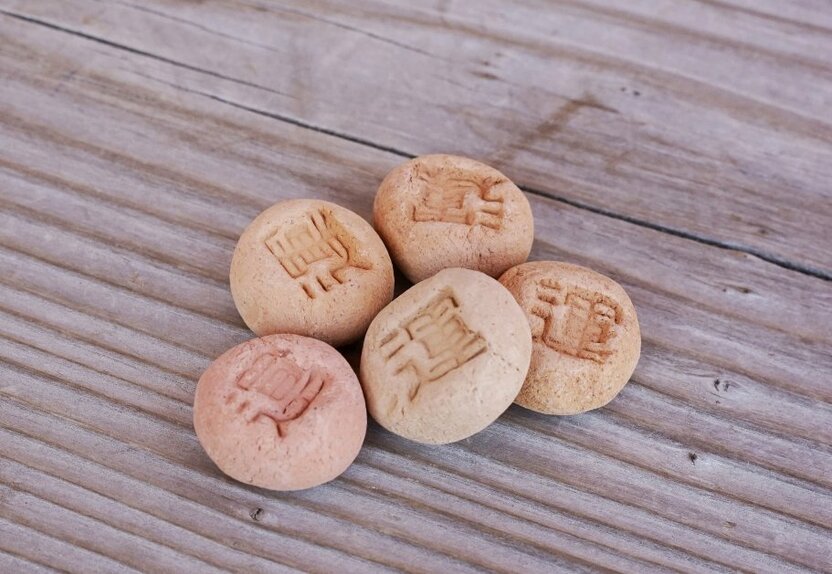 The tradition of throwing “fortune stones” in place of the coins that are tossed into donation boxes in Shintō shrines only dates back as far as the middle of the twentieth century. (© Ōsaka Hiroshi)
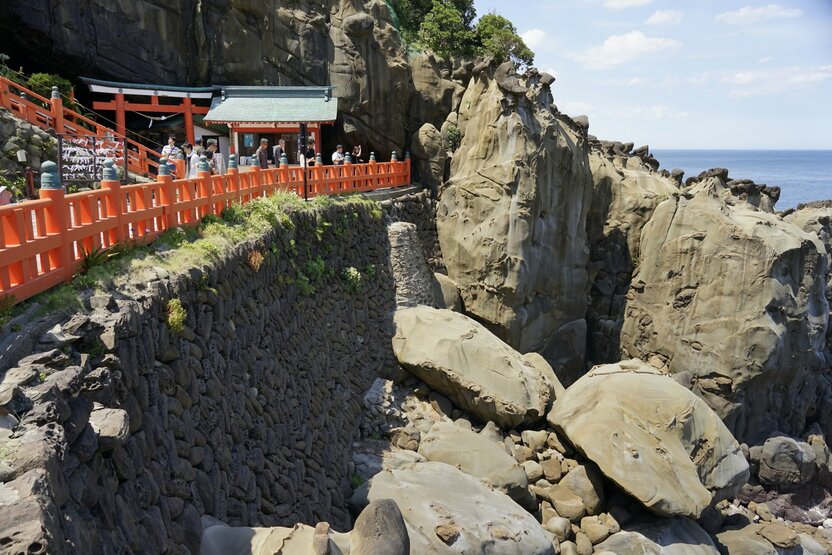 Visitors to the shrine attempt to land small “fortune stones” in a hole approximately 60 centimeters wide some 12 meters away from the cliff. (© Ōsaka Hiroshi)
Udo Shrine
- Sacred to: Hiko Nagi-satake Ugaya-fukiaezu no Mikoto
- Location: Miyaura 3232, Nichinan-shi, Miyazaki Prefecture
The origins of the shrine are unknown, but Udozaki itself has been regarded as a sacred space since prehistoric times. In 782, the Emperor Kanmu bestowed the name Gokokuji on a Buddhist temple here, as part of the official state recognition of Buddhism. The current name dates from the forced separation of Buddhism and Shintō during the early Meiji era (1868-1912). In 2017, the shrine precincts and surrounding area were designated as a place of outstanding natural beauty.
(Originally published in Japanese. Text and editing by Kitazaki Jirō. Banner photo: Turtle rock (kame-ishi) at Udo Shrine. Photo by Ōsaka Hiroshi.)


 Read in other languages