


Lattices and Folding Tables
Lattices are another prominent feature of Kyoto machiya. They evolved as a security measure during a period of social upheaval and military conflict triggered by the Ōnin War (1467–77). At first glance, all lattices appear the same, but a closer look reveals considerable variety in the arrangement and thickness of the latticework, usually reflecting the profession of the machiya owner.
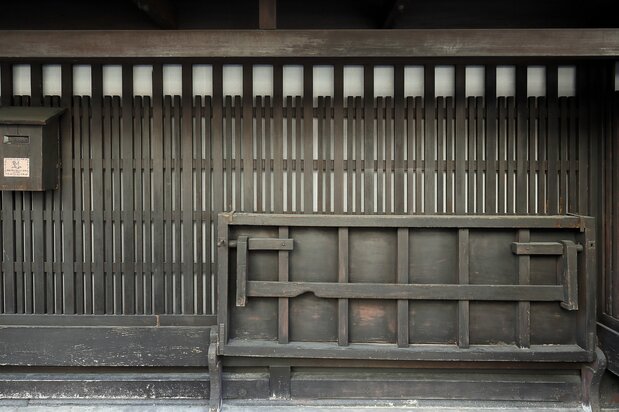
 A machiya with itoya lattices and a battari shōgi folding table (right). The latticework does not reach the ceiling so that sunlight can pass through.
Households engaged in dying, weaving, or selling textiles adopted itoya (yarn shop) lattices that let in sunlight from the top so that colors could be seen more clearly. Those dealing in sake casks, bales of rice, and other heavy items opted for sturdier sakaya (liquor shop) and komeya (rice shop) lattices. Shimotaya lattices, using narrower strips of wood, meanwhile, were for residents who had “closed shop.”
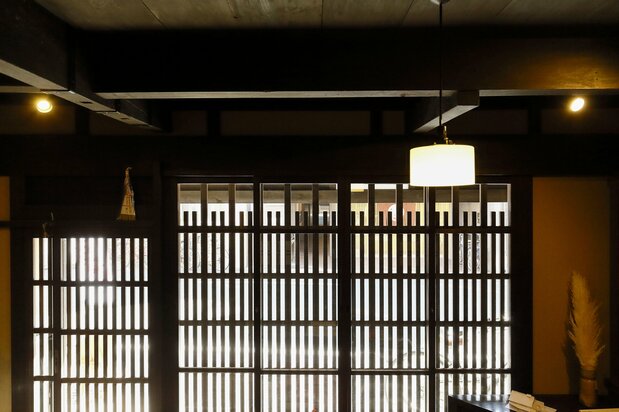 Lattices allow light to pass but keep probing eyes out.
There are a number of machiya that still have a battari shōgi, which are tables that can be folded up against the lattice. “When I was growing up, I would hear shop owners lowering their battari shōgi and lifting up the hajitomi shutters every morning,” says Matsui. But this, he says, has become a thing of the past.
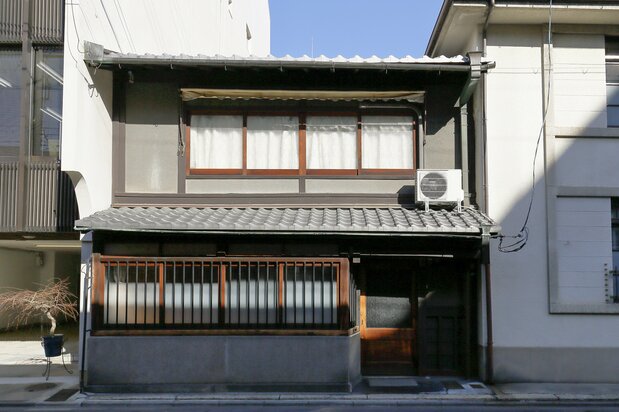 Early twentieth-century machiya replaced the lower half of the lattice with a concrete wall and wooden latticework with metal bars.
Fences for Dogs and Horses
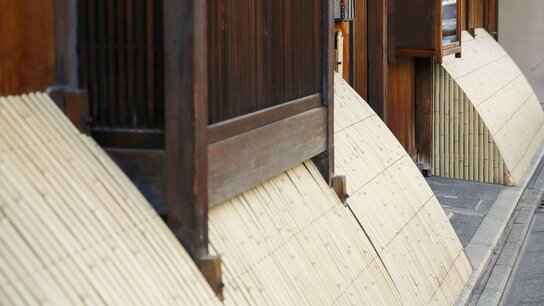
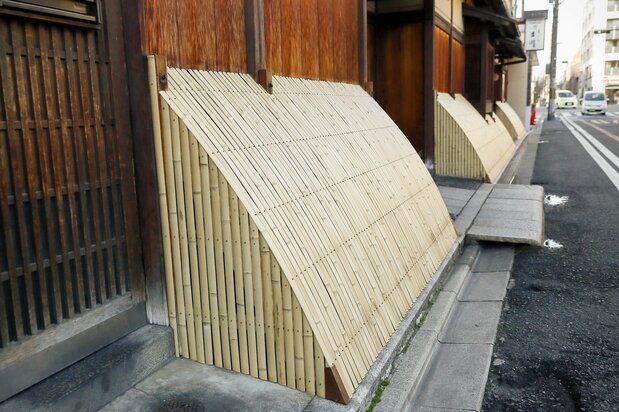 Inuyarai is not just a decorative element but has practical uses as well.
Protecting the lower walls and lattices of a machiya against rain, dirt, and urinating dogs are arched strips of bamboo called inuyarai (dog fence). A komayose (horse station), meanwhile, is a fence made of hardwood like chestnut or zelkova that creates space between the street and the house (thus keeping strangers away), although the name implies it was originally meant for tethering horses.
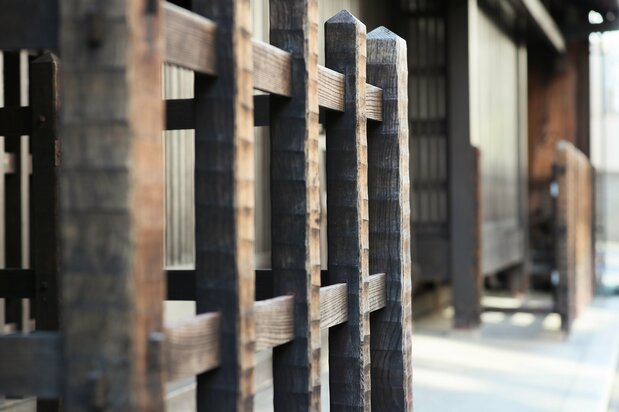 The surface of komayose beams is often decoratively carved with an adz.
Traditional machiya can be found in the old sections of Kyoto, including Gion, Nishijin, and along Shinmachi and Muromachi Streets in Nakagyō Ward. They may all seem similar on the surface but actually have design features that make each one unique. Looking for such differences can make a stroll through this historical city that much more enjoyable.
Related article › Kyoto’s “Machiya” Townhouses and Mindful Living
(Originally published in Japanese on April 26, 2018. Interview and text by Sugimoto Kyōko. Photos by Hamada Tomonori.)
(*1) ^ According to a survey of Kyoto machiya published by the city in May 2017.




 Read in other languages