


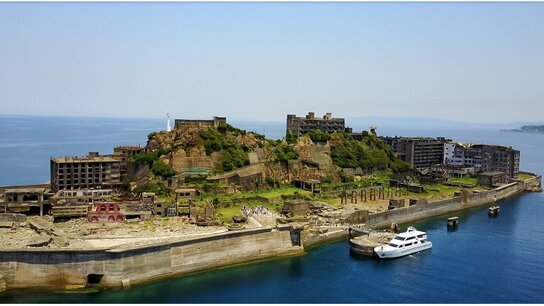
The island of Hashima, better known as Gunkanjima, or “Battleship Island,” is famed among lovers of urban decay. A Nagasaki tour operator offers cruises taking visitors to the island to view its ruins up close and learn about its history.
The Coal That Fueled Japan’s Industrialization
Hashima is an island 18.5 kilometers southwest of Nagasaki’s city center. It is commonly called Gunkanjima (“Battleship Island”), a nickname it gained from its resemblance to the Taishō era (1912–26) battleship Tosa. Nature is now reclaiming the island, left unpopulated since its coal mine closed in 1974, creating a landscape of ruined buildings amid vegetation, like something out of the Ghibli anime Castle in the Sky. Tours to the island are popular among fans of haikyo (abandoned buildings).
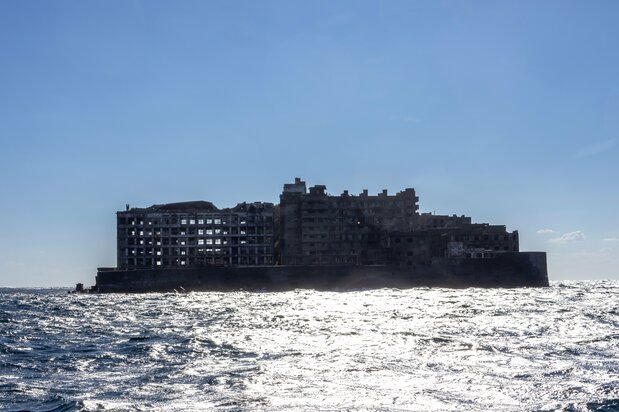
 Abandoned buildings huddle atop the Hashima bluffs. (© Nippon.com)
Originally, Hashima was a reef, with no vegetation. In 1890, it was developed into an artificial island to mine undersea coalfields by the Mitsubishi zaibatsu, founded by Iwasaki Yatarō. It supplied coal to the government-operated Yawata Steel Works in Fukuoka Prefecture, among other outfits, making a significant contribution to Mitsubishi’s prosperity and Japan’s modernization. Increasing demand for coal brought more workers and their families to the island, which was expanded repeatedly until it had tripled in area.
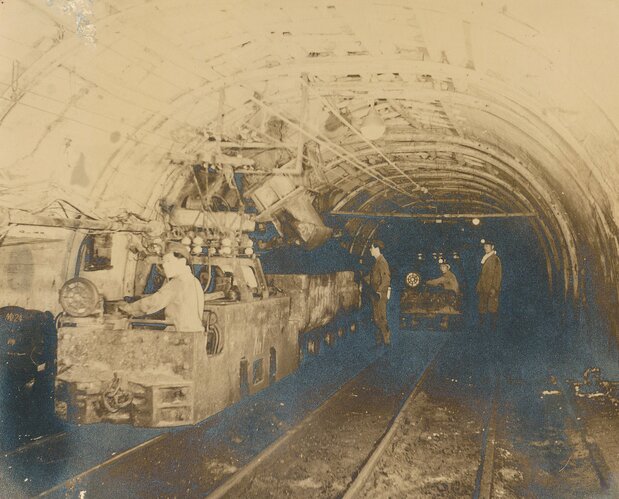 Workers in the mine tunnel. (© Gunkanjima Digital Museum)
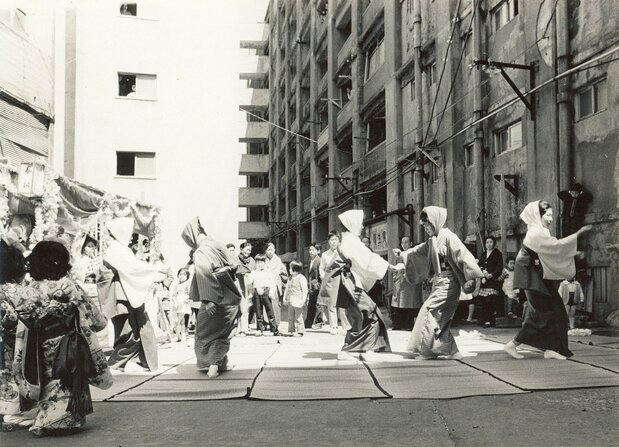 An island festival to pray for safety in the coal mine. (© Gunkanjima Digital Museum)
Over the years, Mitsubishi employed the latest civil engineering and construction technology to develop the infrastructure of the small, remote island. Hashima boasted many firsts, including Japan’s first seven-story reinforced concrete apartment building (completed in 1916) and the first undersea waterworks (1957). During Japan’s postwar rapid economic growth period, more than 30 reinforced concrete apartments were constructed, along with schools, a cinema, a pachinko parlor, a Buddhist temple, and a Shinto shrine. The artificial island was initially devoid of greenery, but from 1910 onward, crops were planted on apartment roofs. The high-rise complex here, with its introduced greenery, was a forerunner to modern compact cities.
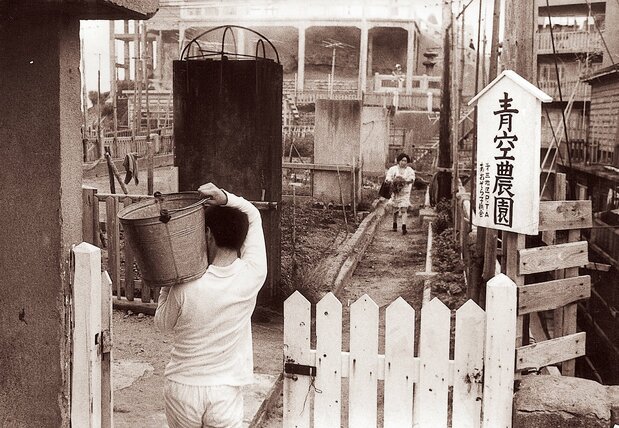 Japan’s first rooftop farm. (© Gunkanjima Digital Museum)
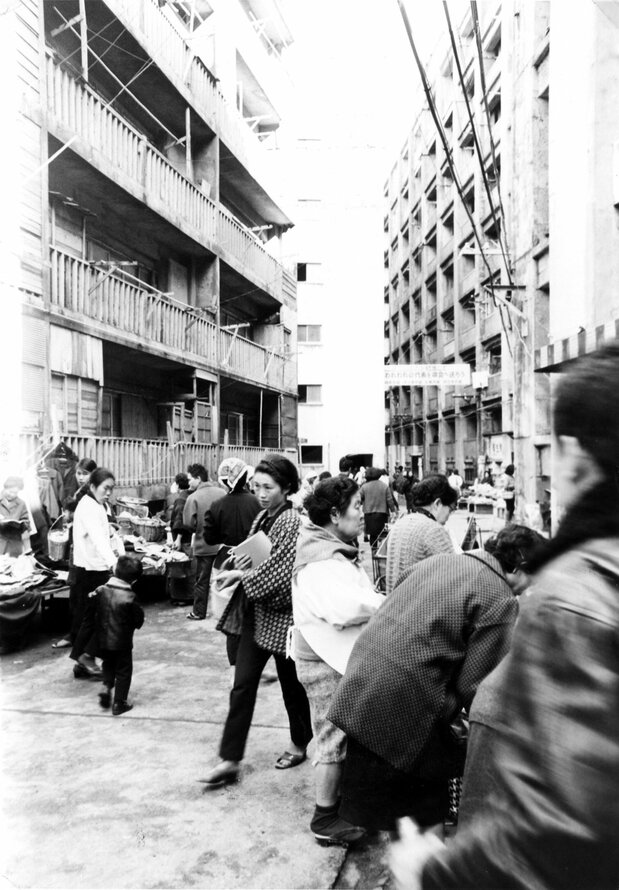 The busy Aozora Market. (© Gunkanjima Digital Museum)
In 1960, at its peak, with a total area of around 6.3 hectares, the island had a population of over 5,200, giving it a population density far exceeding that of Tokyo or New York at the time. The residents enjoyed a high standard of living; most owned televisions, for example, compared with just 10% of homes nationwide.
During Japan’s economic boom, the country shifted from coal to petroleum and natural gas as its main energy sources. As the island’s coal was used chiefly in steel production, though, demand remained high. But in 1964, a fire caused flooding of the main mine shaft. Faced with the difficulty of constructing a new mine, Mitsubishi deemed that the coal that could be mined safely was exhausted. Hashima Coal Mine, while still in the black, was closed in January 1974, and the island’s entire population departed by April, leaving it uninhabited.
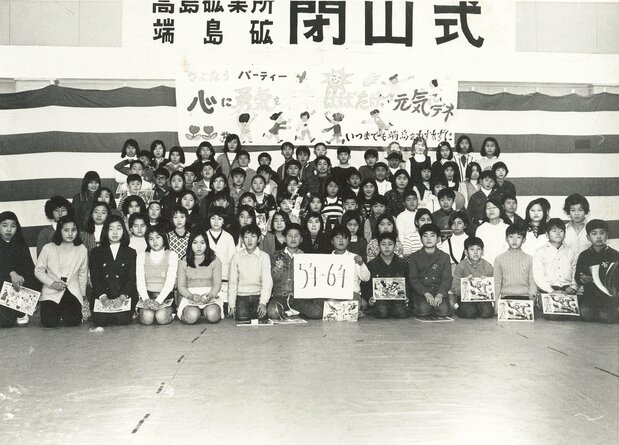 A farewell party held by the last elementary school students to live on the island. (© Gunkanjima Digital Museum)
The island began to attract attention again in the early 2000s. In 2001, ownership was transferred from Mitsubishi Group to the city of Nagasaki, and in 2008, it was placed on a UNESCO tentative list of world heritage sites. Tours for the general public were launched in 2009, and the stunning photos taken by visitors captured the imaginations of young people especially. The island was used as a location to shoot the 2015 Japanese live-action film Attack on Titan, further boosting its fame. In July 2015, the island was inscribed on the list of World Heritage as one of the Sites of Japan’s Meiji Industrial Revolution: Iron and Steel, Shipbuilding and Coal Mining.
A Tour of Hashima’s Industrial Revolution Heritage
In 2024, the island was featured in a Japanese television drama, The Sleeping Diamond in the Sea, set during the economic boom years. With its growing popularity, there are now five companies conducting tours of the island.
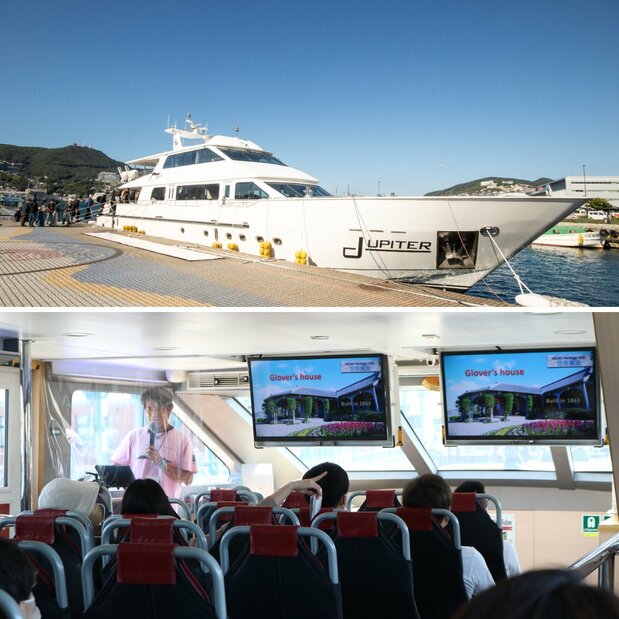 Above: The cruise boat operated by Gunkanjima Concierge. The upper deck offers excellent views, a souvenir shop, and other services. Below: Monitors installed in the passenger cabin show footage of Nagasaki’s world heritage, with English subtitles. (© Gunkanjima Concierge)
Gunkanjima Concierge promotes its cruise as a tour of the Nagasaki area’s Industrial Revolution heritage. It has two departures daily from the Tokiwa Terminal, located close to Glover House, a Western residence that belongs to the same group of World Heritage sites. From the boat, passengers can see Japan’s oldest operating electric crane (dating to 1909), the Western-style reception hall (1904), used to welcome guests from Japan and abroad, and other facilities in the Mitsubishi Heavy Industries Nagasaki Shipyard, which is not open to the public. En route, the boat passes another island, Takashima, where Thomas Glover (who built Glover House) helped to develop a coal mine, later acquired by Mitsubishi. The absorbing commentary makes the 40-minute trip pass quickly.
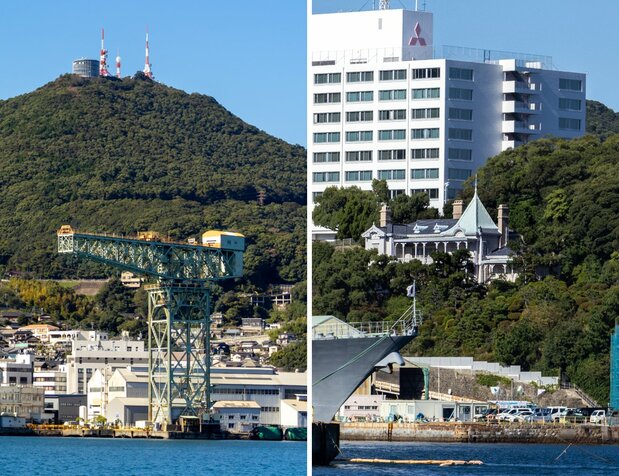 Left: The 62-meter high giant cantilever crane. Right: Senshōkaku, a Western-style reception building, overlooks Nagasaki Port from high above. (© Nippon.com)
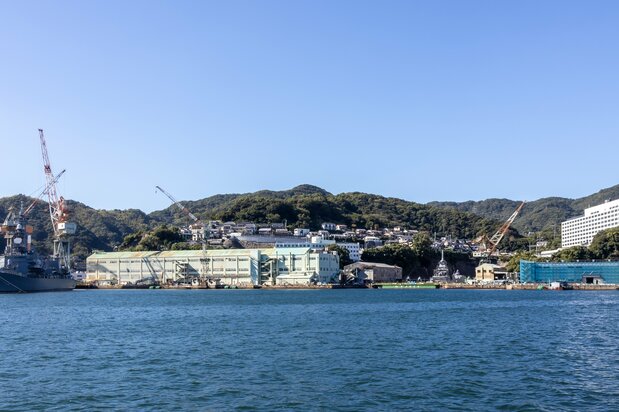 The green water gate (center-right) leads to the shipbuilding and repair docks. This is another piece of Industrial Revolution heritage. (© Nippon.com)
Finally, farther out to sea, Gunkanjima appears. The Meiji era stonework construction of the island was later reinforced with a 15-meter concrete seawall. This wall and the mine shaft, descending 1,000 meters undersea, constitute the buffer zone protecting this World Heritage component site.
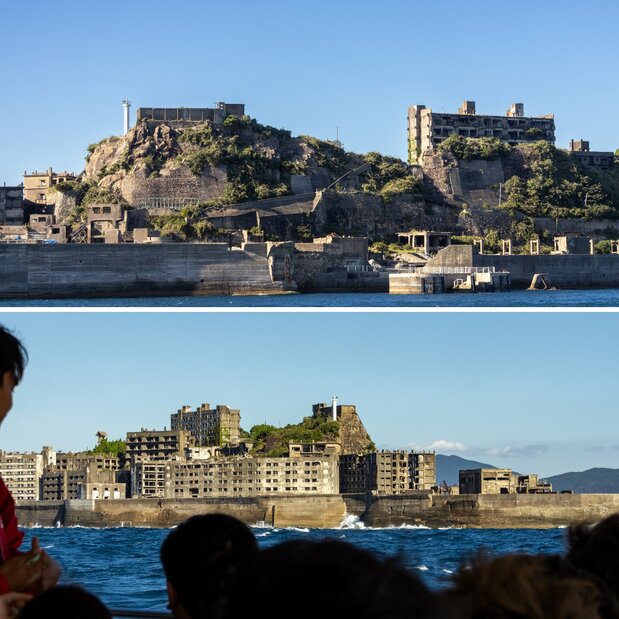 Above: In the right foreground is the berthing facility. The lighthouse on the hilltop was built after the island was deserted. Below: The seawall has suffered damage from high rough seas, revealing some of the old stonework. (© Nippon.com)
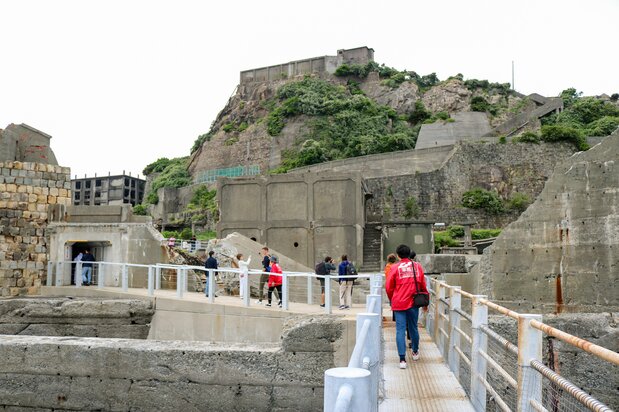 The island tour begins at the wharf and visits some of the mining facilities. (© Gunkanjima Concierge)
The tour lasts 40–50 minutes. Tourists walk with the guide about 220 meters to the location of the former mining facilities. They see the entry to the mine shaft, which had an elevator taking miners down 600 meters, and the main office, which had a communal bath for the miners, before visiting Apartment Block 30. This is Japan’s oldest reinforced concrete apartment building, but it has decayed to the point where it could collapse at any time. The decrepit buildings are far more impressive and melancholic viewed up-close.
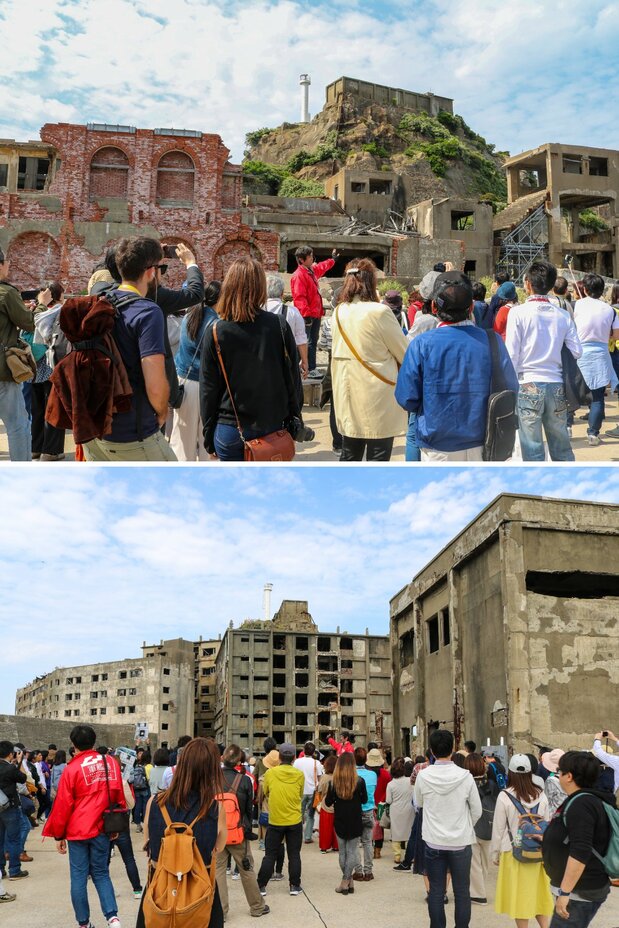 Above: The former main office, at left, stands near the entrance to the mine shaft pier at right. Below: A guide gives an explanation in front of Apartment Block 30. (© Gunkanjima Concierge)
Entry to the former residential area is prohibited due to the risk of building collapse. On rare occasions, high waves prevent the tour boat from landing, in which case it circumnavigates the island instead. The return trip to the mainland gives visitors time to ponder the ruins they saw.
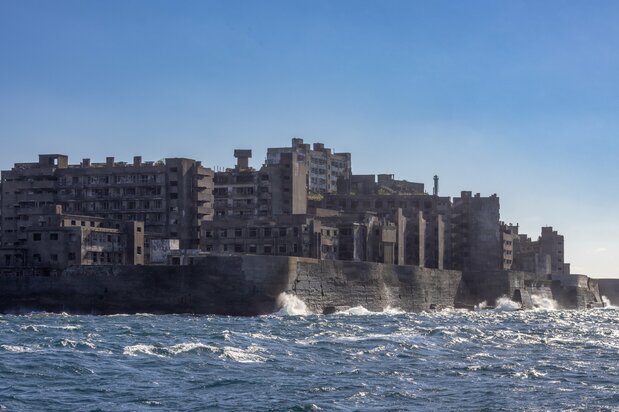 When landing is impossible, the boat circumnavigates the island, allowing passengers a good look at its western side. (© Nippon.com)
Virtual Tours of the Ruins
The Gunkanjima Concierge tour includes entry to the Gunkanjima Digital Museum. The facility is a five-minute walk from the boat terminal, and is a great place to learn about the island before or after visiting.
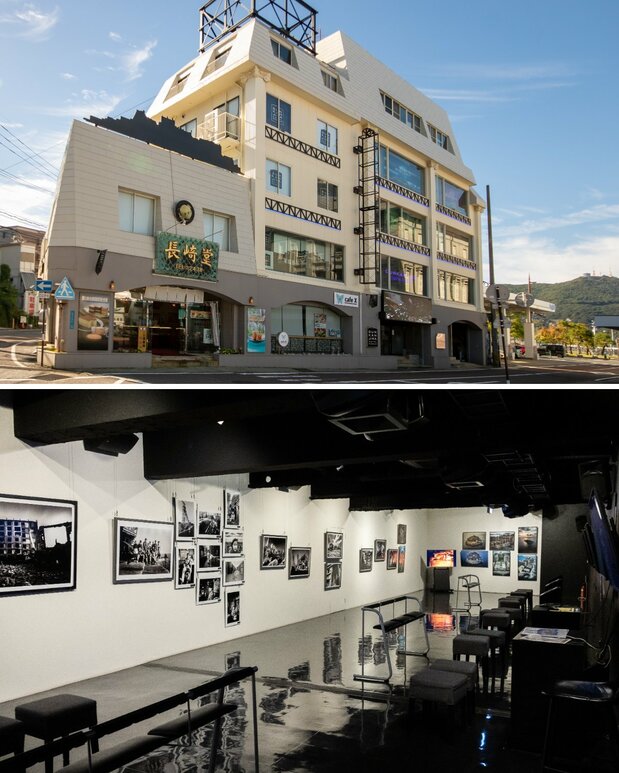 Above: The four-story high museum also has a café. Below: Gallery of photos by a former island resident who lived in Apartment Block 30 in 1972. (© Nippon.com)
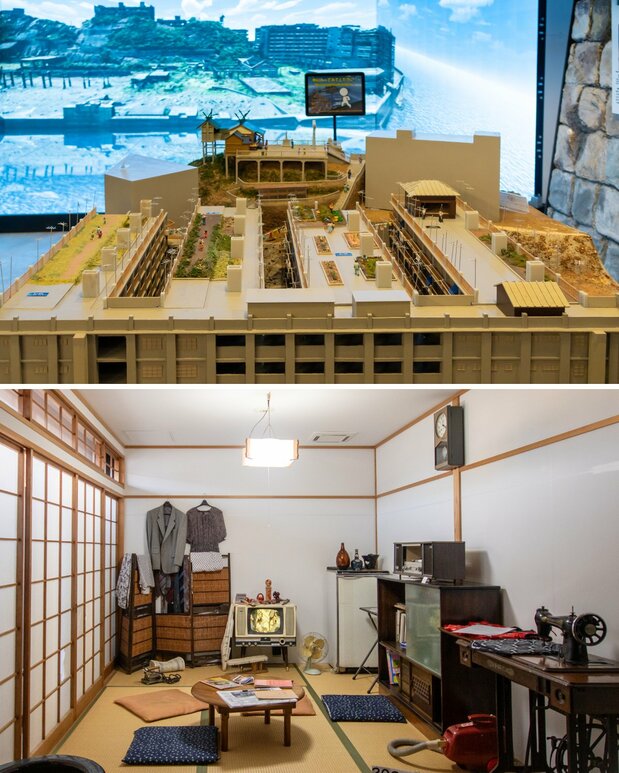 Above: A model of an apartment building with a rooftop farm. Below: A reproduction of a late-1950s apartment interior. (© Nippon.com)
The museum preserves a range of materials donated by former island residents and an extensive digital display. There is a virtual reality section that uses drone footage, allowing visitors to view the ruined town from above. Visitors to Nagasaki unable to go to the island can get a taste of it with a visit to the museum—and perhaps the Glover Garden nearby.
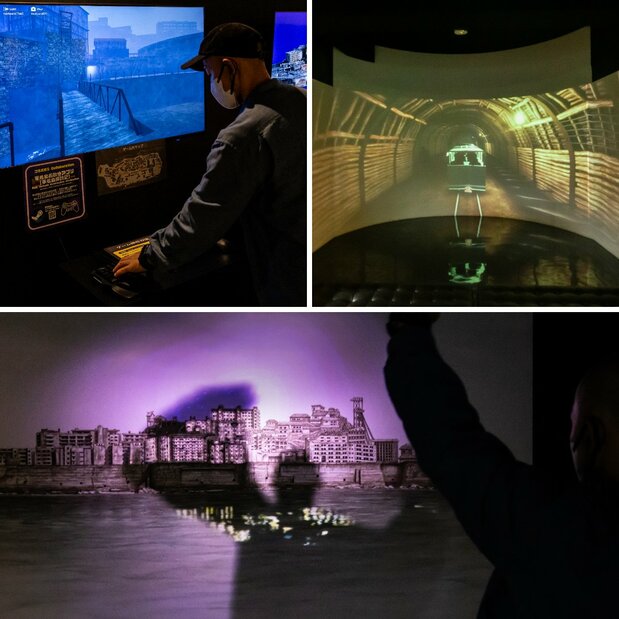 Clockwise from top left: A 3D CG recreation of Gunkanjima immediately after the mine closure; “Road to the Coal Mining Point,” a virtual experience of the elevator and trolley journey to the coal face; “Wonder Island,” an interactive display that lights up when a shadow is cast upon it. (© Nippon.com)
With the cooperation of the Nagasaki city government, Gunkanjima Concierge plans to launch special tours of the island’s residential area in 2025. The apartment buildings, which reflect the developments of early modern Japan and its boom era, are gradually weathering away. A visit to these Shōwa era ruins is a once-in-a-lifetime opportunity.
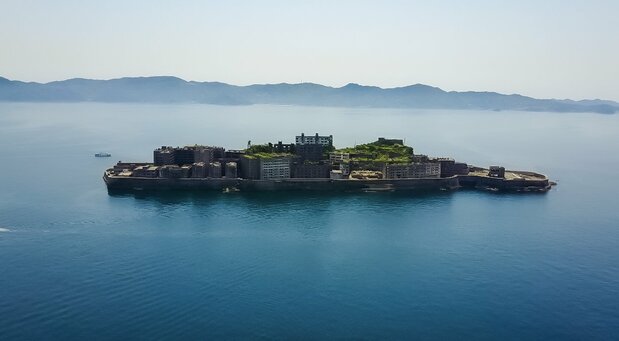 The island’s landscape is constantly changing. (© Gunkanjima Concierge)
For tour details and reservations, visit the Gunkanjima Concierge official website
(Originally published in Japanese. Report, text, and photos by Nippon.com. Banner photo © Gunkanjima Concierge.)


 Read in other languages