-
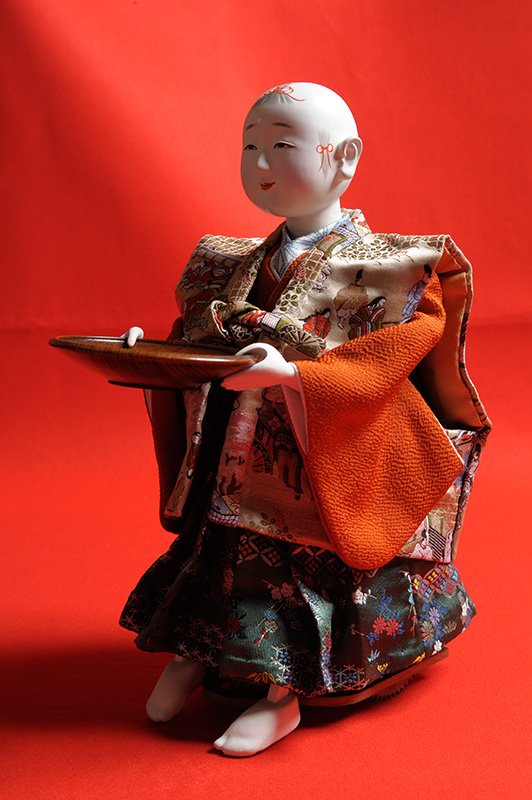
Placing a cup on the saucer of the tea-serving doll causes it to clack forward. Its gentle face and prim kimono belie the intricate clockwork motor hidden inside.
-
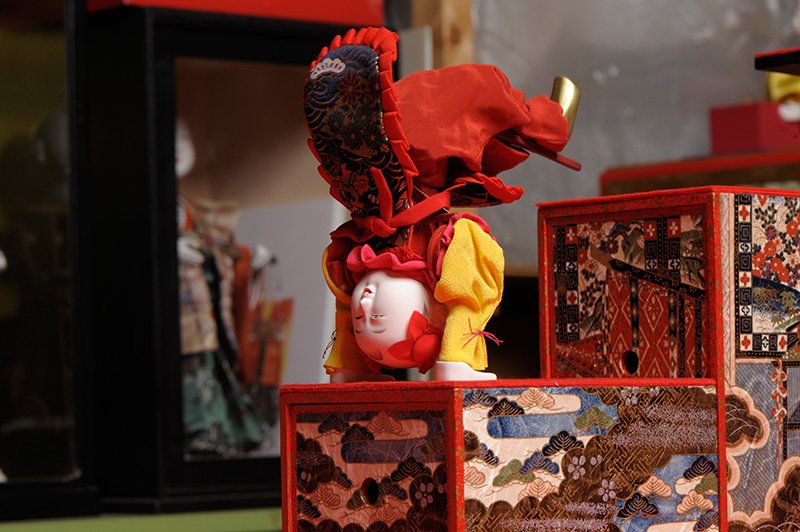
The stair-walking doll somersaults its way down several steps.
-
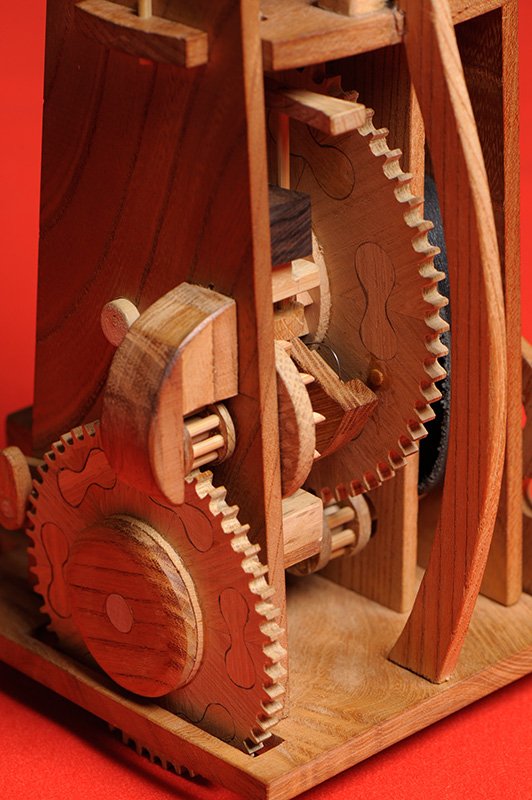
The gears of the clockwork inside karakuri ningyō are carved from wood, rather than using metal. If the grain on the wooden gears is aligned poorly, the teeth can break off, so instead of carving the teeth directly into the gears, tiny wooden triangles are affixed to the wooden wheels—a technique adapted from traditional Japanese handicrafts.
-
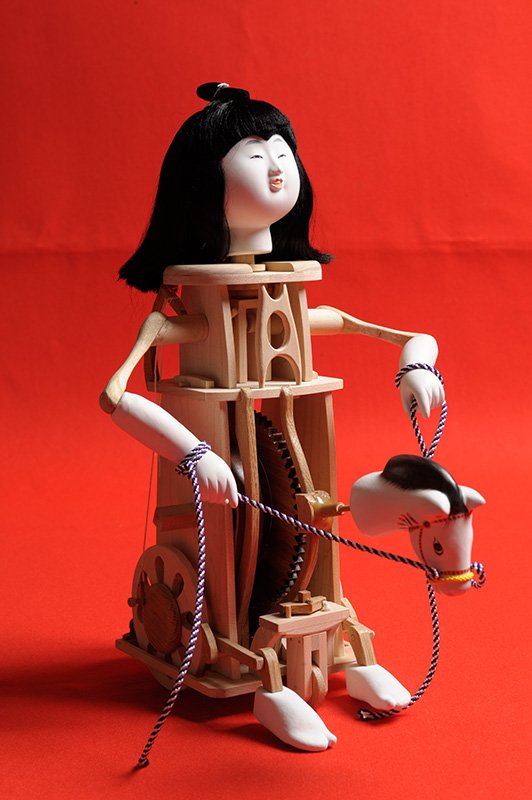
A harukoma ningyō (toy-horse rider doll); as the rider moves, it pulls the reins, swinging the horse’s head from side to side, creating a realistic impression of horse riding.
-
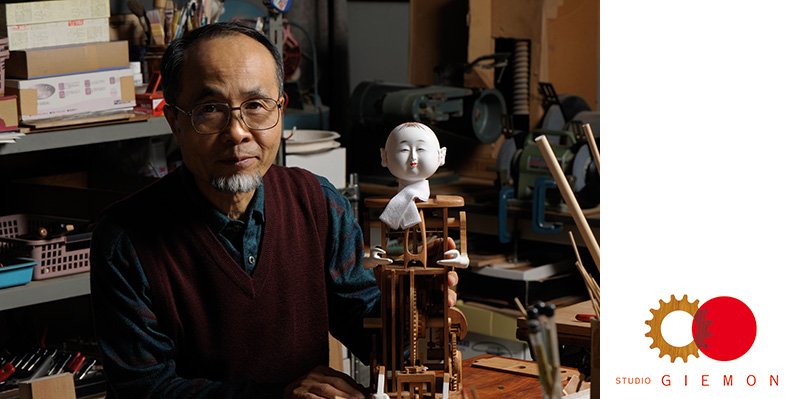
Han’ya Harumitsu, a karakuri ningyō artisan. After discovering mechanical dolls, he left his job as an industrial technology researcher to dedicate himself to their revival. Recently he has created a complete dramatic production using mechanical dolls.


 Read in other languages