-
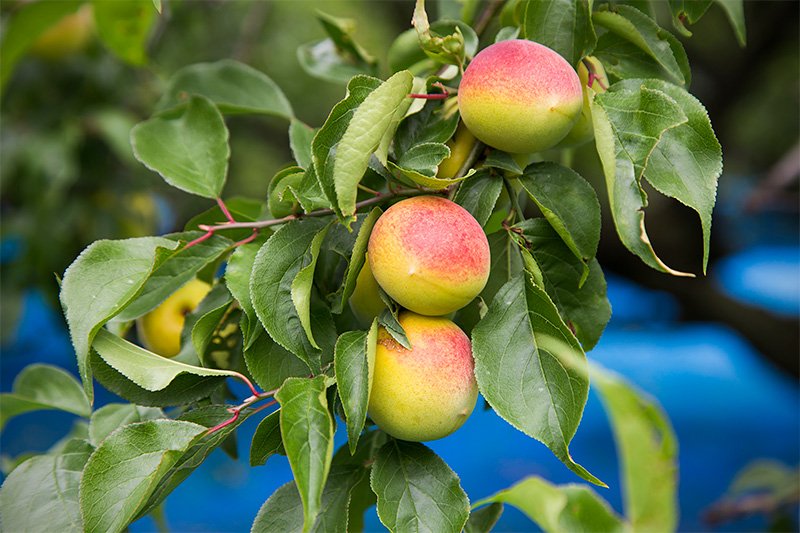
The fruit of the Nankō-ume starts to ripen around May, eventually turning yellow all over.
-
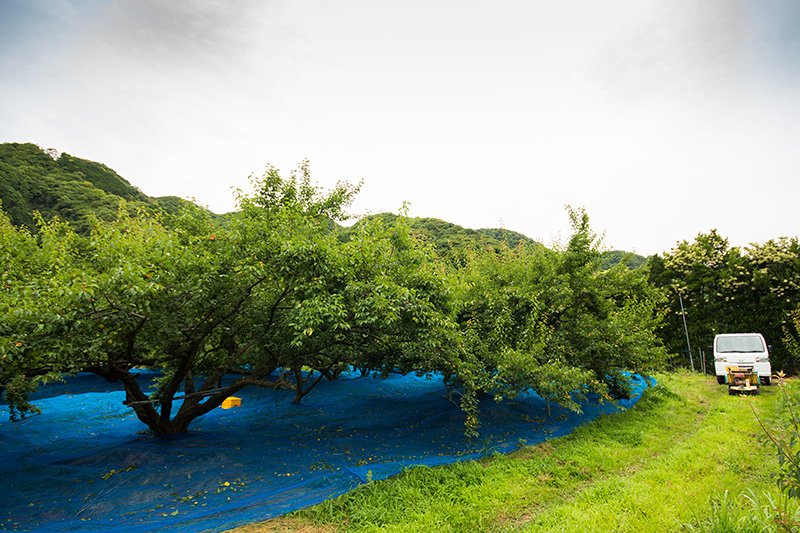
The sweet scent of ripe fruit fills the air around the orchards at harvest time.
-
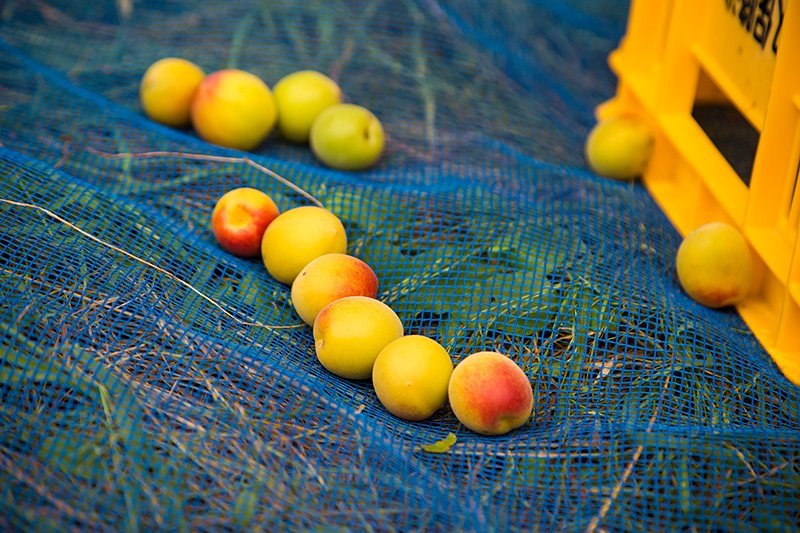
Ripe fruit that has fallen to the ground, touched red in places by the late spring sun.
-

Workers collect fallen plums. A monorail hopper is used to transport the harvested fruit.
-

Newly harvested plums.
-
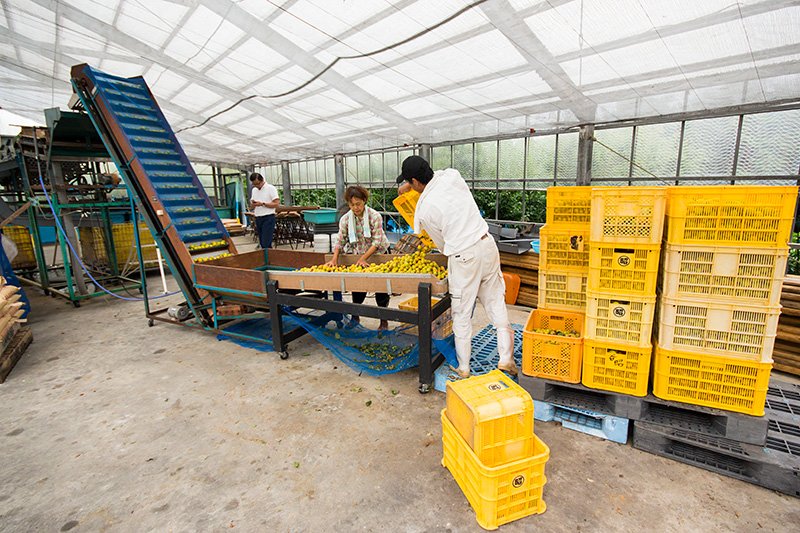
Workers check by hand for damaged or imperfect fruit.
-
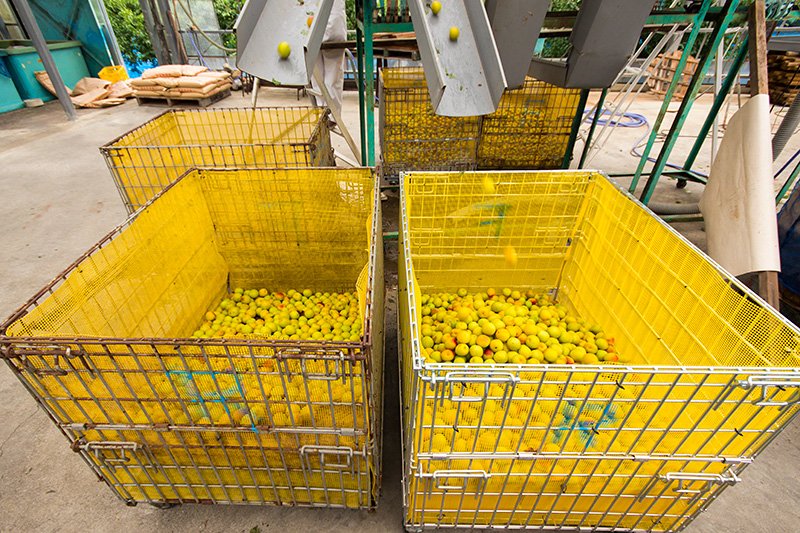
Plums are sorted by machine according to size.
-
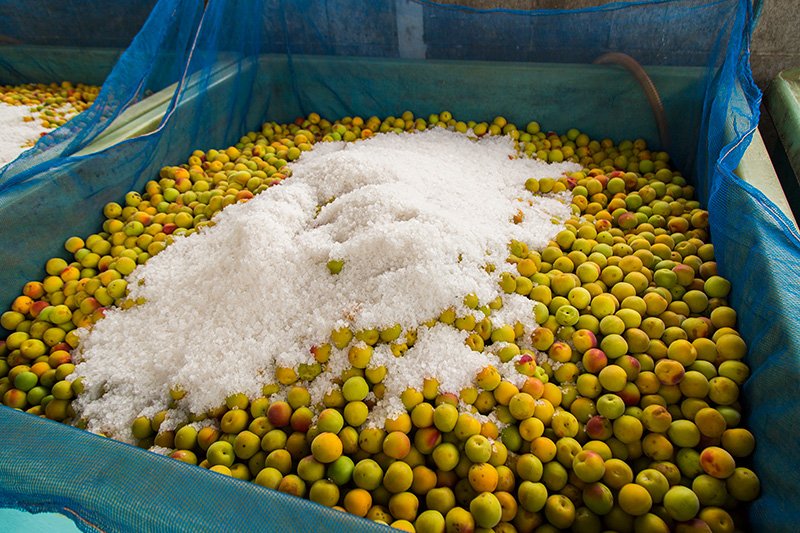
Coarse, natural salt is added to ume. After four or five days, the tank will be full of plum vinegar.
-
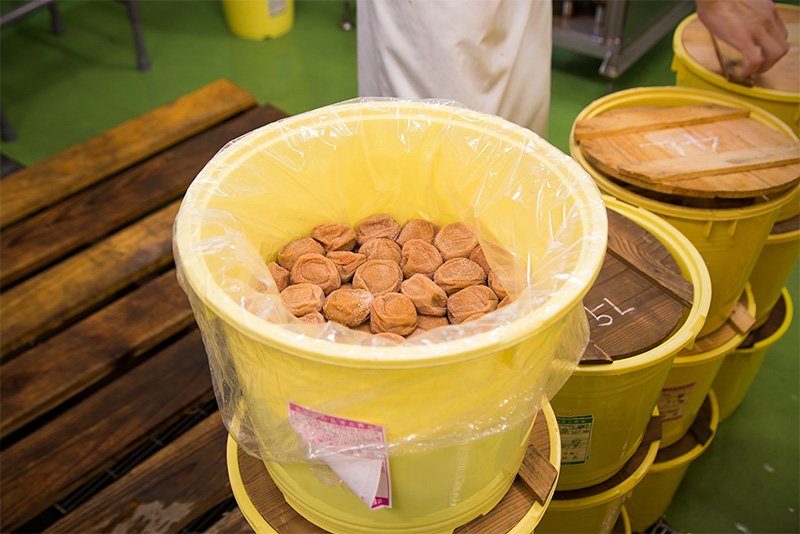
Shira-boshi pickled plums ready for delivery to Shōkibai. The plums will keep for years if stored in an air-tight container and kept in a cool, dark place.
-
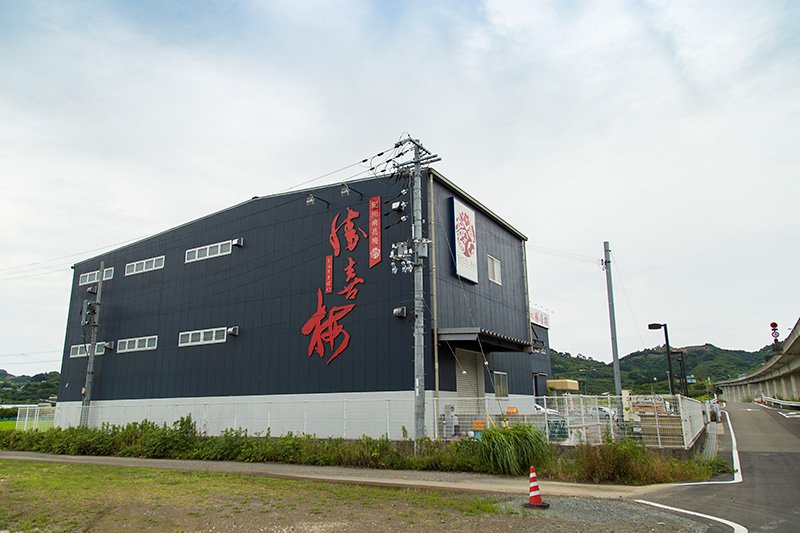
Shōkibai’s processing plant in Minabe.
-
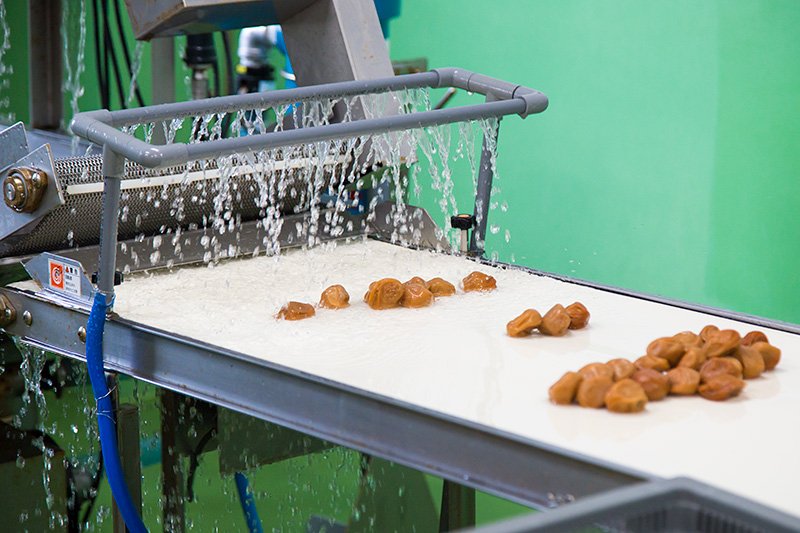
Shōkibai’s pickled plum showers in action.
-
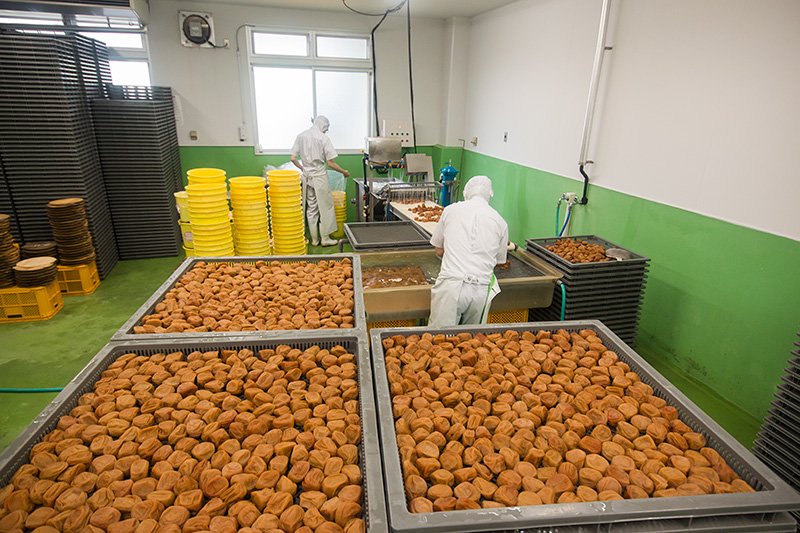
Each plum is individually washed by hand.
-
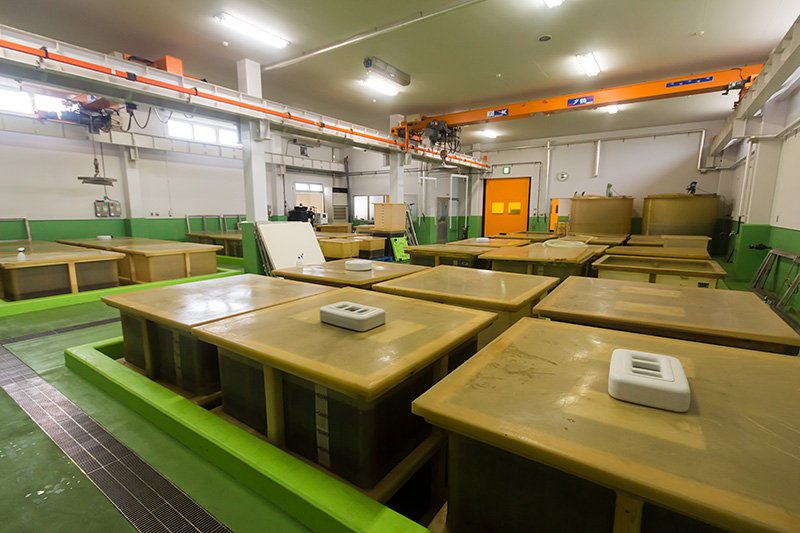
Inside tanks salt levels of umeboshi are adjusted and flavorings such as honey and shiso (perilla) are added.
-
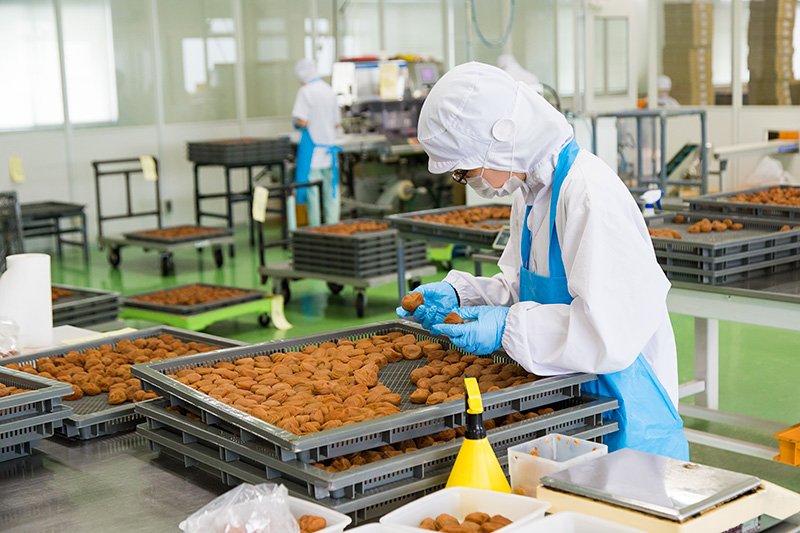
After flavoring, the umeboshi are given a final once-over before packaging.
-
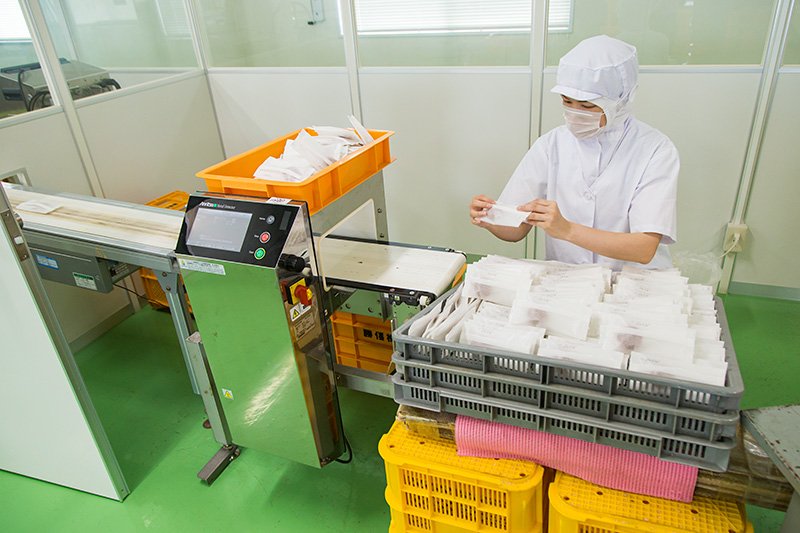
After a final check, the umeboshi are individually packaged.
-
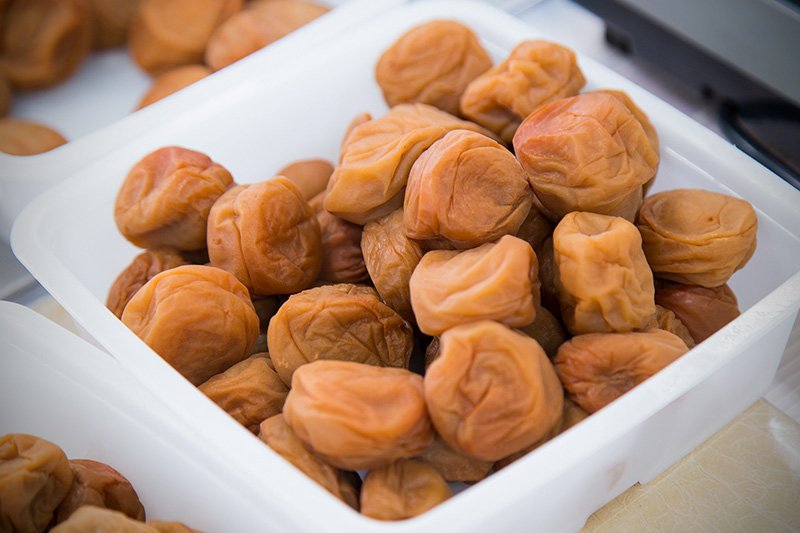
Umeboshi flavored with honey await packaging. Additional flavoring reduces the fierce sourness and gives the plums a delicate sweetness.
-
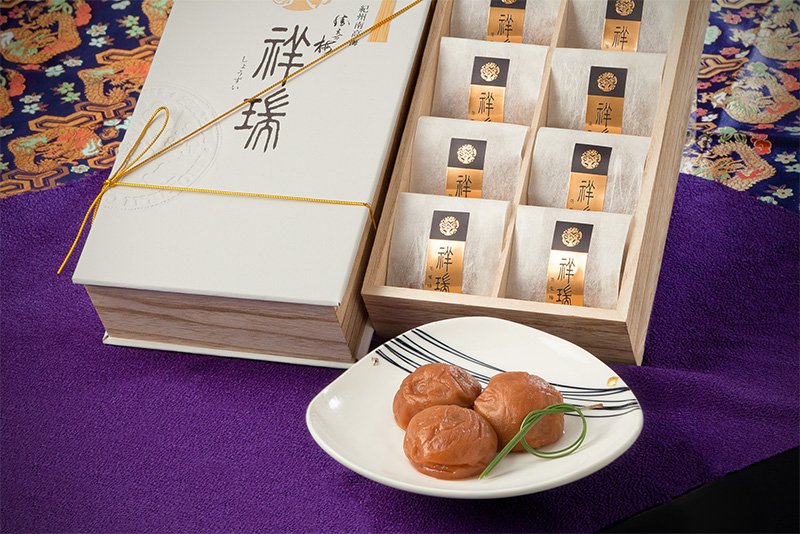
The Shōzui is the king of umeboshi, a 5L size fruit with a diameter of at least 48 millimeters. A packet of ten of these super-deluxe umeboshi will set you back ¥5,400. (Photo courtesy of Shōkibai)


 Read in other languages