-

A worker at soy sauce brewer Ishimago in Yuzawa, Akita Prefecture, uses a shovel to mix steamed soybeans and roasted wheat with tane-kōji. The mixture will be packed into shallow wooden boxes and set to ferment in the kōji-muro.
-
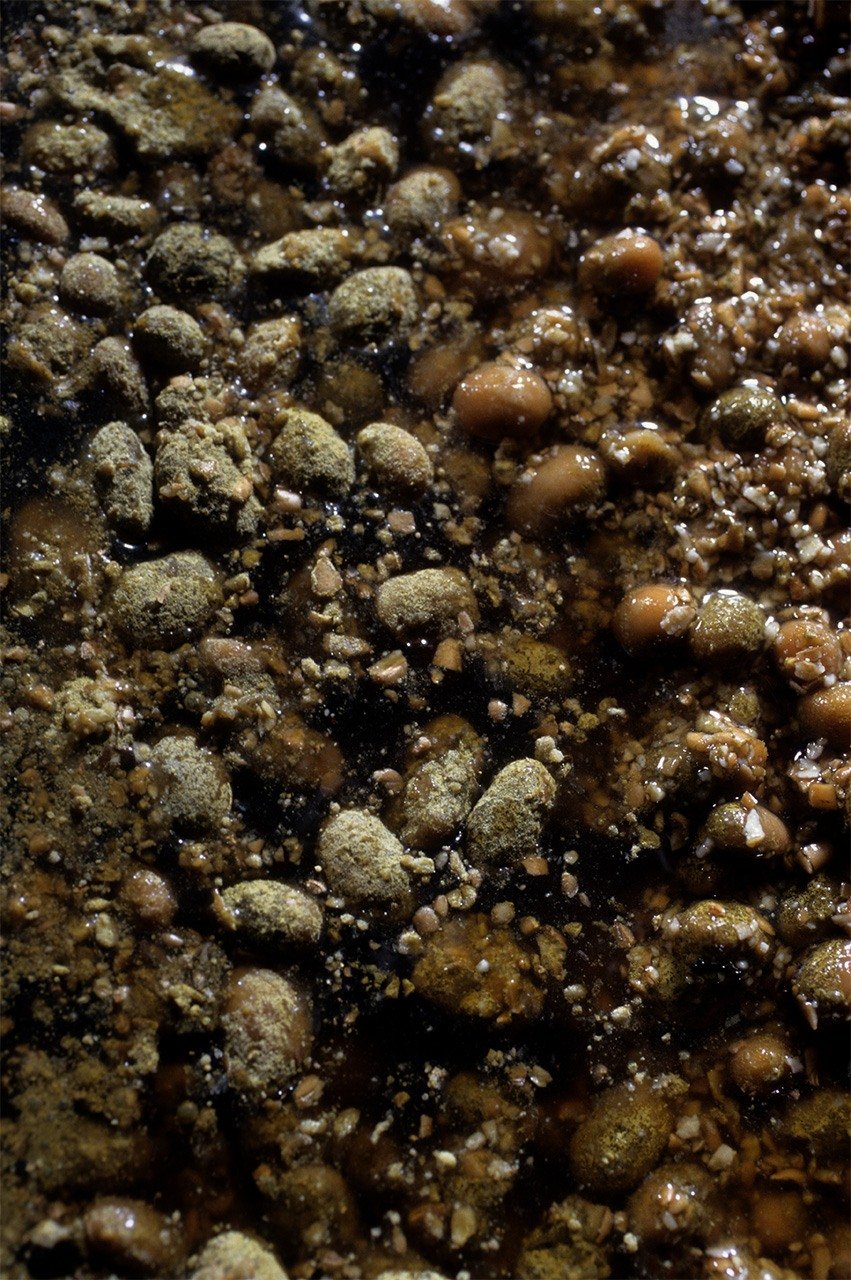
Two-week old moromi is mostly odorless and has a strong salty flavor.
-
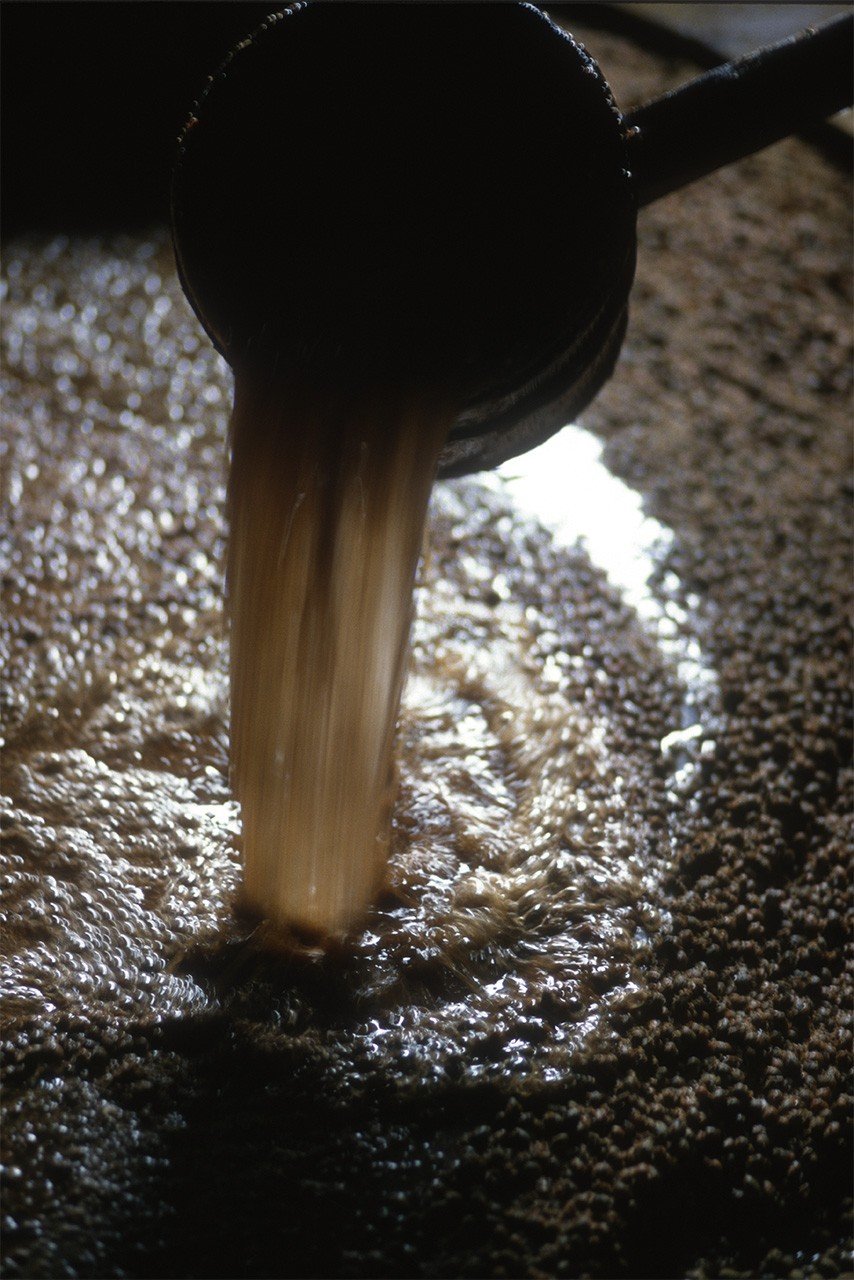
For two months, the mash is stirred twice a day to keep the contents mixed and to prevent a crust from forming on the surface.
-
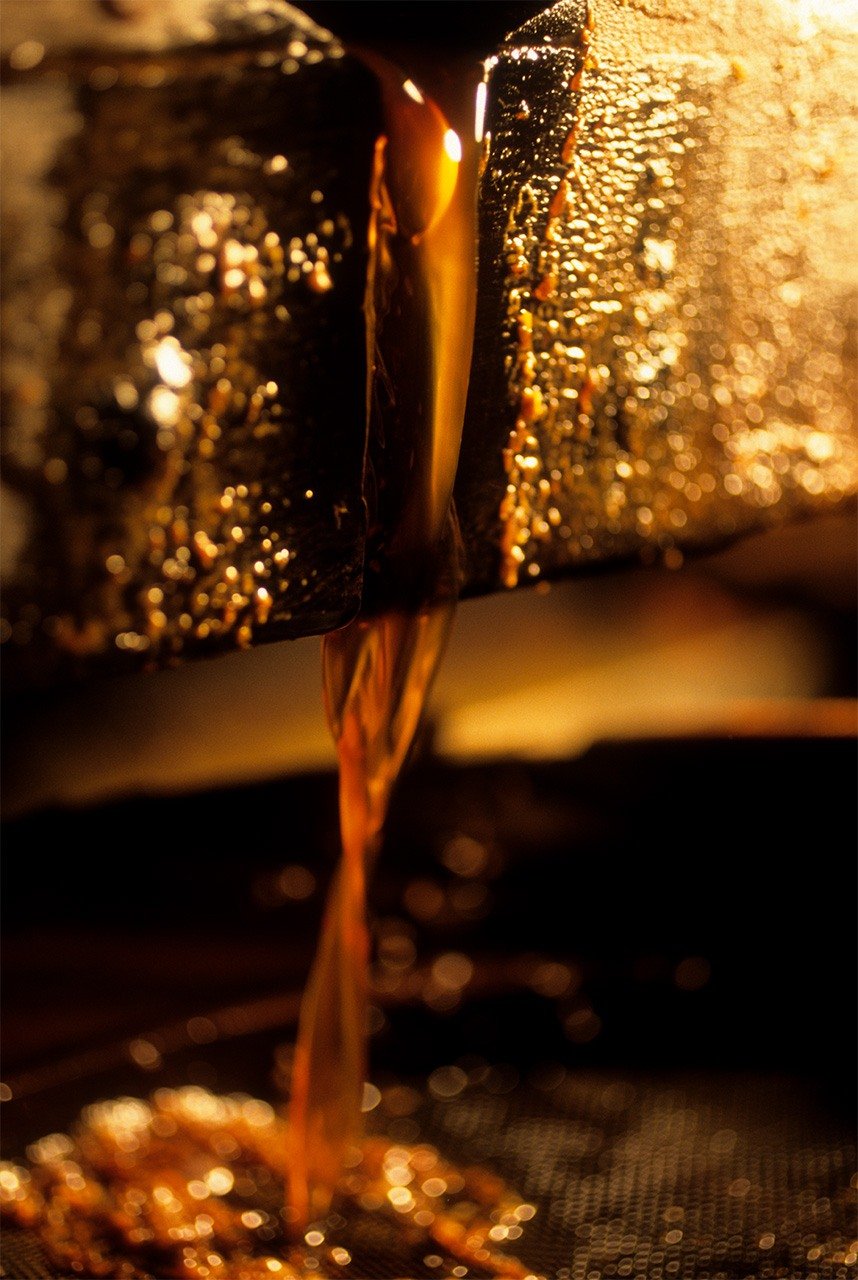
At the end of fermentation, the mixture is pressed and the raw soy sauce collected.
-

Brewing at Ishimago takes place in old-style warehouses dating back over a hundred years. The five structures are registered as important tangible cultural properties.
-
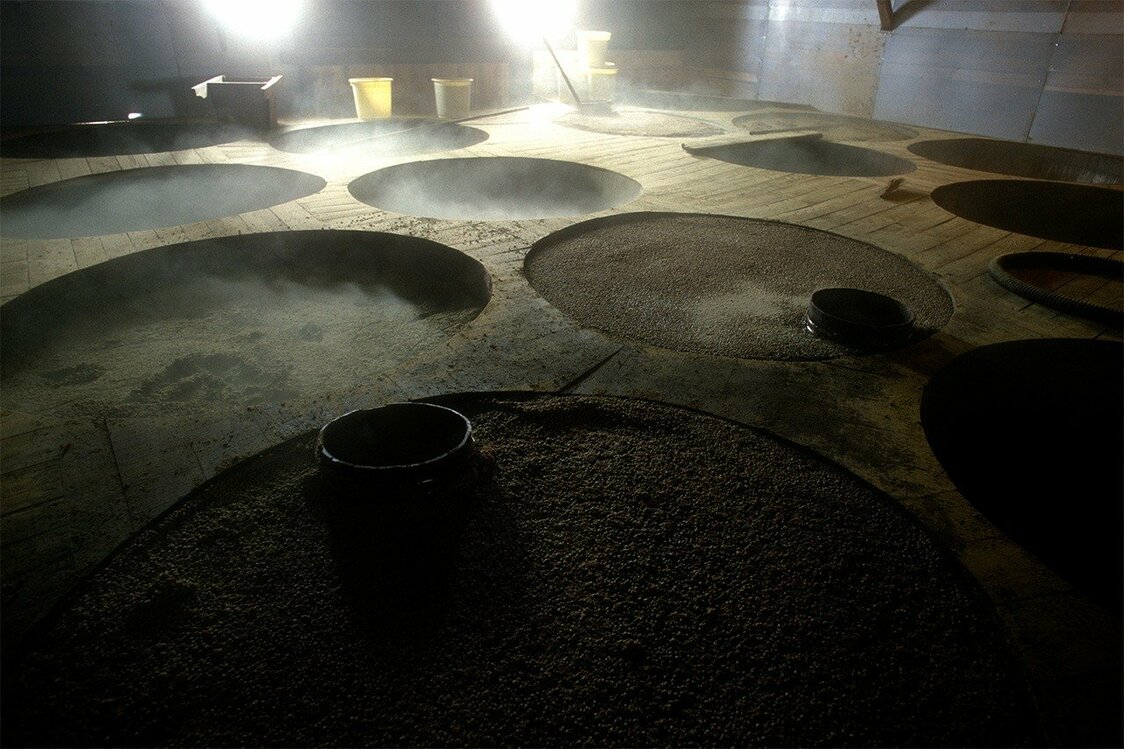
Wooden vats of moromi mash ferment slowly.
-
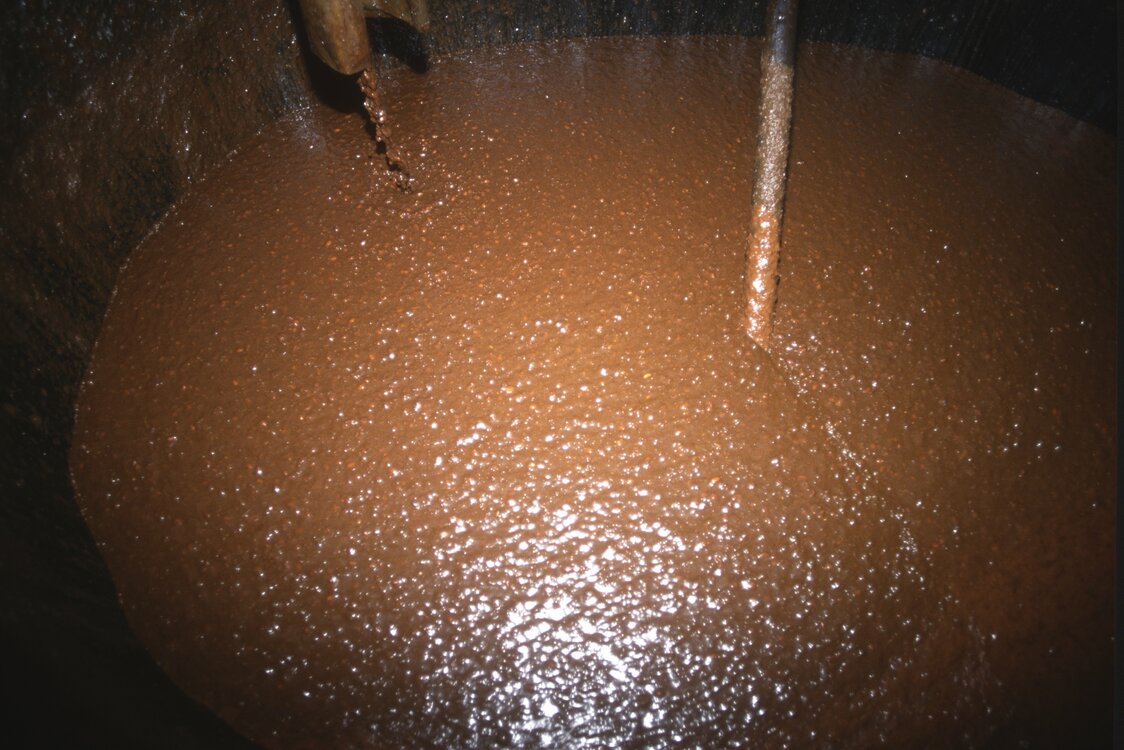
The mash is mixed with a special stirring stick called a kaibō. After six months, the soybeans and wheat have dissolved into a dark brown mixture.
-
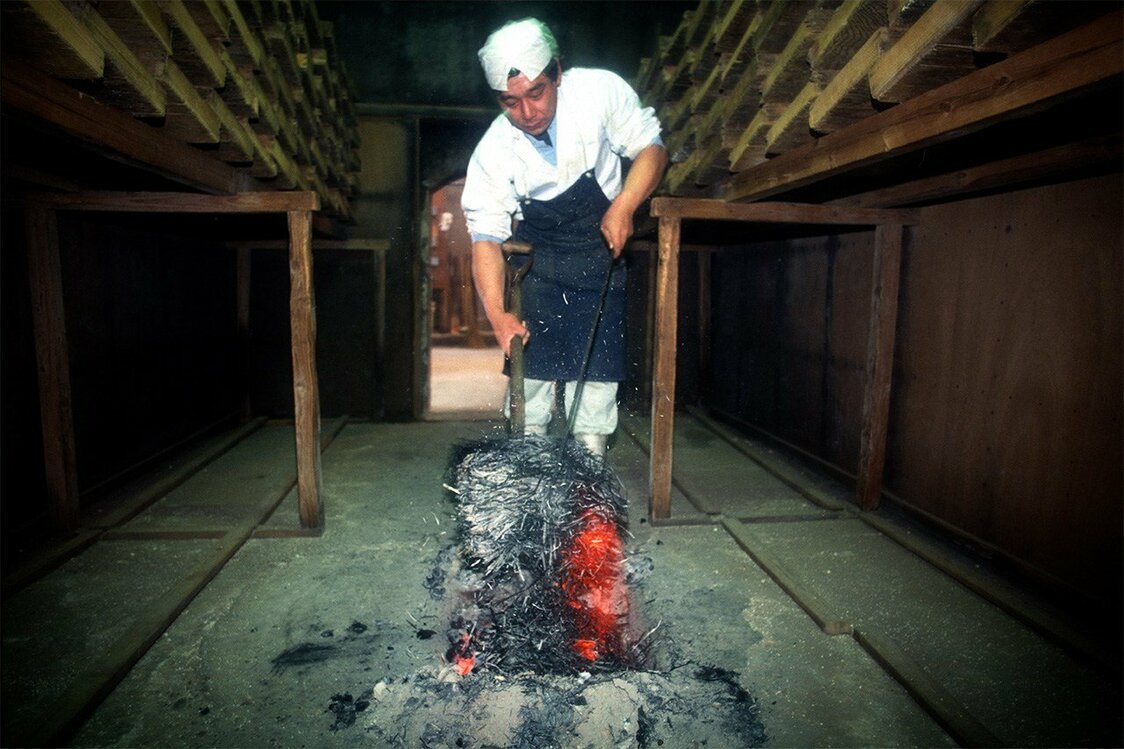
A worker covers glowing embers with straw ash to heat the kōji-muro.
-
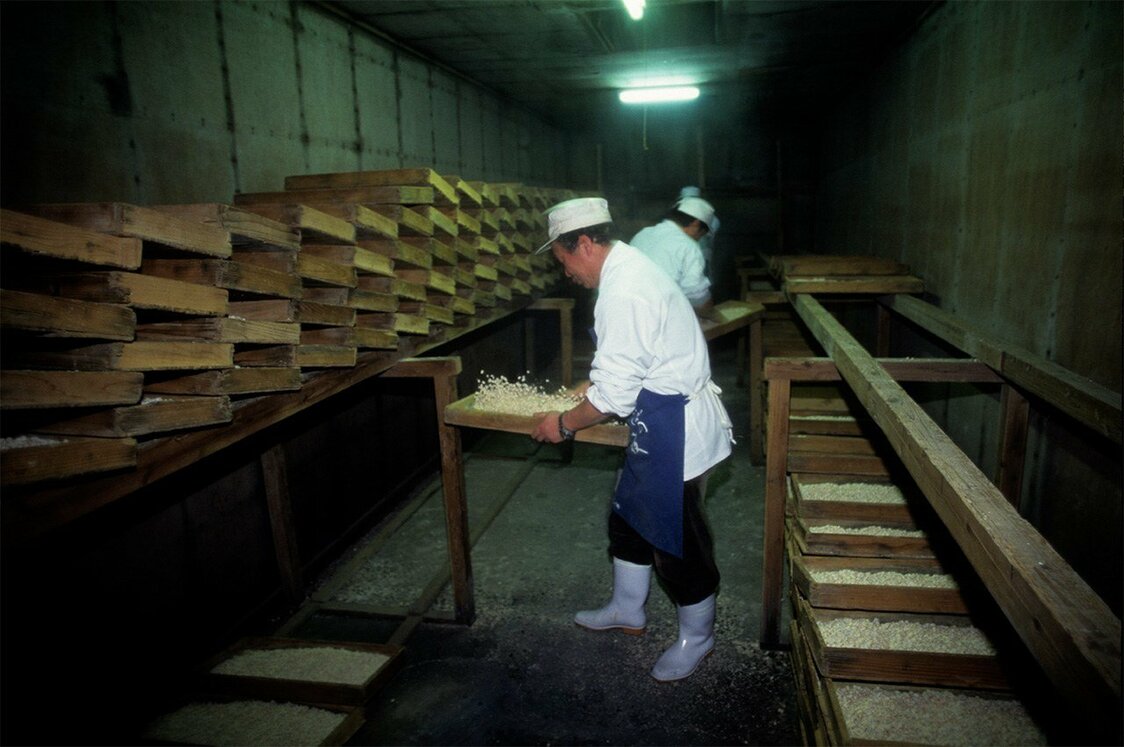
Workers in the kōji-muro one by one mix and rearrange the trays.
-
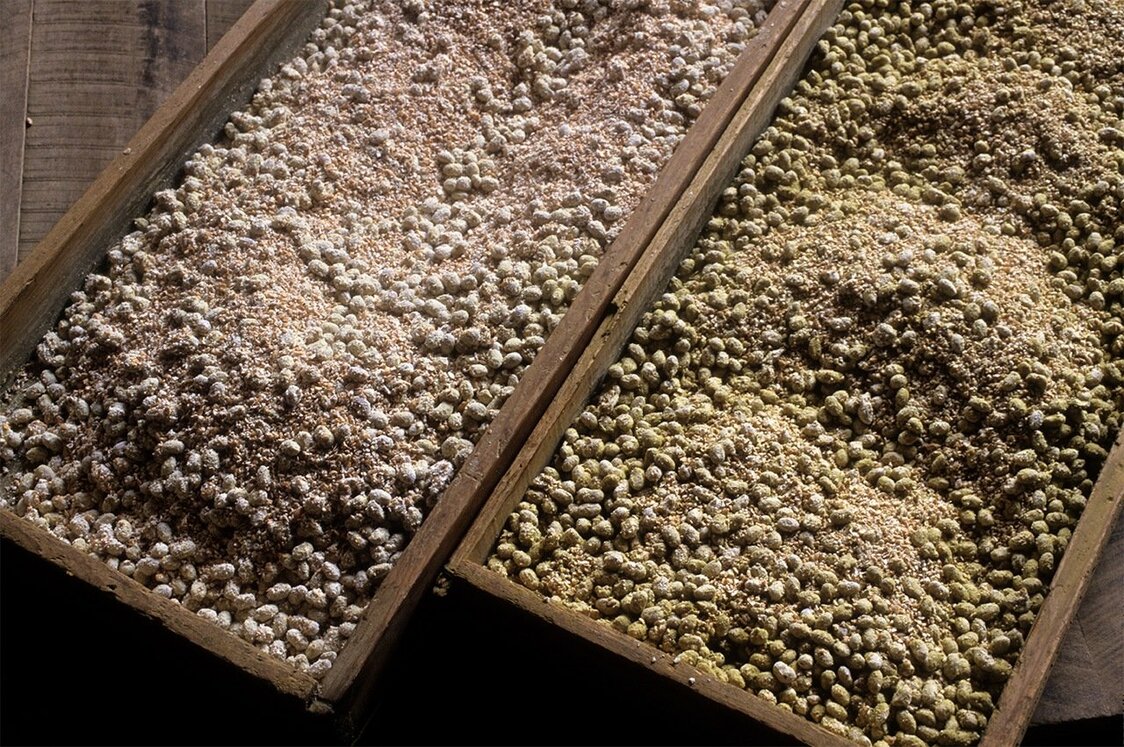
A freshly prepared starter mixture (left) alongside a four-day-old batch covered in kōji mold.
-
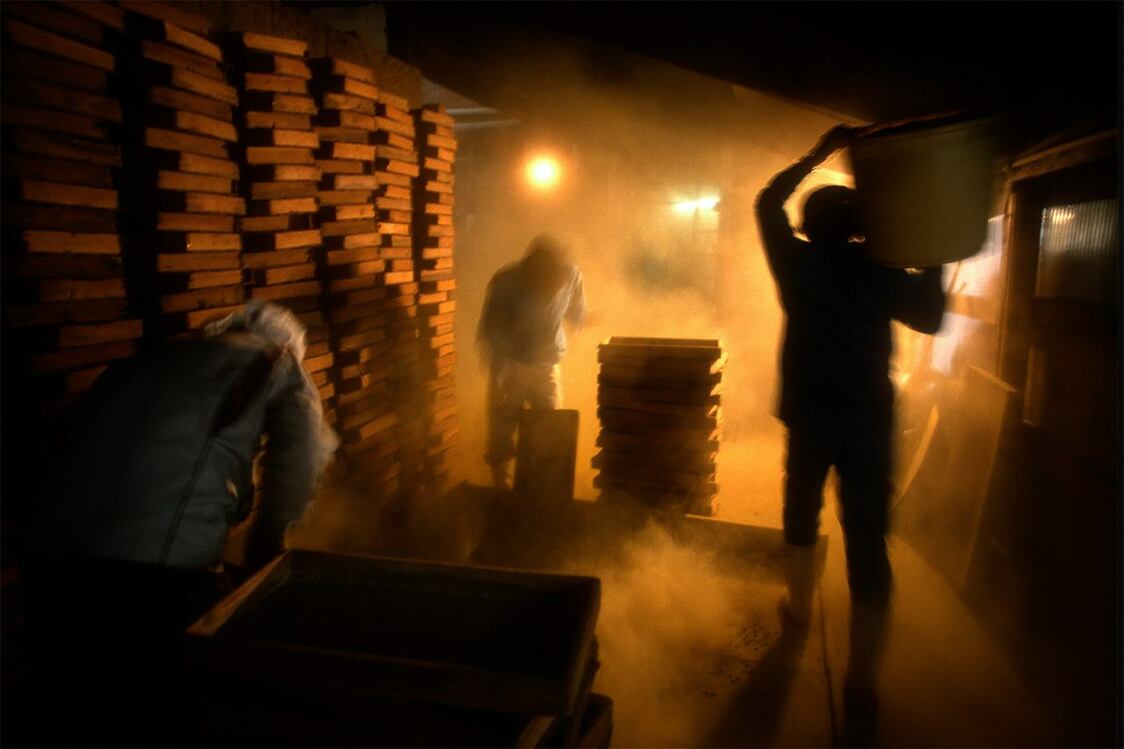
Kōji mold fills the air as workers transfer finished starter mixture to the vats, where it will be stirred into salt and water to form the mash.


 Read in other languages