-
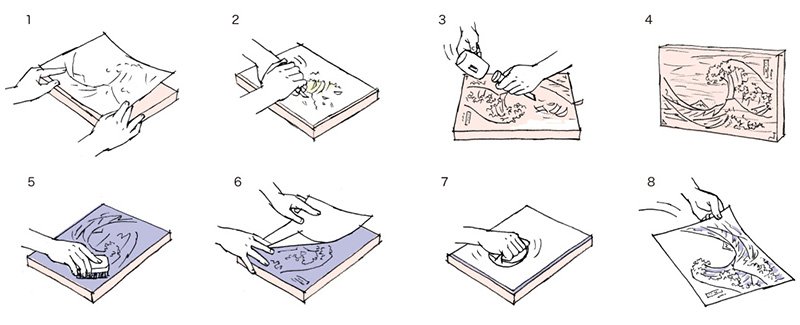
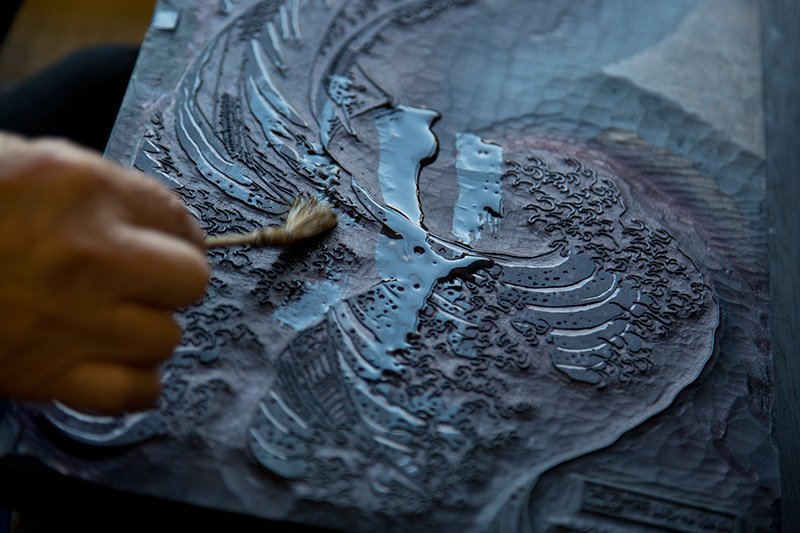
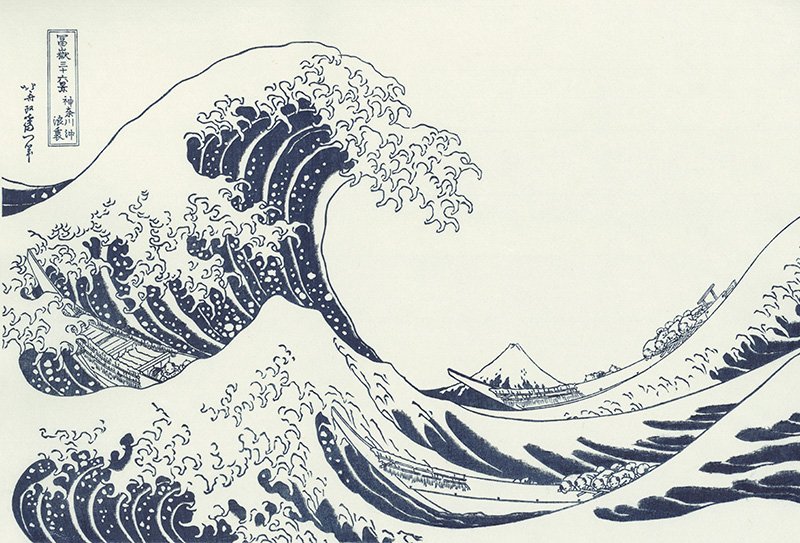
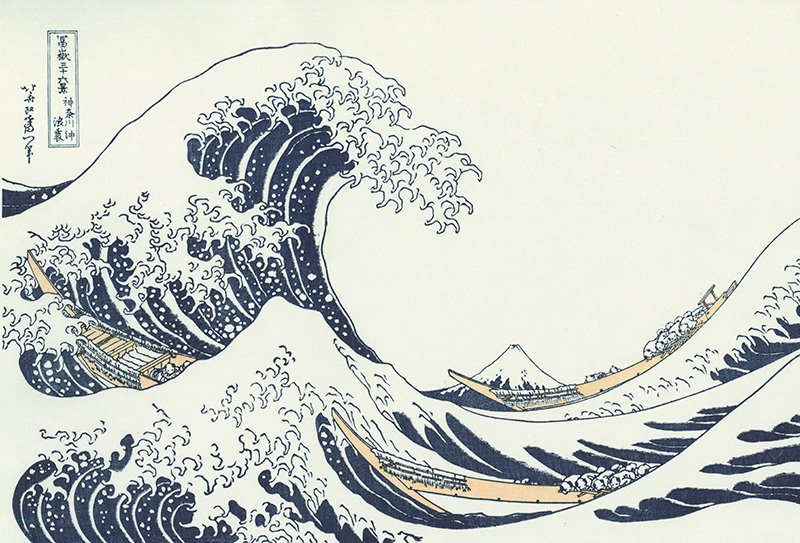
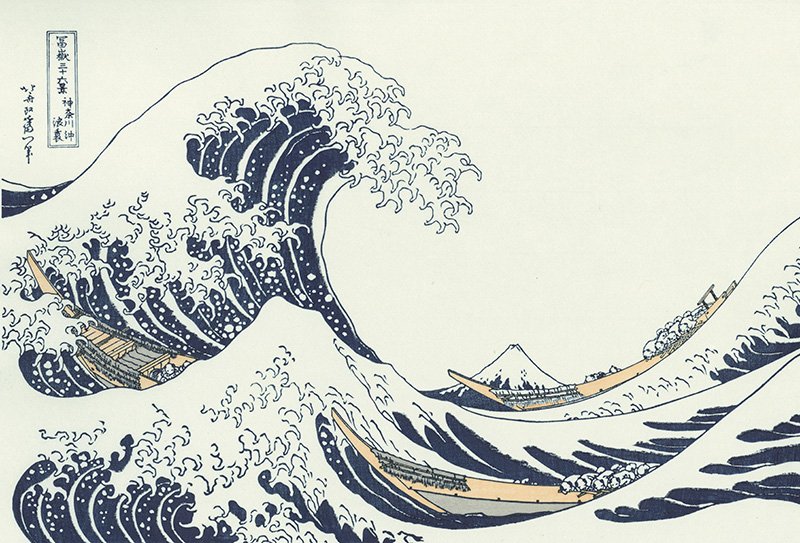
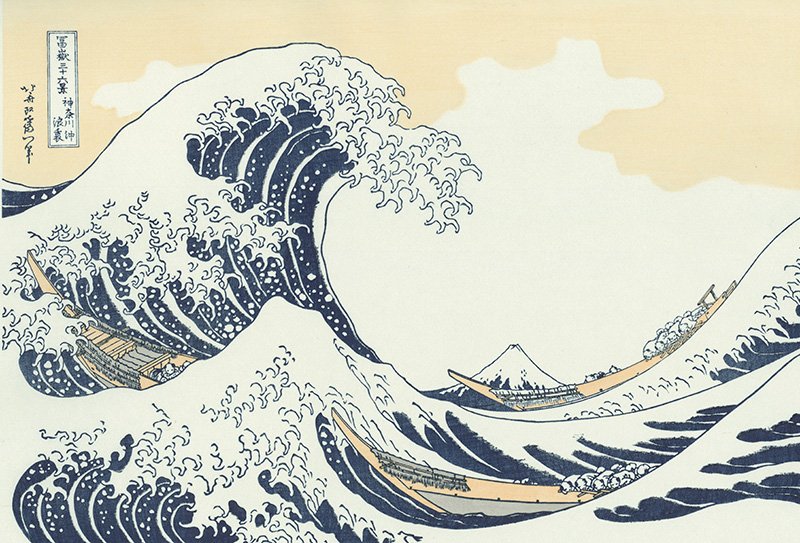
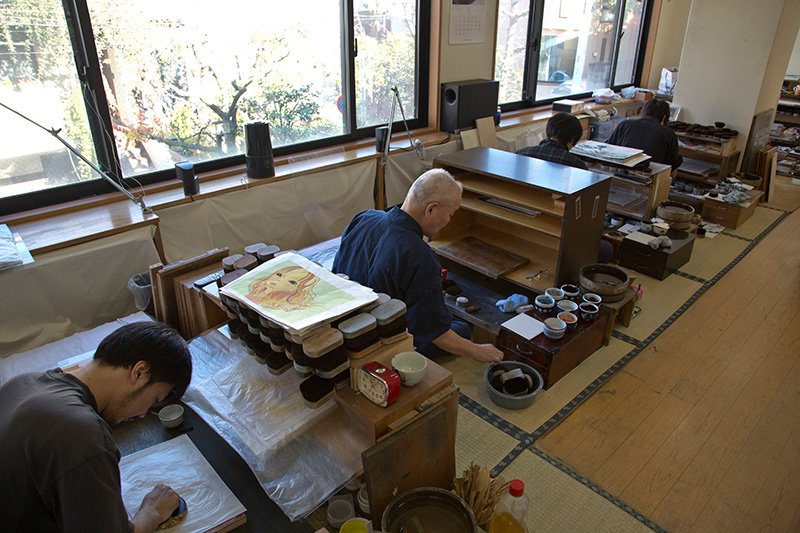
The design is pasted onto a woodblock (1), then the outline is carved with a small knife (2). After the surrounding wood is removed with a chisel (3), the key block is finished (4). During the printing stage, paint is applied to the woodblock (5), paper is placed on top of the block (6), and the paper is rubbed using a tool called a baren (7), thus completing the printing of one color (8). The finished ukiyo-e is produced by repeating this process for each color.
-
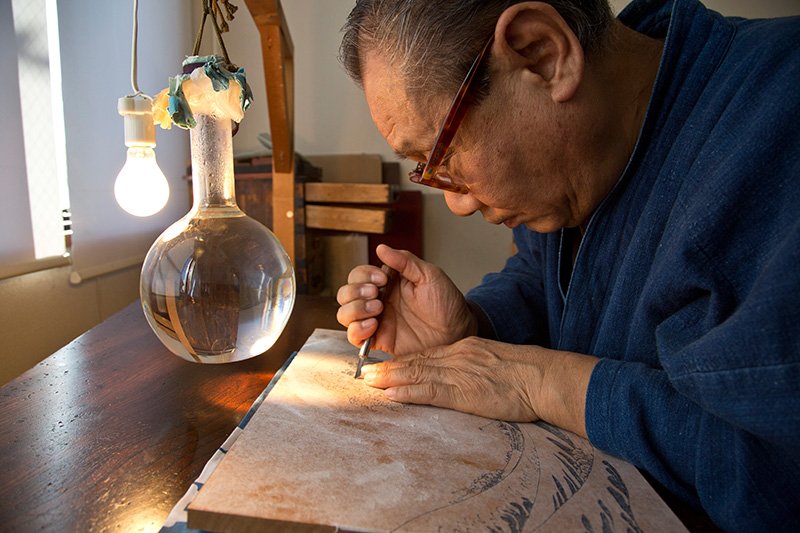
Carving requires extreme precision, so the workspace needs to be bright. A glass flask full of water hangs between the woodblock and a light bulb. When the light from the bulb hits the flask it is refracted in all directions and eliminates shadows from the surface of the woodblock, enabling the artisan to see the finest of lines.
-
-
-
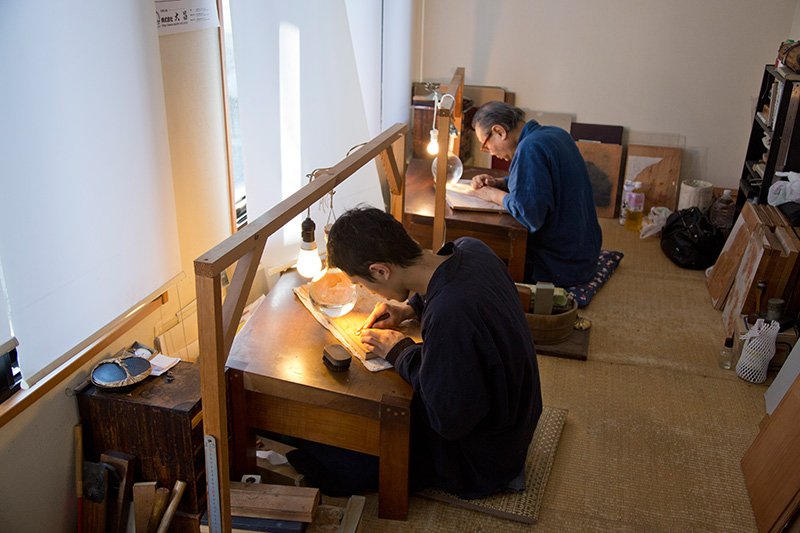
28-year-old Kishi Chikura (front) saw Niinomi’s demonstration and decided to study the advanced skills used in the craft. Now he has finished his apprenticeship and is working as a professional woodcut carver.
-
-
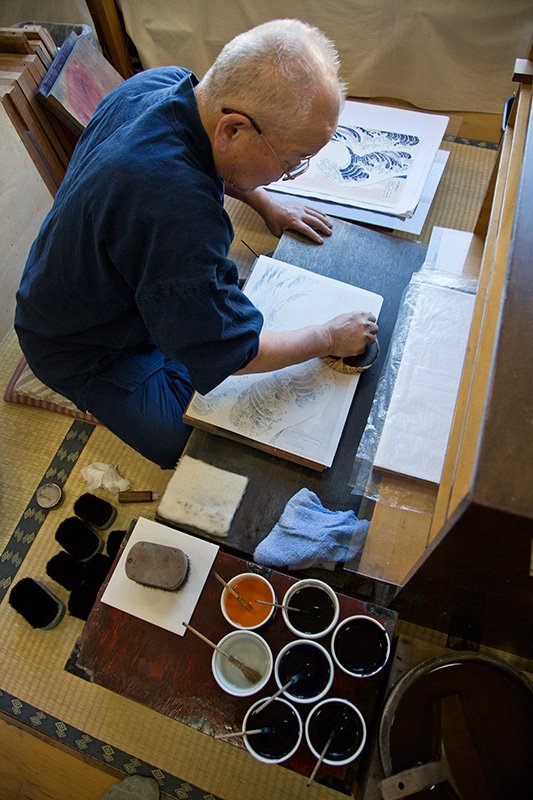
Printer Nakata Noboru at work.
-
-
-
-
-
-
-
-
-
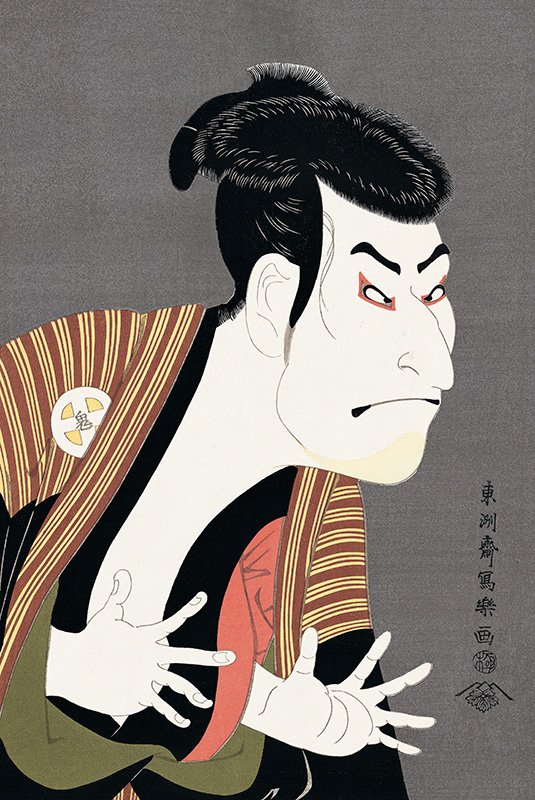
The Actor Ōtani Oniji III as Edobei by Tōshūsai Sharaku.
-
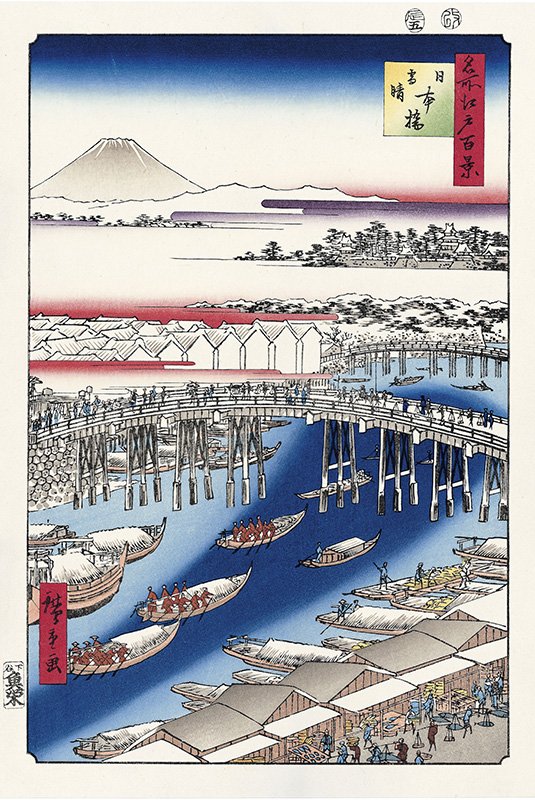
Nihonbashi, Clearing After Snow, No. 1 in One Hundred Famous Views of Edo by Utagawa Hiroshige.
-
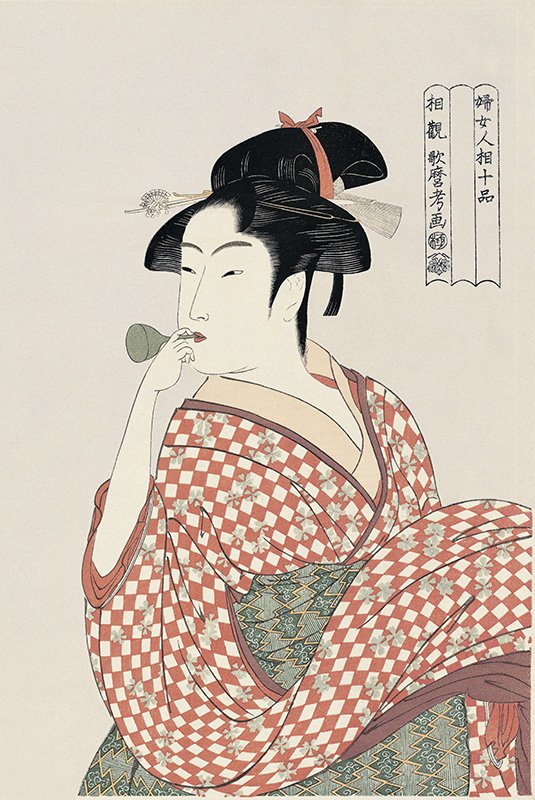
Girl Blowing a Glass Toy from the series Ten Physiognomic Aspects of Women by Kitagawa Utamaro.
-
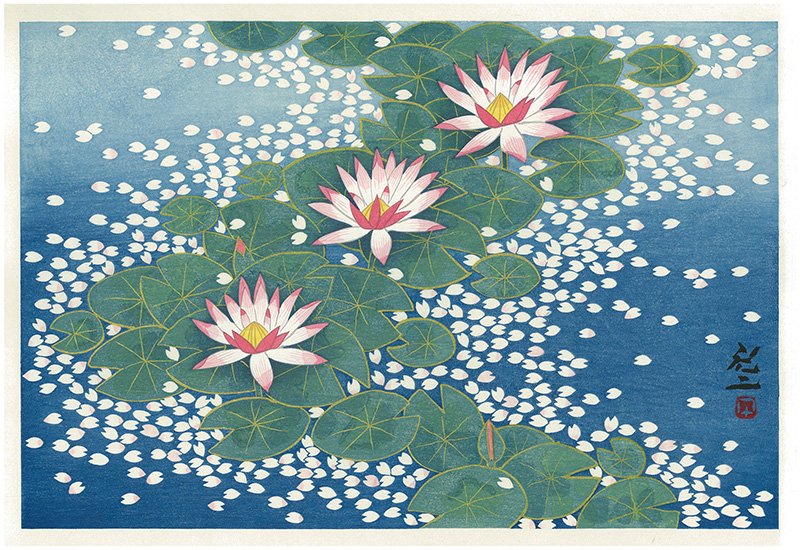
The 2013 multi-color woodcut print Haru (Spring) created from a design by the artist Hiramatsu Reiji (© Hiramatsu Reiji / Adachi Institute of Woodcut Prints).
-
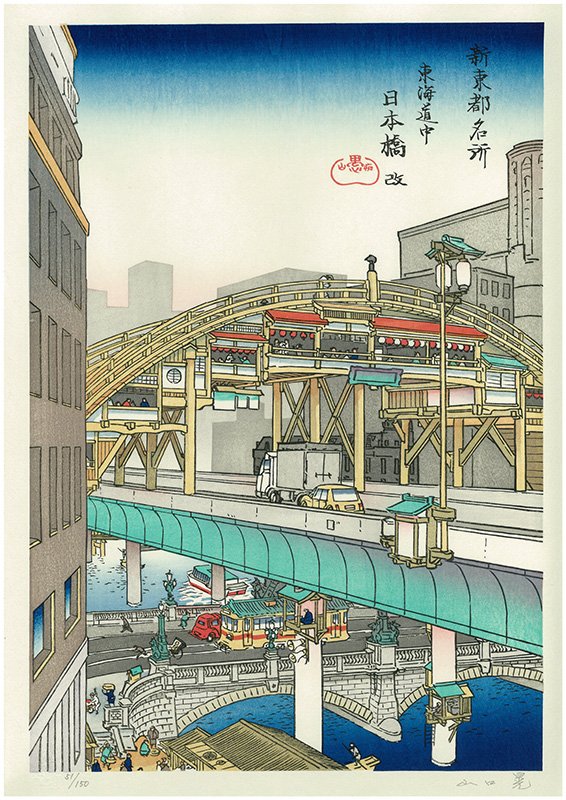
The 2012 multi-color woodcut print New Sights of Tokyo: Tōkaidō Nihonbashi Revisited created from a design by the artist Yamaguchi Akira (© Yamaguchi Akira / Mizuma Art Gallery /Adachi Institute of Woodcut Prints).
-


 Read in other languages