-
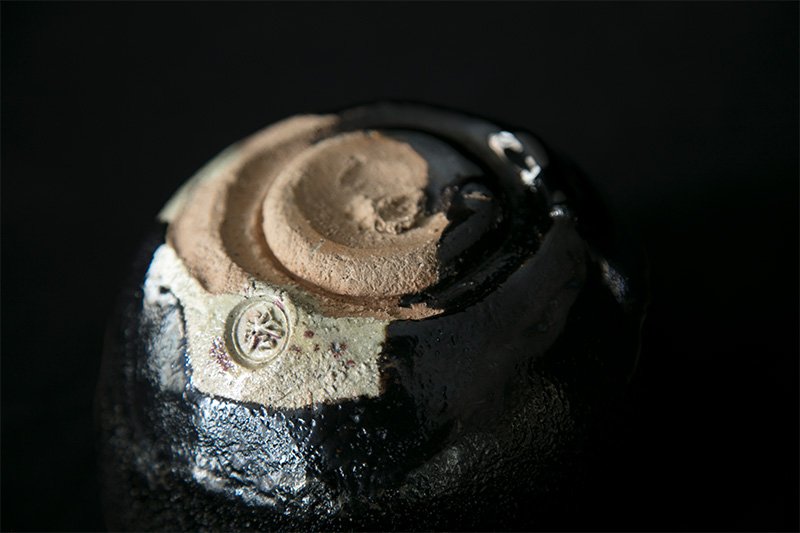
The seal of Raku Kichizaemon XV. The name “Raku” is said to derive from a seal presented by Toyotomi Hideyoshi bearing that kanji.
-
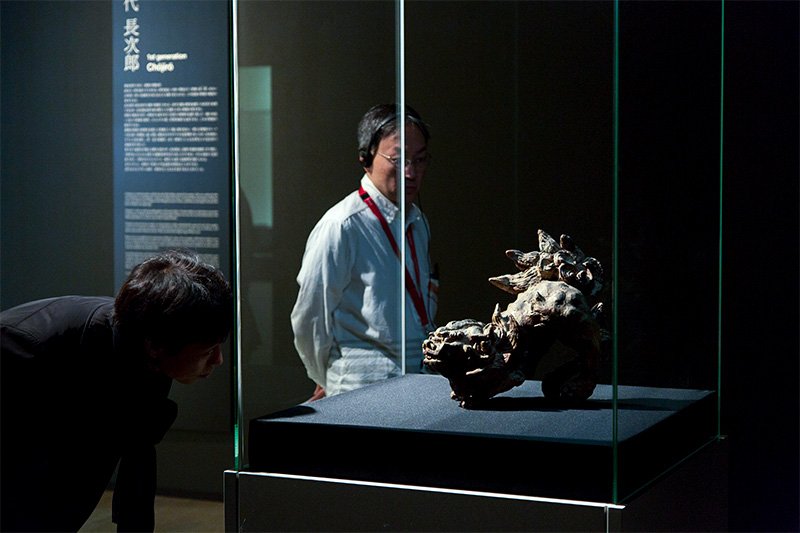
Lion with two-colored glaze by Chōjirō, the first head of the Raku family. Important Cultural Property. 1574. Collection of the Raku Museum, Kyoto. Rikyū presumably made a point of commissioning the intensely expressive Chōjirō to produce subdued tea bowls in the austere wabi-cha aesthetic.
-
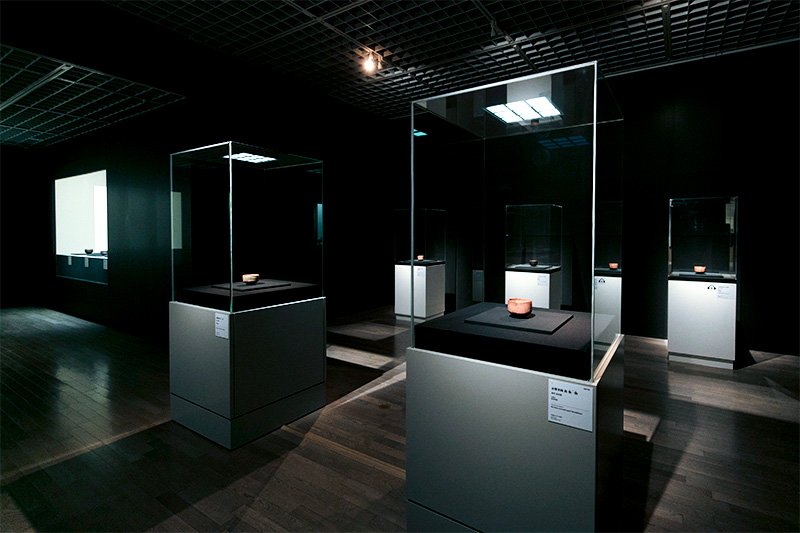
An air of quiet dignity saturates the first exhibition room, a reunion space for a widely dispersed collection of tea bowls by Chōjirō.
-
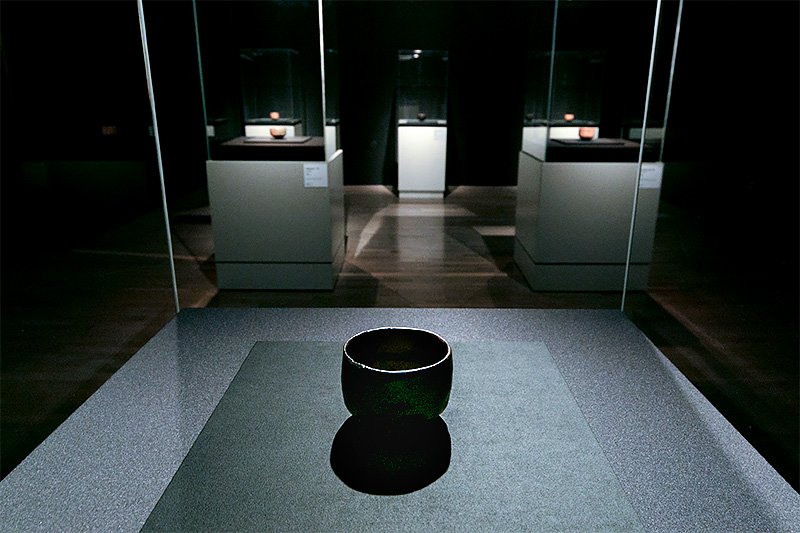
Black Raku tea bowl named Ōguro (Great Black) by Chōjirō. Important Cultural Property. Momoyama period (sixteenth century). Private collection. Ōguro, the first piece that visitors see in the first room, exudes a commanding presence despite its small size.
-
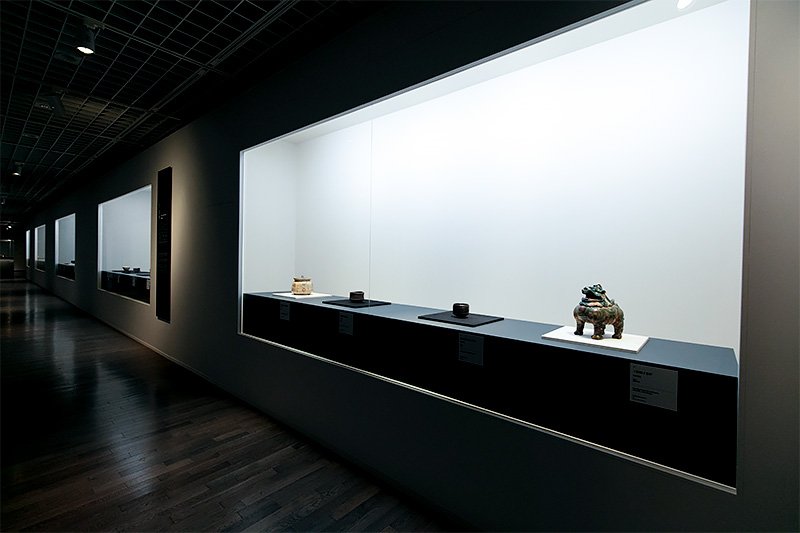
Works of the successive heads of the Raku line follow the Chōjirō room. Just as Chōjirō produced a lion figure, his successors have made lion-dog-shaped incense burners.
-
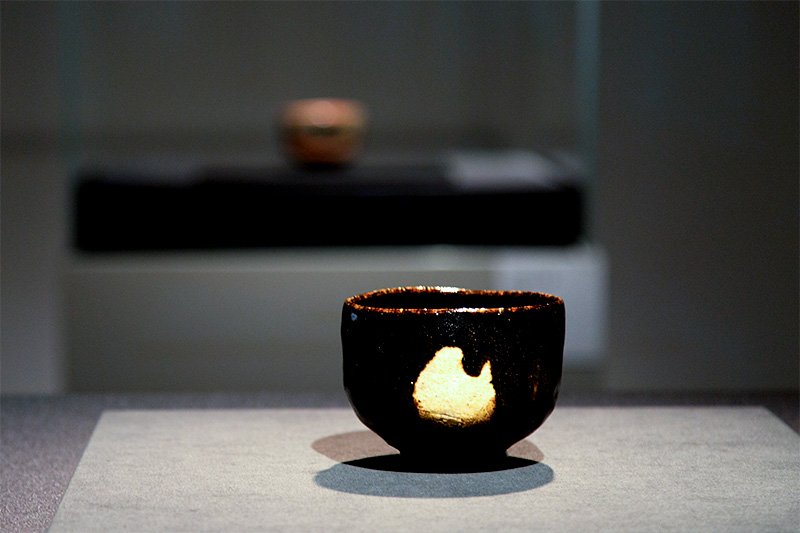
Black Raku tea bowl Aoyama by the third Raku master, Dōnyū. Important Cultural Property. Seventeenth century. Collection of the Raku Museum, Kyoto.
-
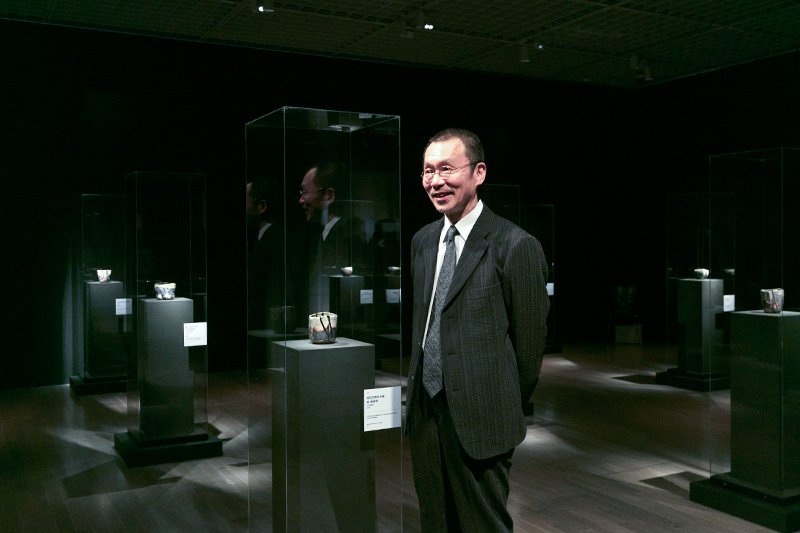
Raku Kichizaemon XV explores his own modern expressions and creativity befitting the twenty-first century while recognizing the avant-garde spirit inherent in Chōjirō’s tea bowls. Works by Kichizaemon occupy the three final rooms of the exhibition.
-
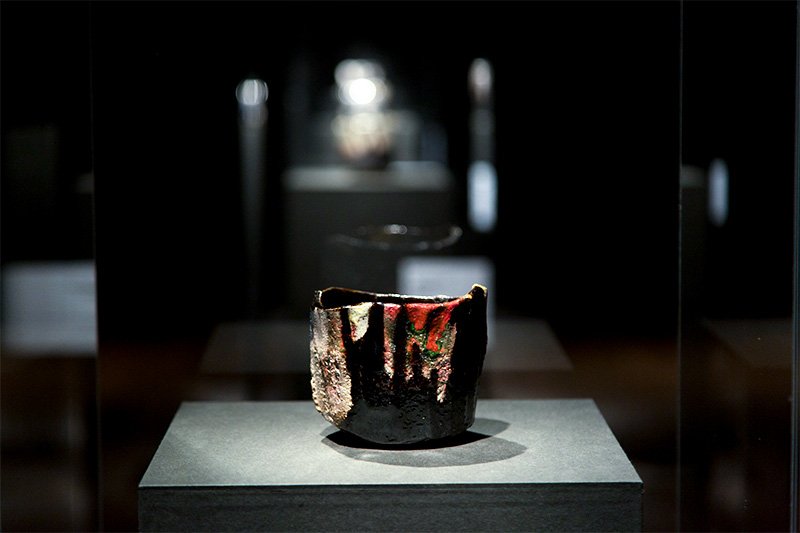
Yakinuki-type black Raku tea bowl named Tsukirōmei by Raku Kichizaemon XV, 1986. Yakinuki is a firing technique that involves blowing a bellows inside the kiln with great intensity to finish the bowls at very high temperature. The avant-garde works by Kichizaemon startled the Japanese tea ceremony world.
-
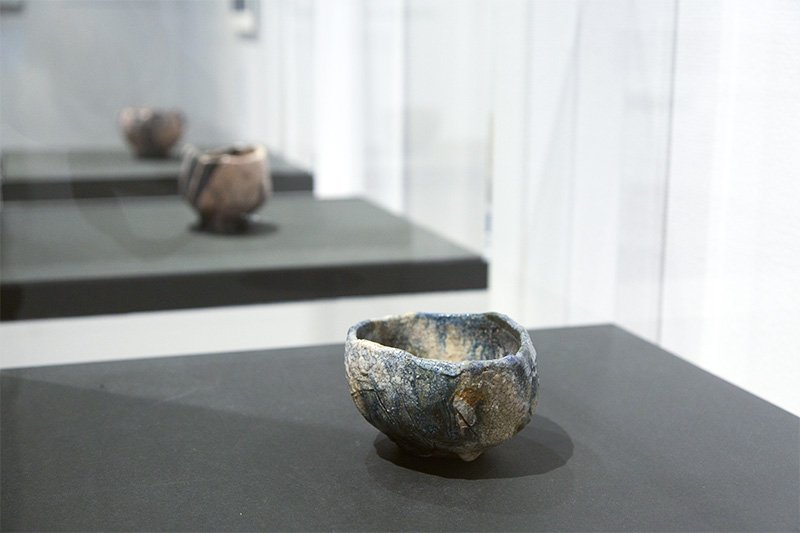
France Raku tea bowl by Raku Kichizaemon XV, 2007. Collection of Sagawa Art Museum, Shiga Prefecture. Produced in the Western Raku style at a pottery owned by his friend and ceramic artist Andoche Praudel in the French village of Loubignac. Liberating himself from the confines of the Raku family tradition, Kichizaemon made this tea bowl using only French materials, having brought no clay, glaze, or any other material from Japan.
-
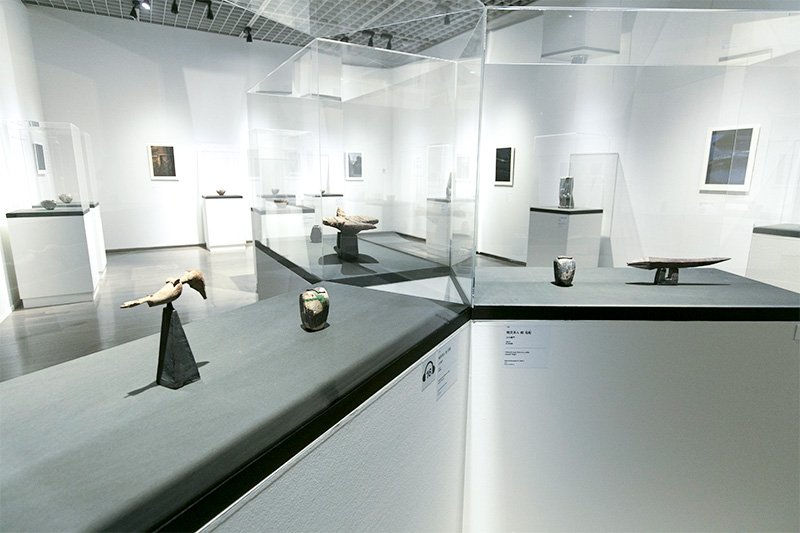
(In foreground from left to right) Wooden bird from Borneo, artist unknown; yakinuki-type Raku tea caddy named Seiran by Raku Kichizaemon XV, 2009, collection of the Raku Museum, Kyoto; yakinuki-type Raku tea caddy named Nāga by Raku Kichizaemon XV, 2009, collection of Sagawa Art Museum; wooden snake from Borneo, artist unknown. The tea caddy on the left looks as though it is deep in dialogue with the Bornean bird that inspired it, one of the Indonesian folkcraft pieces in Kichizaemon’s personal collection.
-
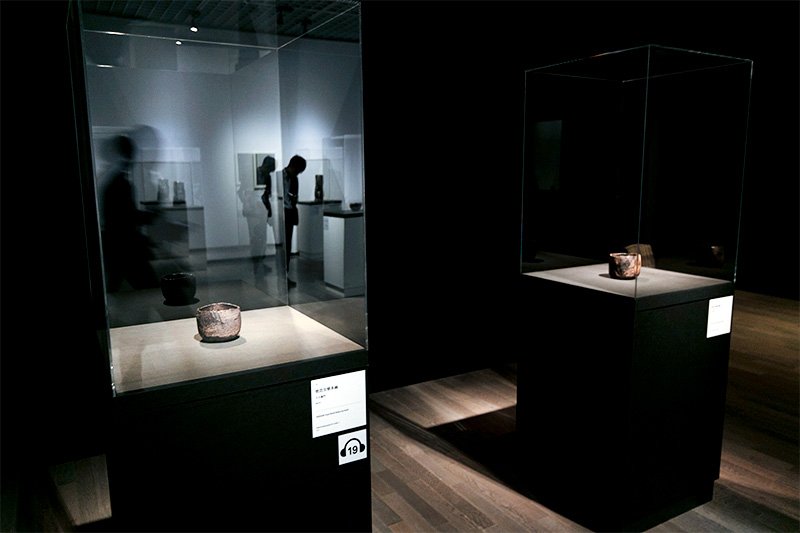
Yakinuki-type black Raku tea bowls by Raku Kichizaemon XV. Private collection. Dubbed ganseki (rock) chawan by their creator, these bowls give a glimpse of the new realm that Kichizaemon is now entering. From works that “shouted” with bold, primitive colors like red, indigo, and green, Kichizaemon has moved on to monochromatic tea bowls that “do not speak.”


 Read in other languages