-
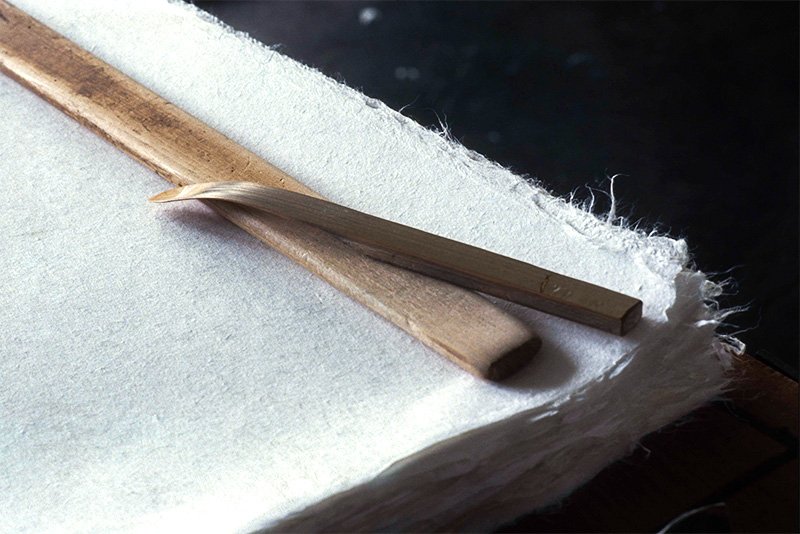
Torinoko paper today is used chiefly for Nihonga paintings. A special knife is used to trim the “ears” from the edges of the paper.
-
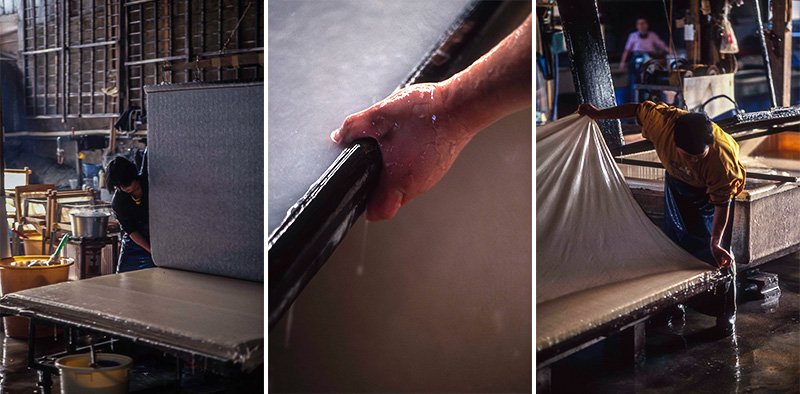
Paper is removed from the suki-su bamboo pressing mat and set aside, one sheet at a time (left). The mash is sieved through the suki-geta frame to obtain paper of a uniform thickness (center). Traditional papermaking is done in the coldest months of the year (right).
-
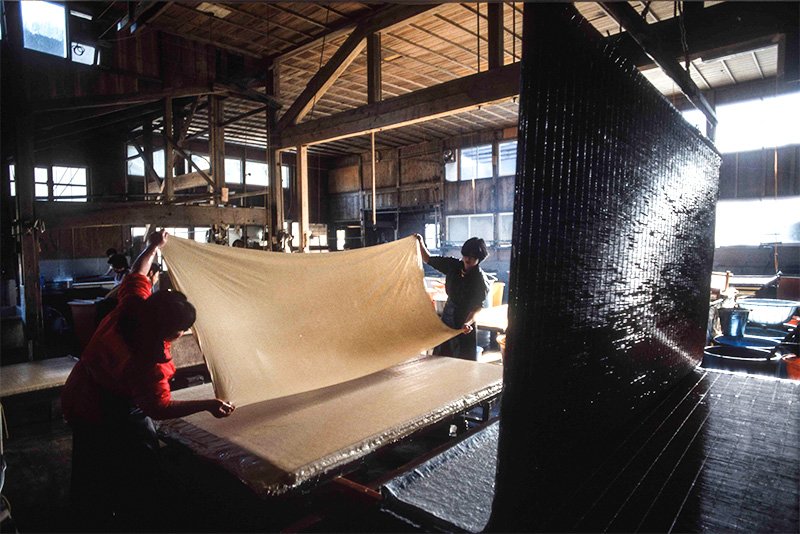
After many years working together as a team, these workers move in perfect tandem as they lift the freshly made paper, sheet by massive sheet. Cloth is placed between the sheets to make them easier to peel off when dry. The suki-geta used for large sheets like this has to be lifted by crane.
-
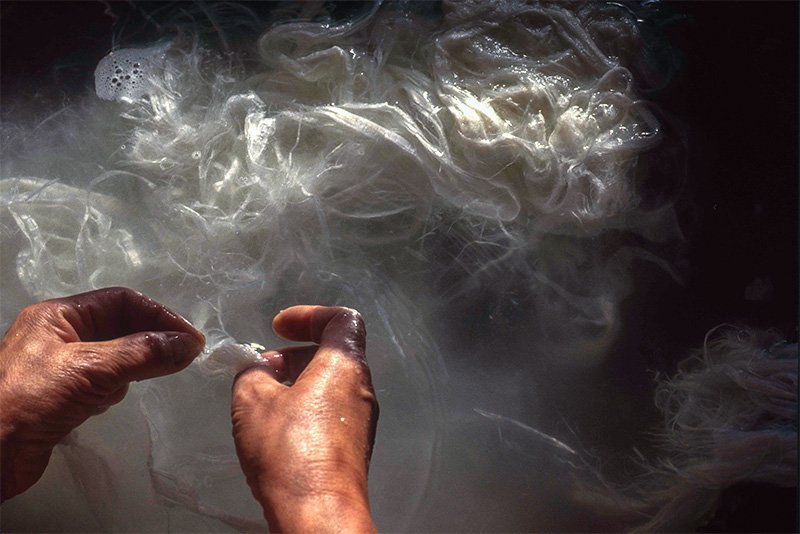
A worker’s well-practiced hands painstakingly remove stray particles or impurities from the plant fibers.
-
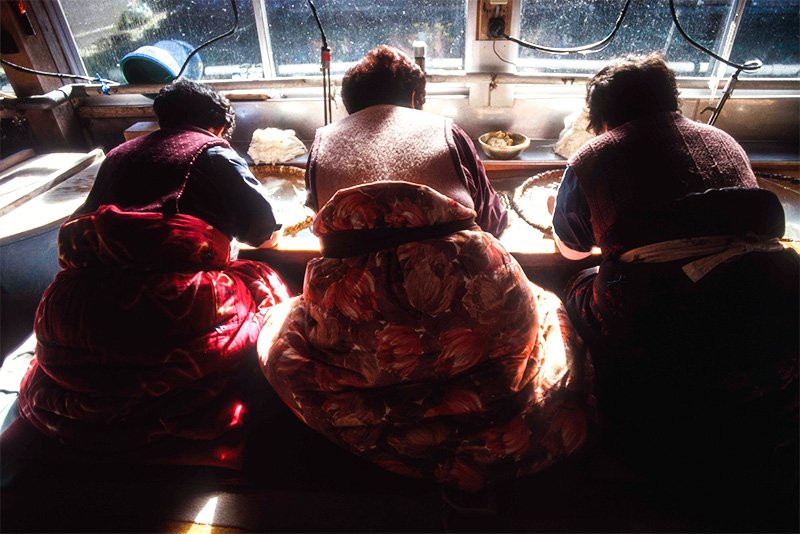
Women crouched at work removing stray debris from the fibers, their fingers numb from constant immersion in cold water. Workers need to wrap up well to ensure they do not freeze during the long hours of work in the bitter cold.
-
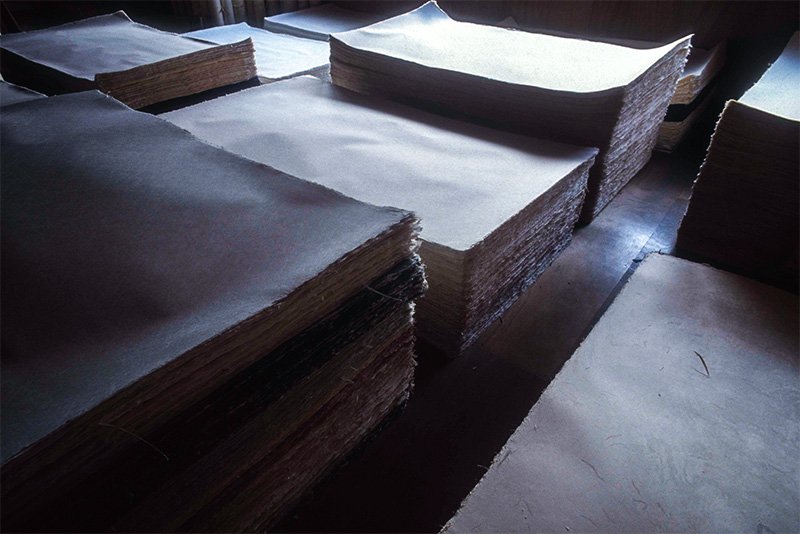
Handmade torinoko paper, freshly pressed in the winter cold. The name comes from the paper’s color, which is said to resemble that of an egg.
-
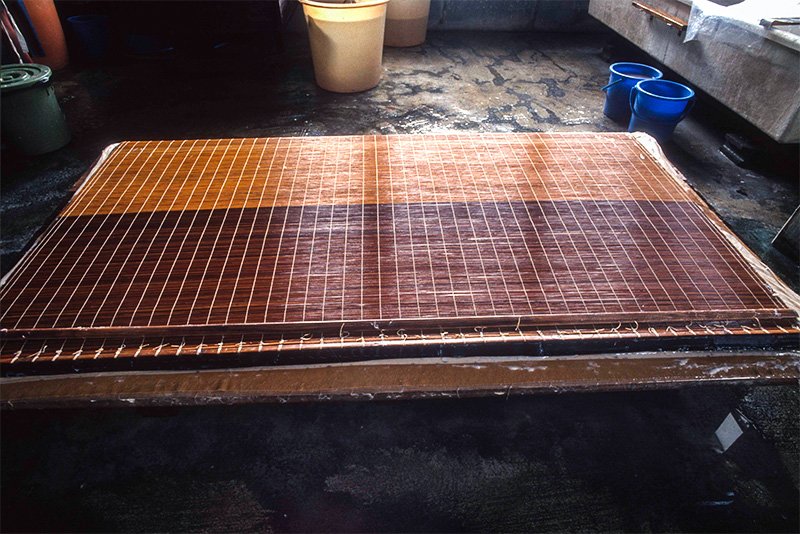
The simple bamboo tools of the washi-making trade: the suki-su lying atop the suki-geta.


 Read in other languages