-
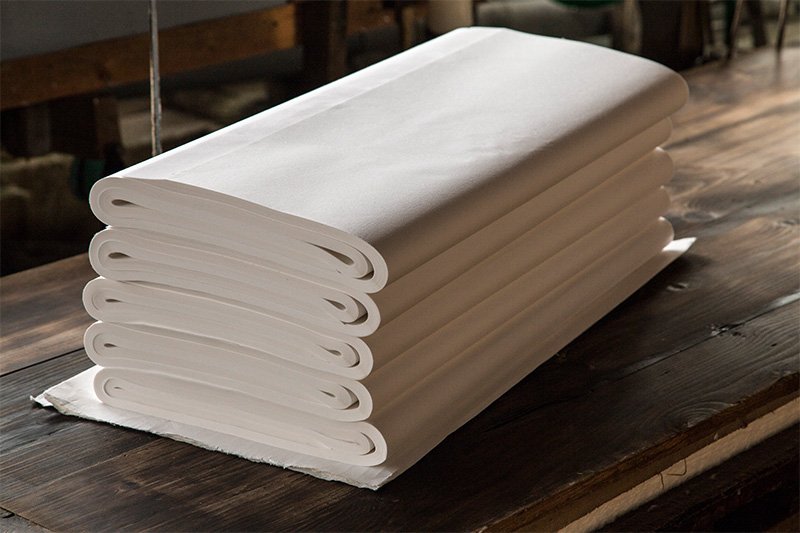
Nishijima specializes in producing handmade washi art paper that is prized by painters and calligraphers.
-
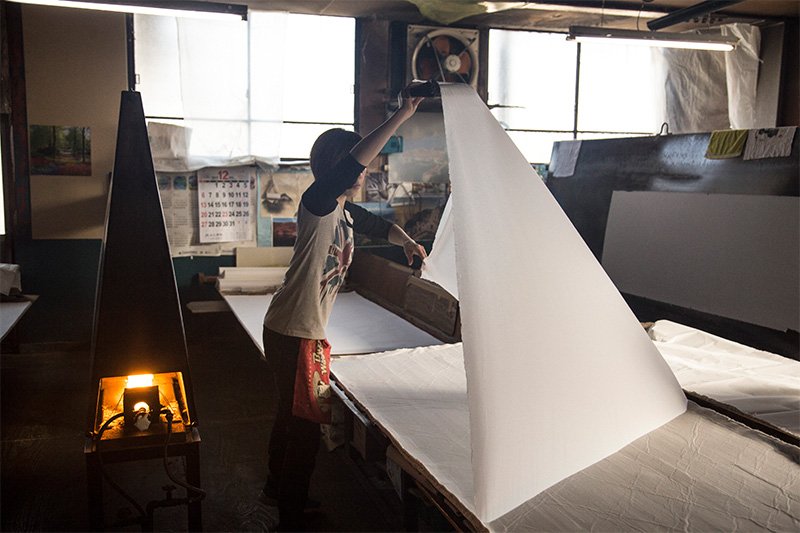
After it has been allowed to air-dry, the paper is immersed in water for half a day and then peeled off carefully, one sheet at a time, and dried again on a hot metal plate.
-
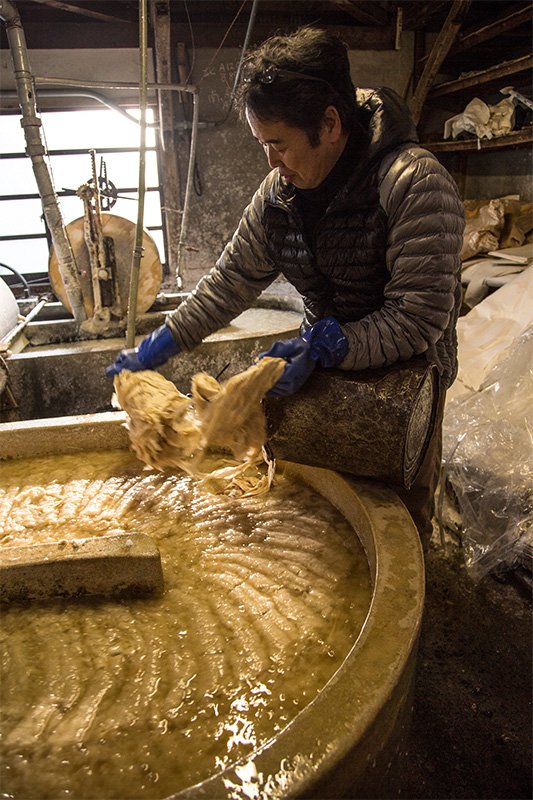
A mix is made from boiled-down strips of old paper, hemp, and rice straw, and a beater is used to produce the short-fibered mash from which Nishijima washi is made.
-
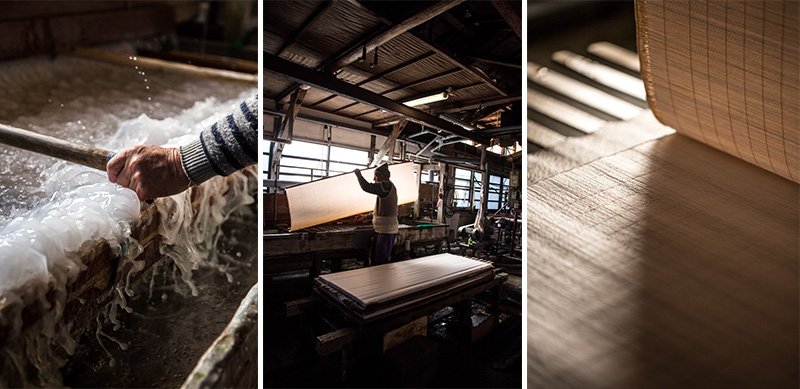
The suki-geta is shaken to ensure that the materials are evenly mixed and of a uniform consistency (left). The suki-su is removed and freshly made paper moved to the drying area (center). Three hundred sheets are press-dried together (right).
-
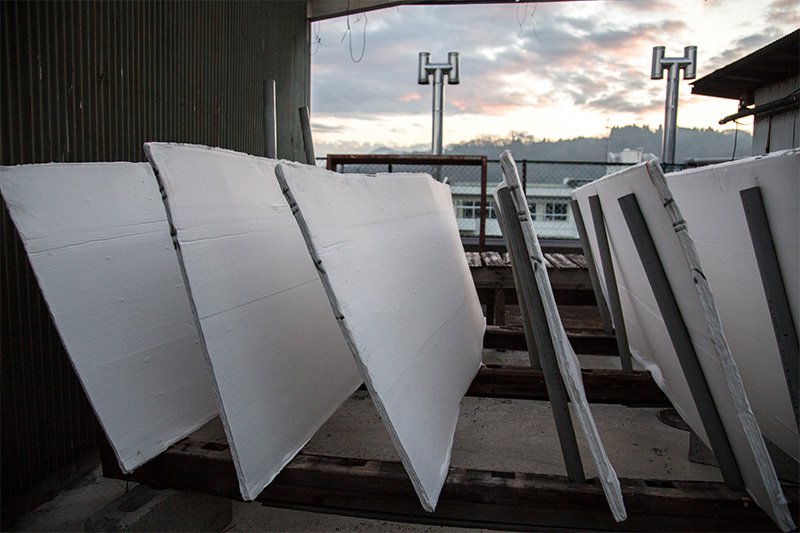
The fibers are too short to allow the paper to be peeled off one sheet at a time, so around 300 sheets are moved together to a well-ventilated place, where they are left to dry for 10 to 20 days.
-
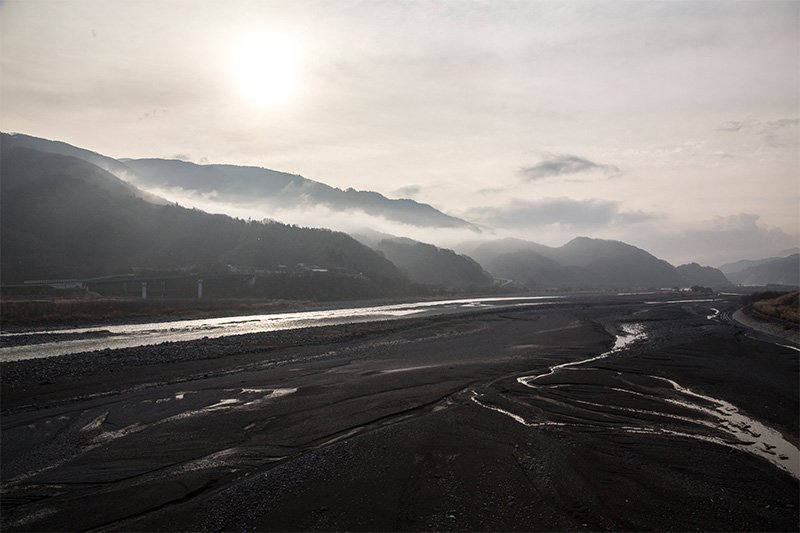
The papermaking village of Nishijima lies on the banks of the Fuji River, surrounded by mountains and blessed with supplies of fresh water.


 Read in other languages