-
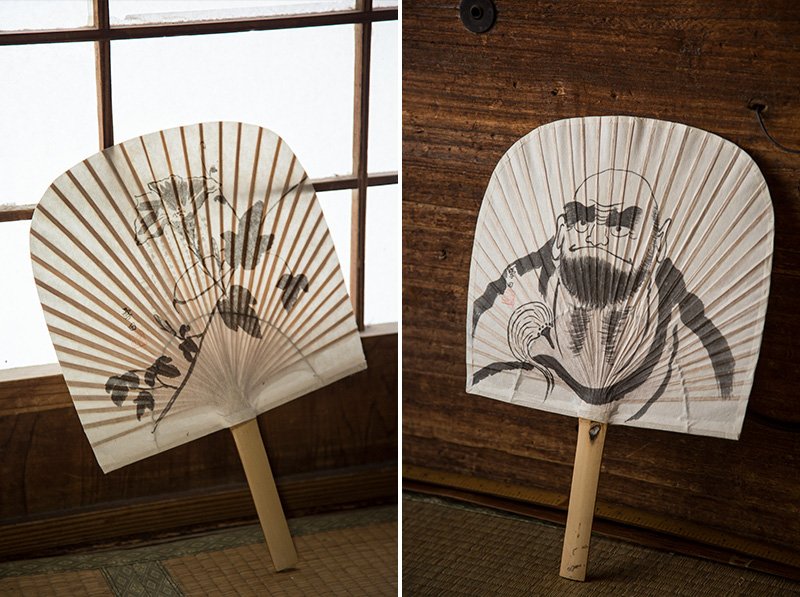
Sesson fans. Copies of paintings by the monk artist Sesson and images made by previous generations of craftsmen are printed onto the paper fans.
-
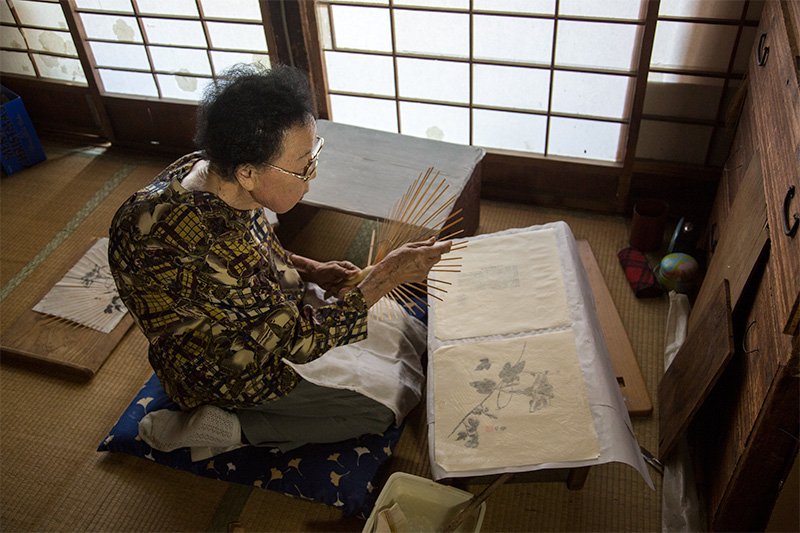
Akutsu Fusako has more than 80 years’ experience making these fans. She takes care of every stage of the process herself, by hand. Here she applies a painting of morning glories to a bamboo frame.
-
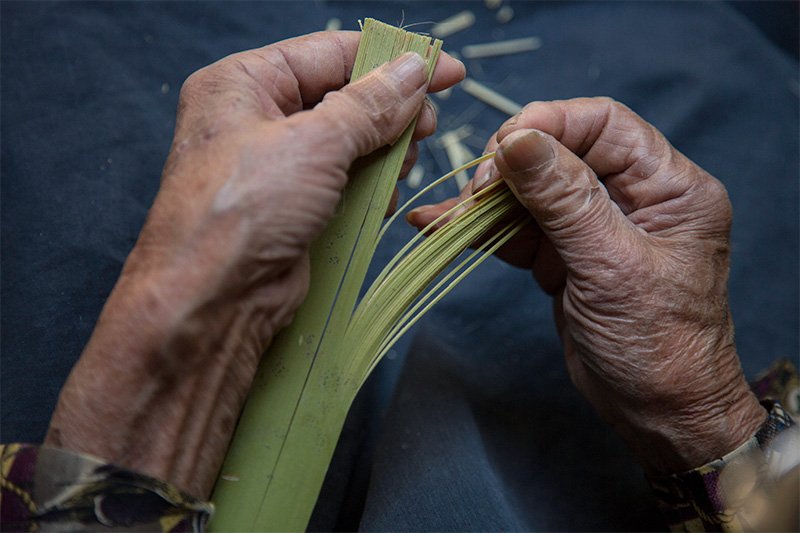
Making the bamboo frame. First, Akutsu cuts a 37-centimeter piece of bamboo into nine chunks with a hatchet. After shearing off some of the thickness, she cuts 40 thin notches into the bamboo, then stretches these out into a fan shape with her hands.
-

Once she has bound the frame with dampened igusa reeds, the skeleton of the fan is finished. After being left to dry in the sun for eight months, the framework is light and strong.
-
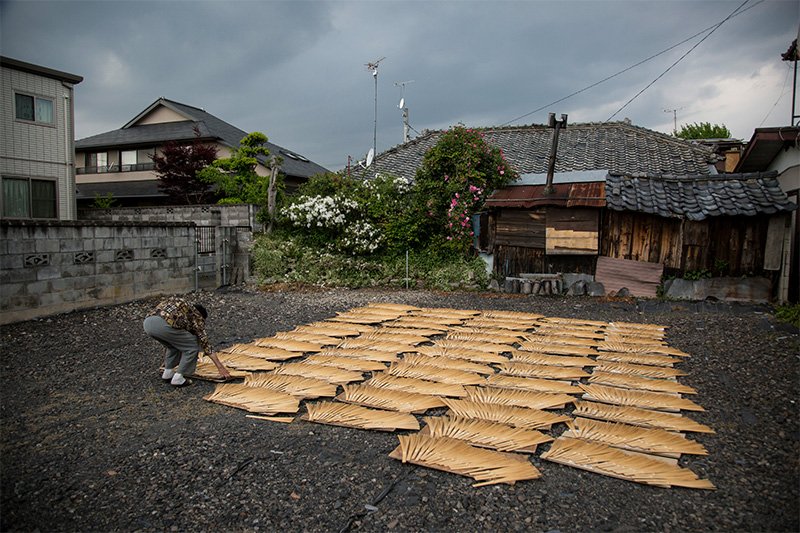
Drying out the frames. The frames are put out to dry in the morning and taken in again in the late afternoon. The biggest risk is a sudden downpour. Neighbors sometimes stop by to alert Akutsu to showers she may not have noticed.
-
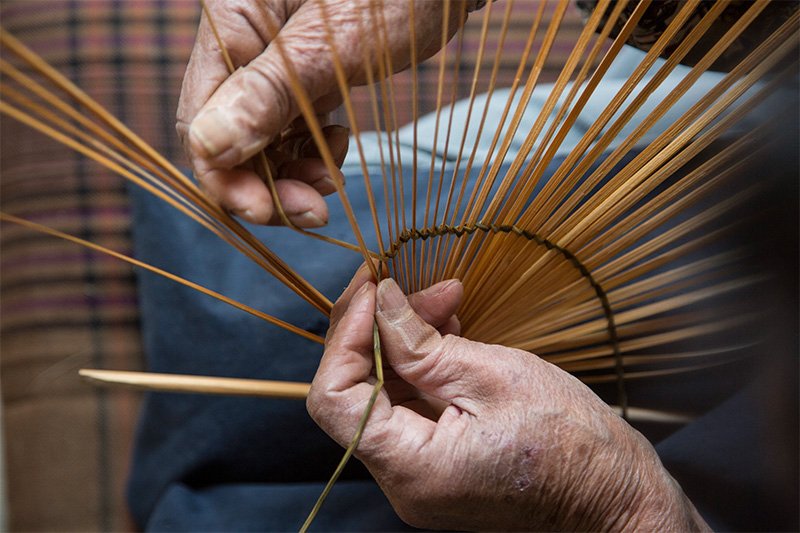
Making the “windows.” Akutsu binds the spokes with igusa reed to form a neat, evenly spaced fan shape. She performs this task 20 to 25 times on an average day.
-
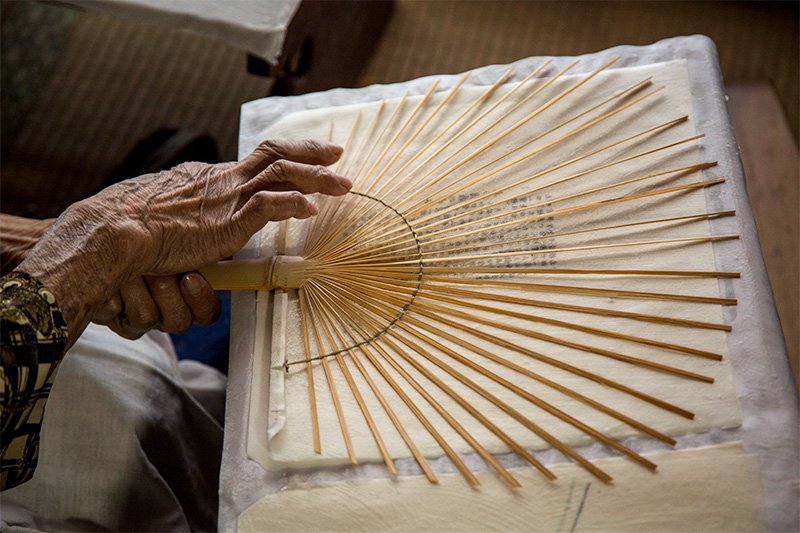
Applying the paper. Akutsu’s skilled hands know just how thick bamboo spokes need to be, and can judge the correct space between spokes and the difference between the front and back of the washi by touch alone.
-
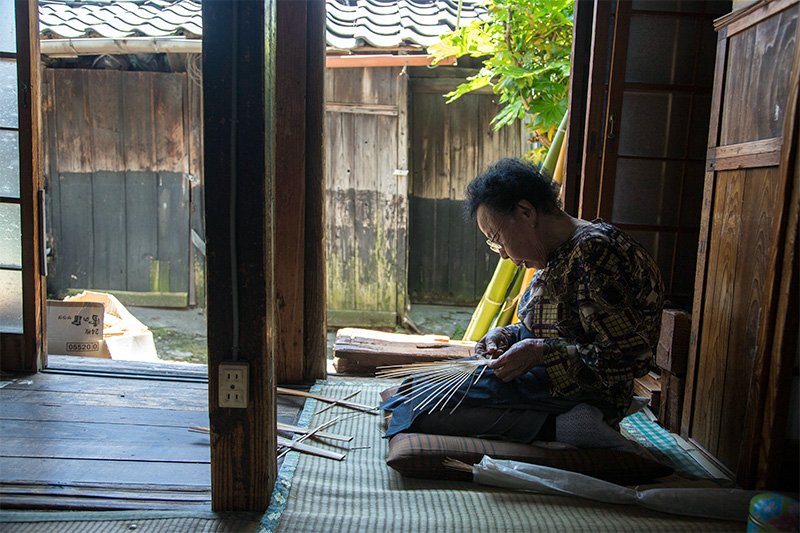
Traditional houses were always built with an engawa or veranda—an ideal place to work: cool in summer, and well-lit in winter.


 Read in other languages