-
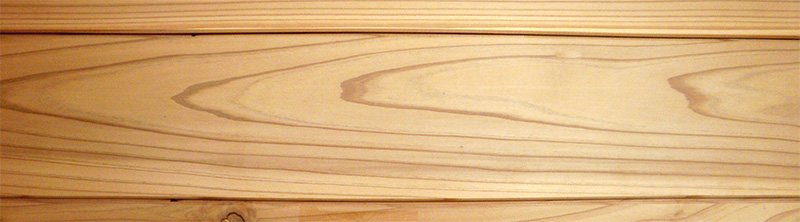
A typical board of Japanese cedar (sugi).
-
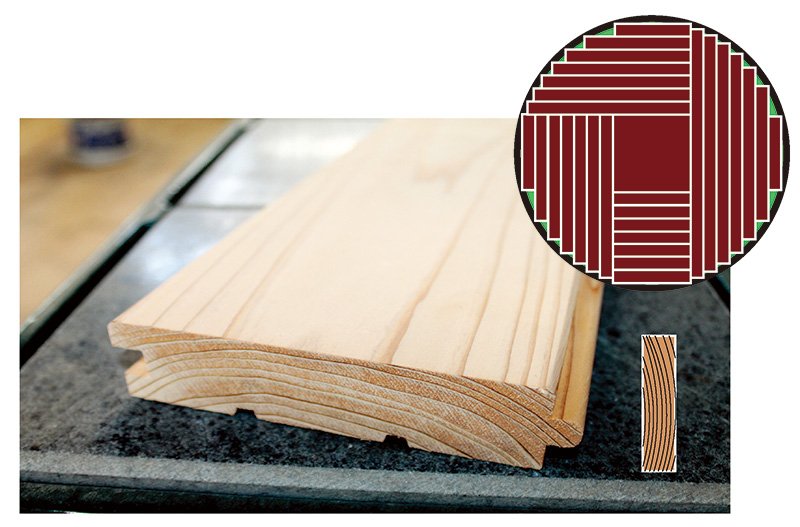
Plain-sawn boards are cut flat from one side of a log until a set depth. The log is then turned 90 degrees and the process is repeated, until only a square column remains at the center. A board cut in this way generally has the end grain—the pattern visible on the ends of the board—running lengthwise along the narrow end face.
-
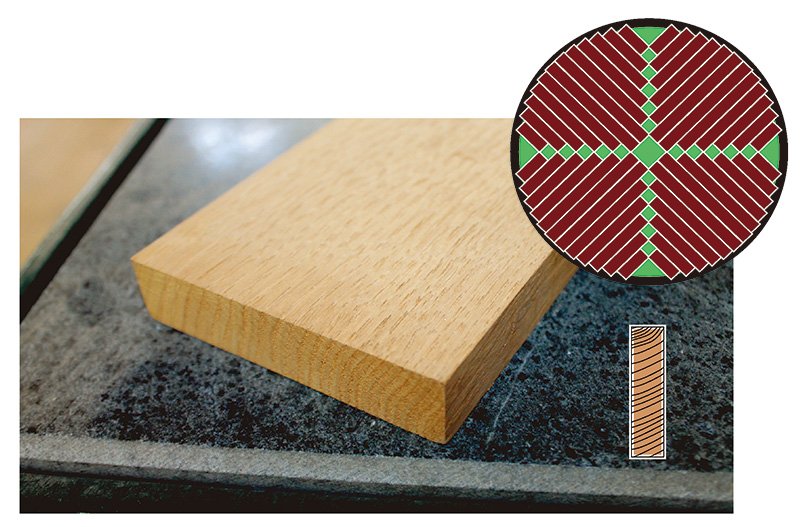
For quartersawn wood, the log is cut into four quarters, which are then sawn into planks so that most of the grain is vertical to the cut face.
-
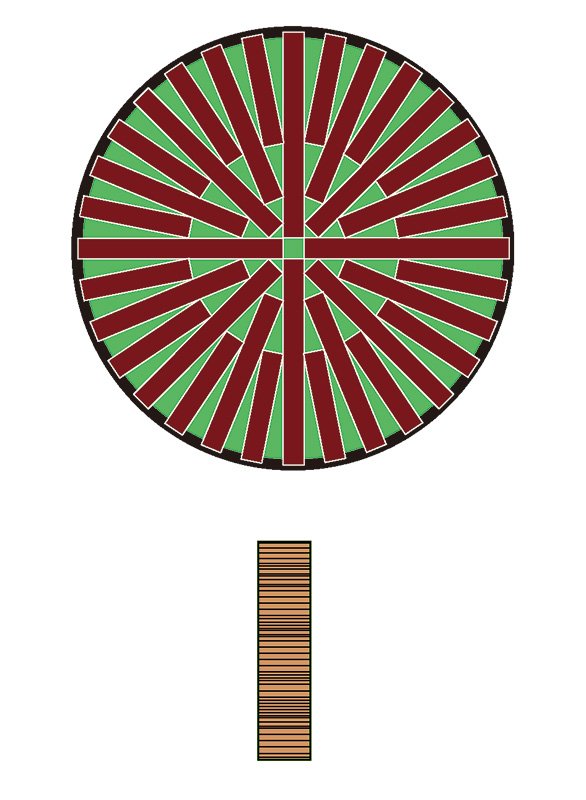
Riftsawing is both time consuming and wasteful, so it is mainly used for expensive objects like musical instruments.
-
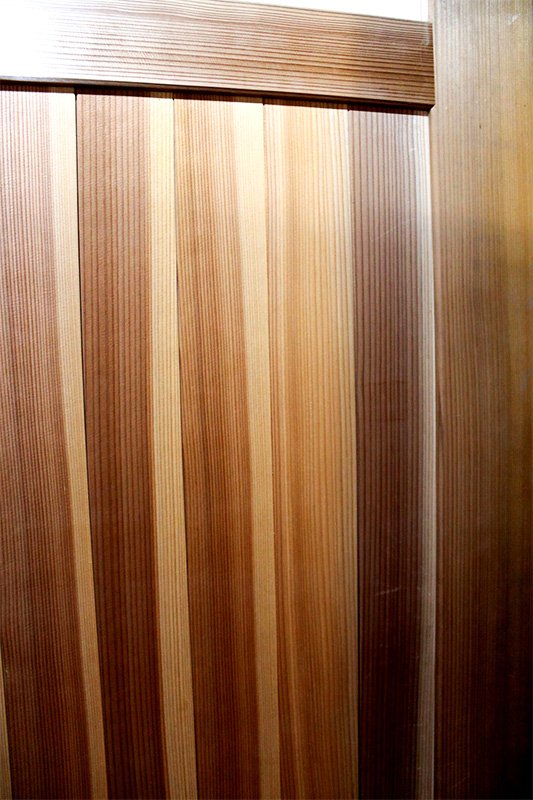
Detail of a door made from quartersawn wood.
-
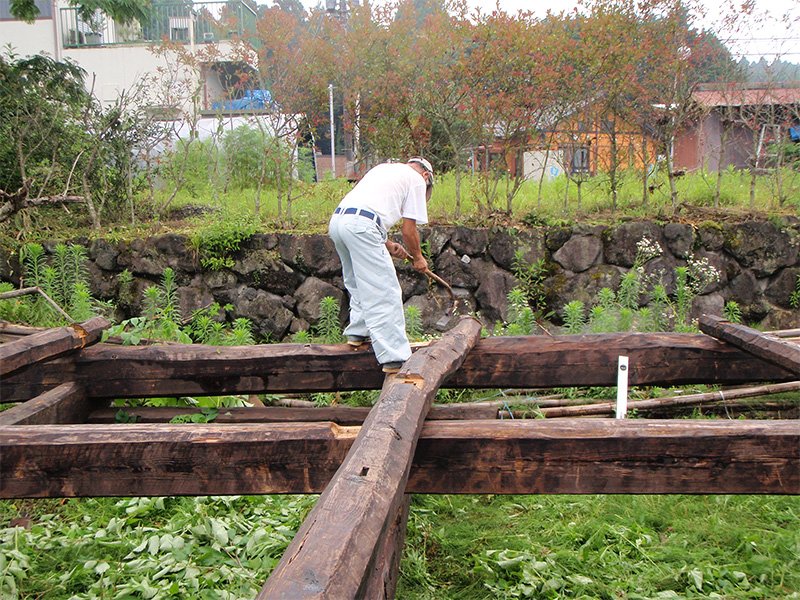
A carpenter, fitting together beams for a minka home reconstruction, works with the natural curves and twists of the beams.


 Read in other languages