-
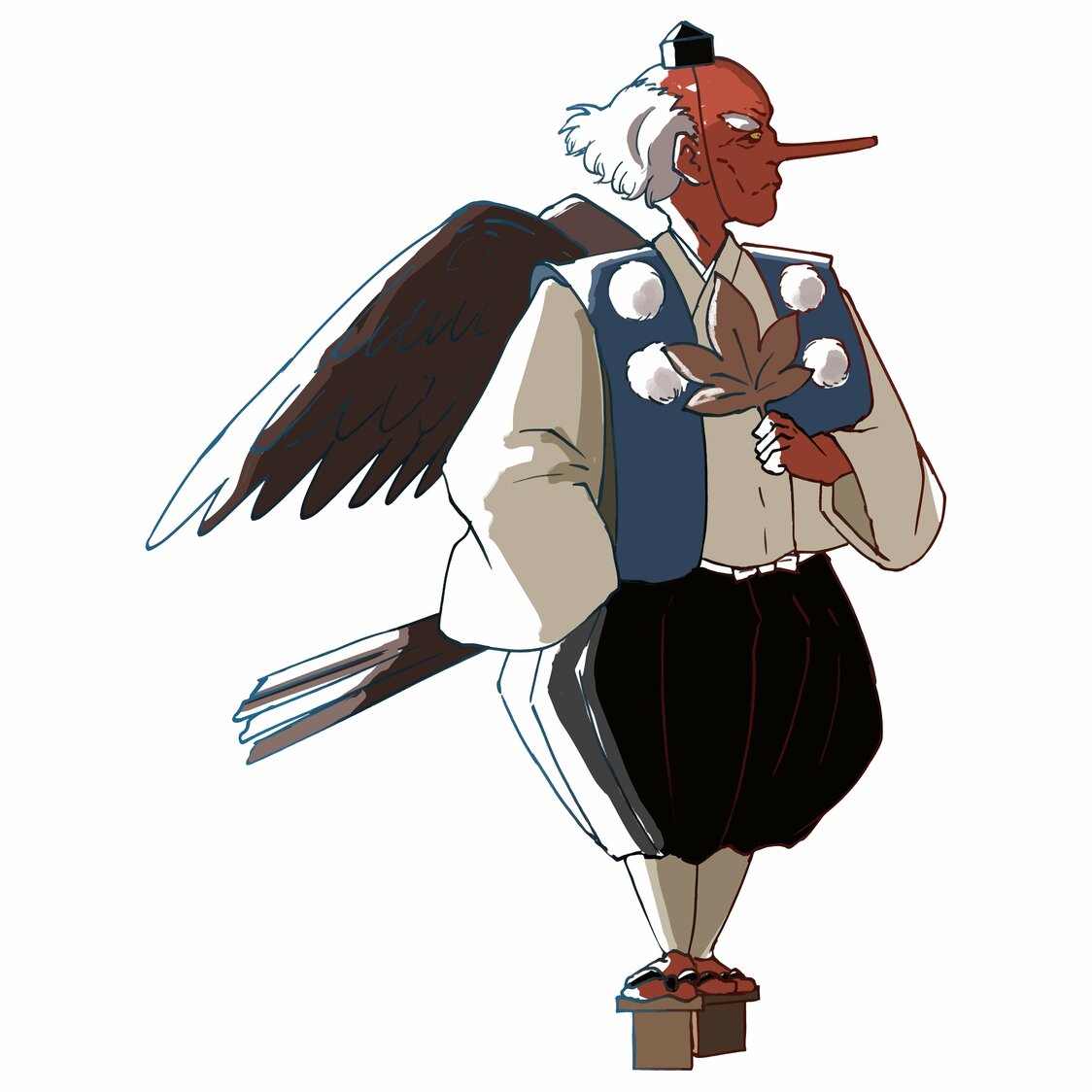
A typical tengu in the popular imagination today. (© Pixta)
-
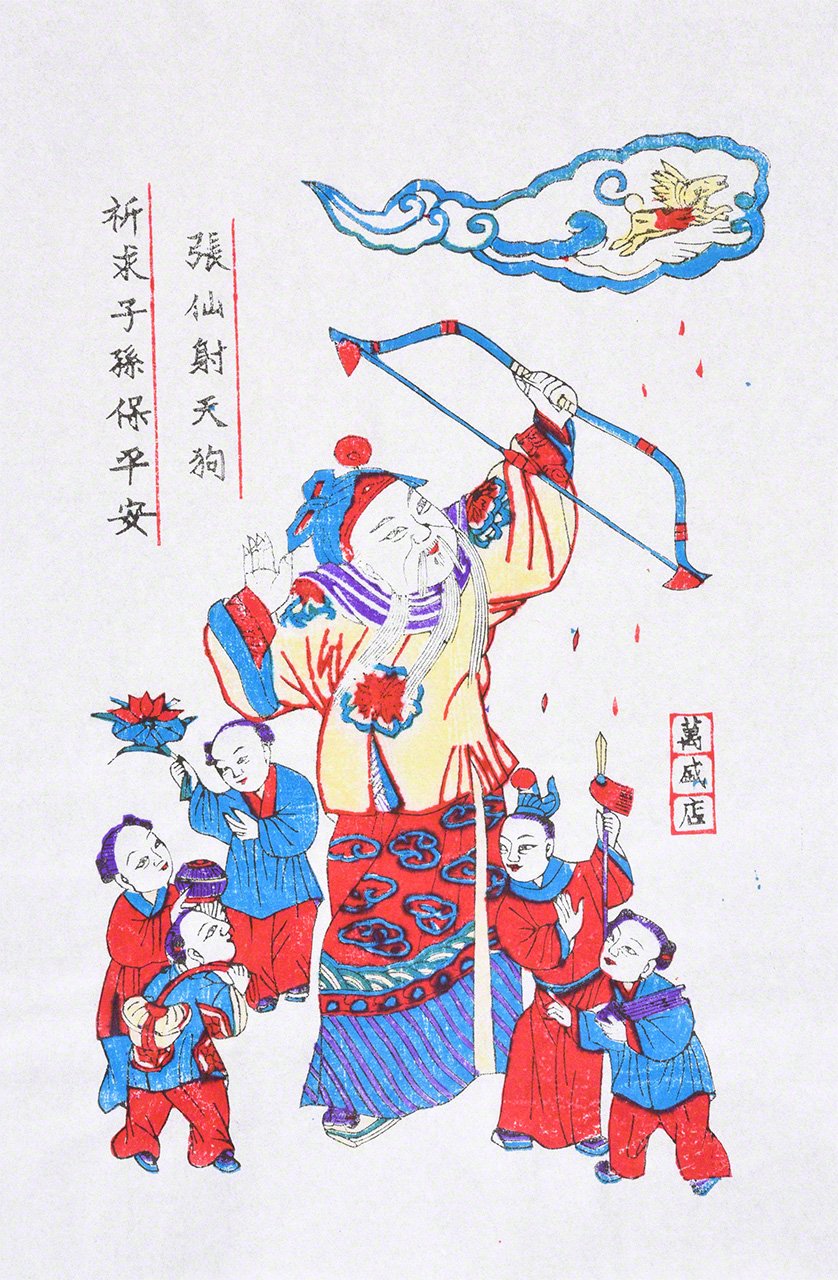
“Zhang Xian Shoots the Tiangou.” Cards like this would be hung in houses to ward off bad luck at Chinese New Year. Zhang Xian, the guardian deity of children, protects his charges from illness by shooting the ill-omened tiangou. (Courtesy Kagawa Masanobu)
-
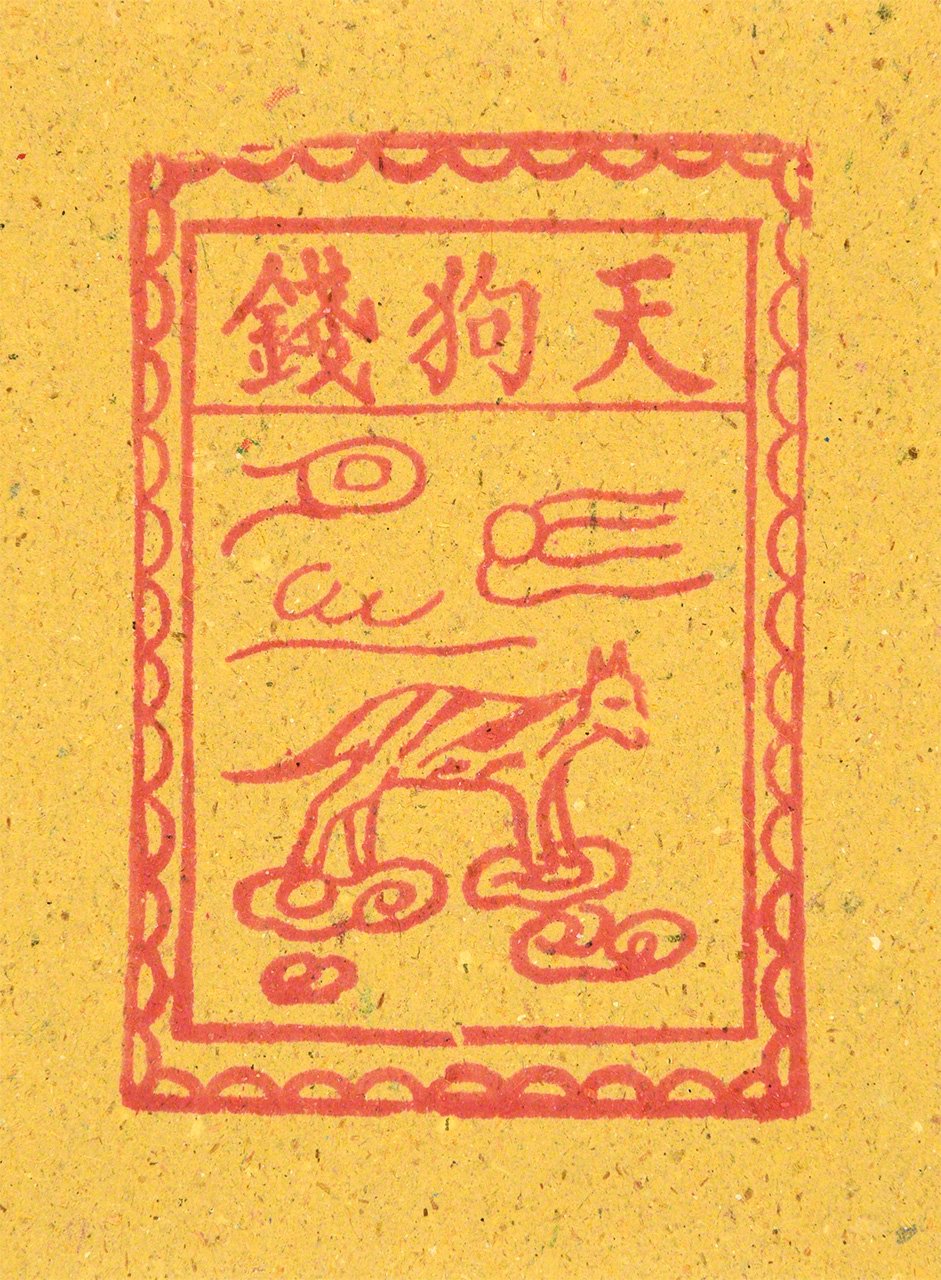
In China and Taiwan, people would pay Taoist priests to burn joss paper printed with images of the tiangou to ward off evil and ill omens. (Courtesy Kagawa Masanobu)
-
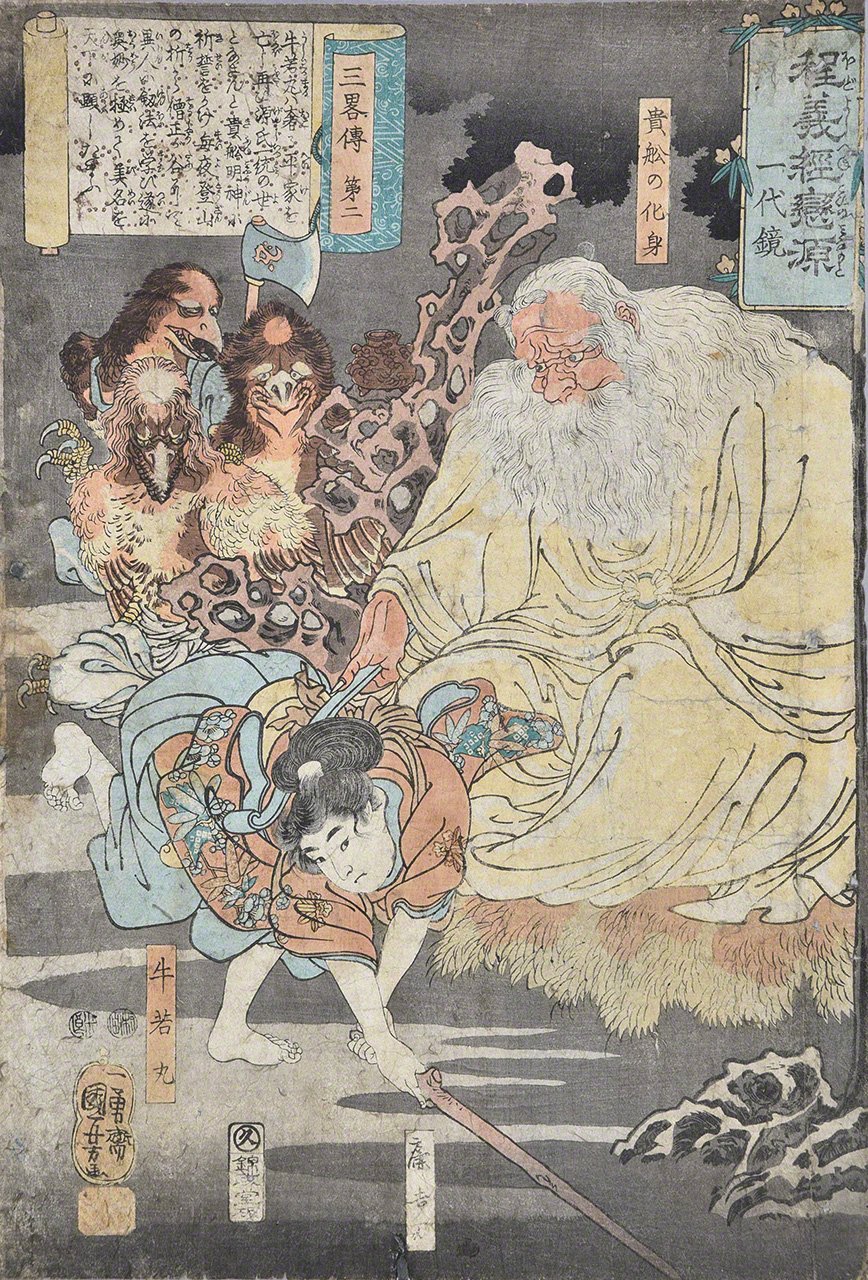
The warrior hero Minamoto Yoshitsune spent his boyhood on Mount Kurama in Kyoto, where according to legend he was trained in the martial arts by a Great Tengu, avatar of the local Shintō deity Kibune Myōjin and his followers the Karasu-tengu or “Crow Tengu.” This ukiyoe print by Utagawa Kuniyoshi was produced around 1847–52, based on the nō play Kurama tengu. (Courtesy Kagawa Masanobu)
-
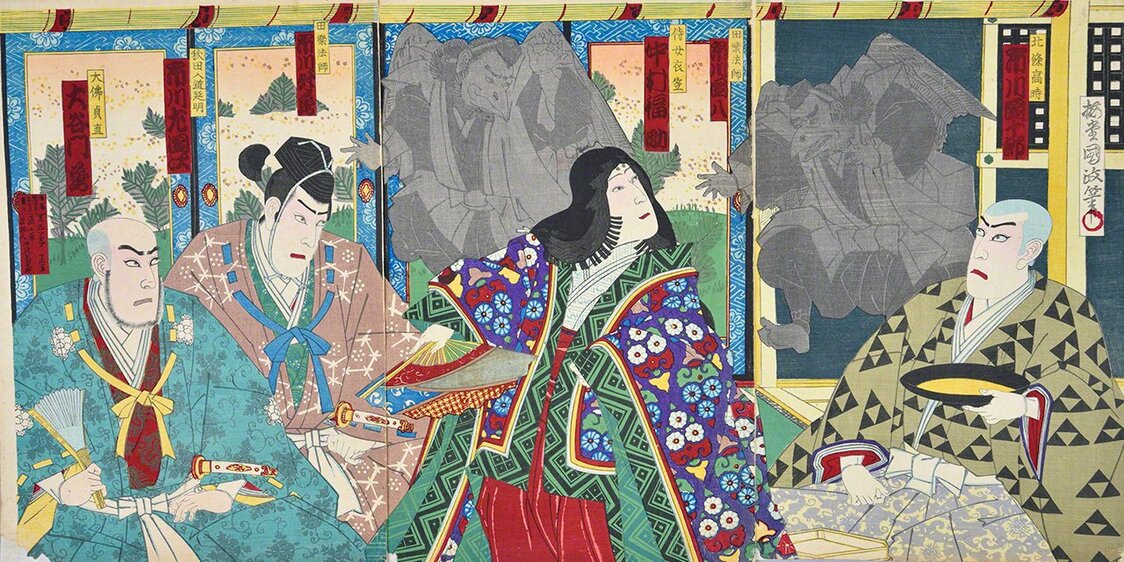
This 1887 print by Utagawa Kunimasa depicts the famous scene in a kabuki play based on the Taiheiki, in which tengu appear before the ruler Hōjō no Takatoki to perform a dance that prophesies the ruin of his government. (Courtesy Kagawa Masanobu)
-
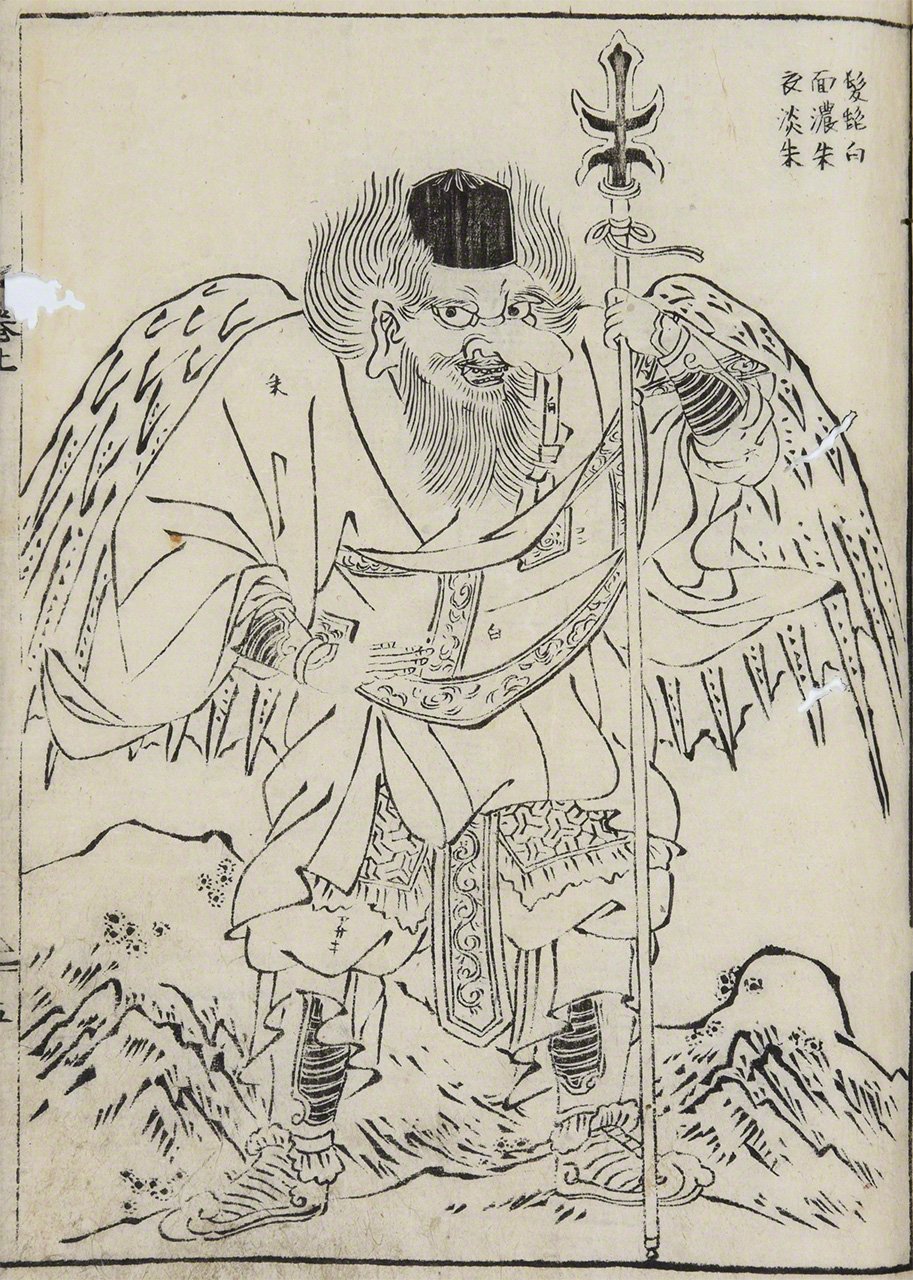
Sōjōbō, the tengu priest of Mount Kuruma in Kyoto, attributed to Kanō Motonobu. Published in the Ehon tekagami (An Illustrated Book of Model Paintings), in 1720 by Ōoka Shunboku. (Courtesy the Hyōgo Prefectural Museum of History.)
-
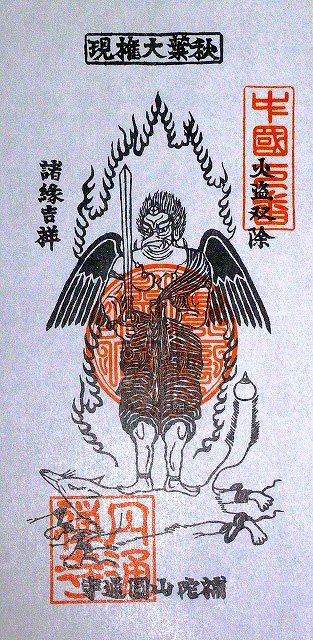
Talismans like this, inscribed with the image of the tutelary deity Akiha Sanjakubō Daigongen, are distributed at the festival held to honor the fire-quenching deity each January at Entsūji temple in Kurashiki, Okayama Prefecture. Sanjakubō, depicted as a crow tengu standing on a fox, is often regarded as a manifestation of the Akiha Gongen deity, and these talismans are believed to have magical powers to ward off fire. (Courtesy Kagawa Masanobu)


 Read in other languages