-
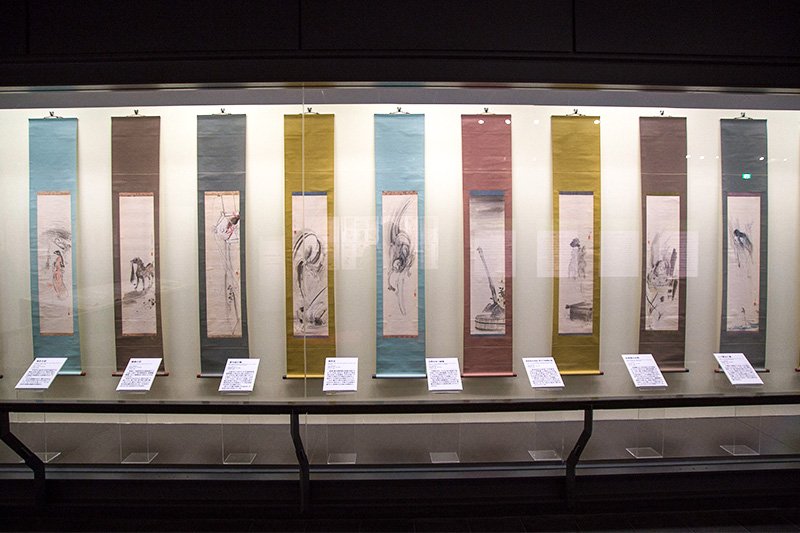
Itō Seiu’s paintings from the Kosan collection.
-
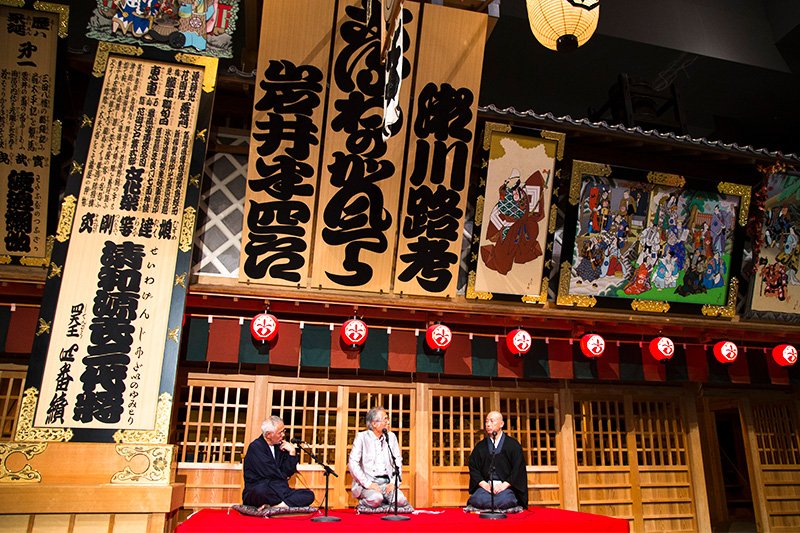
Suzuki Toshio (left), Fujimori Terunobu (center), and Hirai Shōshū (right), in a three-way discussion at the replica of the nineteenth-century Nakamuraza theater at the Edo-Tokyo Museum. Rakugo performances are sometimes held in the theater.
-
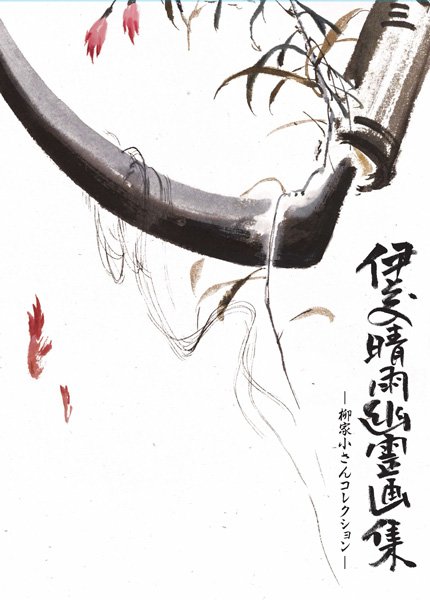
The catalog for the museum exhibition.
-
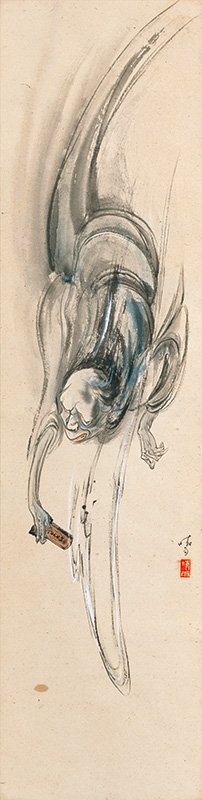
Ihai o motsu yūrei (Ghost Holding a Mortuary Tablet). The swift movement of this leaping male ghost is expressed through effective use of blurring in the curved lines.
-
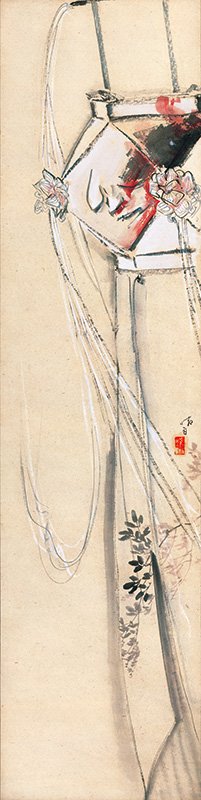
Kasane no bon tōrō (Kasane’s Obon Festival Lantern). The face that appears in the swinging Obon lantern has one swollen eyelid, so the eye is not visible. It represents the vengeful spirit of a murdered woman called Kasane.
-
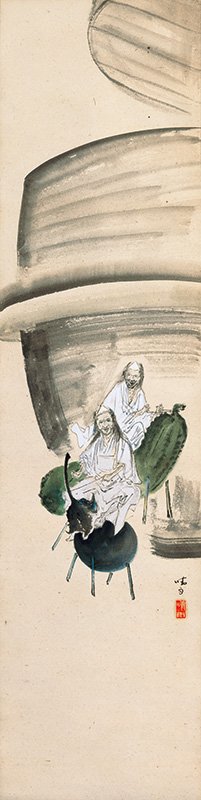
Urabon’e no mōja (Obon Ghosts). Obon is traditionally held around the fifteenth day of the seventh month in the former lunar calendar (equivalent to August 17, 2016). Spirits are believed to travel from and back to the realm of the dead on spirit animals represented by eggplants and cucumbers. It was once thought that even demons stopped punishing criminals during New Year and Obon.
-
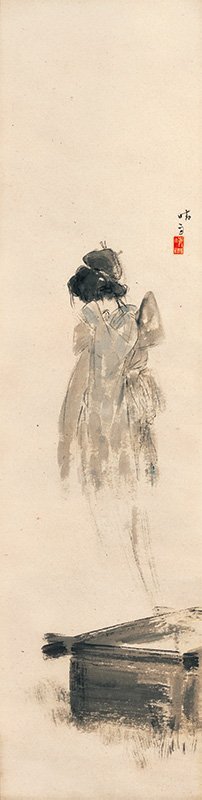
Sarayashiki no Okiku (Okiku of the Plate Mansion). Based on the famous story of the servant Okiku who loses her life after breaking one of the 10 valuable plates of the family she works for. As a ghost, she spends each night counting and recounting the plates. The depiction of the legs fading out is a standard of the ghost painting genre.
-
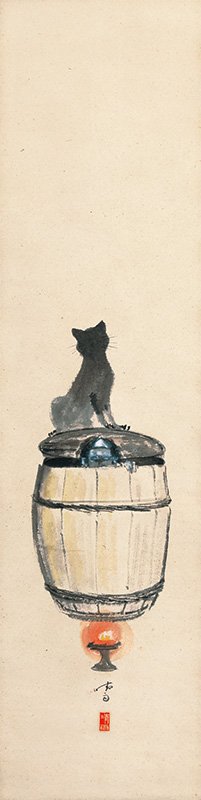
Neko no kaidan (Cat Ghost Story). Since ancient times there was a belief that cats could summon the spirits of the dead. The rakugo tale Cat Ghost Story describes the strange events that occur when Yōtarō is carrying the body of his dead father-in-law.


 Read in other languages