-
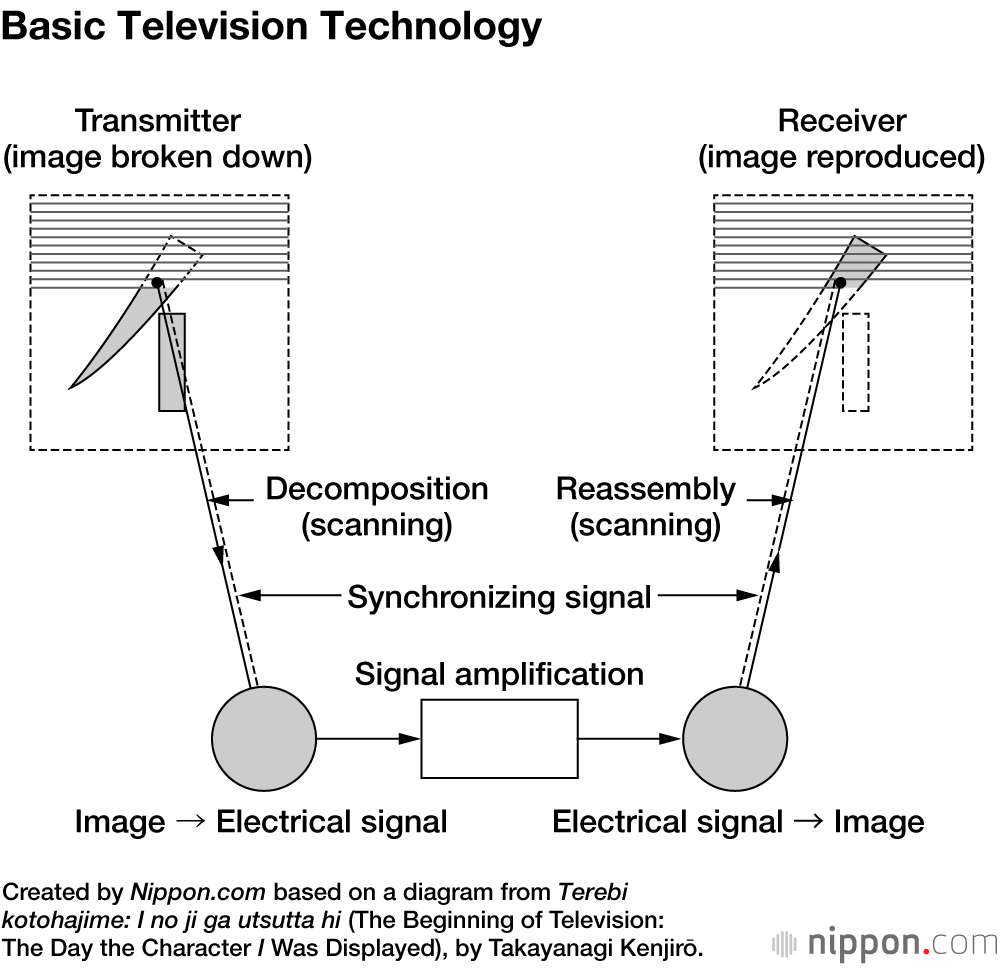
A recording device breaks an image into horizontal lines of tiny dots (pixels), which are converted into electrical signals and transmitted. A receiver converts the signal back into images, reassembling the image with an electron beam that creates those same horizontal lines as it illuminates the pixels across a screen. Motion is reproduced by refreshing this display at a rate of 25–30 frames per second—although this rate is now moving toward 50–60 frames per second as technology advances.
-
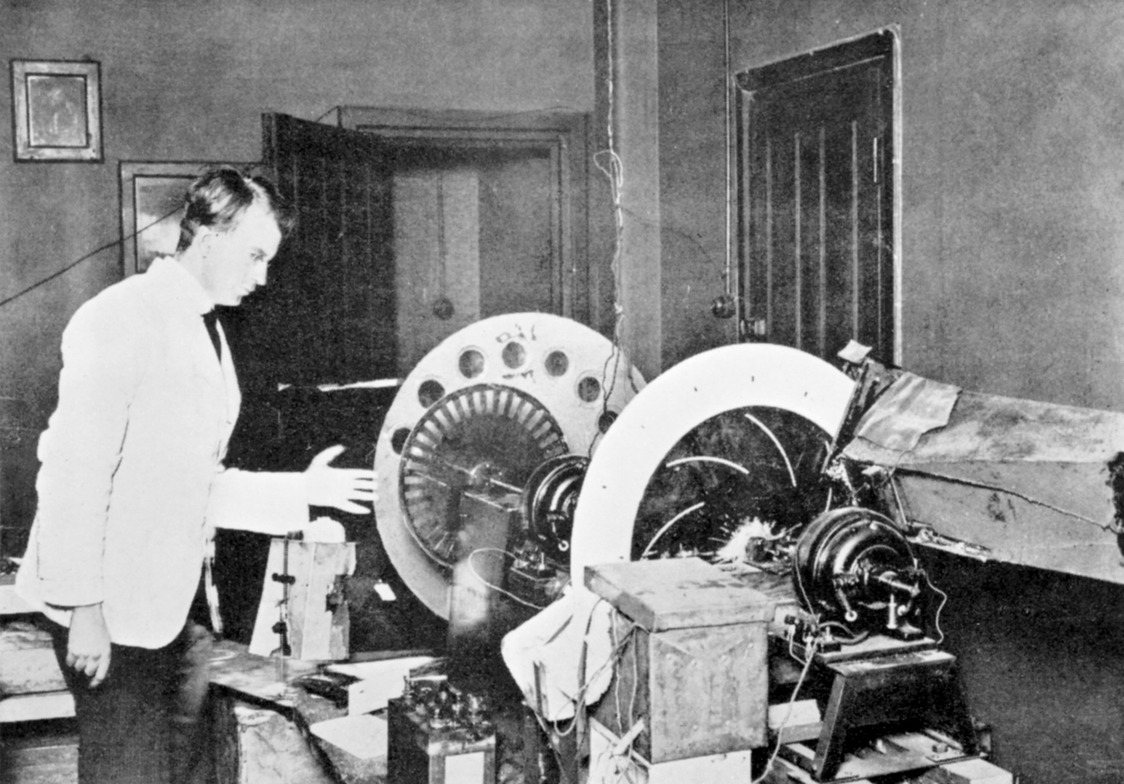
Baird demonstrates his original television model. (© Science Photo Library via Reuters Connect)
-
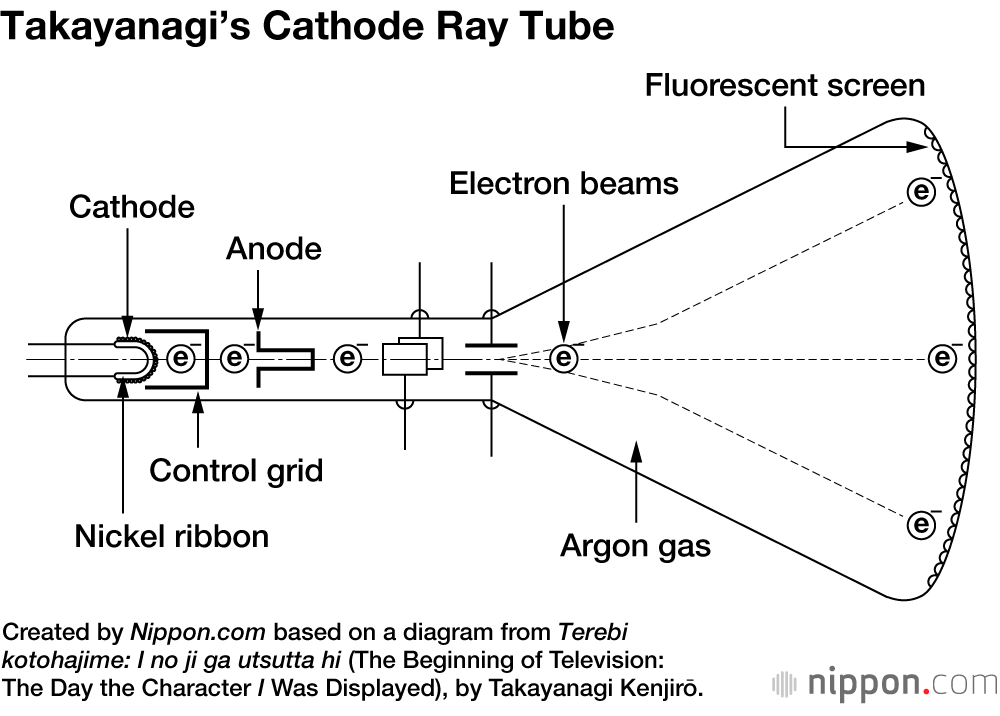
The cathode emits electrons and an anode focuses the beam of particles on the fluorescent screen, illuminating it. The beam is steered by magnetic force, with the brightness controlled by adjusting the voltage.
-
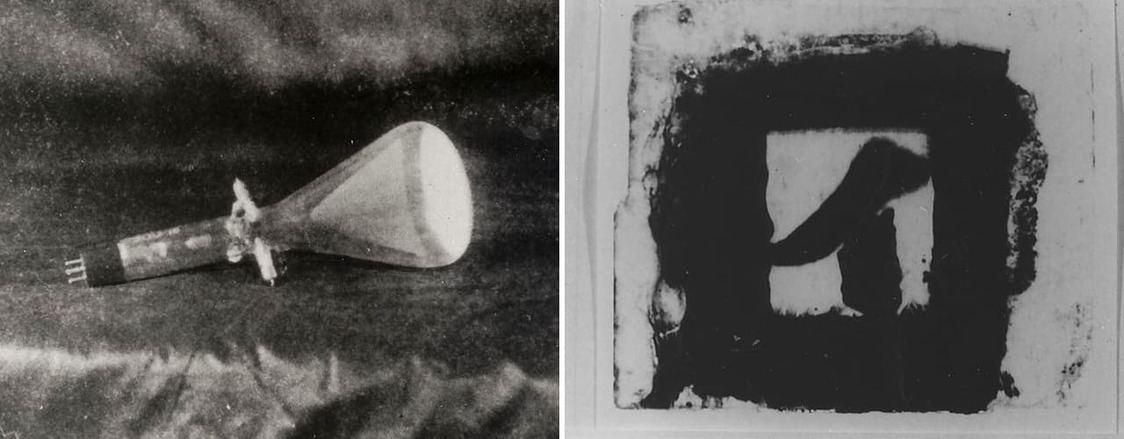
At left, the 13-inch cathode ray tube Takayanagi developed for his television produced 40 scanning lines; at right, the mica plate with the katakana character イ. (Courtesy the Kenjirō Takayanagi Foundation)
-
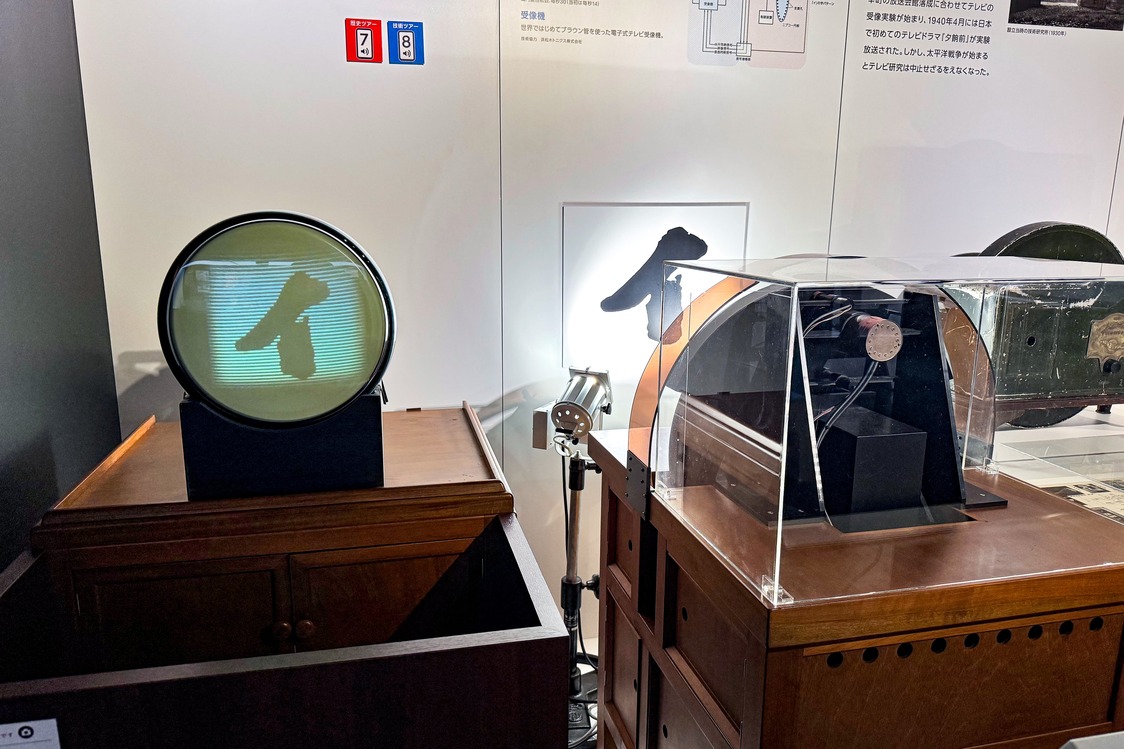
A replica of Takayanagi’s 1926 television, displayed at the NHK Museum of Broadcasting. (© Nippon.com)
-
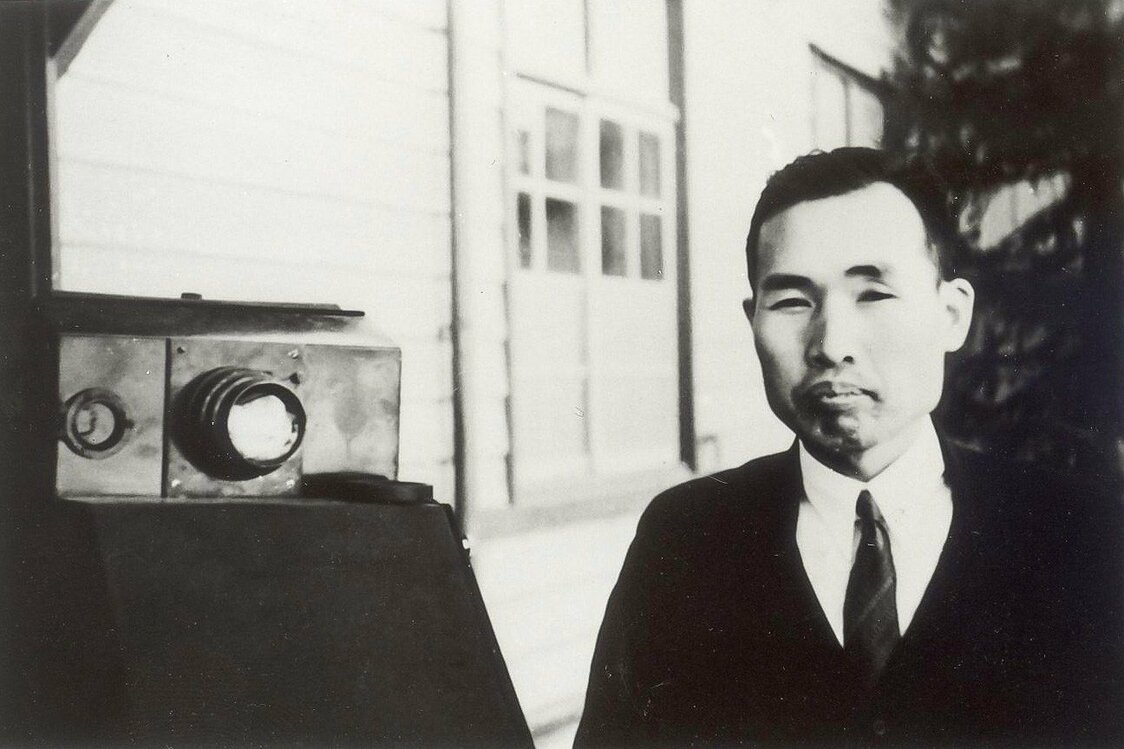
Takayanagi with his improved iconoscope in 1935. (Courtesy the Kenjirō Takayanagi Foundation)
-
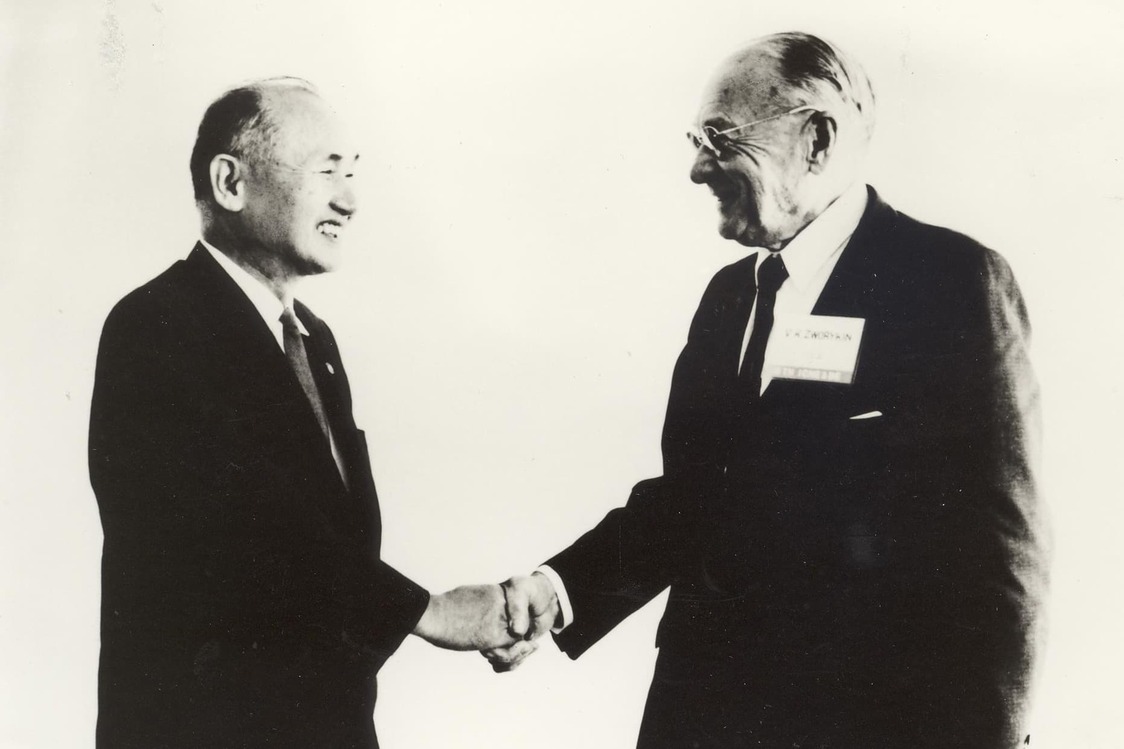
Takayanagi (left) and Zworykin later in life. (Courtesy the Kenjirō Takayanagi Foundation)
-
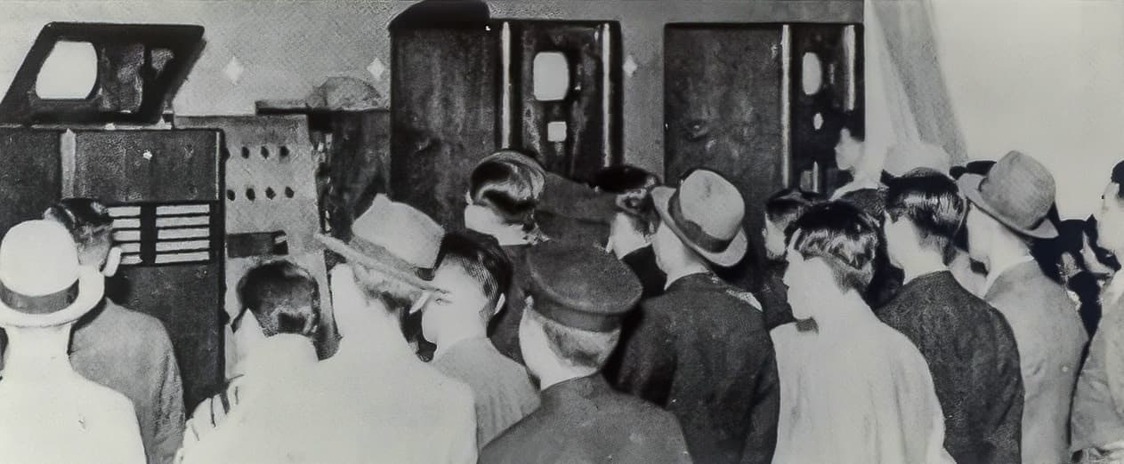
People gather at a public television broadcast demonstration in Tokyo. (Courtesy the Kenjirō Takayanagi Foundation)
-
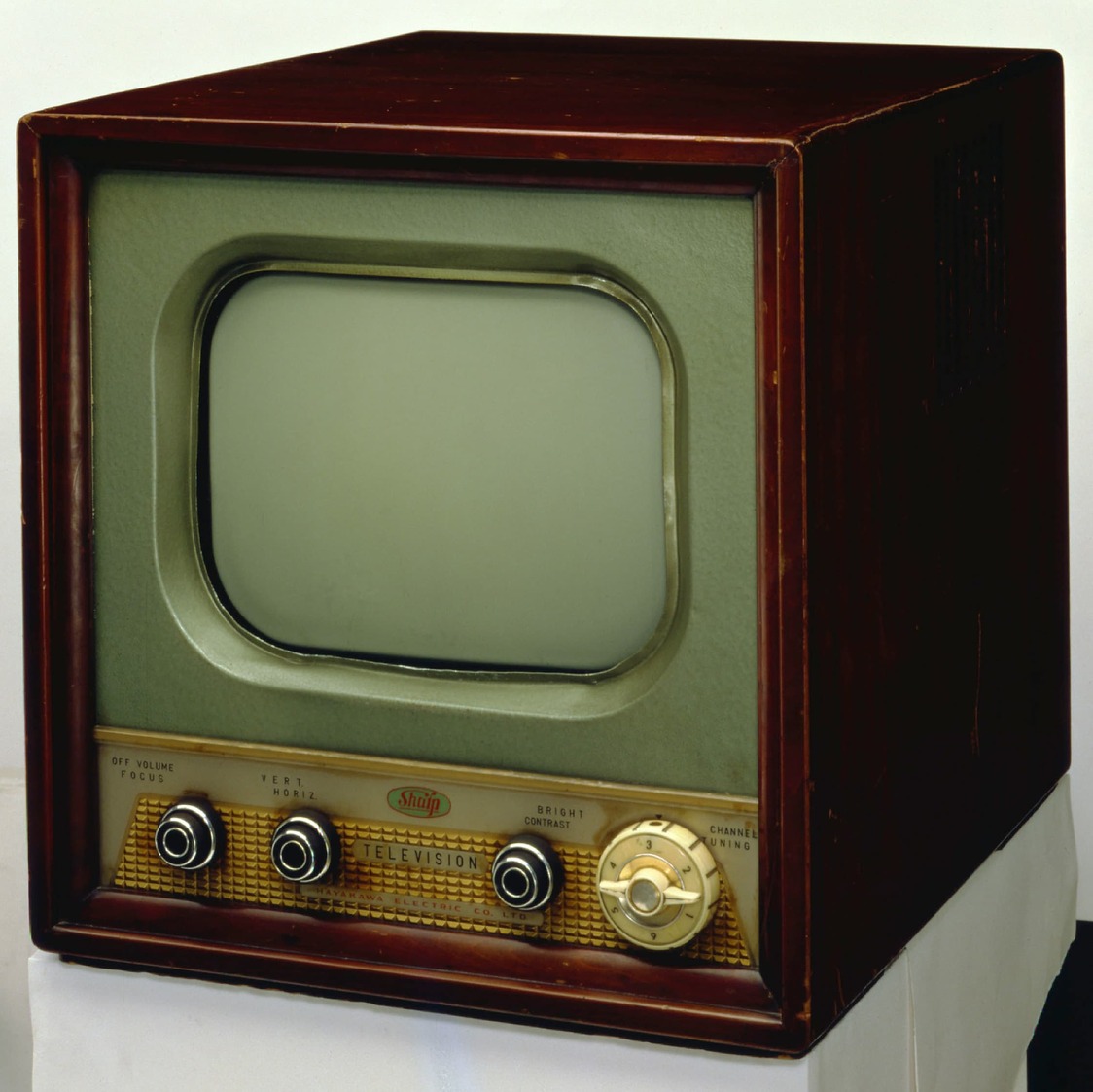
The first mass-produced Japanese television released by Hayakawa Electric (now Sharp) in 1953 utilized standards, such as a 14-inch screen, formulated by Takayanagi and other television researchers. (Courtesy Sharp; via Jiji)
-
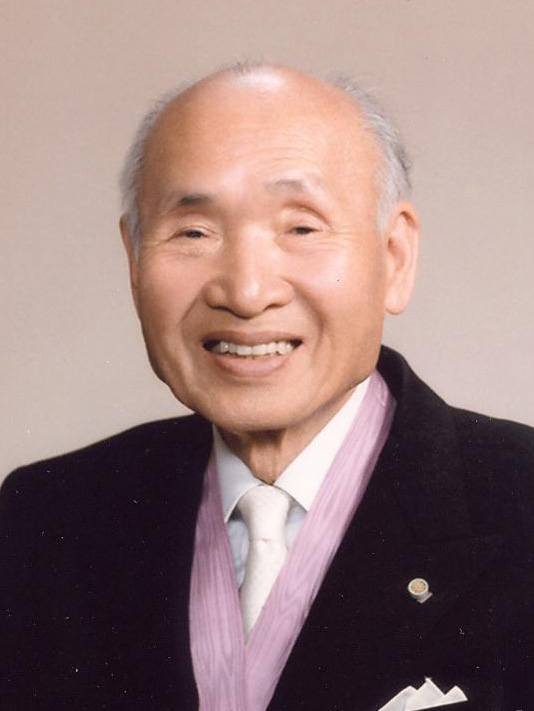
Takayanagi upon receiving the Order of Culture in 1981. He retained an eye for emerging technologies throughout his life, including pointing out in a 1970 lecture the potential of electroluminescence in creating flat panel displays. (Courtesy the Kenjirō Takayanagi Foundation)


 Read in other languages