-
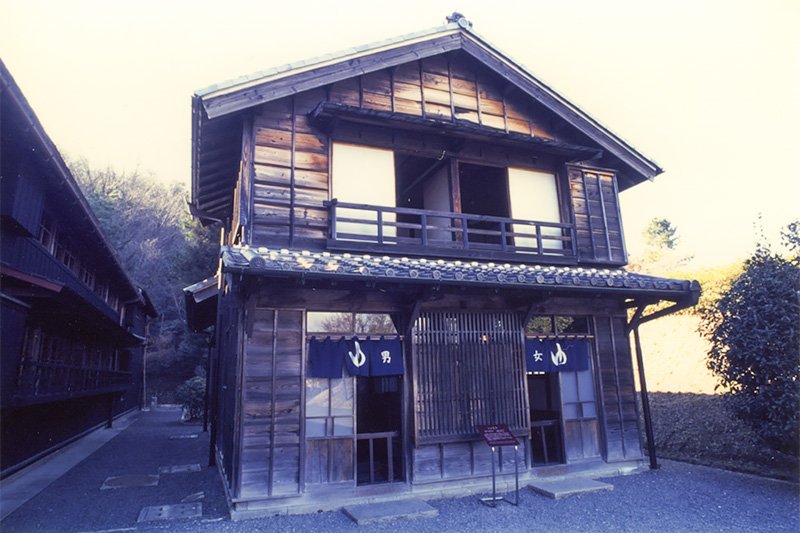
Handaazumayu is a plain-style bathhouse built around 1910. It can now be seen at the Meijimura museum in Inuyama, Aichi Prefecture.
-
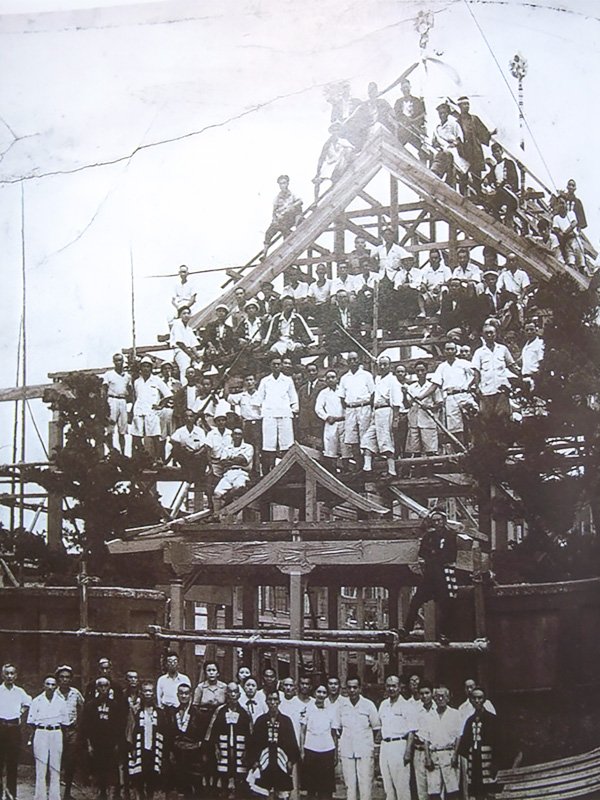
A miyazukuri-style bathhouse constructed in the late 1950s or early 1960s. It is said to have taken three months to build. (Photo courtesy Iidaka Construction)
-
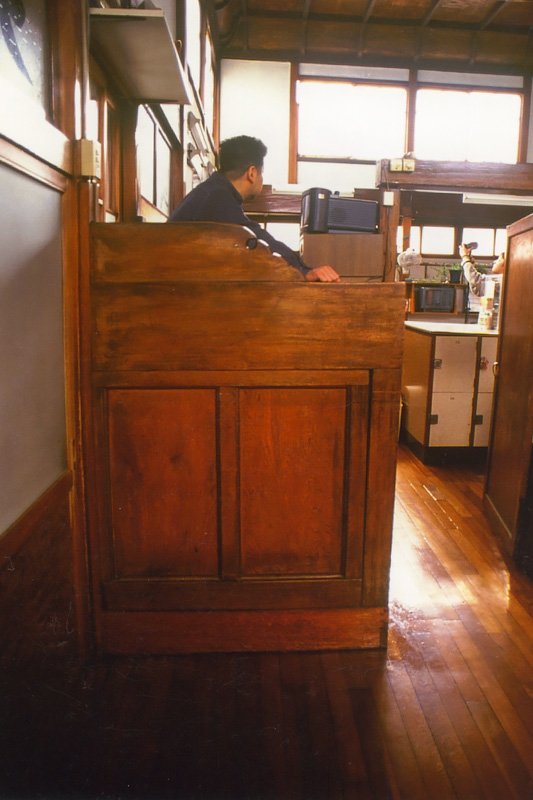
The bandai platform at Myōjin’yu, in Ōta, Tokyo. Customers pay entrance fees or buy soap and other items at these platforms, located in the changing rooms of older sentō. From the high vantage point they offer, attendants can observe the bathing area in case, for example, any customers appear to be unwell. Bandai in the Tokyo area tend to be particularly tall, with an average height of around 1.3 meters.
-
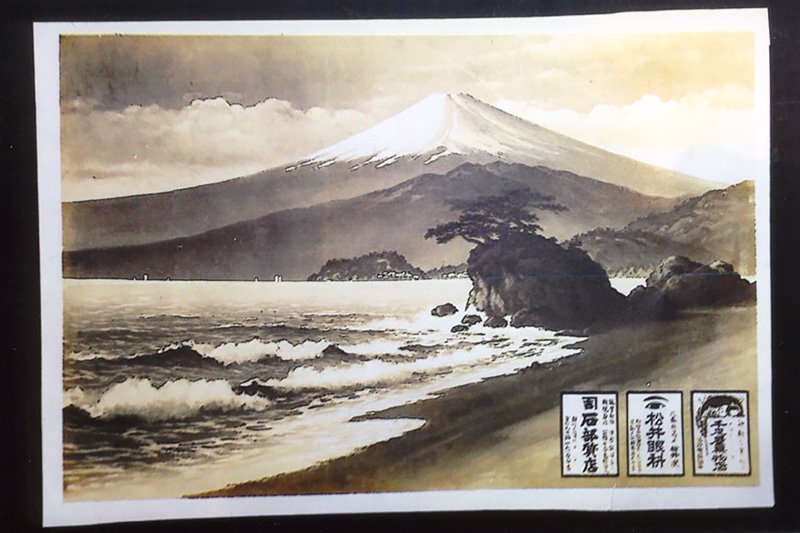
A work by Kawagoe Kōshirō, who painted the first Mount Fuji mural in a sentō. (Owned by Machida Shinobu)
-
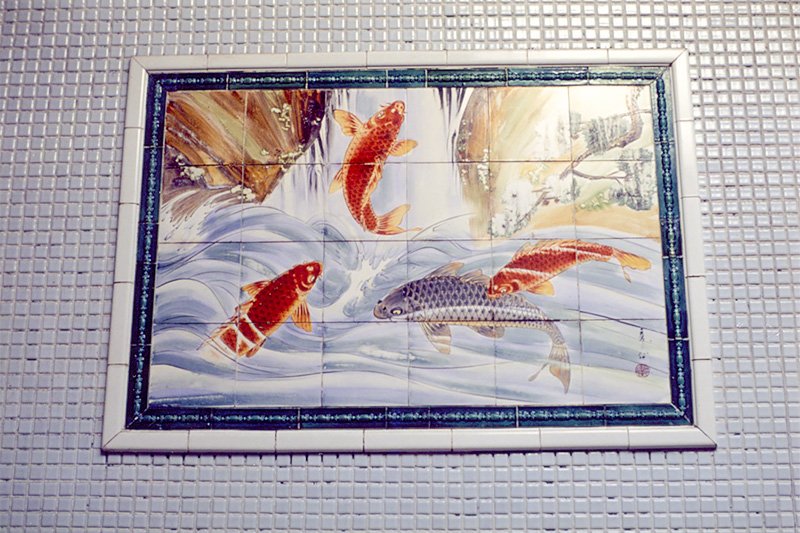
Paintings on tiles are a playful touch at sentō. They often depict koi carp swimming up a waterfall, which is an image associated with worldly success. This photo was taken at the now defunct Ninjin’yu in Kanazawa, Ishikawa Prefecture.
-
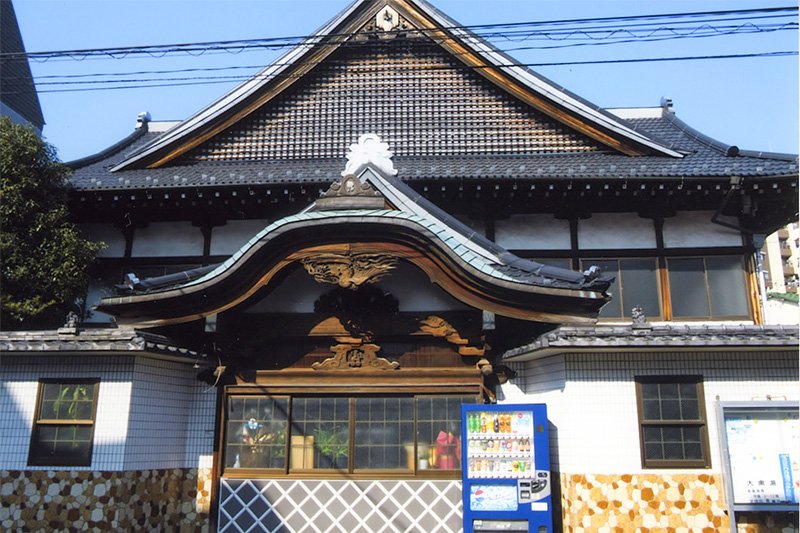
Daikokuyu in Adachi, Tokyo, is known as the “king of sentō.” The front entrance is no longer used and customers go around to the right-hand side to enter.
-
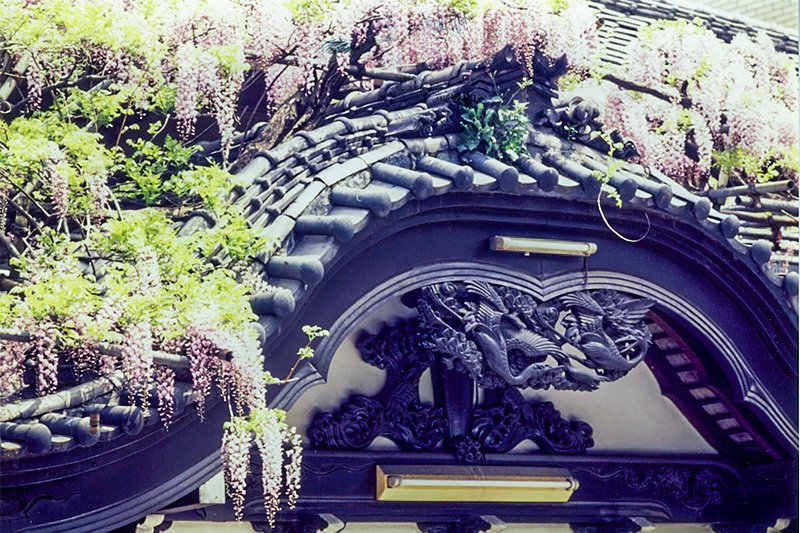
The karahafu gable at Akebonoyu in Asakusa, Tokyo. Pale purple wisteria flowers transform the bathhouse entrance in May.


 Read in other languages