-
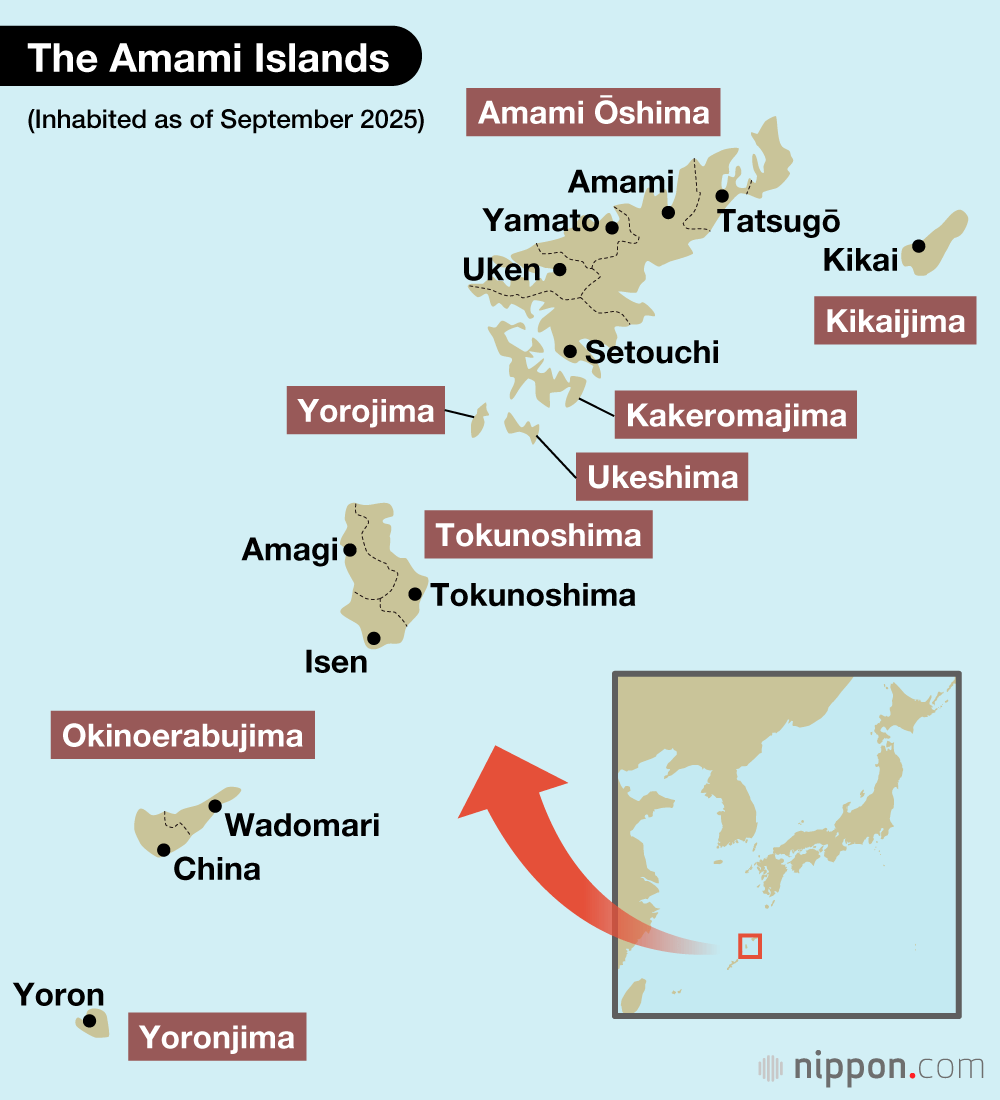
The Amami Islands
-
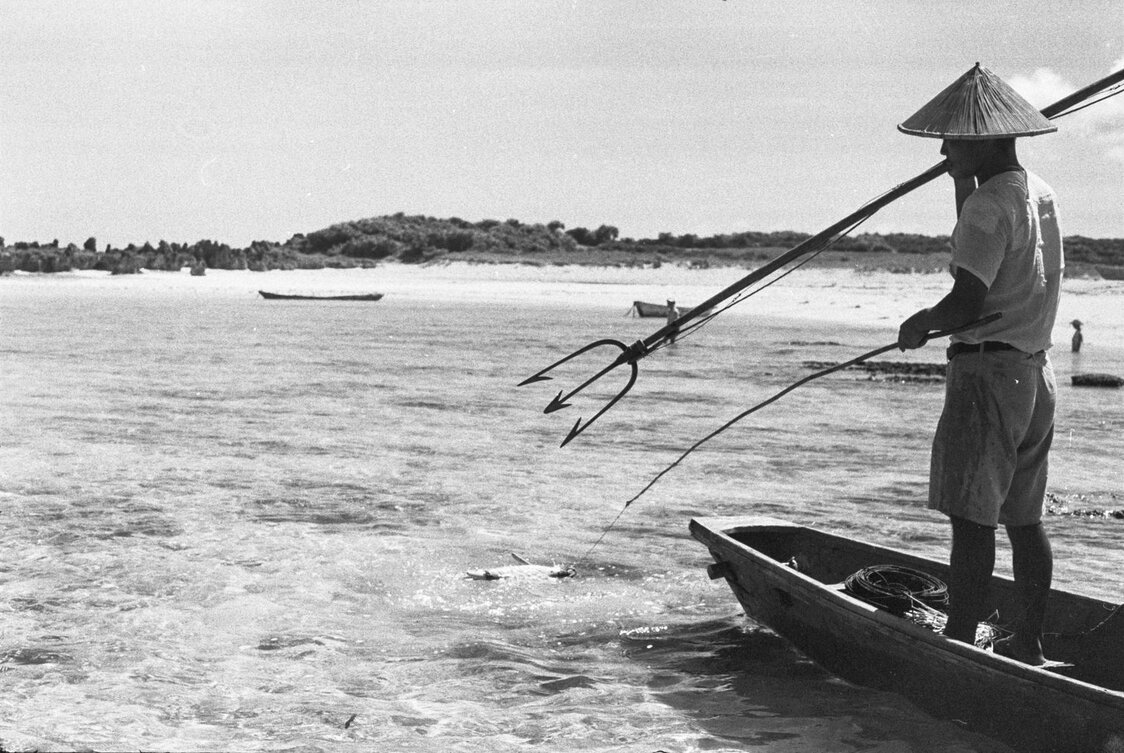
Harpoon fishing at Okinoerabujima. (© Haga Hideo)
-
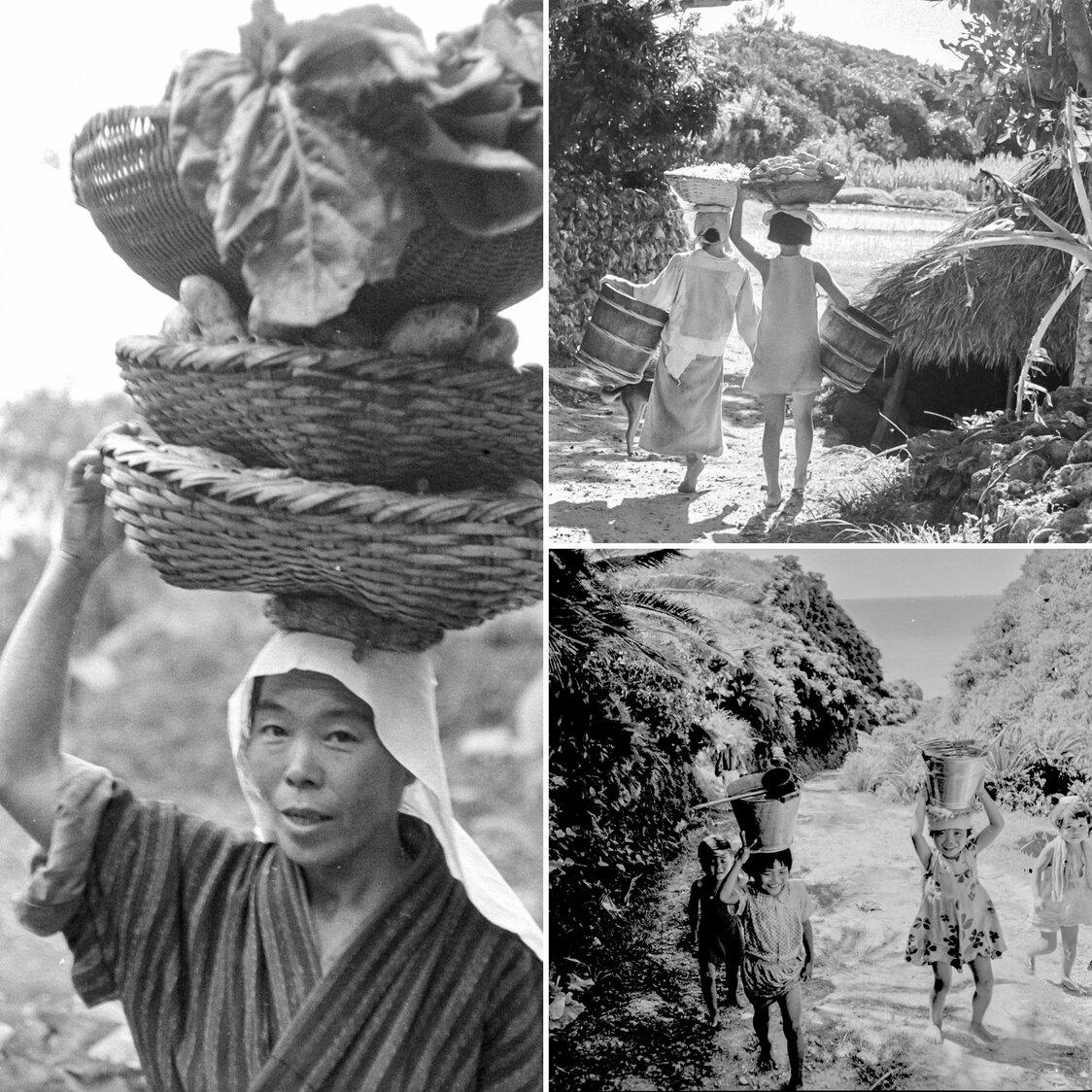
Women and children carrying loads on their heads. (© Haga Hideo)
-
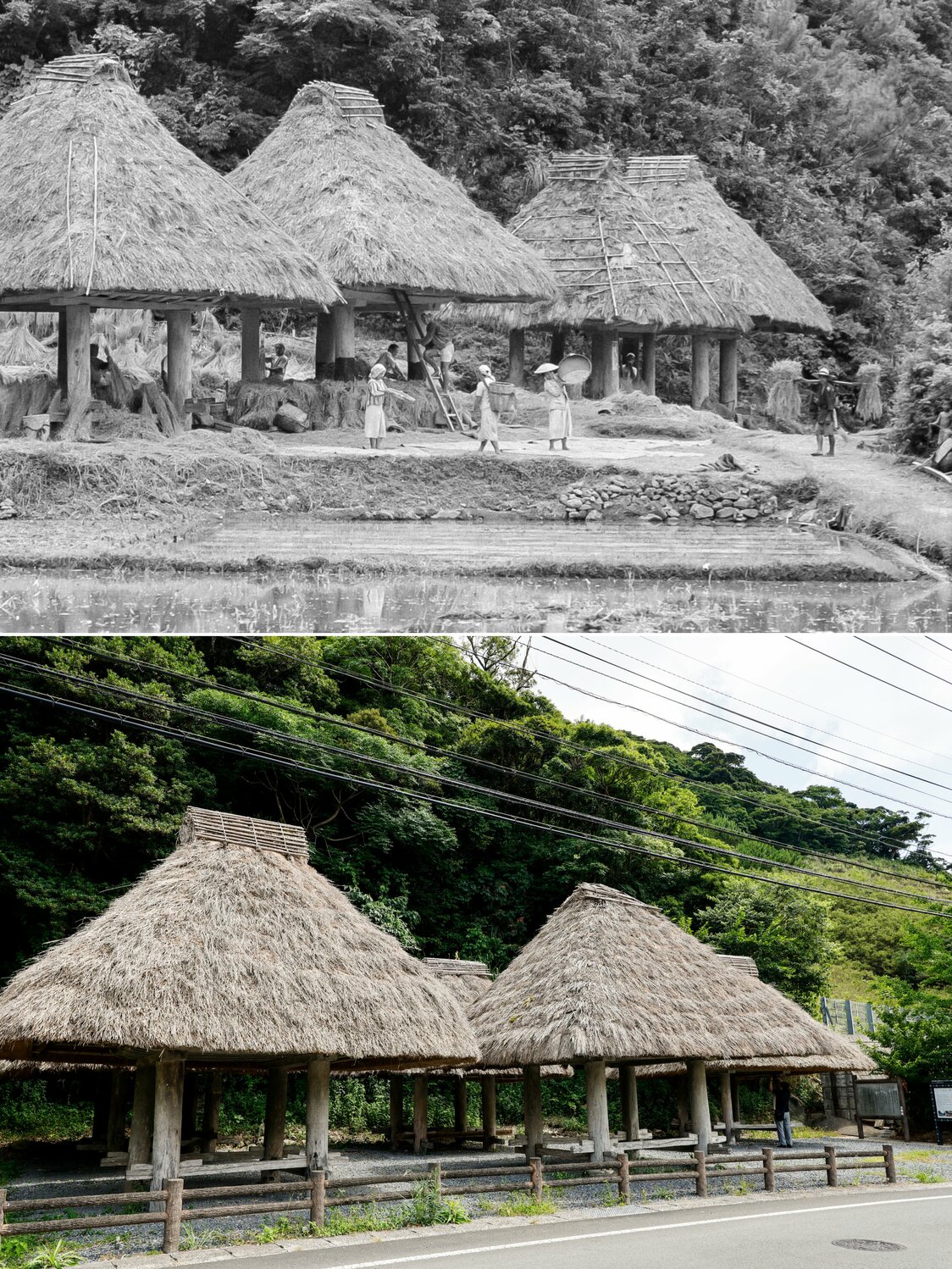
A group of storehouses in Yamato on Amami Ōshima. Preserved as a cultural asset, they huddle by the side of a road. (Top photo © Haga Hideo; lower photo © Haga Hinata)
-
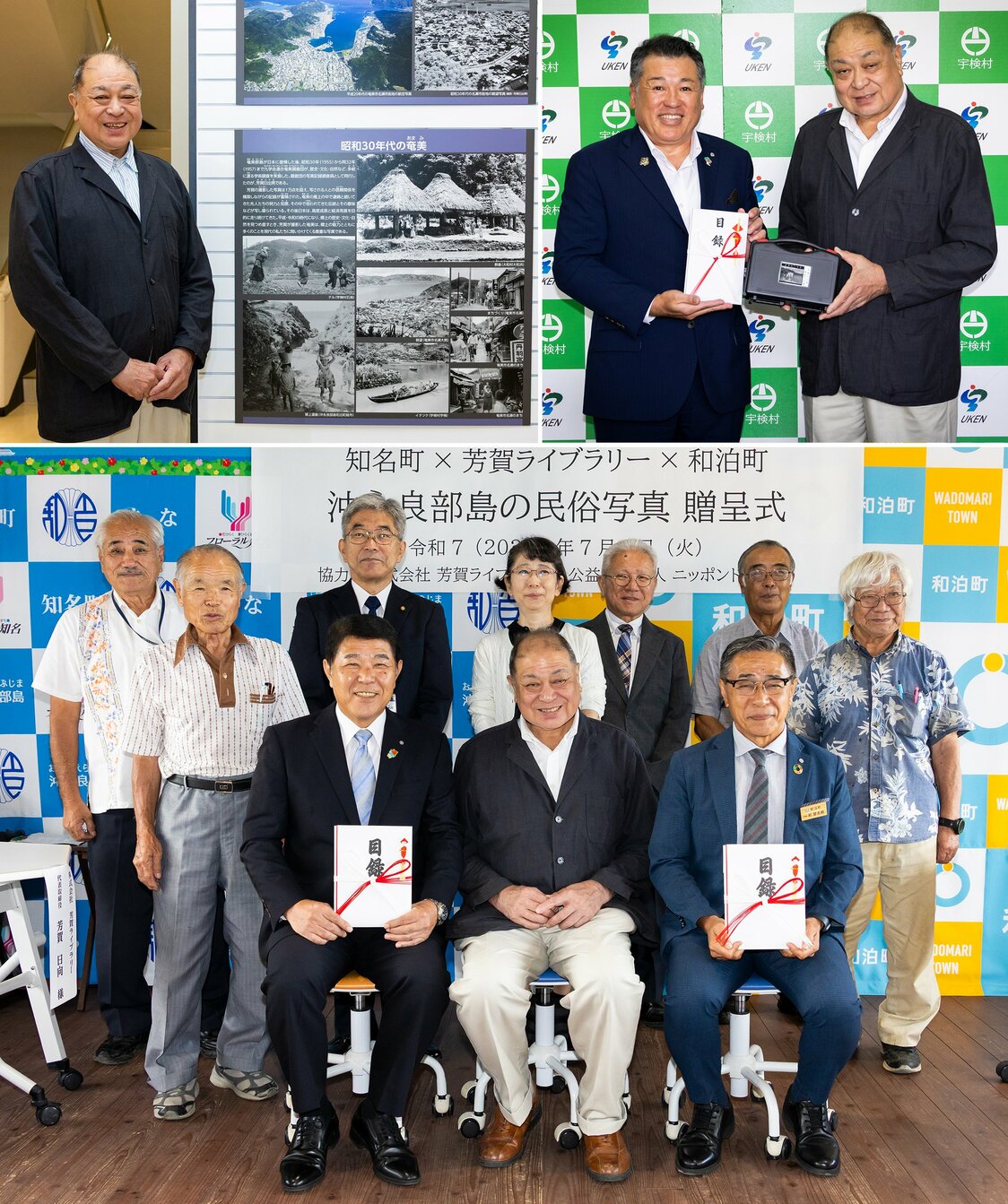
Clockwise from top left: Haga Hinata, who donated his father’s photos to the Amami Museum; a presentation ceremony in Uken; representatives from China and Wadomari gather to receive the materials. (© Nippon.com)
-
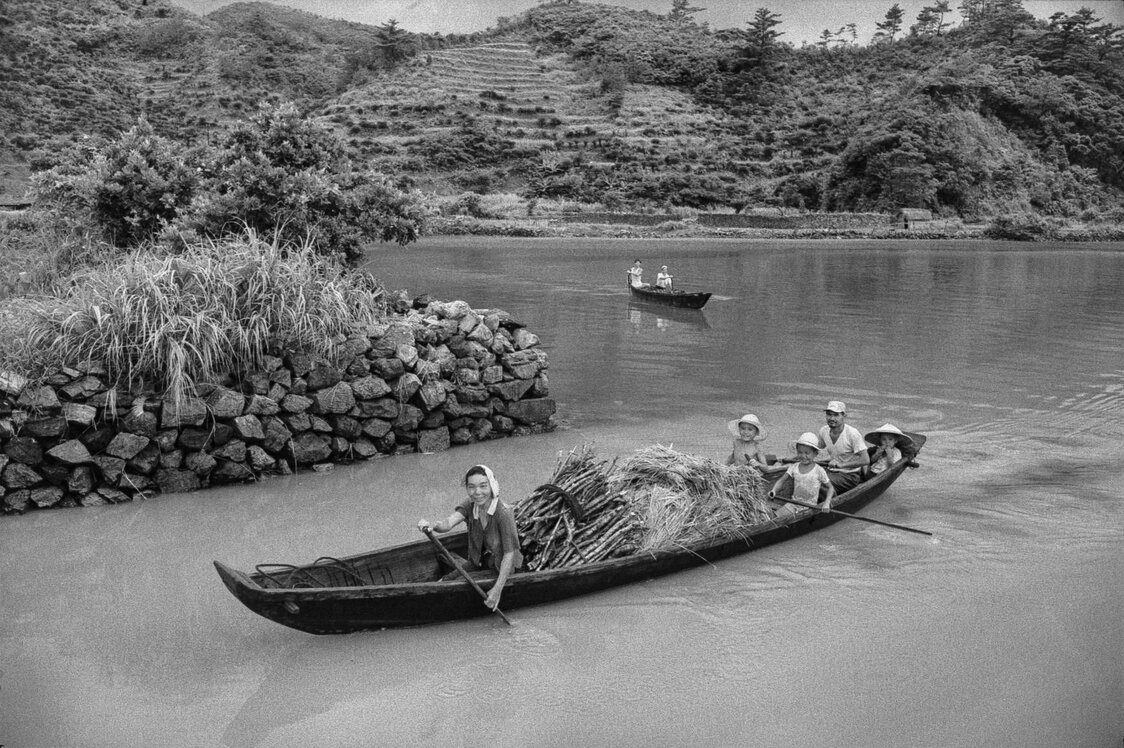
A family returning home after harvesting rice. (© Haga Hideo)
-
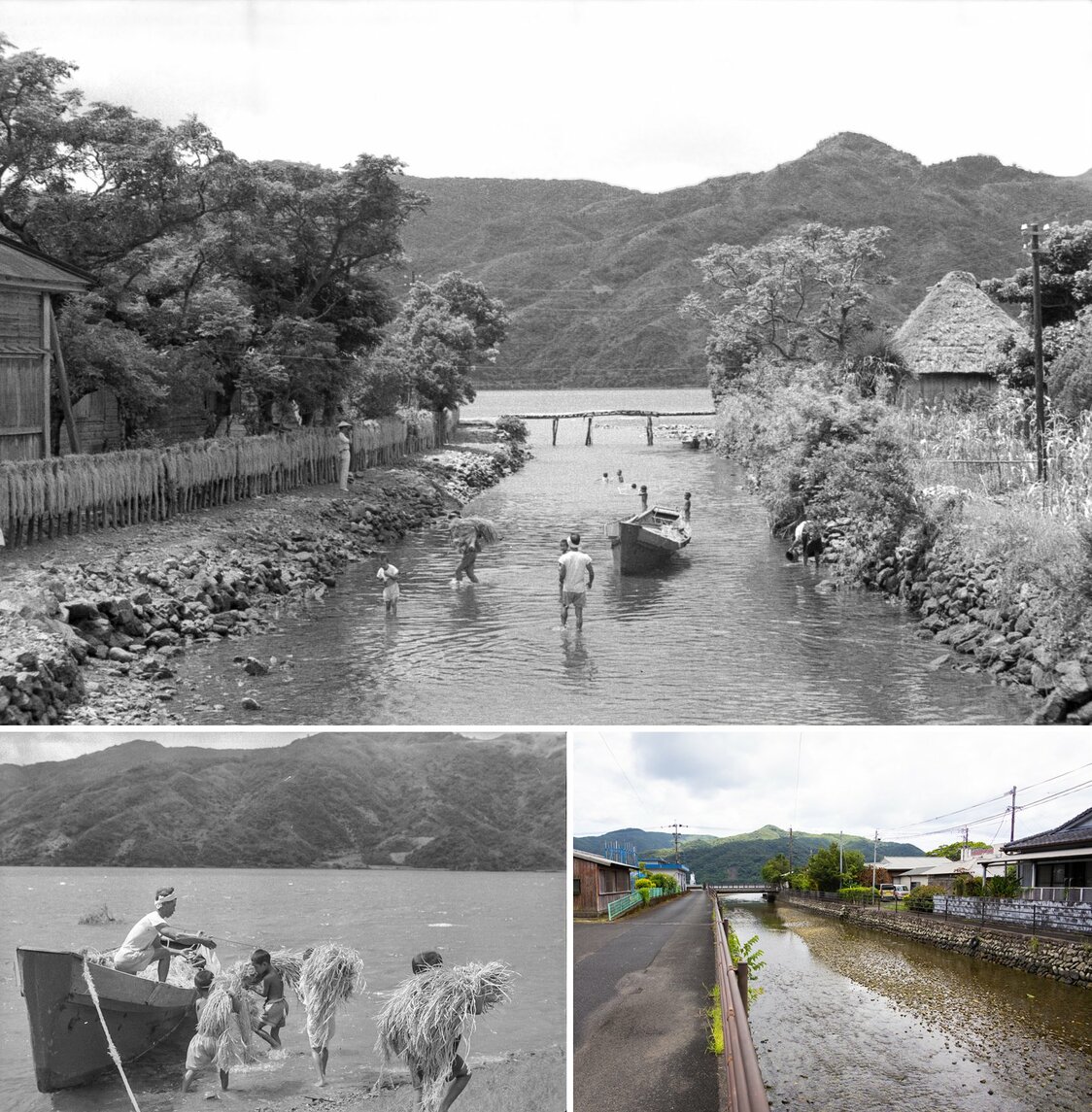
In the postwar years, rivers were the main means of transportation in the village of Uken. Children also helped harvest the rice. (Top and lower left photos © Haga Hideo; lower right photo © Nippon.com)
-
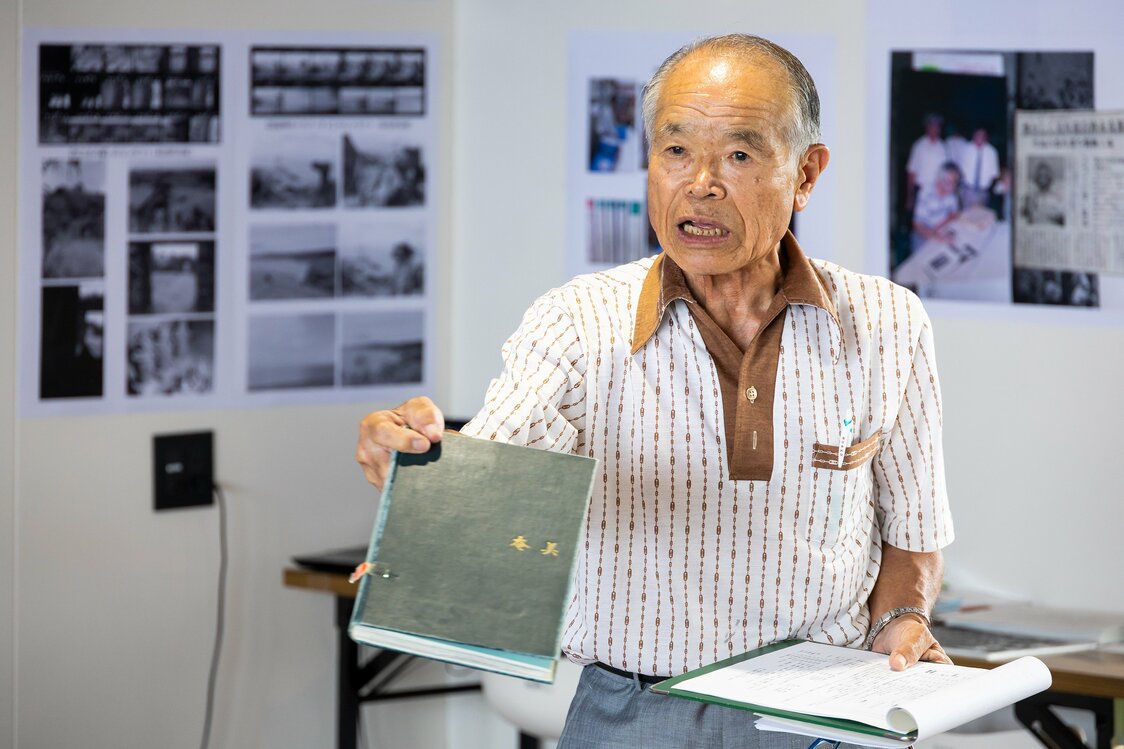
Sakida describes the photos, using the Federation of Nine Learned Societies report Amami as a reference. (© Nippon.com)
-
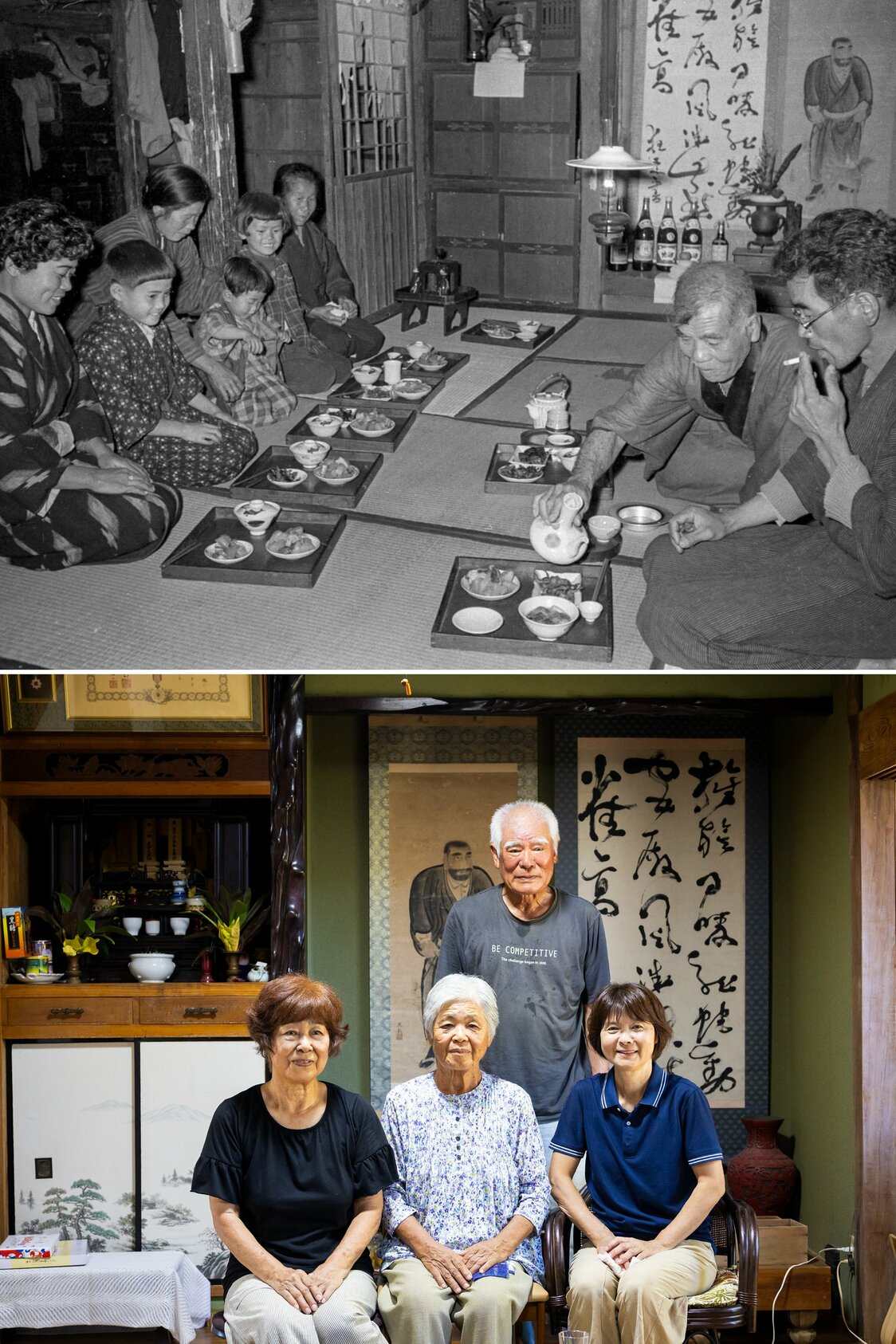
A New Year celebration then, and family members now. (Top photo © Haga Hideo; lower photo © Nippon.com)
-
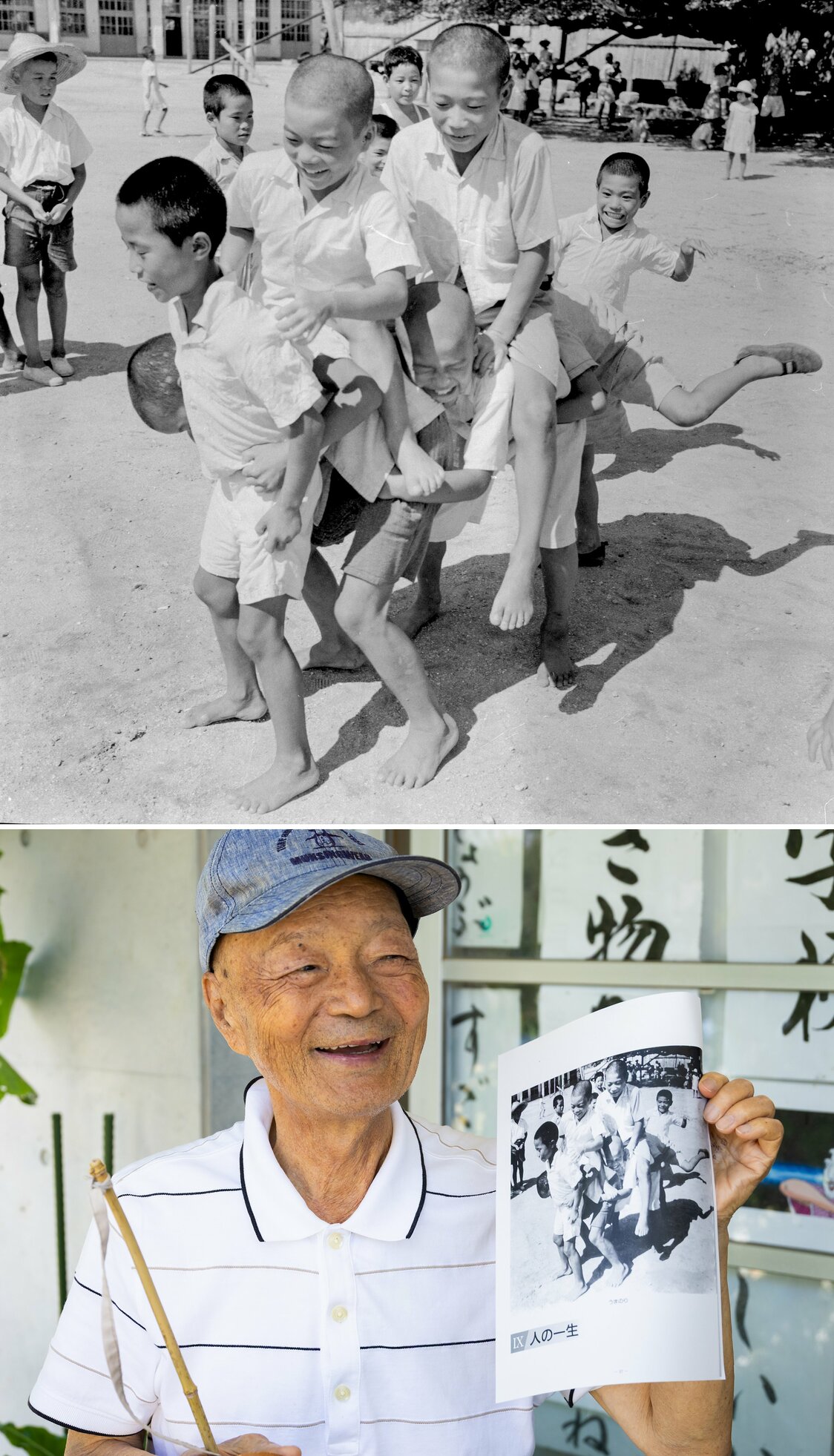
The “horse rider” second from left at the top laughs: “You can see the resemblance, don’t you think?” (Top photo © Haga Hideo; lower photo © Nippon.com)
-
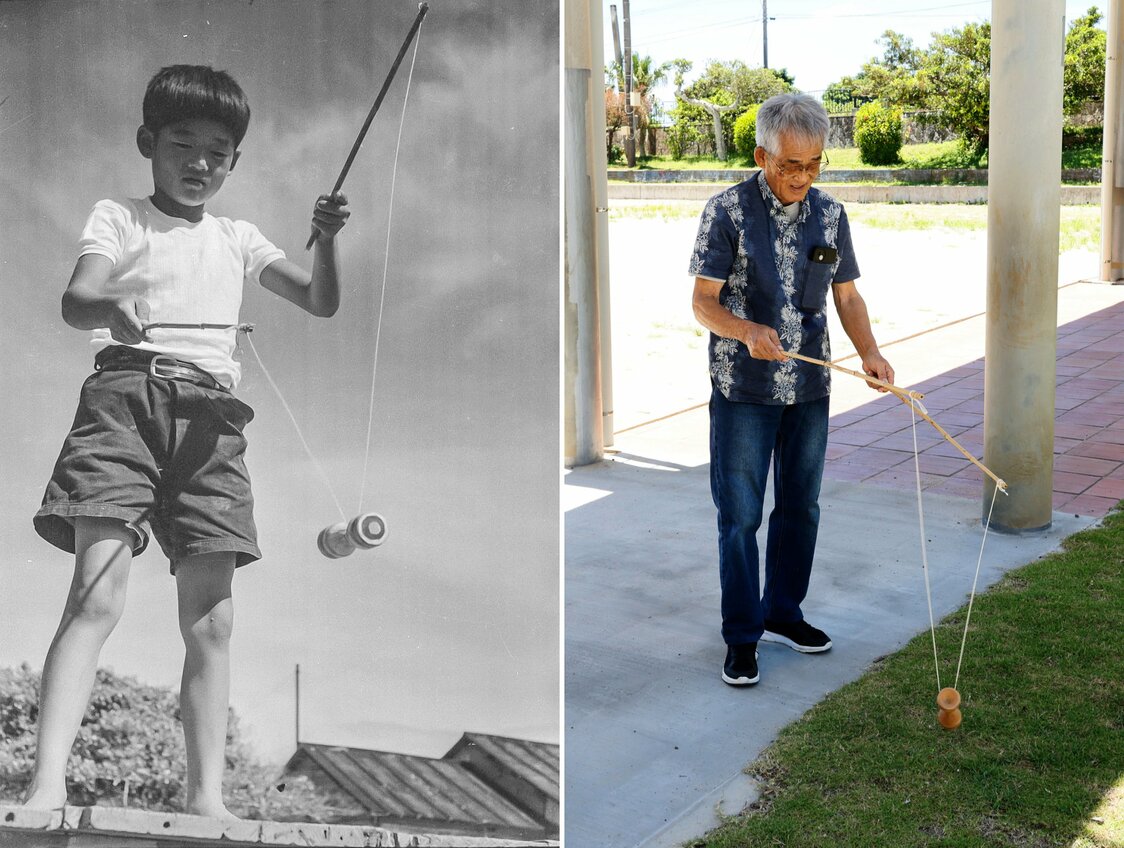
A man tries his hand at byābōru, a local toy similar to a yo-yo that he played with 70 years ago. (From left, © Haga Hideo; © Haga Hinata)
-
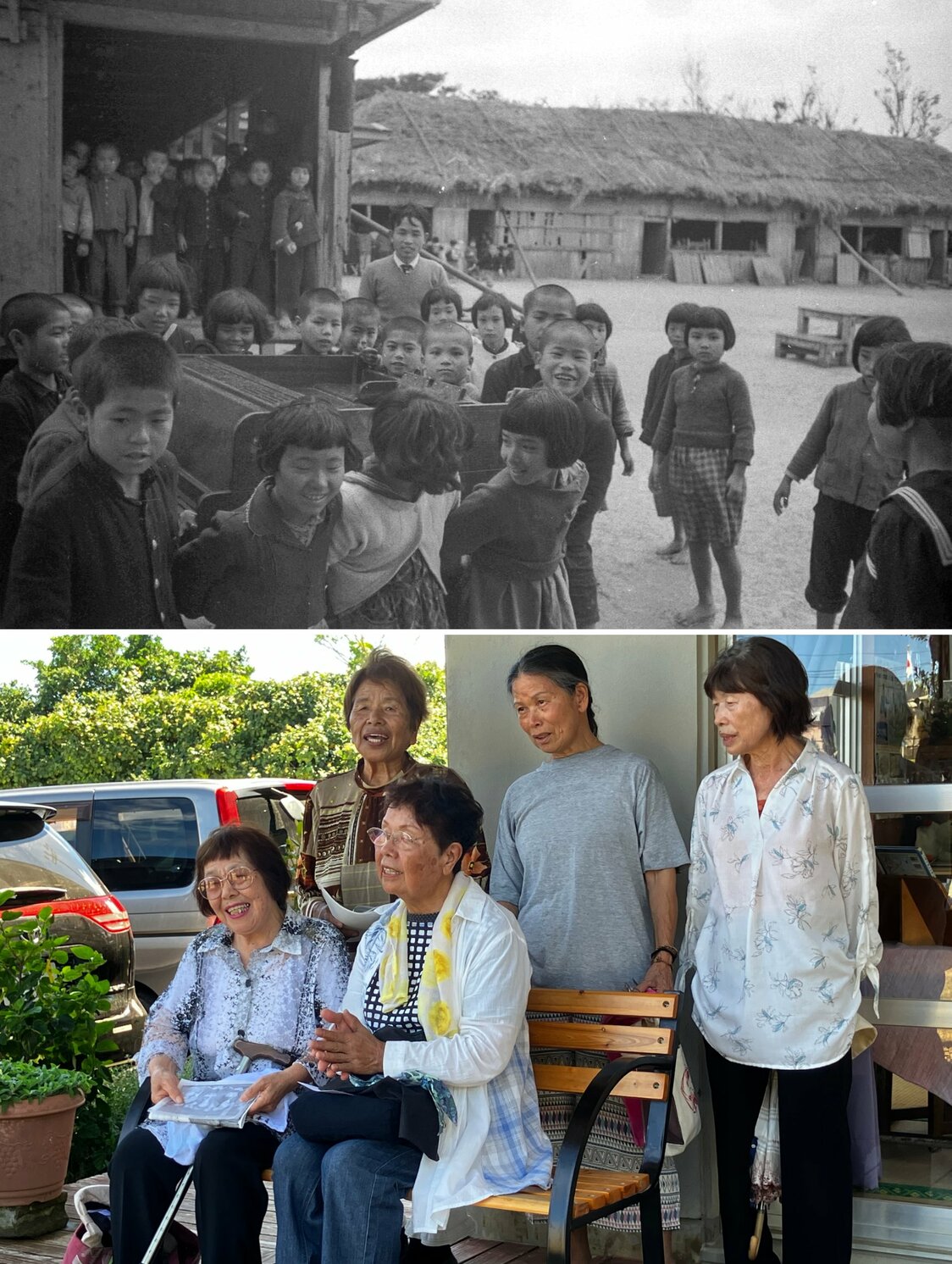
From top: Children carrying an organ into the new Kunigami elementary school building; part of the group sits reminiscing over the photo. (Top photo © Haga Hideo; lower photo © Haga Hinata)
-
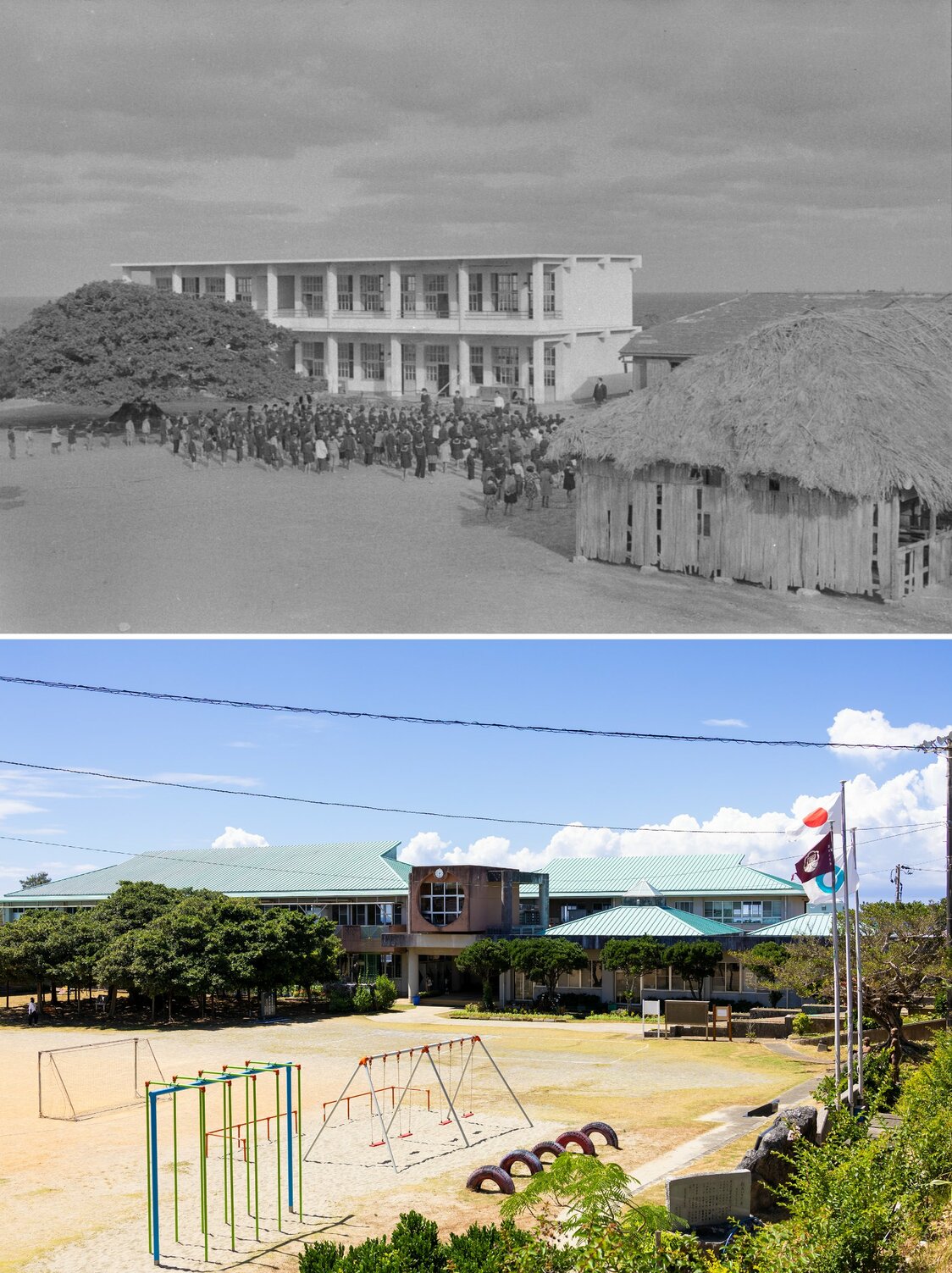
The school building is new, but the banyan tree, reputedly Japan’s finest, is still going strong in the schoolyard. (Top photo © Haga Hideo; lower photo © Nippon.com)
-
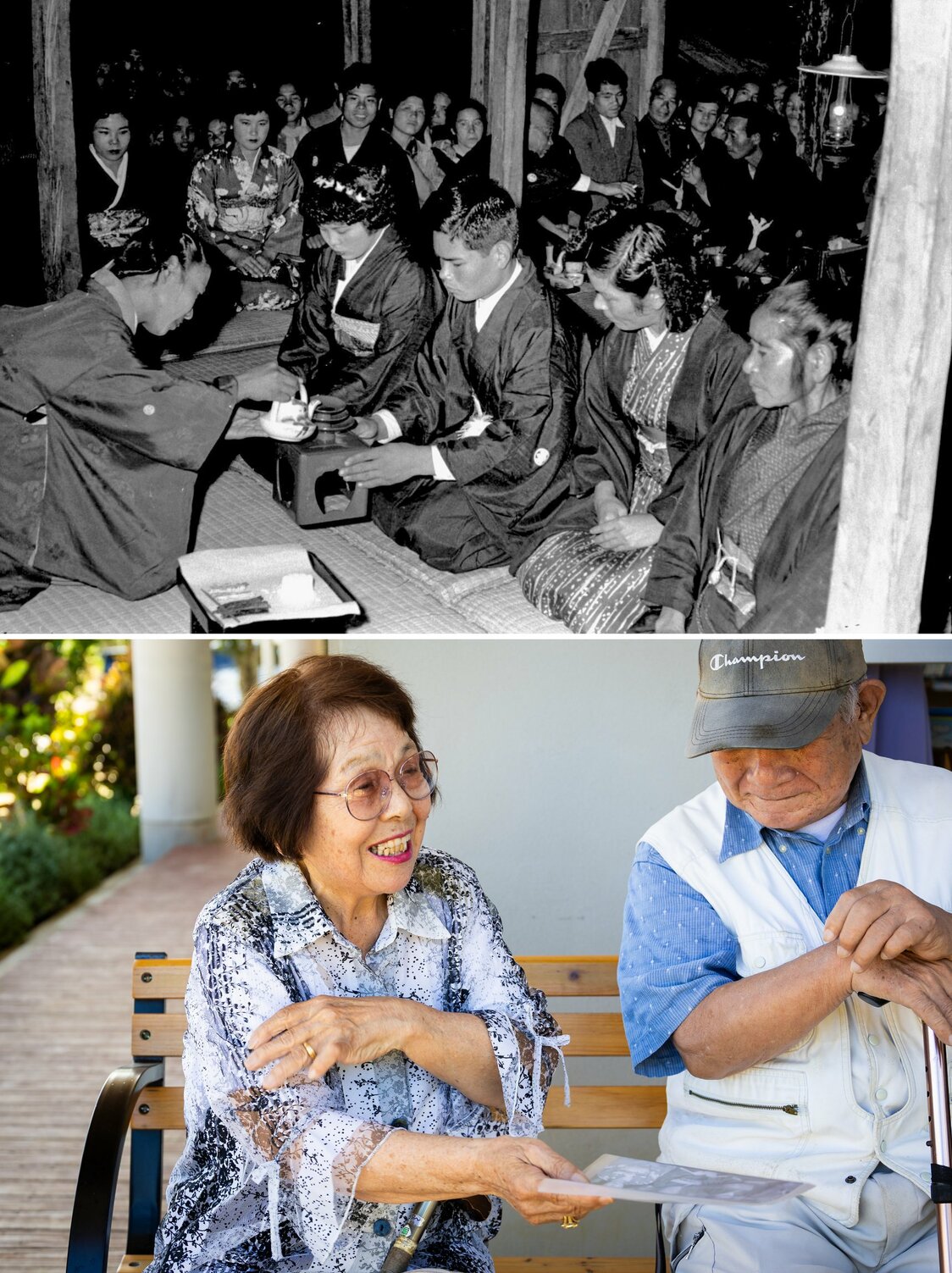
On the big day, the bashful bride looked down the entire time, flustered by the onlookers. “Someone even brought a goat along,” she laughs. (Top photo © Haga Hideo; lower photo © Nippon.com)
-
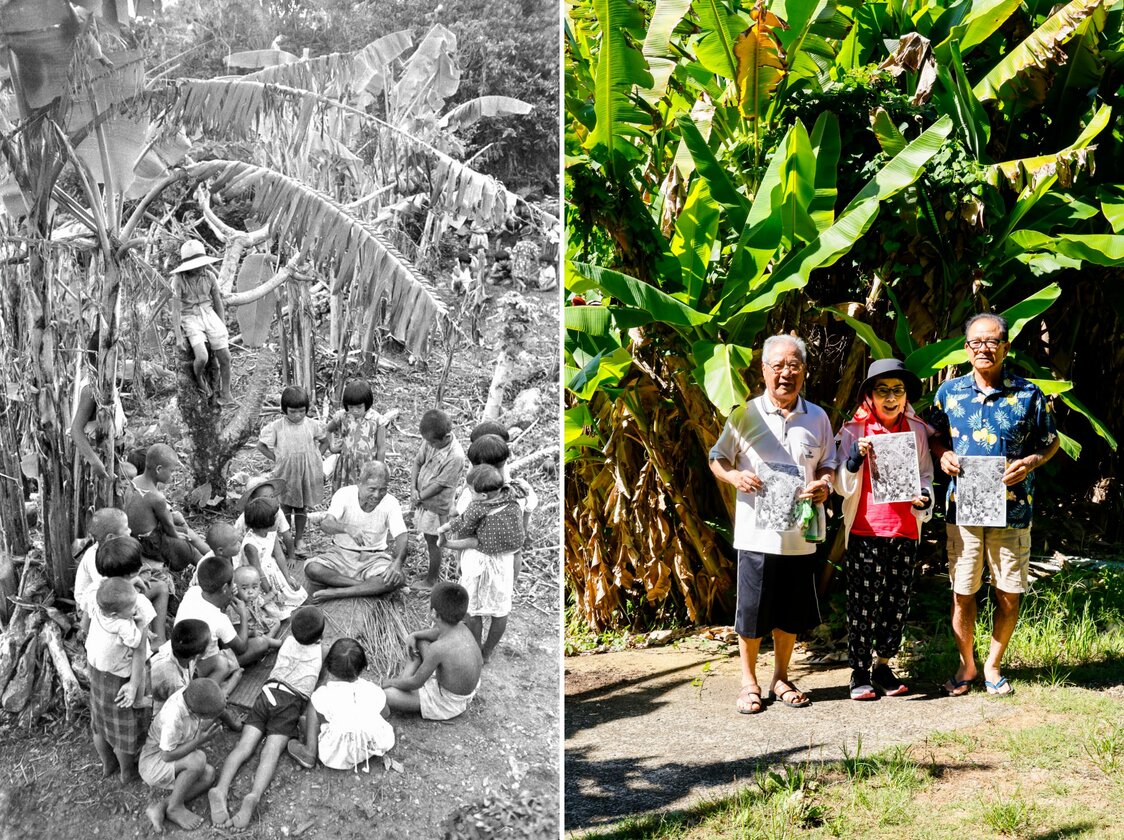
Subtropical vegetation flourished then, as it does now. The storyteller Taira Maenobu shares tales with island youth (left, © Haga Hideo); the boy perched in the tree, now grown, stands on the left, with Matsumura Yukie at center (right, © Nippon.com).
-
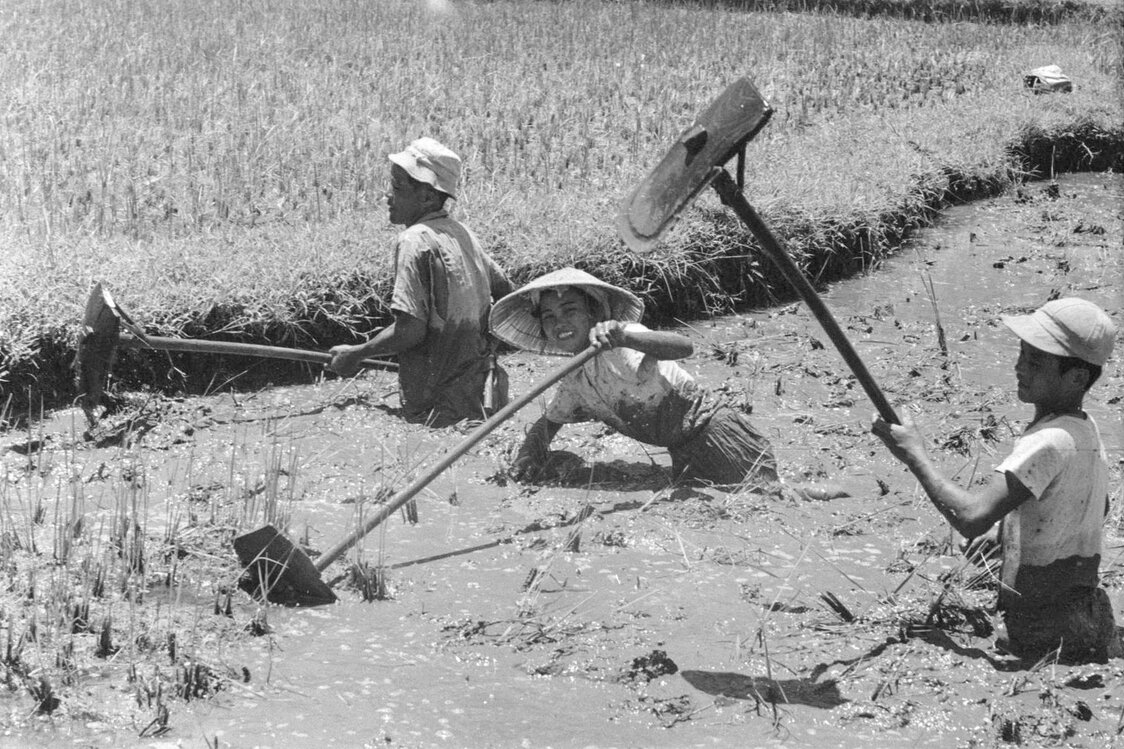
The islands’ chalky soil made rice growing in muddy paddies arduous work. (© Haga Hideo)
-
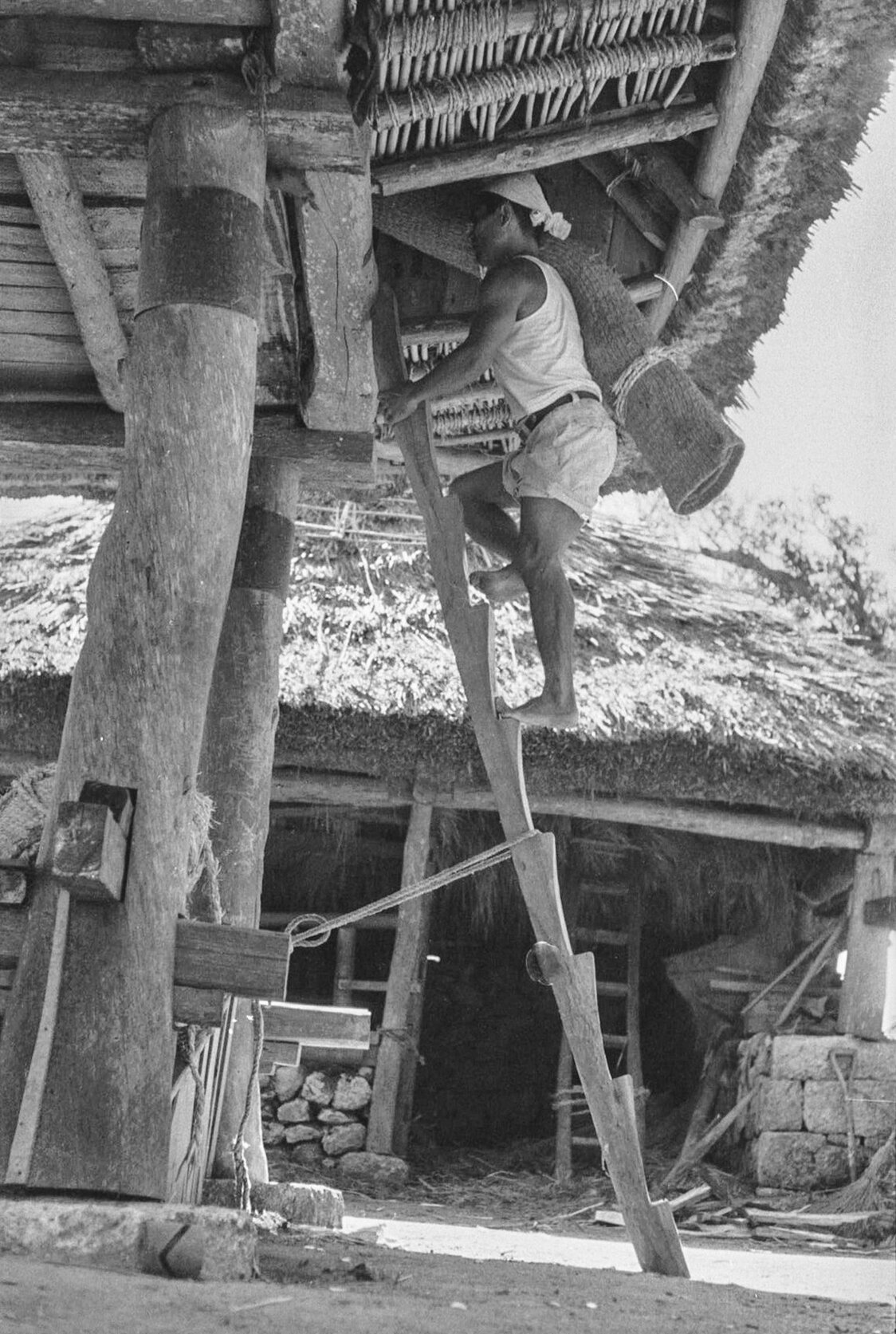
A man clambers up a ladder hoisting a 60-kilogram bale of rice to store in an elevated granary. The ladder, with footholds hewn into a log, closely resembles specimens excavated at Toro, a Yayoi period (ca. 300 BCE–300 CE) archaeological site in Shizuoka Prefecture. (© Haga Hideo)
-
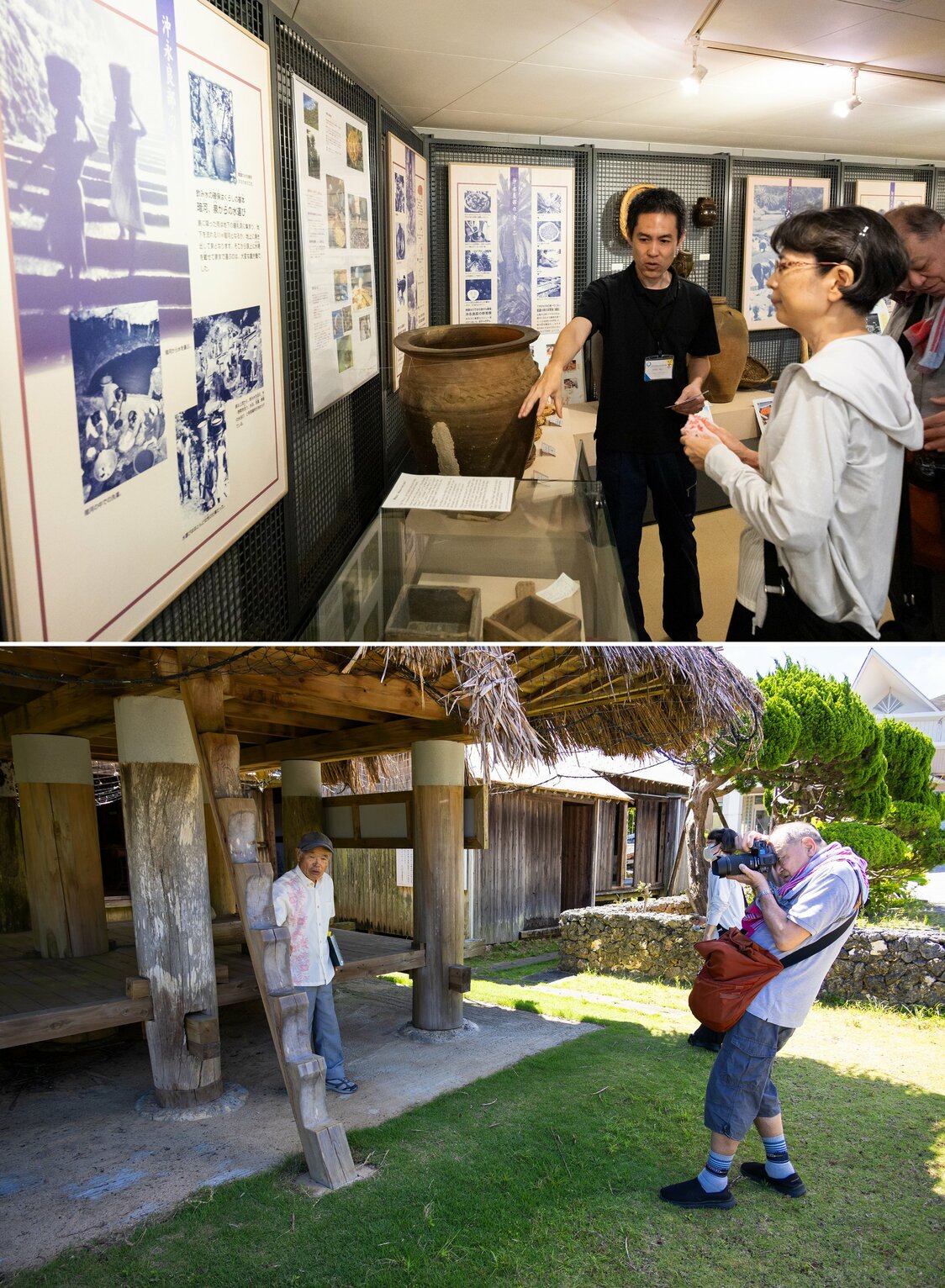
The museum displays everyday articles of yesteryear. A granary and ladder are also preserved there. (© Nippon.com)
-
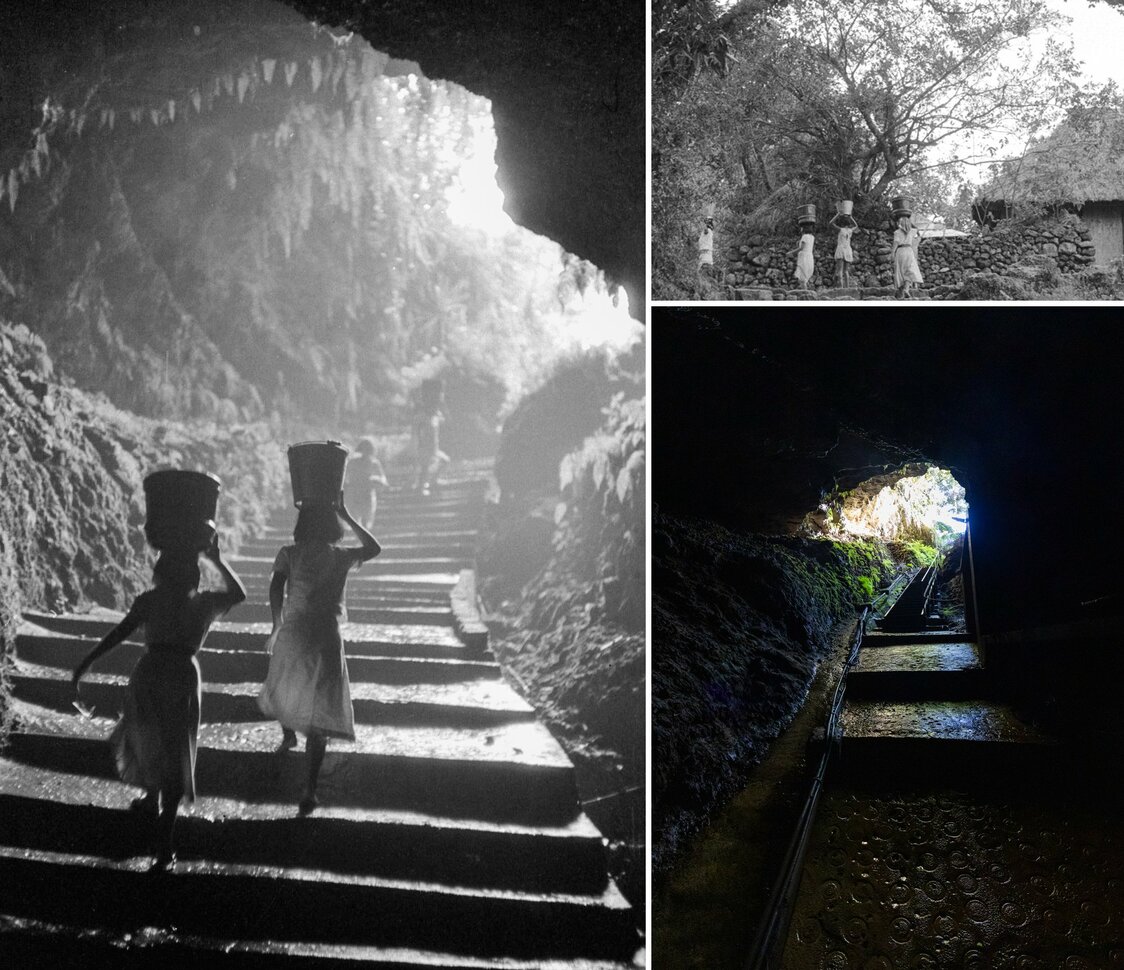
Fetching water was hard work. The Kuragō cave has been preserved as a site where children learn about local history. (Left and top right photos © Haga Hideo; lower right photo © Nippon.com)
-
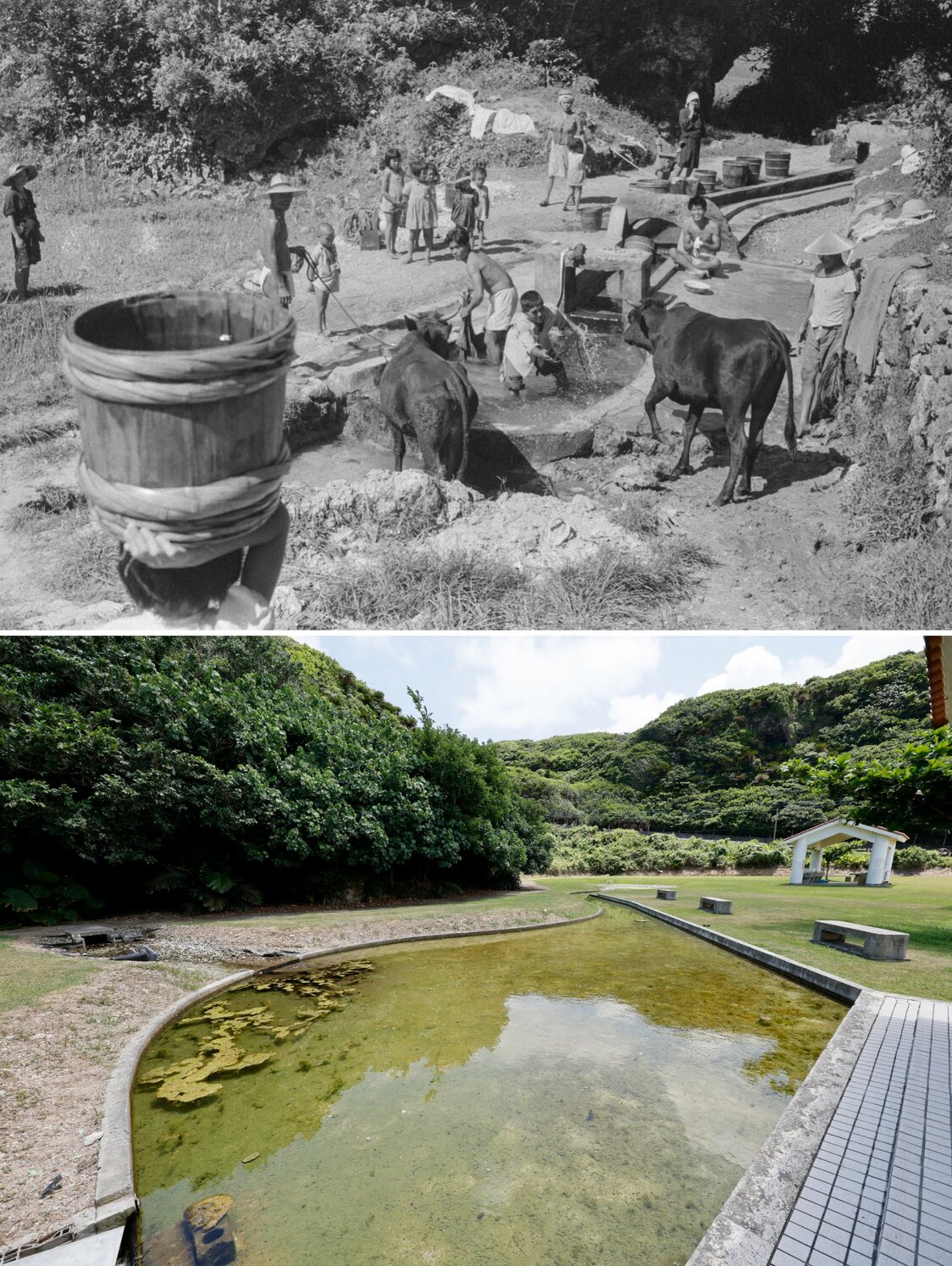
One of the spring-fed ponds, Wanjo, is now a park. Inhabitants used the water upstream for drinking. Further downstream, it was used for bathing, laundering, and watering livestock. The ponds were also lively social centers. (Top photo © Haga Hideo; lower photo © Haga Hinata)
-
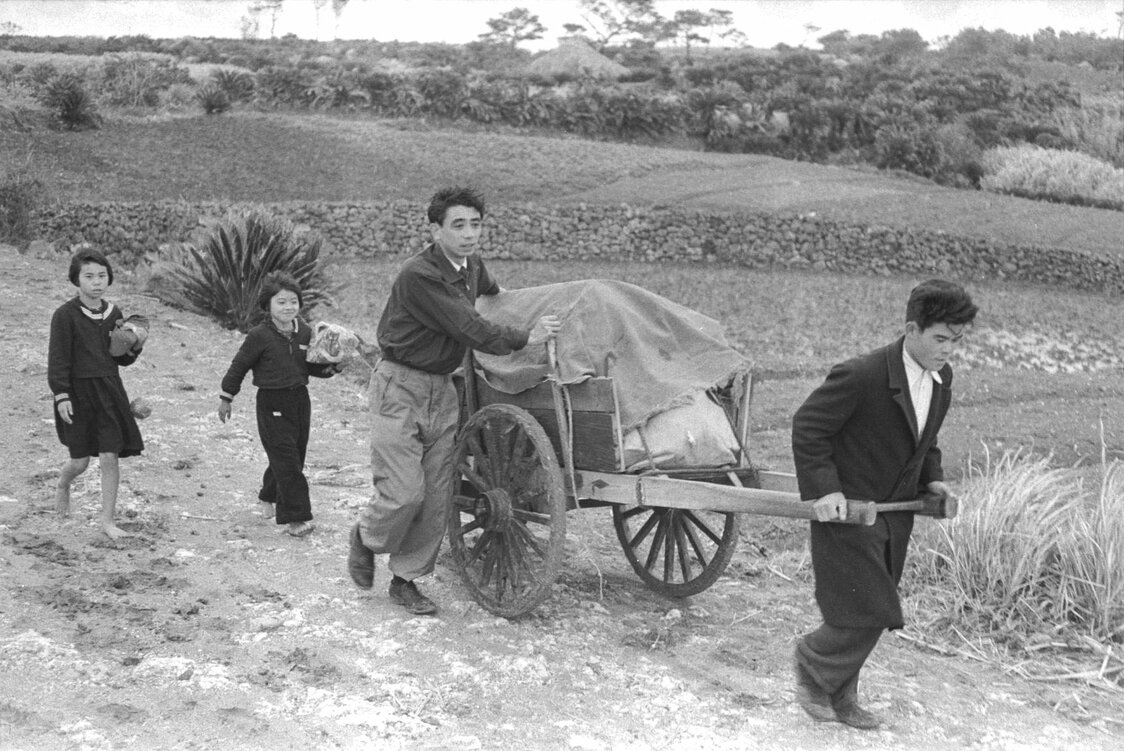
Haga Hideo (center) helps push a loaded wagon on Okinoerabujima. (© Haga Hideo)


 Read in other languages