-
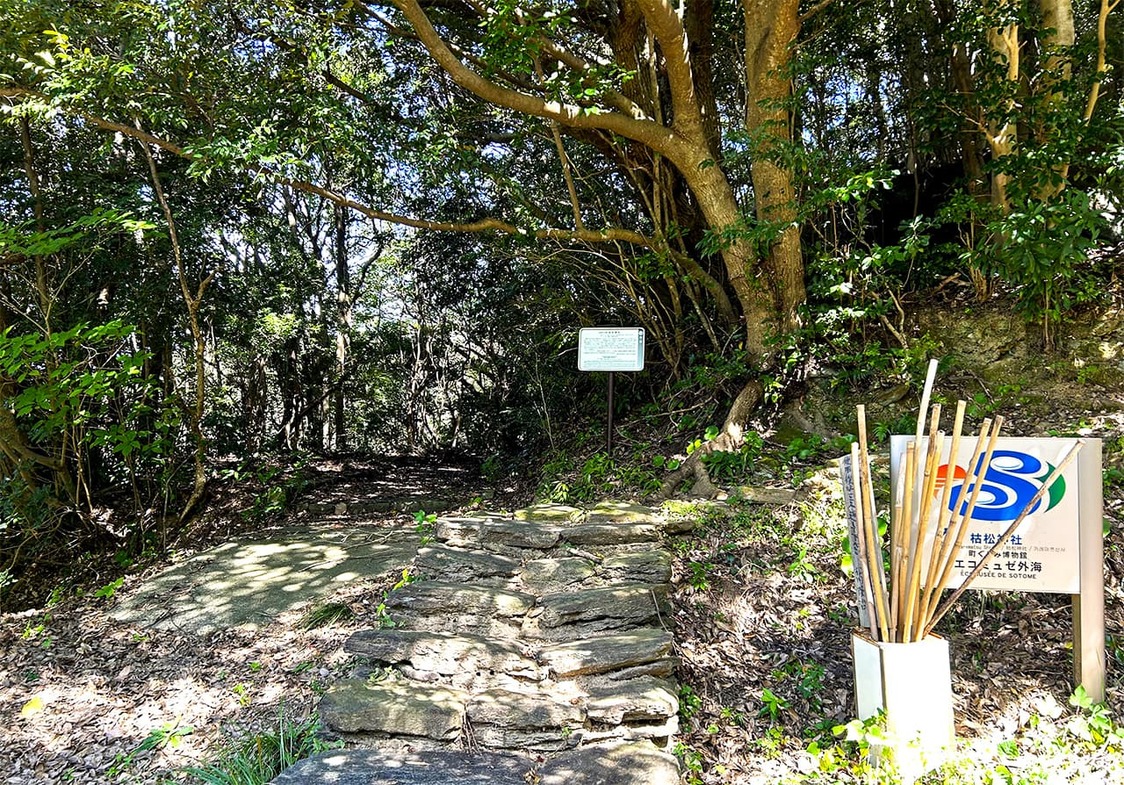
The entrance to Karematsu Jinja. From here, a five-minute walk up a stone stairway leads to the main hall. There are walking sticks for pilgrims in front of the sign. (© Amano Hisaki)
-
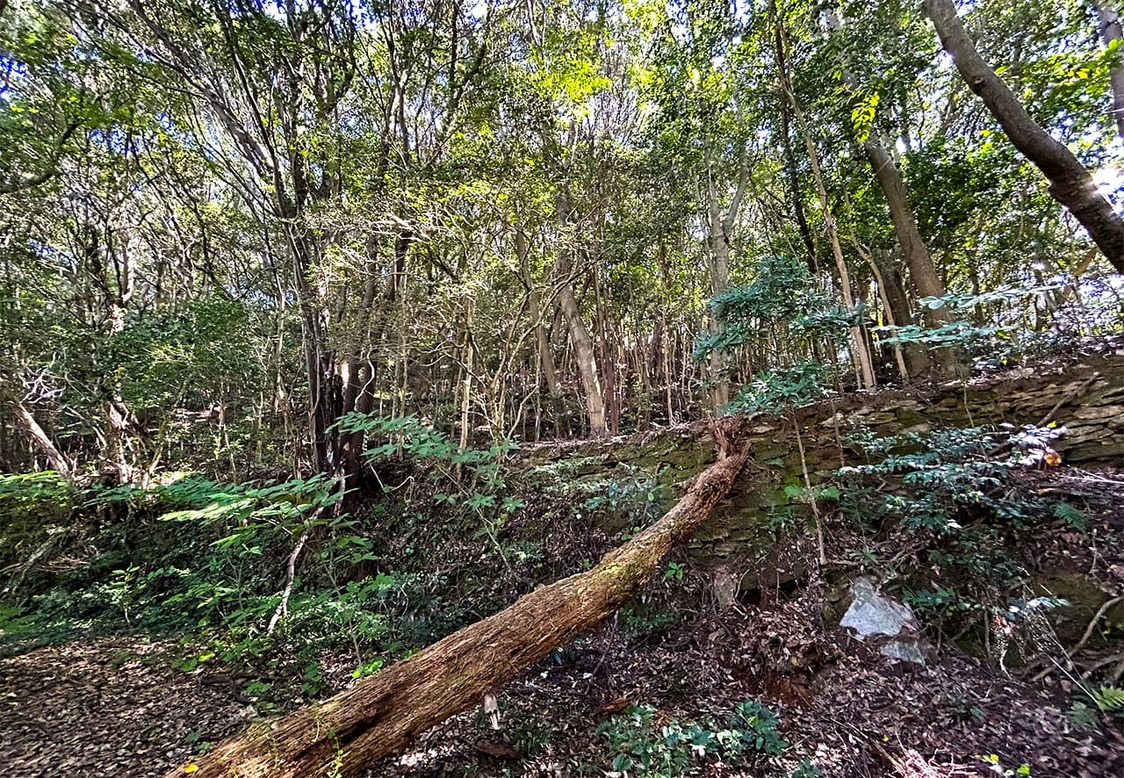
Recalling the scenery in Silence, the view around the shrine is filled with dense forest. (© Amano Hisaki)
-
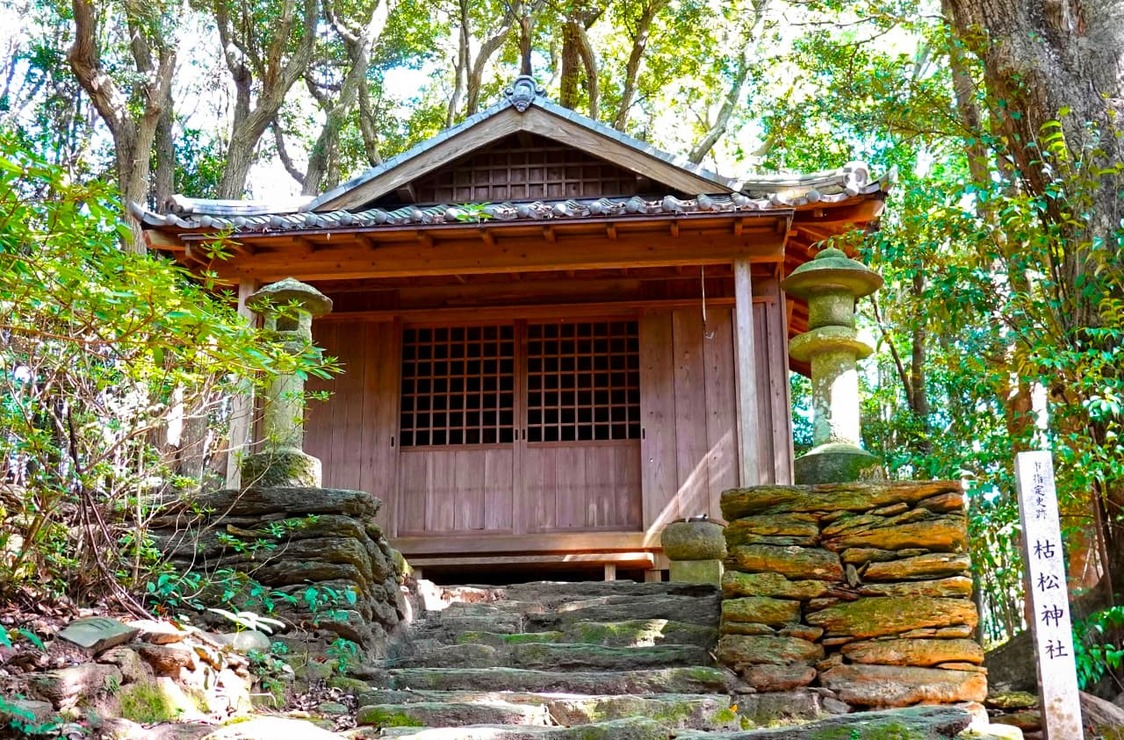
The shrine hall of Karematsu Jinja. The first official shrine was built in 1937, but the current one is a 2003 replacement. There are two smaller hokora shrines inside. (© Amano Hisaki)
-
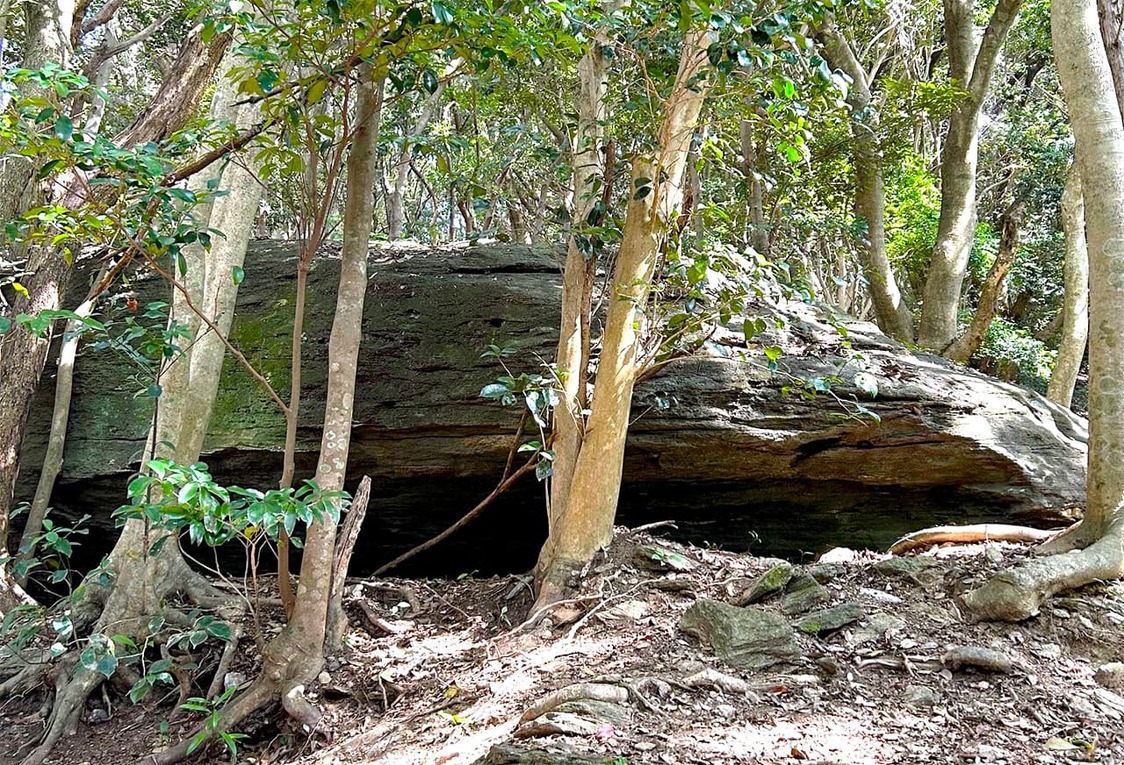
A massive boulder in front of the shrine called the “rock of prayer.” Apparently, the hidden Christians would secretly gather here during Lent to say the Oratio prayer into a hole in the rock. (© Amano Hisaki)
-
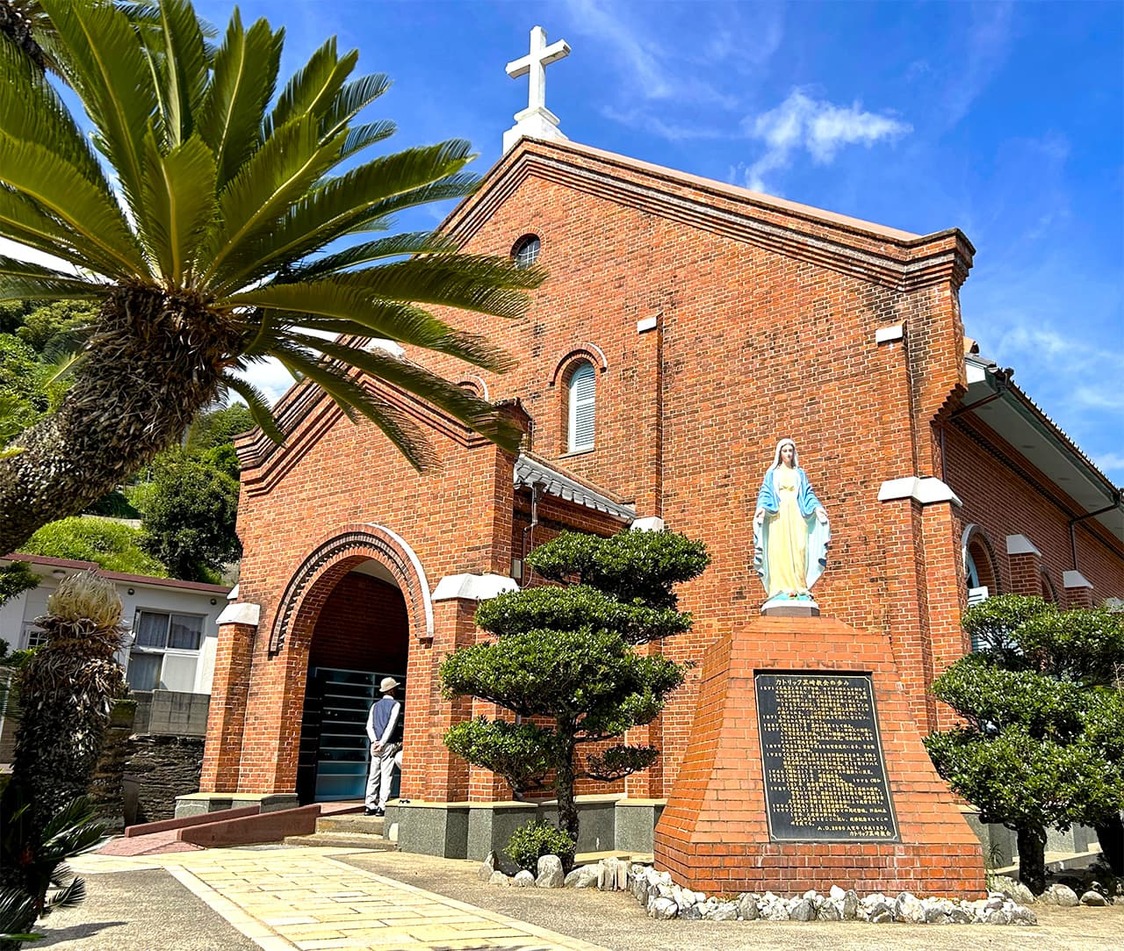
A statue of the Virgin Mary with arms held out welcomes visitors to the red brick Kurosaki Church, completed in 1920. It stands next to the Kurosaki Kyōkai-mae bus stop. (© Amano Hisaki)
-
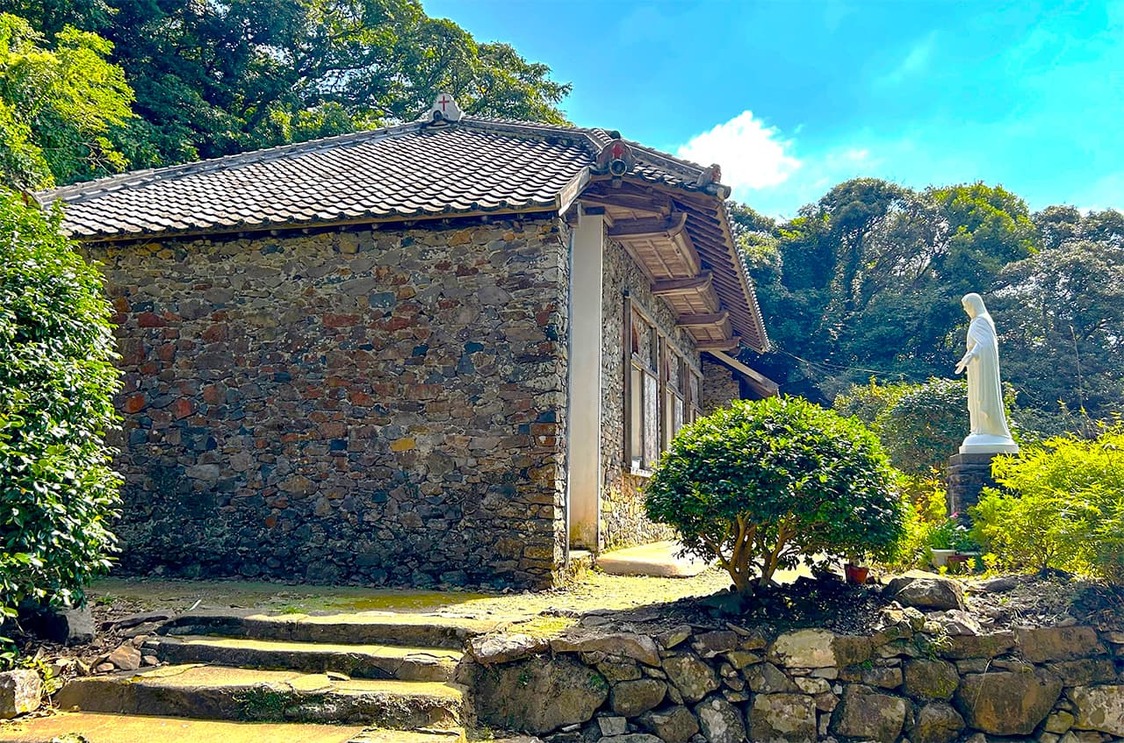
The wood and stone Ōno Church stands hidden in the woods about 10 minutes’ walk from Ōno bust stop. It was completed in 1893. If it were not for the statue of the Virgin Mary, it could be mistaken for an old farmhouse. (© Amano Hisaki)
-
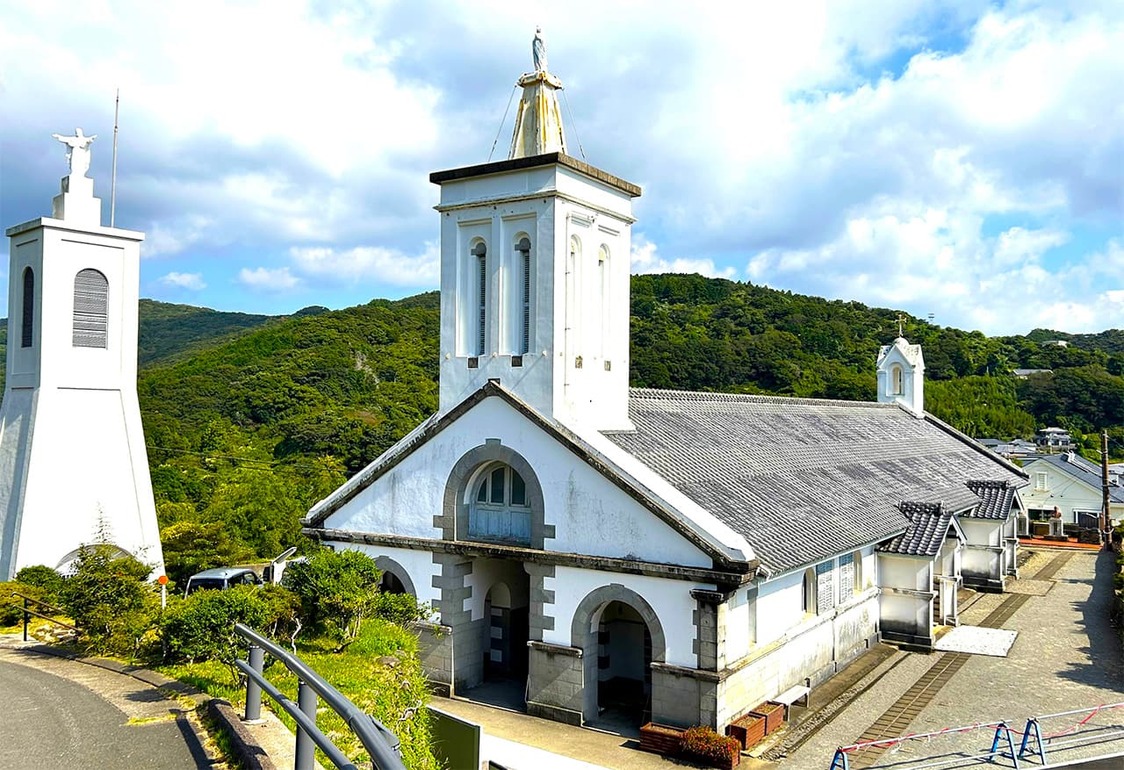
Beautiful Shitsu Church, with its dignified chalk walls and two towers, was completed in 1882. It is 20 minutes’ walk from Shitsu Bunkamura bus stop. (© Amano Hisaki)
-
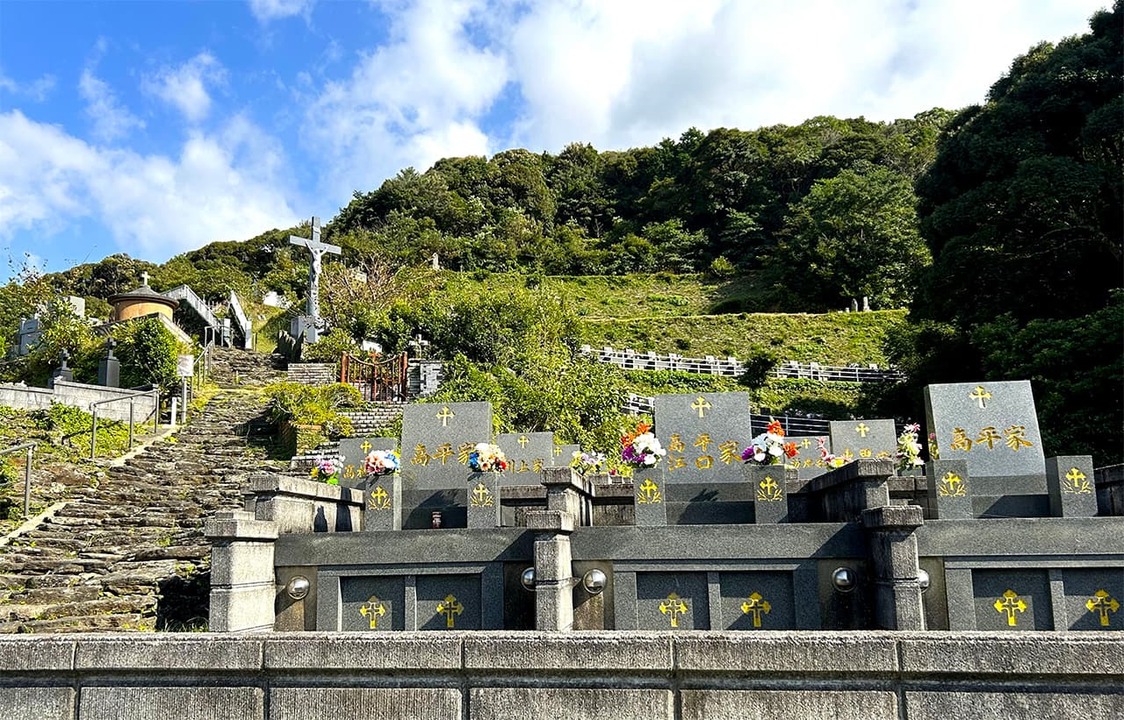
The Nomichi Christian Graveyard climbs a steep hillside in terraces and was apparently designed by Father de Rotz. For the 46 years until his death in 1914, the father stayed here without once returning to his home of France. Now, his remains rest here eternally. It is around 10 minutes’ walk from Shitsu bus stop. (© Amano Hisaki)
-
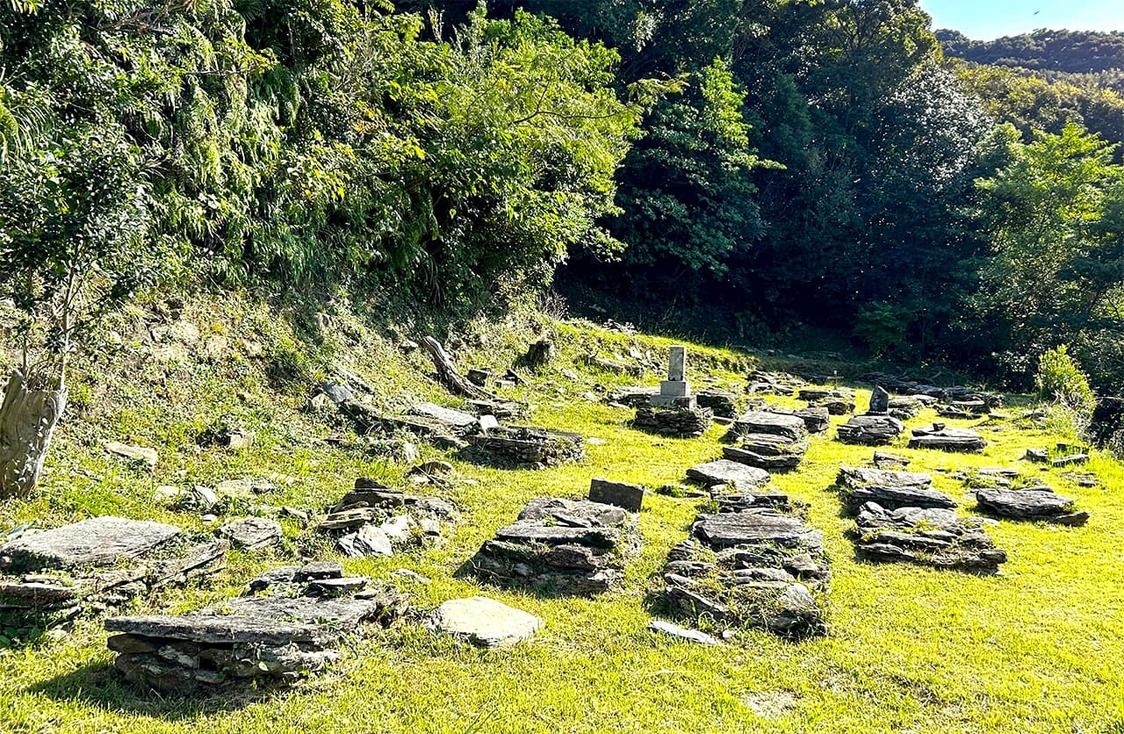
At the top of the graveyard’s long, precipitous stone stairway, you can see rows of the Sotome region’s unique piled-rock gravestones. (© Amano Hisaki)
-
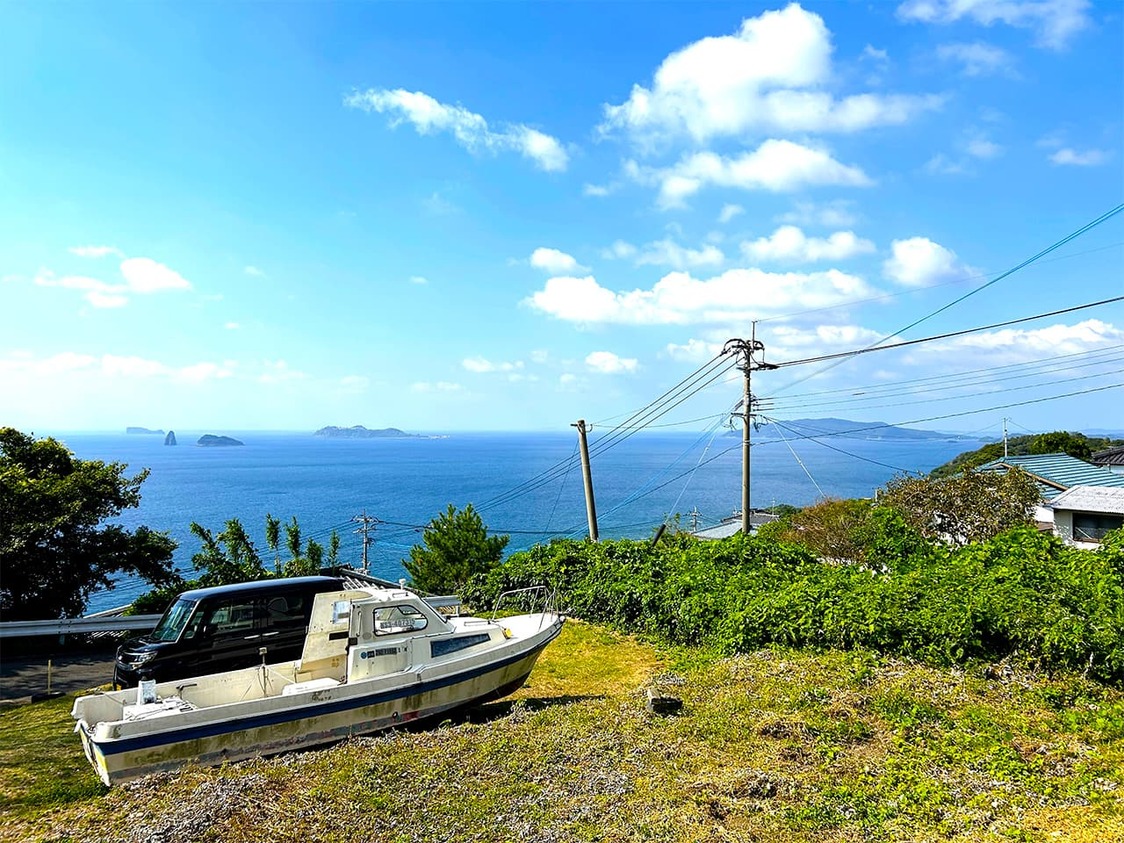
The view from Kurosaki Church toward Karematsu Jinja. A lonely fishing boat sits in a yard. (© Amano Hisaki)
-
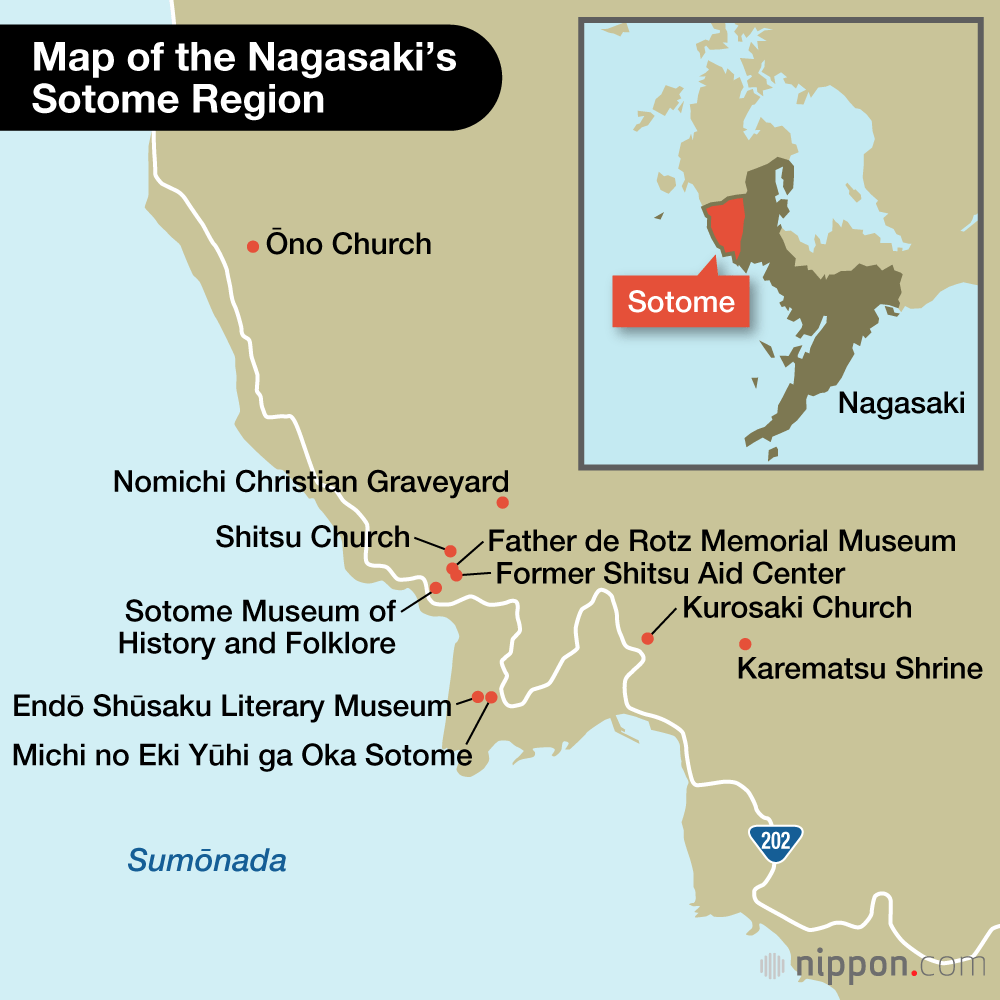
Map of the Nagasaki’s Sotome Region


 Read in other languages