-
-
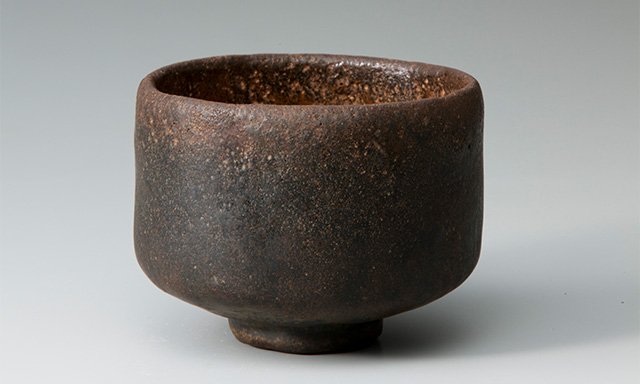
Black Raku tea bowl named Mozuya-guro by Chōjirō, the first head of the Raku family. Momoyama period (sixteenth century). Collection of the Raku Museum, Kyoto. Considered an exemplar of Rikyū’s austere wabi-cha aesthetic.
-
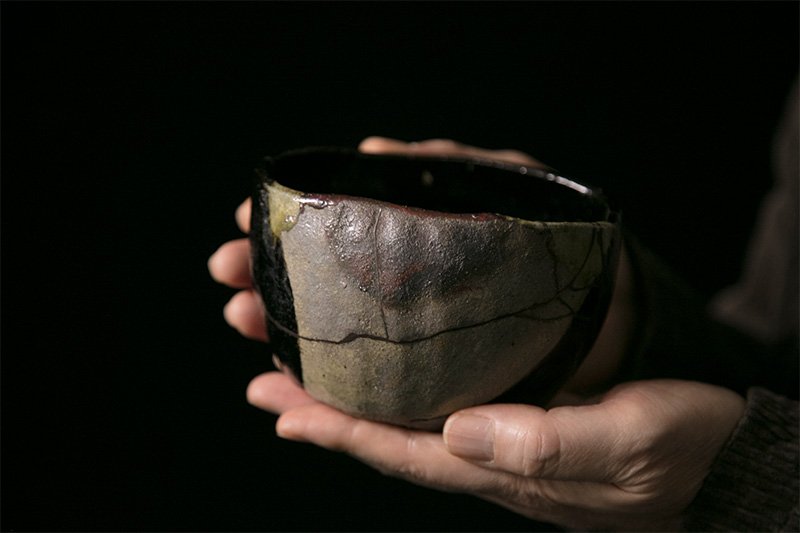
Raku tea bowls are made by a special handbuilding technique known as tezukune, a method of slab forming (as distinct from coiling or pinching). In the tezukune technique, the potter presses a ball of clay into a thick disc and then raises the edges bit by bit to shape a bowl that fits comfortably into one’s cupped hands.
-
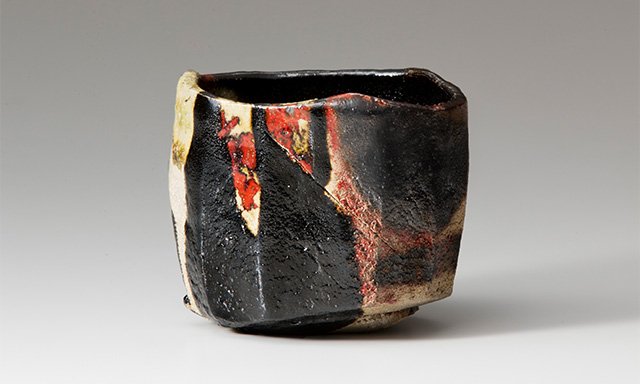
Yakinuki-type black Raku tea bowl named Yōkoku, 1989, by Raku Kichizaemon XV. Private collection. The sides of the vessel are cut sharply with a spatula. Although his methods differ, Kichizaemon considers himself heir to the same radical spirit that informed the work of Chōjirō, founder of the Raku dynasty of potters.
-

Yakinuki-type black Raku tea bowl named Neko-waride, by Raku Kichizaemon XV, mended by the gintsugi method (using lacquer mixed with silver). Years ago, a stray cat wandered into the workshop and broke one of Kichizaemon’s favorite tea bowls, which was later mended. The family only brings out the bowl when entertaining close friends. Tea aficionados value the signs of repeated use that accumulate inside and outside of long-treasured tea bowls and utensils. (Not on exhibition.)


 Read in other languages