-
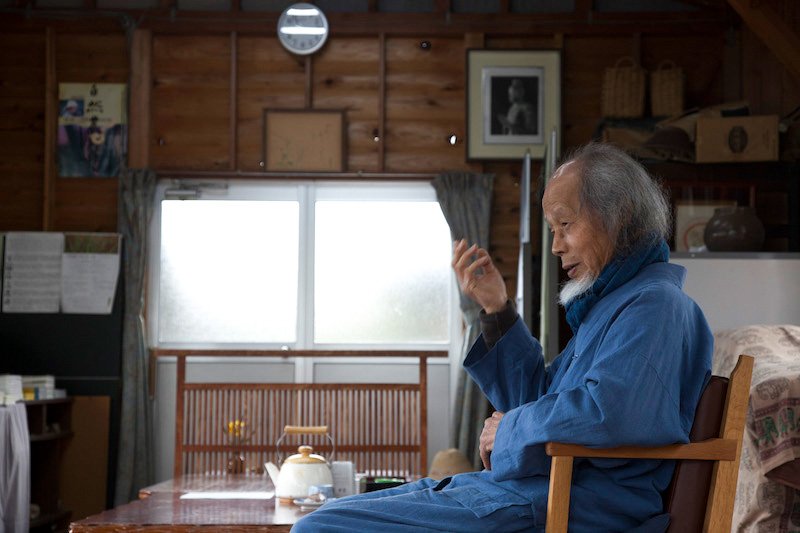
Kawaguchi at his home, Sakurai, Nara Prefecture.
-
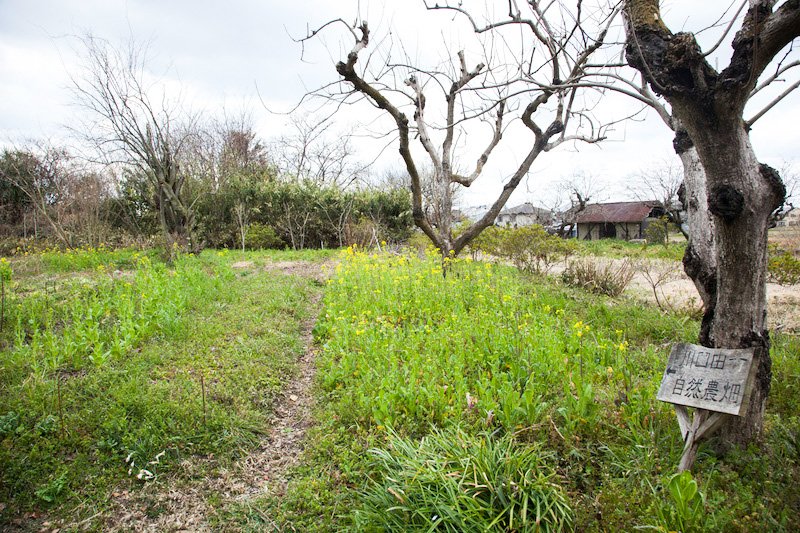
In the spring, a variety of cruciferous vegetables burst into bloom in one of Kawaguchi Yoshikazu’s naturally farmed fields (identified as such by the hand-lettered sign at right).
-
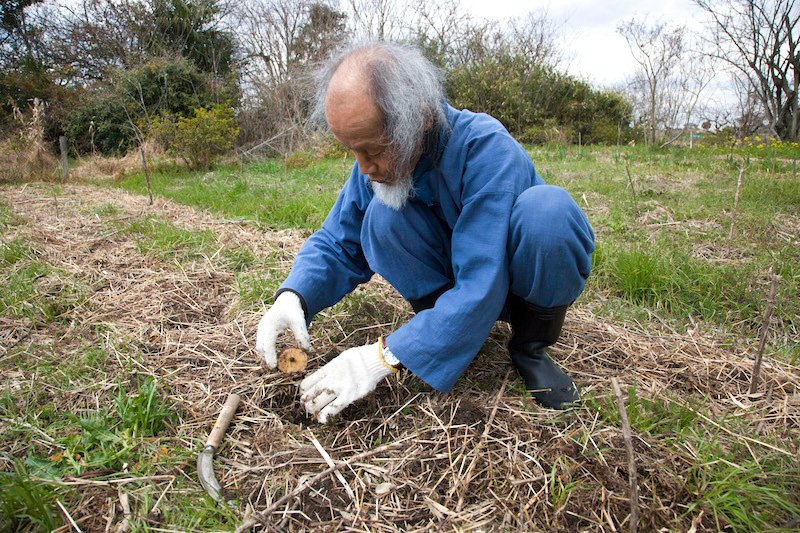
In March Kawaguchi plants potatoes by hand, burying them under a thick layer of straw mulch.
-
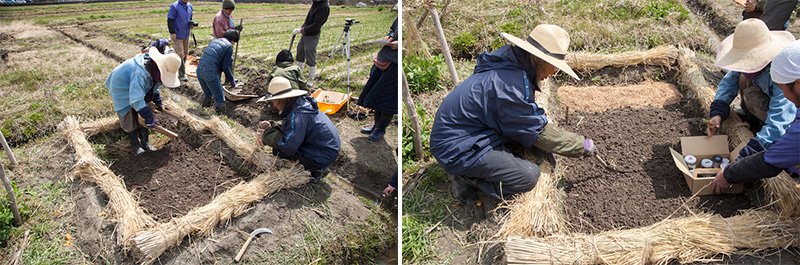
Kawaguchi’s workers prepare a nursery bed to grow summer vegetable seedlings. They line a pit 30 cm deep with rice straw. Then they add alternating layers of food scraps, rice bran, and rice straw, followed by a layer of green grass cuttings and rice straw. After watering the compost, they apply a 15-cm layer of soil, level the surface, and plant the seeds. The bed is encircled by a bank of rice straw and protected by a cover of oil paper applied to a wooden frame. Heat generated by fermentation of the compost warms the soil and accelerates germination and growth of the seedlings.
-
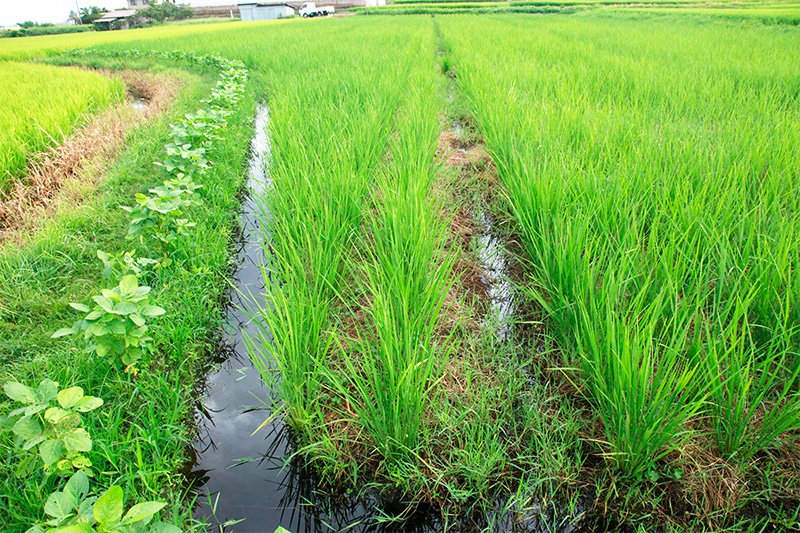
One of Kawaguchi’s naturally farmed rice paddies. While Japanese rice farmers typically transplant seedlings in bunches, Kawaguchi plants one at a time, giving each of them plenty of room to grow. In time-honored fashion, he grows edamane soybeans (also known as azemame, or “ridge beans”) on the paddy borders.
-
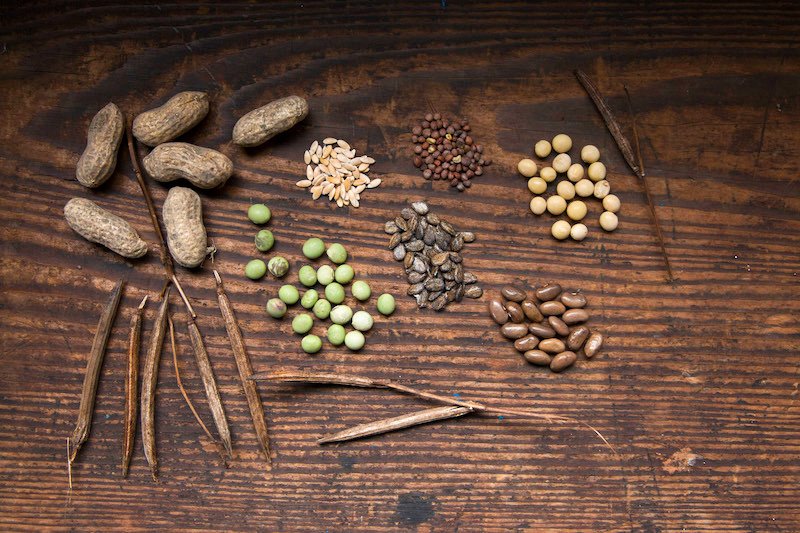
Kawaguchi carefully harvests and stores seeds from such diverse crops as peanuts, watermelon, radish, and soybeans for future planting. Some of those seeds are the legacy of 40 years of cultivation.


 Read in other languages