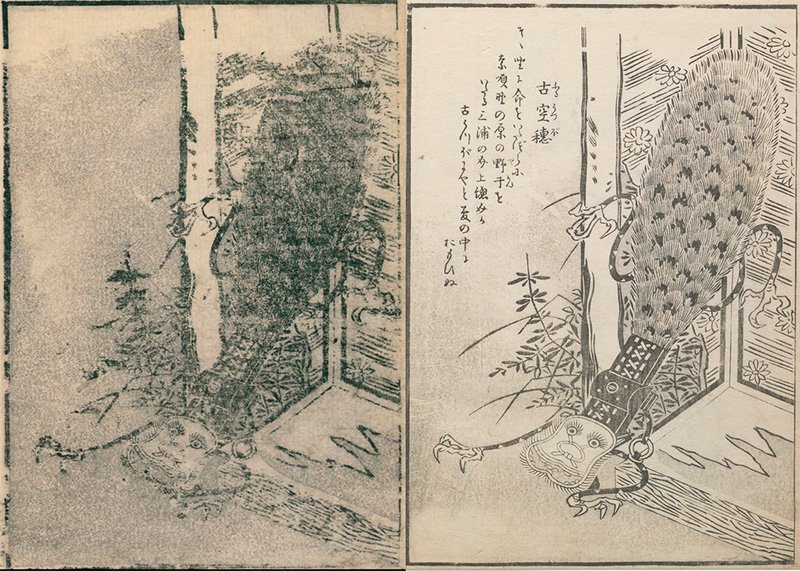
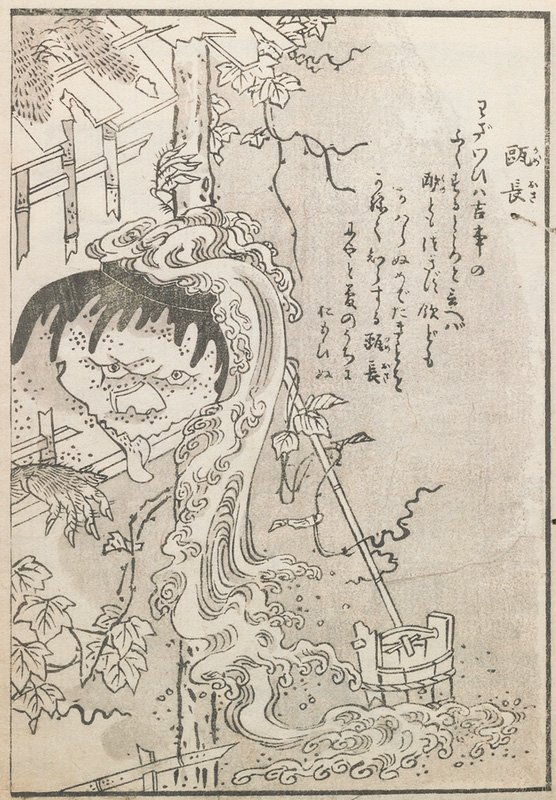
The Furu-utsubo print copy available at the Smithsonian (right) shows much finer detail, in addition to including the text missing from the National Diet Library’s copy. (Courtesy National Diet Library and Smithsonian Libraries)
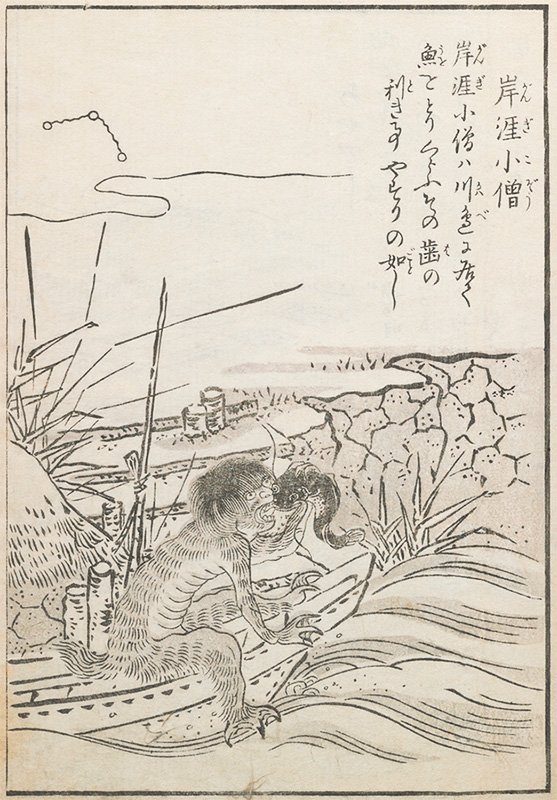
Visual wordplay abounds in the Gangi-kozō print, with the gangi-shibori pattern at upper left, in addition to a stone waterfront ramp (also called a gangi) and the creature’s teeth, said to be sharp as a rasp—one common type of which was the gangi-yasuri. (Courtesy the Smithsonian Libraries)
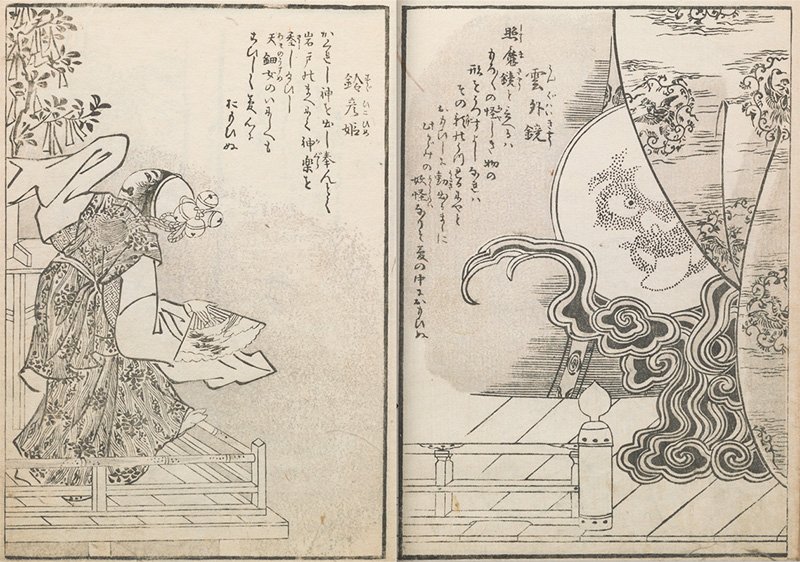
This pair of images represents a parody of the legendary scene from Kojiki (Record of Ancient Matters) where a bawdy dance coaxes Amaterasu from the cave where she is concealing herself. (Courtesy the Smithsonian Libraries)
Multiple layers of meaning concealed in the Kame-osa print show what a treat Sekien’s works were for informed readers—and how hard they are to decipher centuries later. (Courtesy the Smithsonian Libraries)



 Read in other languages