-
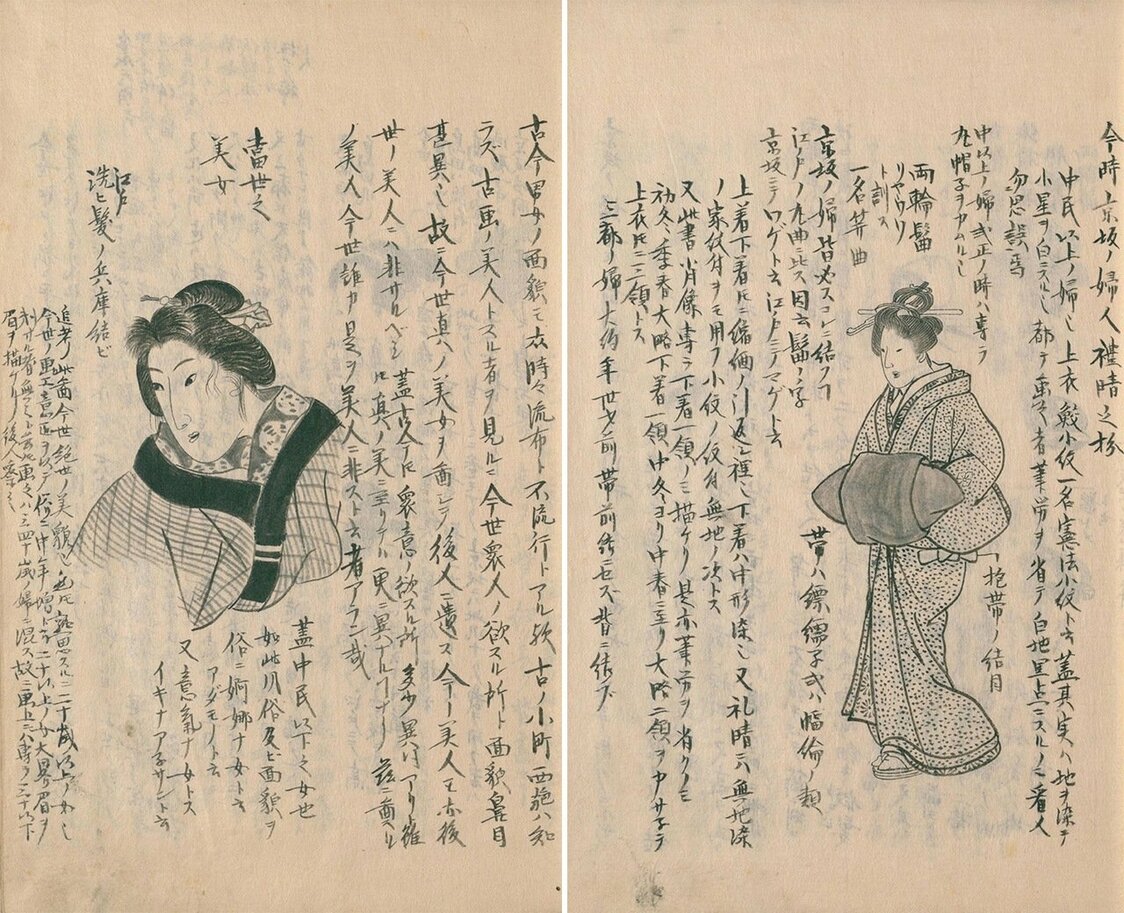
Comparisons of hairstyles and accessories of a woman from Edo (left) and Kyoto.
-
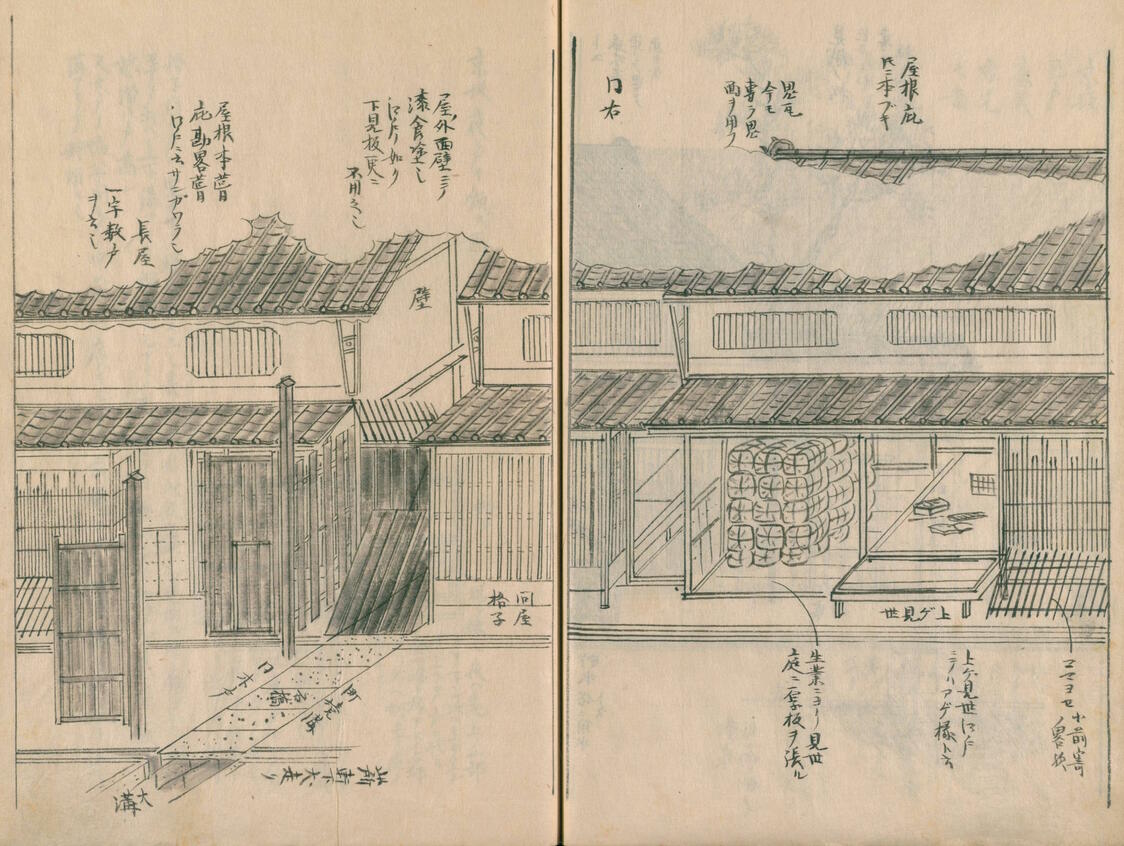
To the right of the sacks of rice piled up in a Kyoto store is a display table known as an agemise in front of the building, a feature of the city’s stores since the Muromachi period (1333–1568). It can be raised to close the front of the shop. The gate to the left leads through to traditional nagaya “long houses.”
-
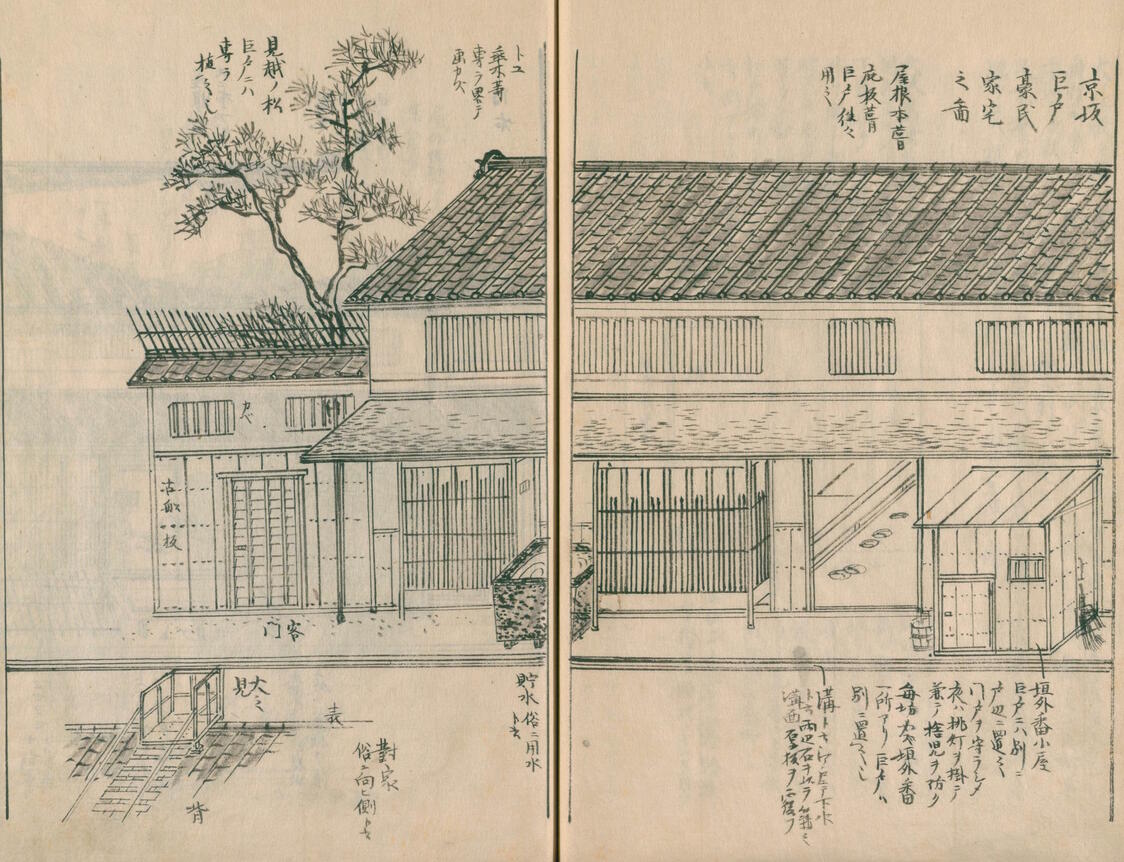
This Kyoto scene has a guardhouse at the right. To its left is the entrance to the machiya or townhouses. It is narrow, but deep, like the townhouses themselves, which were nicknamed unagi no nedoko (sleeping places for eels).
-
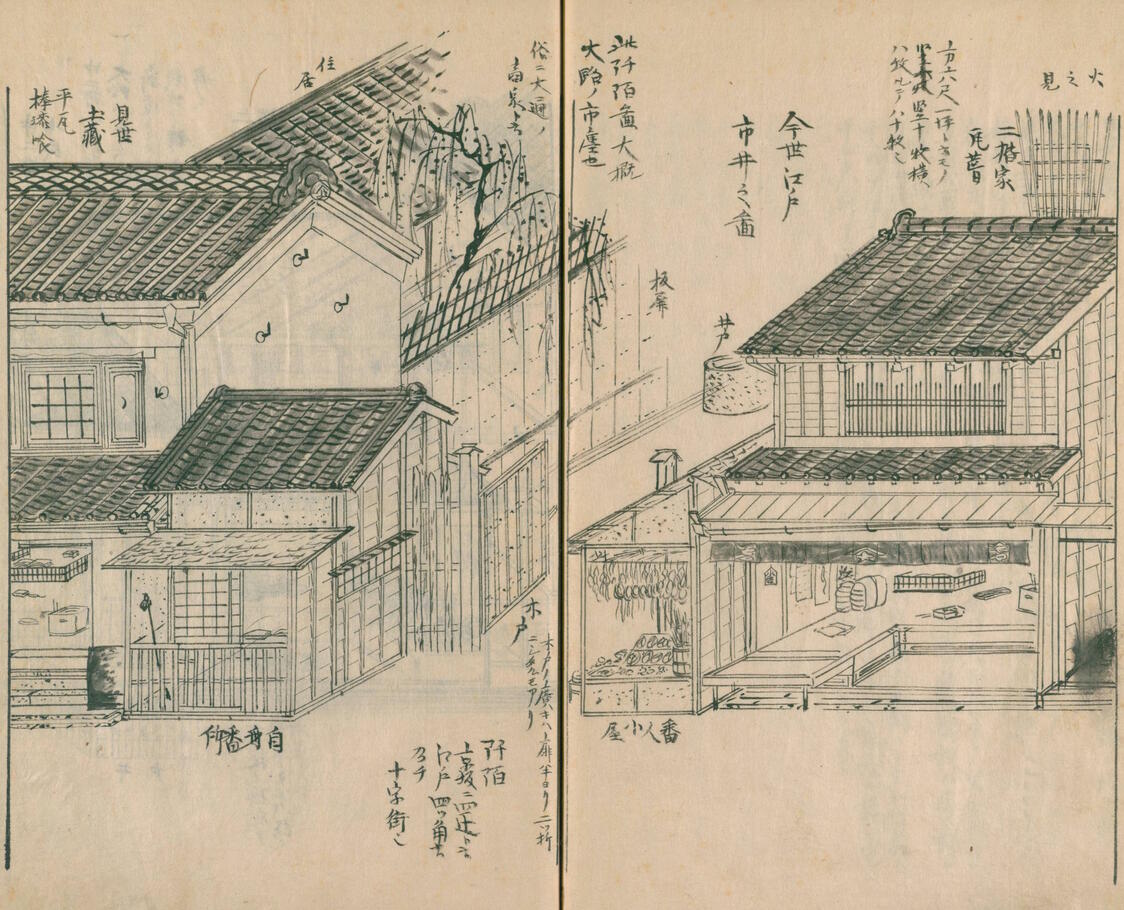
The store at the right facing the street in this picture of Edo is called an omotedana, which was usually run by the landowner. The central gate leads to nagaya in which people would rent living space from the landlord.


 Read in other languages