-
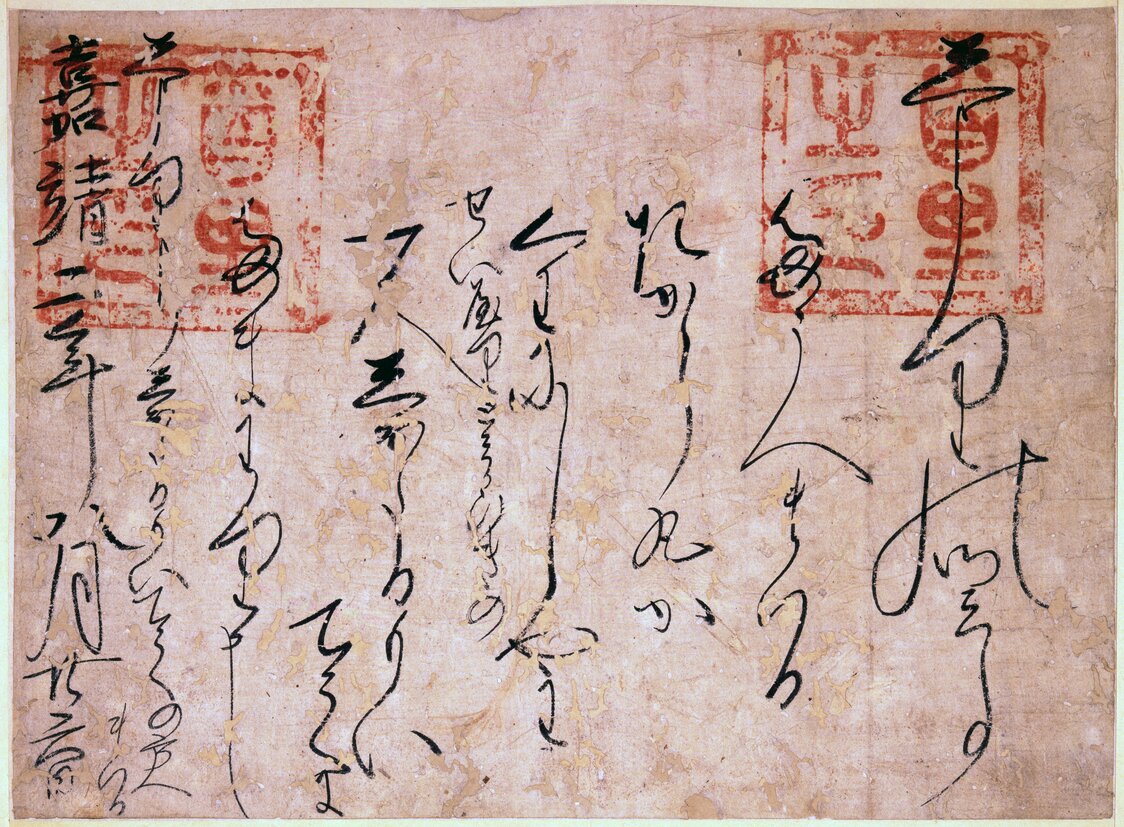
Dana family clan document no. 1. This is an official letter (jireisho) appointing the bearer to the crew of the Takara-maru, a ship that would take part in an official diplomatic voyage to China. The text is written in hiragana but uses a Chinese date and is stamped with the “Shuri seal” at top left and right, in the Chinese style. (In the collection of the Okinawa Prefectural Museum and Art Museum)
-
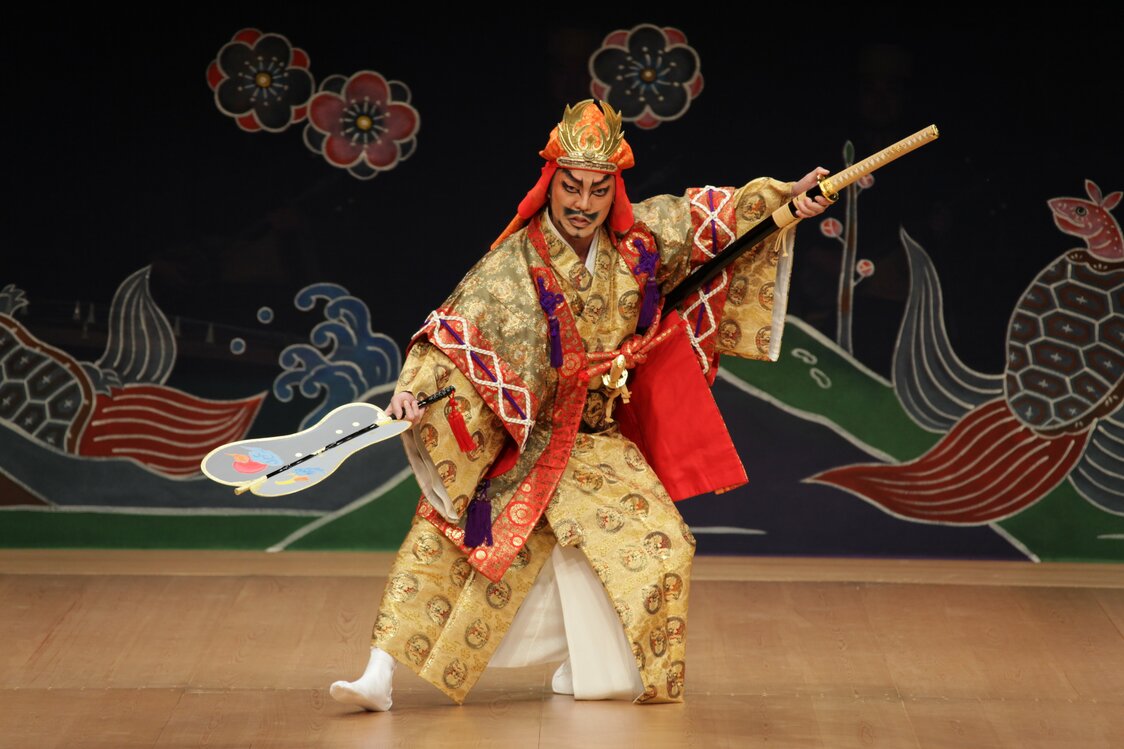
A scene from Nidō tekiuchi, one of the best-known examples of kumiodori. The drama is based on the story of Amawari, who raised an insurgency in the fifteenth century and was avenged by the orphaned sons of his adversary, the loyal retainer Gosamaru. (Courtesy of the National Theater Okinawa)
-
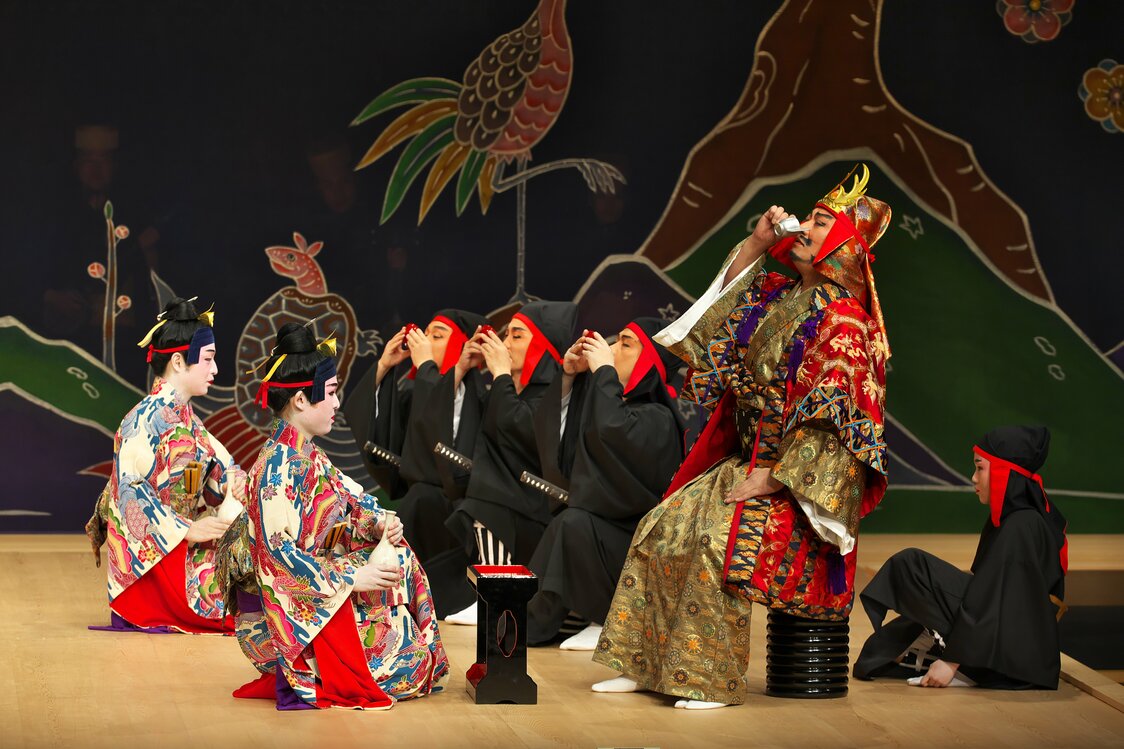
A scene from Nidō tekiuchi. Burning with an ambition to seize control of the kingdom, Amawari (right) destroys his rival Gosamaru, who is avenged by his two sons (left). (Courtesy of the National Theater Okinawa)
-
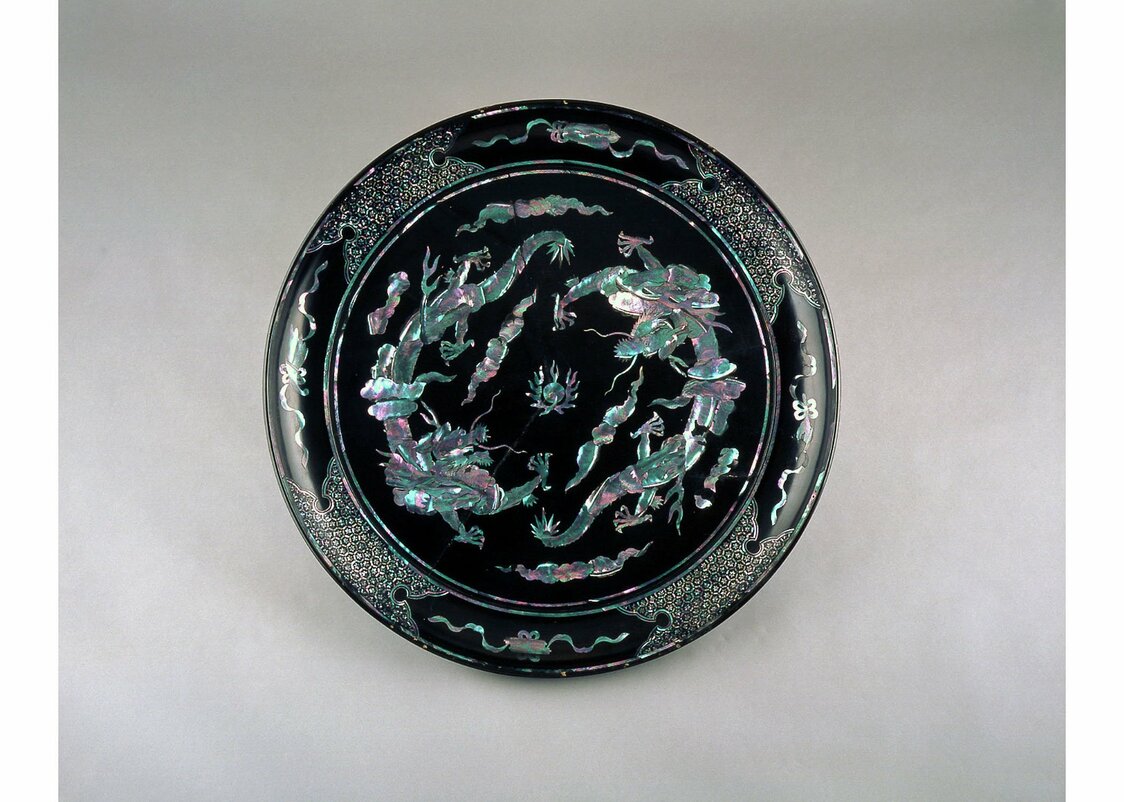
Large plate tray with unryū cloud dragons in mother-of-pearl on black lacquer. This piece dates from the late eighteenth or early nineteenth century. The auspicious design shows a pair of dragons emerging from clouds bearing wish-fulfilling jewels. (In the collection of the Urasoe Art Museum)
-
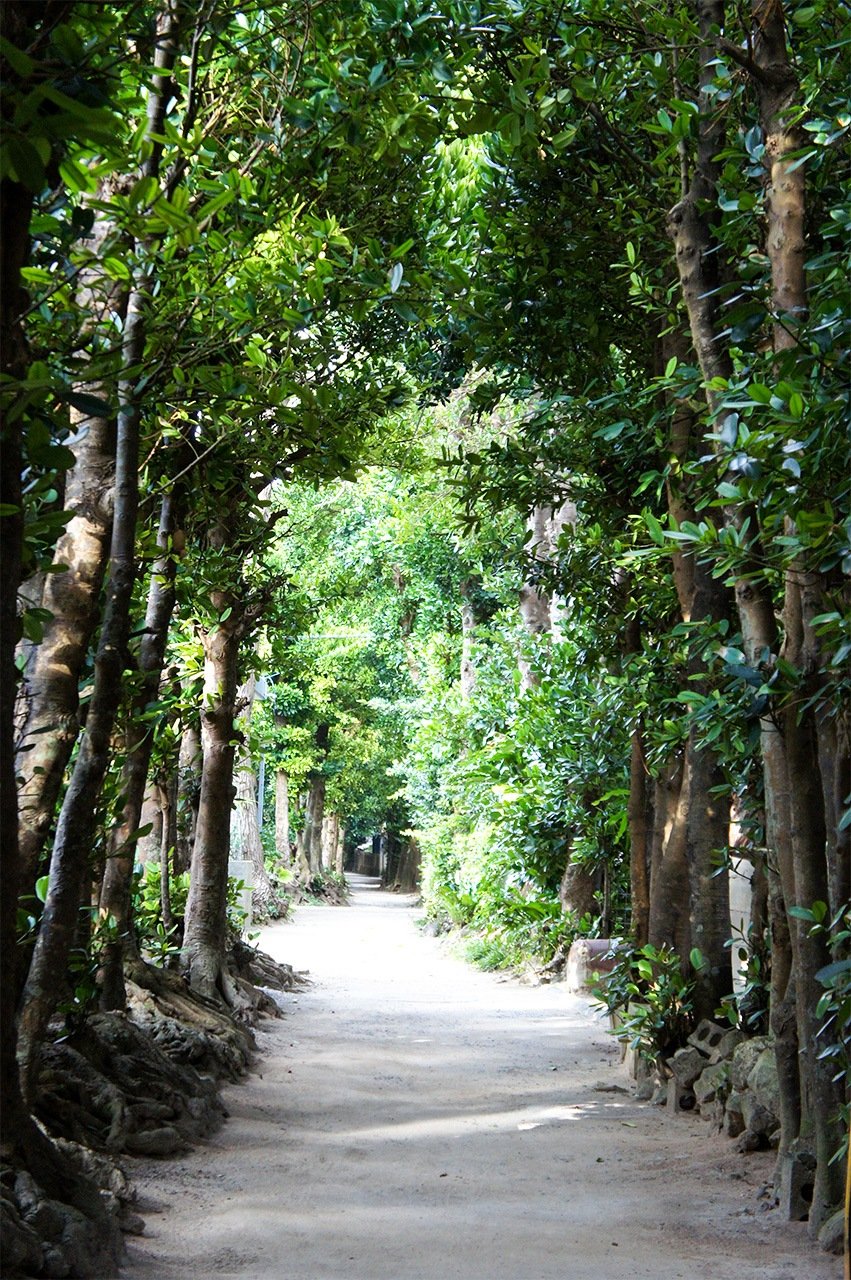
Scenes like this, showing a line of fukugi trees planted along a straight road arranged in a traditional grid pattern according to fengshui principles, would have been a common sight in villages throughout the Ryūkyū islands in the eighteenth and nineteenth centuries. These lines of trees also served as a defense against frequent typhoons. (Photo by the author)
-
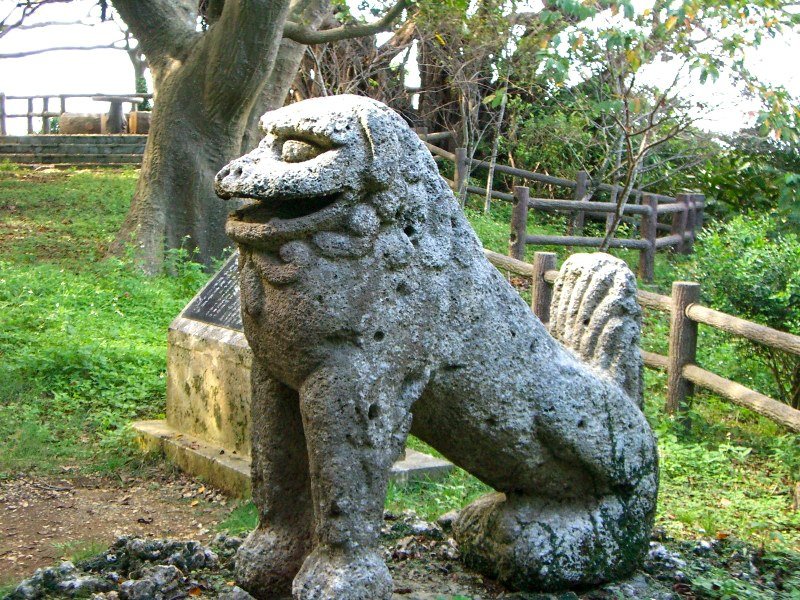
Shīsā guardian deities became widespread in villages during the early modern period. Beginning in the Meiji era (1868–1912) they began to appear on roof tiles as well. (Photo by the author)
-
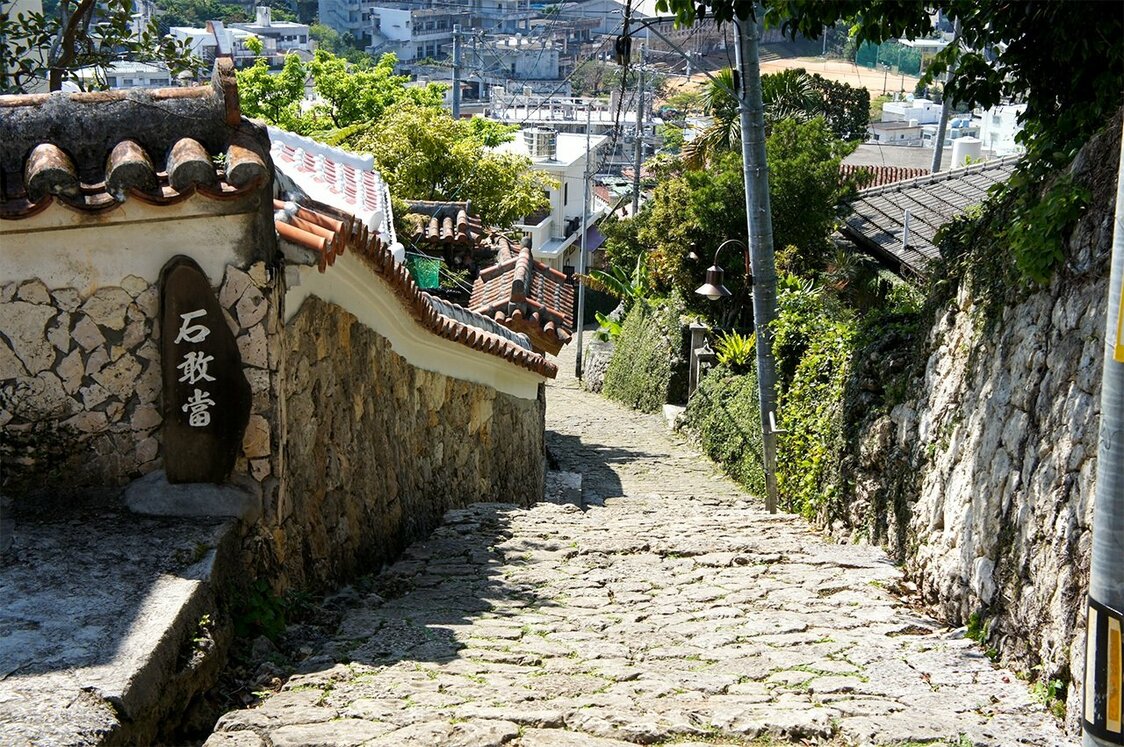
Stone crossroad amulets known as ishigantō originated in China. They are placed at T- and Y-shaped intersections to ward off evil spirits. (Photo by the author)
-
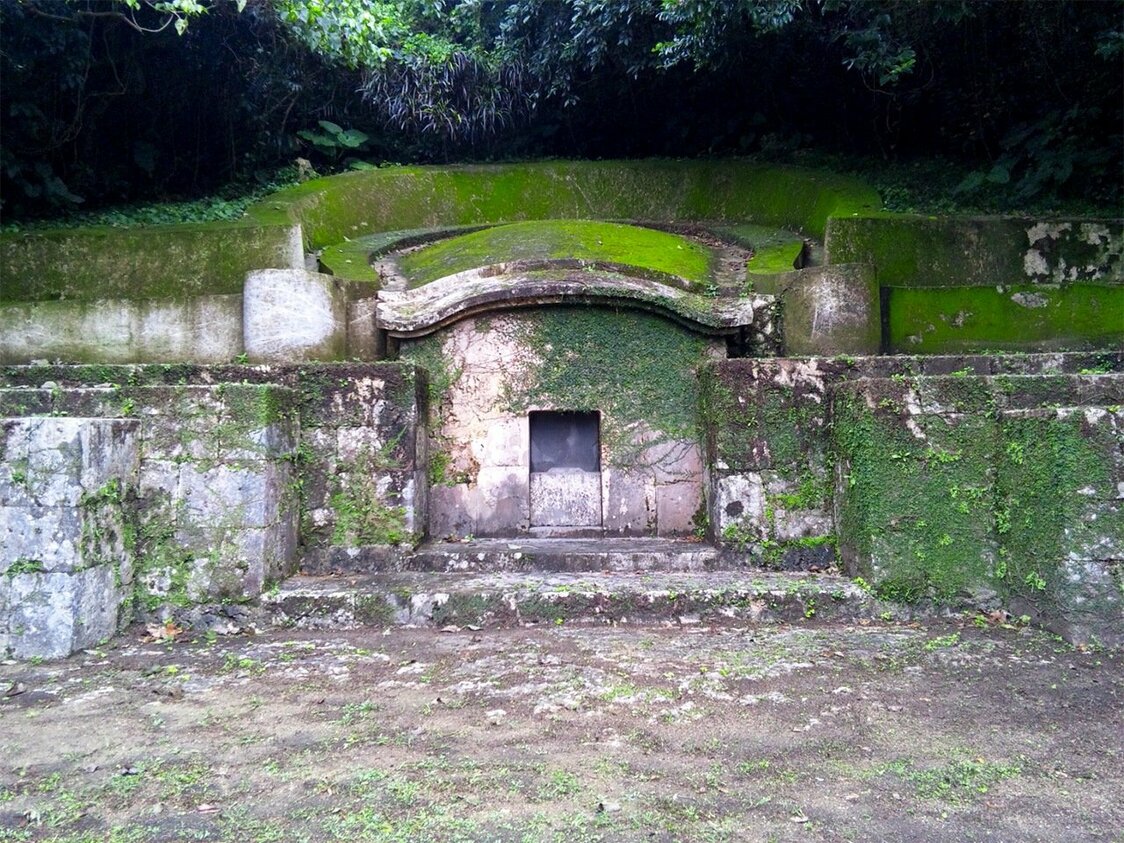
A kamekō-baka (turtleback tomb). These started to be built in the islands in the second half of the seventeenth century. They are thought to have originated in Fujian. They are not individual graves but family crypts. (Photo by the author)
-
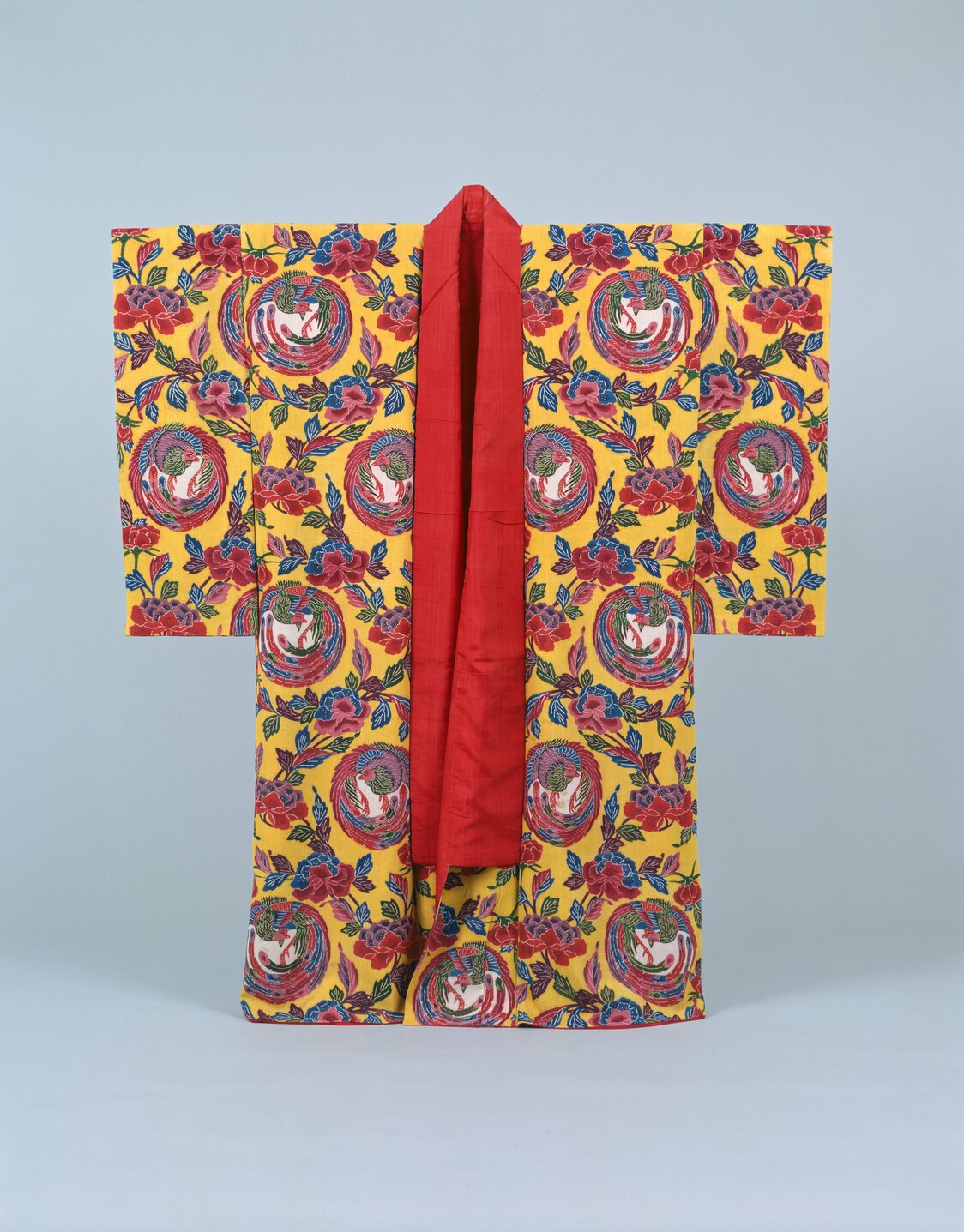
Lined silk crepe bingata kimono with phoenix and peony design on a yellow background. This would have been worn by boys of the ruling class before their coming-of-age ceremony. The vibrant yellow was achieved using orpiment, a toxic sulfide mineral used as a dye. (In the collection of the Naha City Historical Museum).


 Read in other languages