-
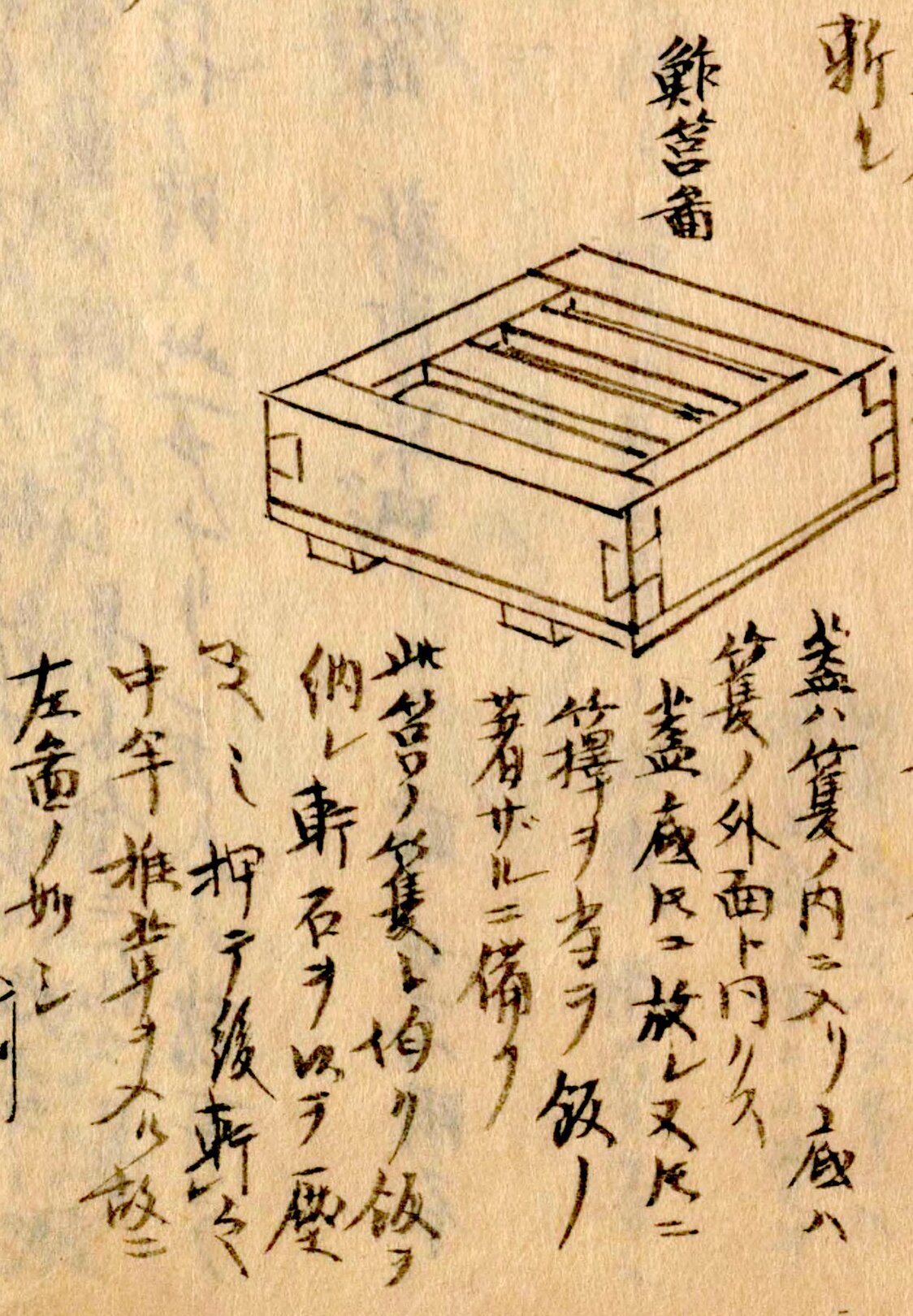
The hakozushi of Morisada’s time has not changed very much since. Toppings are laid on vinegared rice with a lid on top, and then it is pressed down by hand or with a weight. From Morisada mankō (Morisada’s Sketches). (Courtesy National Diet Library)
-
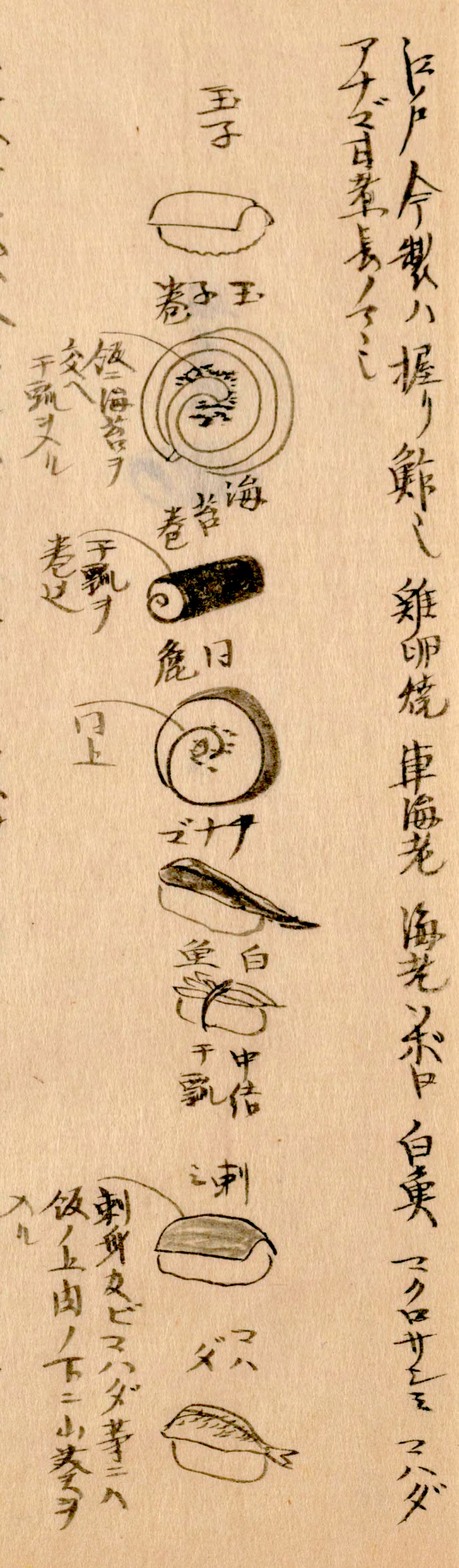
Nigirizushi from Morisada’s Sketches. From top: tamagoyaki (rolled omelet), tamagomaki (kanpyō gourd strips wrapped in tamagoyaki), norimaki with kanpyō inside, a norimaki cross-section, anago (conger eel), shirauo (icefish) wrapped with kanpyō, tuna sashimi, and kohada (gizzard shad). (Courtesy National Diet Library)
-
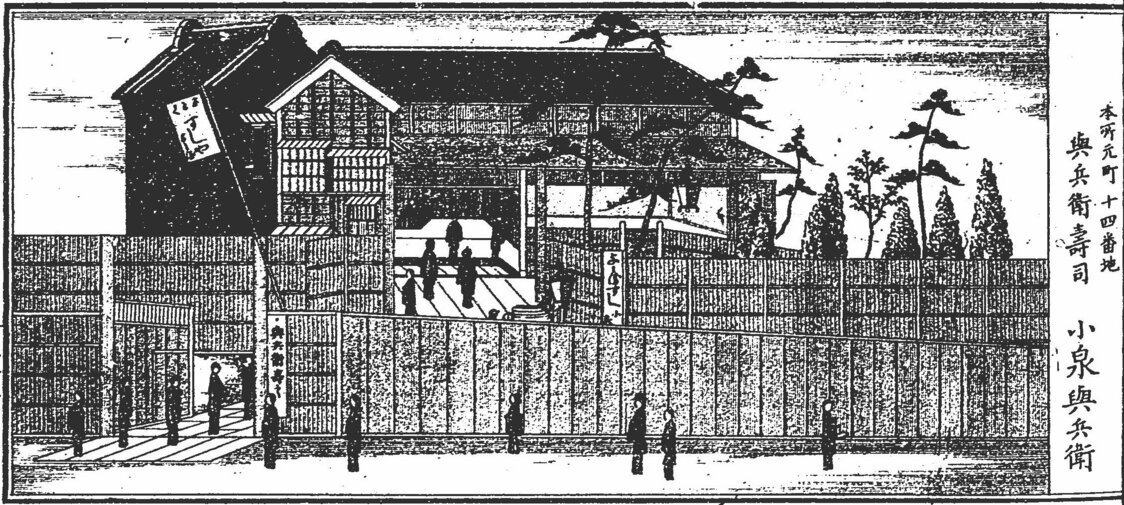
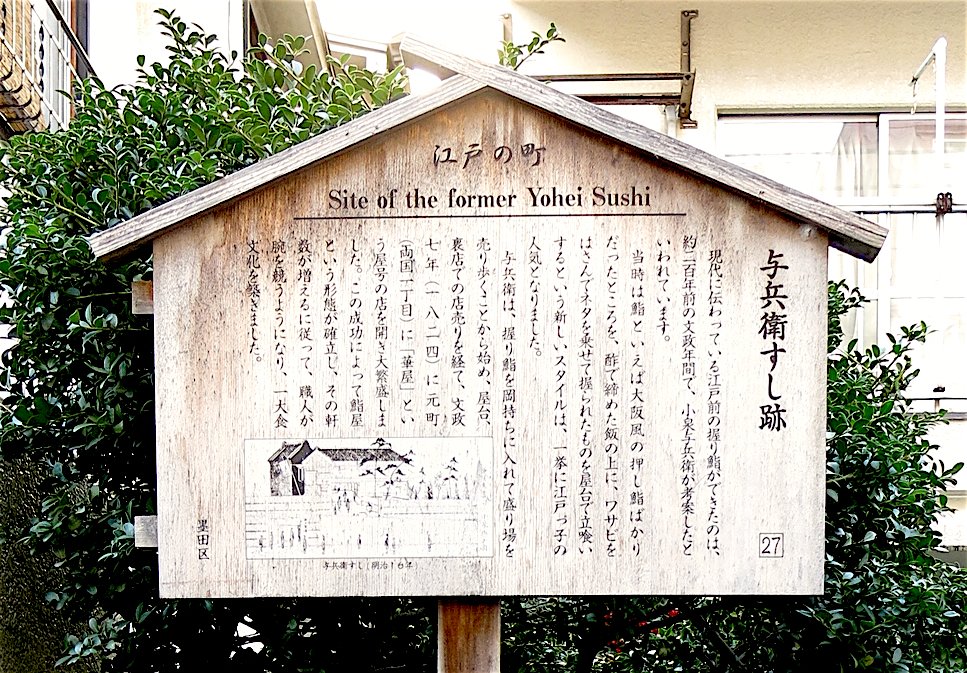
The Yohei-zushi shop. From the Meiji era (1868–1912) work Tokyo shin-hanjōki (A Chronicle of New Prosperity in Tokyo). (Courtesy National Diet Library)
-
-
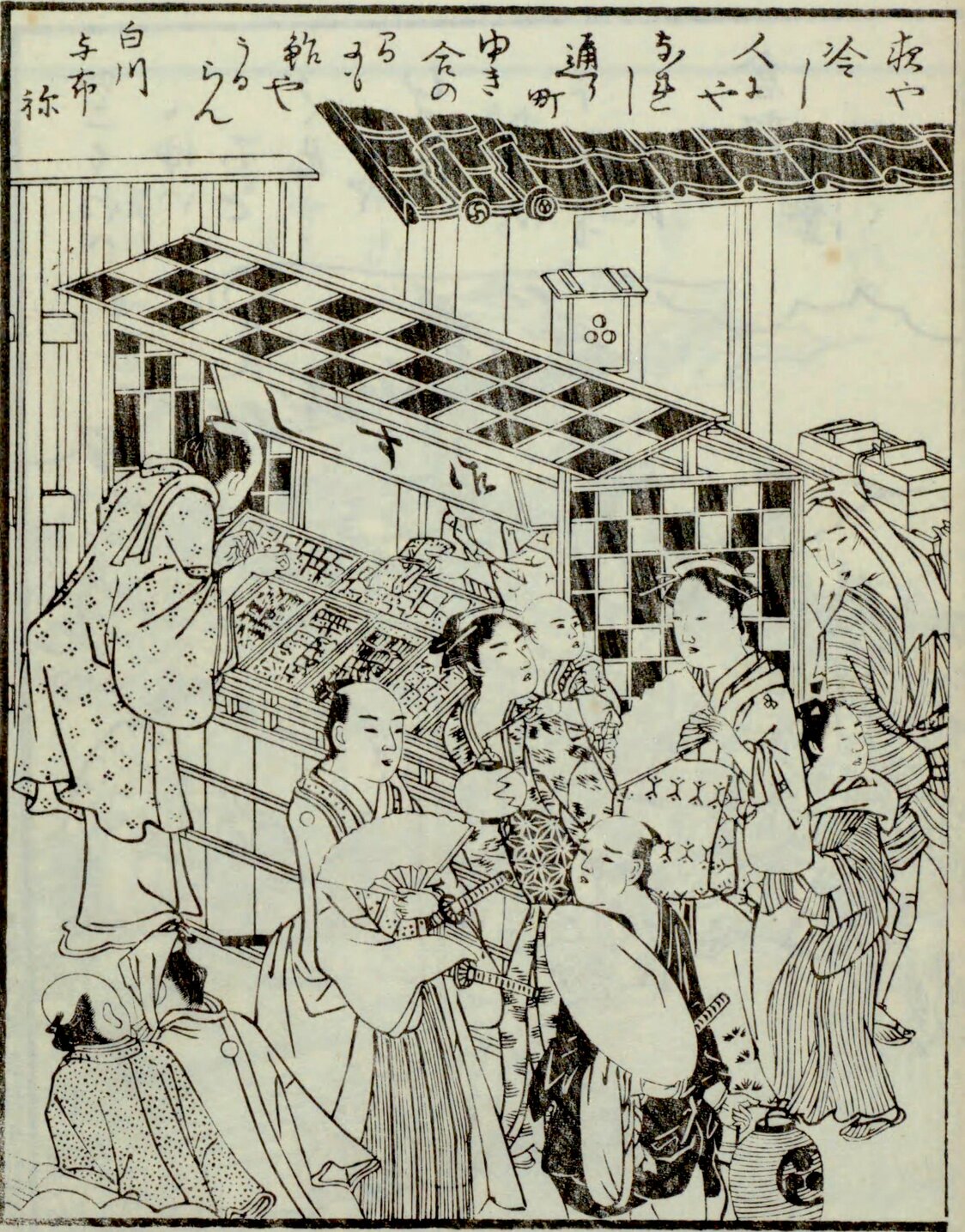
A sushi stall in Edo’s streets. Customers choose from the toppings on display, and the chef at the back makes the sushi for them. From Ehon Edo suzume (Picture Book: Edo Sparrows). (Courtesy National Diet Library)
-
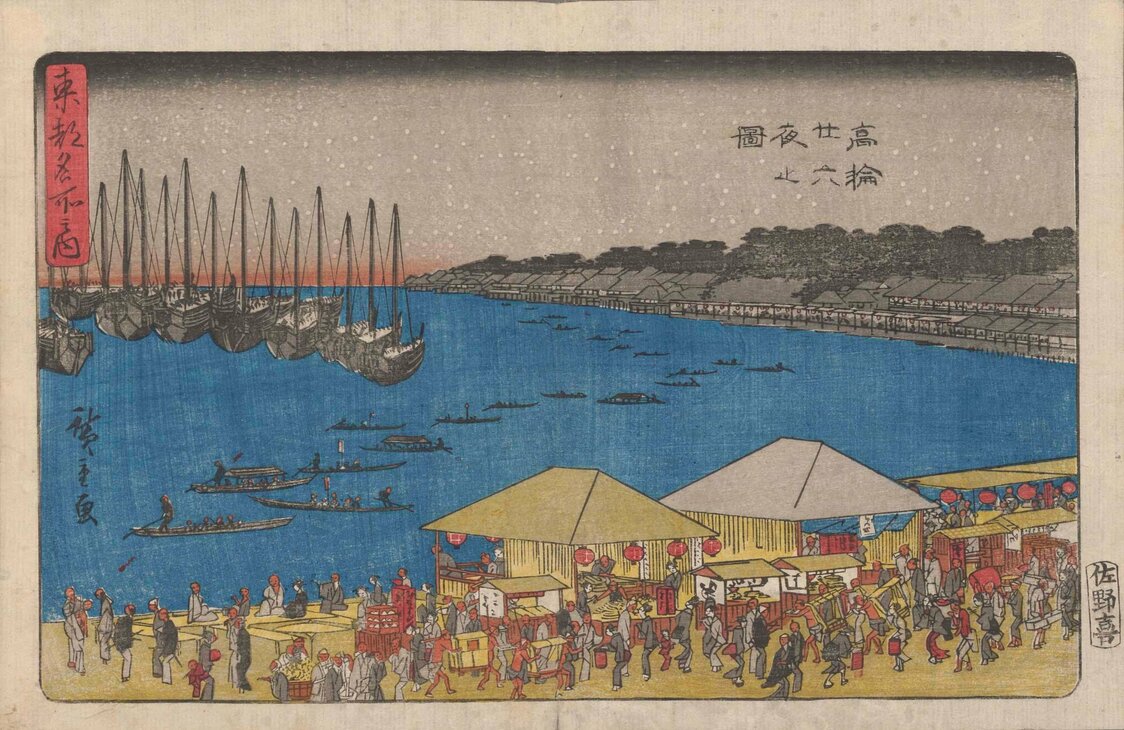
The nijūrokuya-machi festival in Takanawa. Just to the right of center, below the light-colored roof, a stall has a sign with the word sushi written in hiragana (すし). Tōto meisho no uchi: Takanawa nijūrokuya no zu (Famous Places in the Eastern Capital: Takanawa Twenty-Sixth Night) by Utagawa Hiroshige. (Courtesy Ajinomoto Foundation for Dietary Culture)
-
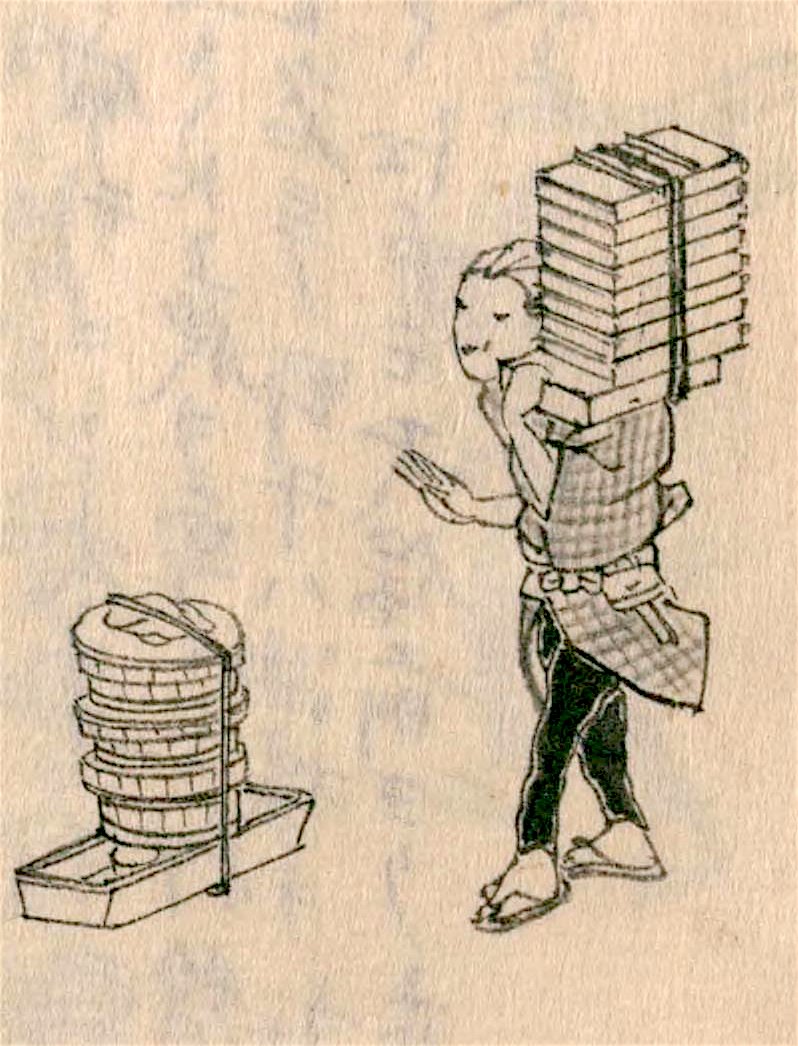
A sushi deliveryman in Morisada’s Sketches. (Courtesy National Diet Library)


 Read in other languages