-
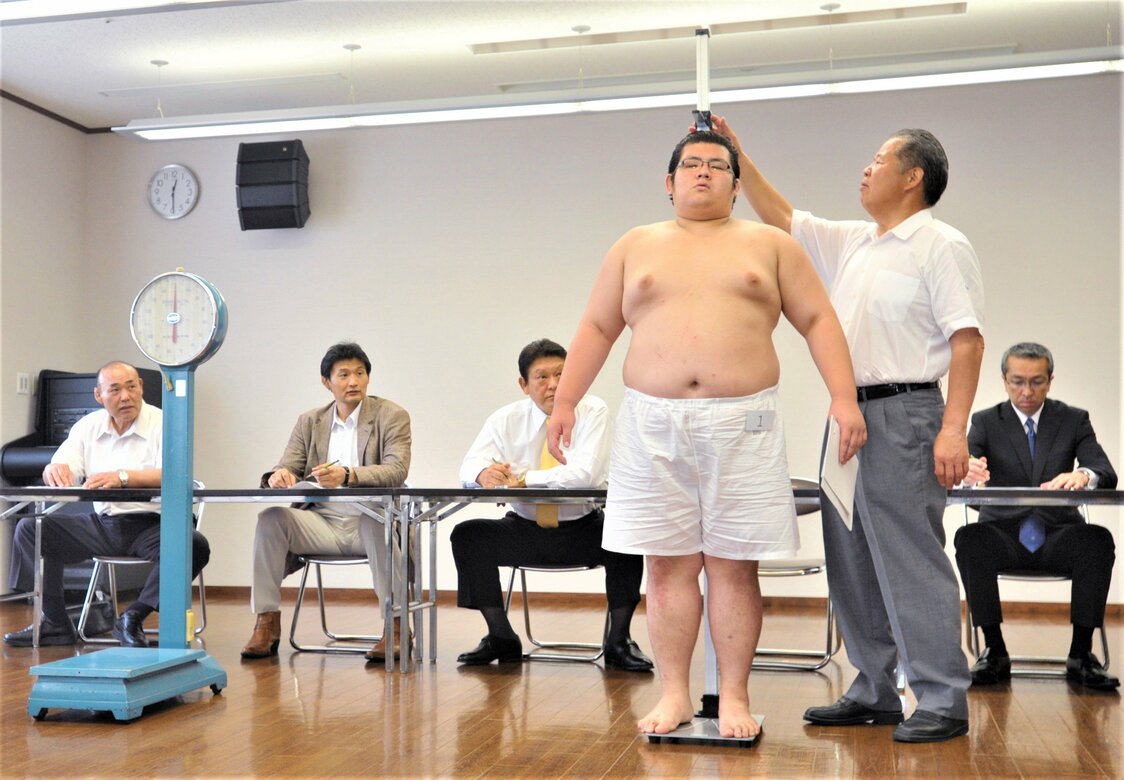
The physical examination for new recruits. An oyakata operates the slider on the height scale and reads out the number to the adjudicators. Taken on July 4, 2011, in Nagoya. (© Jiji)
-
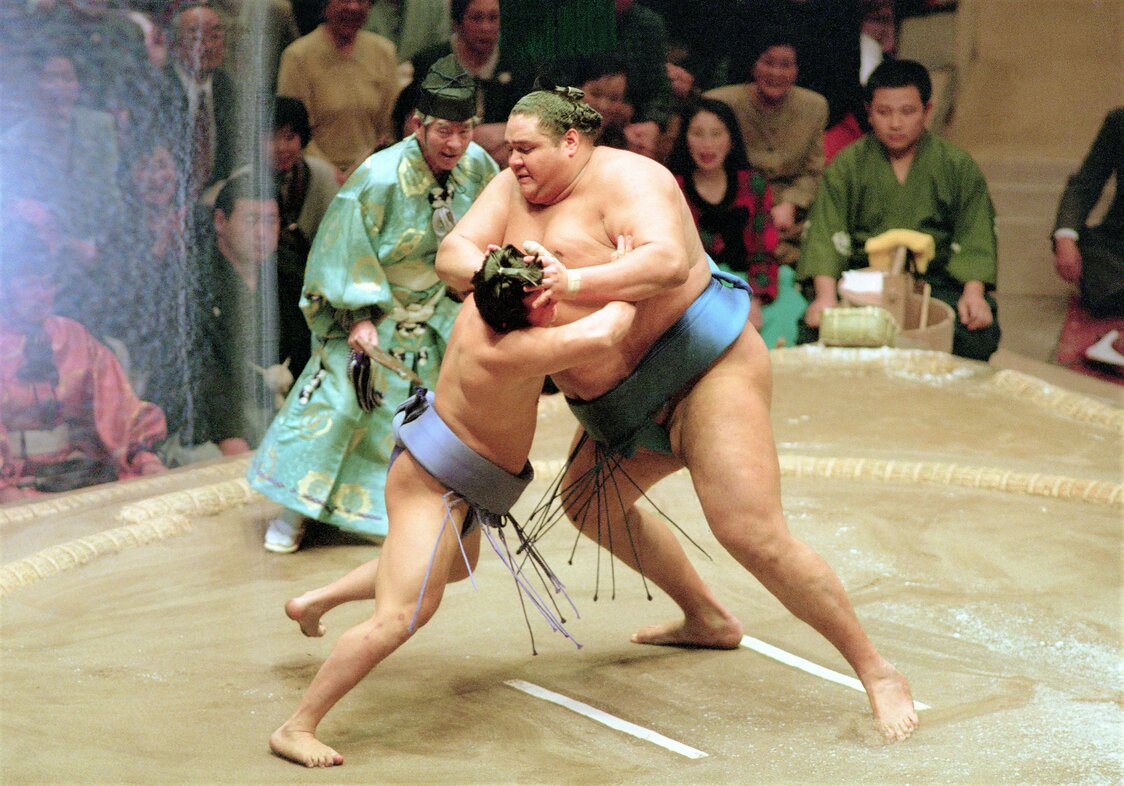
Mainoumi hung on even in the face of a two-handed thrust by 203-centimeter, 230-kilogram yokozuna Akebono on January 12, 1995, at the Tokyo Ryōgoku Kokugikan. Mainoumi maintained that physical size difference with an opponent was not a handicap. (© Jiji)
-

Mainoumi upends ōzeki Kirishima (right) with a spectacular kakenage hooking inner thigh throw. While Mainoumi was known for a broad repertoire of unusual moves, his solid grounding in sumō basics and lower body strength helped him prevail over larger opponents. Taken on July 11, 1993, at the Aichi Prefectural Gymnasium. (© Jiji)
-
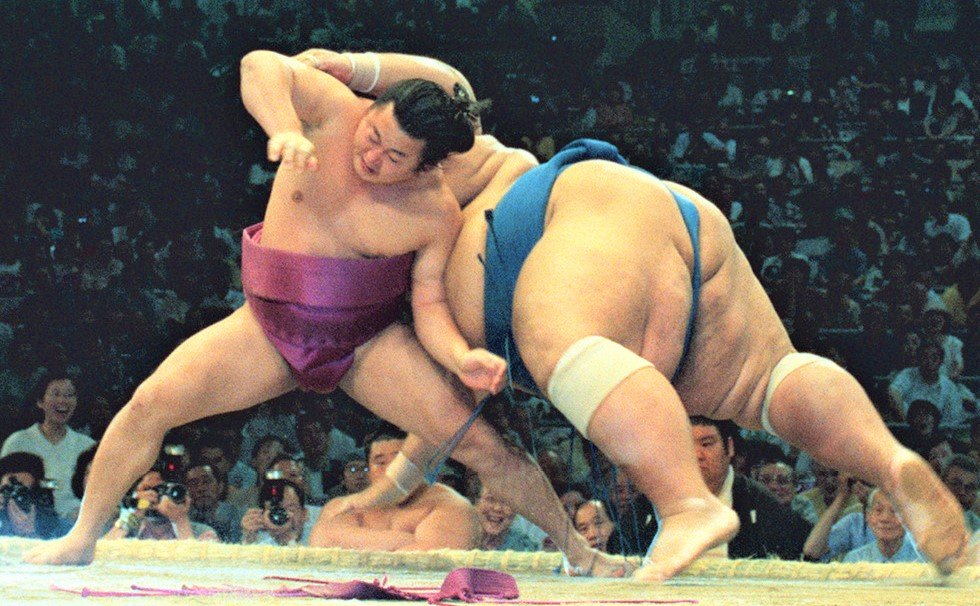
At the July 1996 basho, Mainoumi, pushed to the edge of the ring by 280-kilogram ōzeki Konishiki, overturned him with a shitatehineri twisting underarm throw. After he fell to the makushita division as a result of the severed ligament he suffered when Konishiki fell on his leg during that bout, Mainoumi’s fighting spirit propelled him back to the top makuuchi division. (© Kyōdō)
-
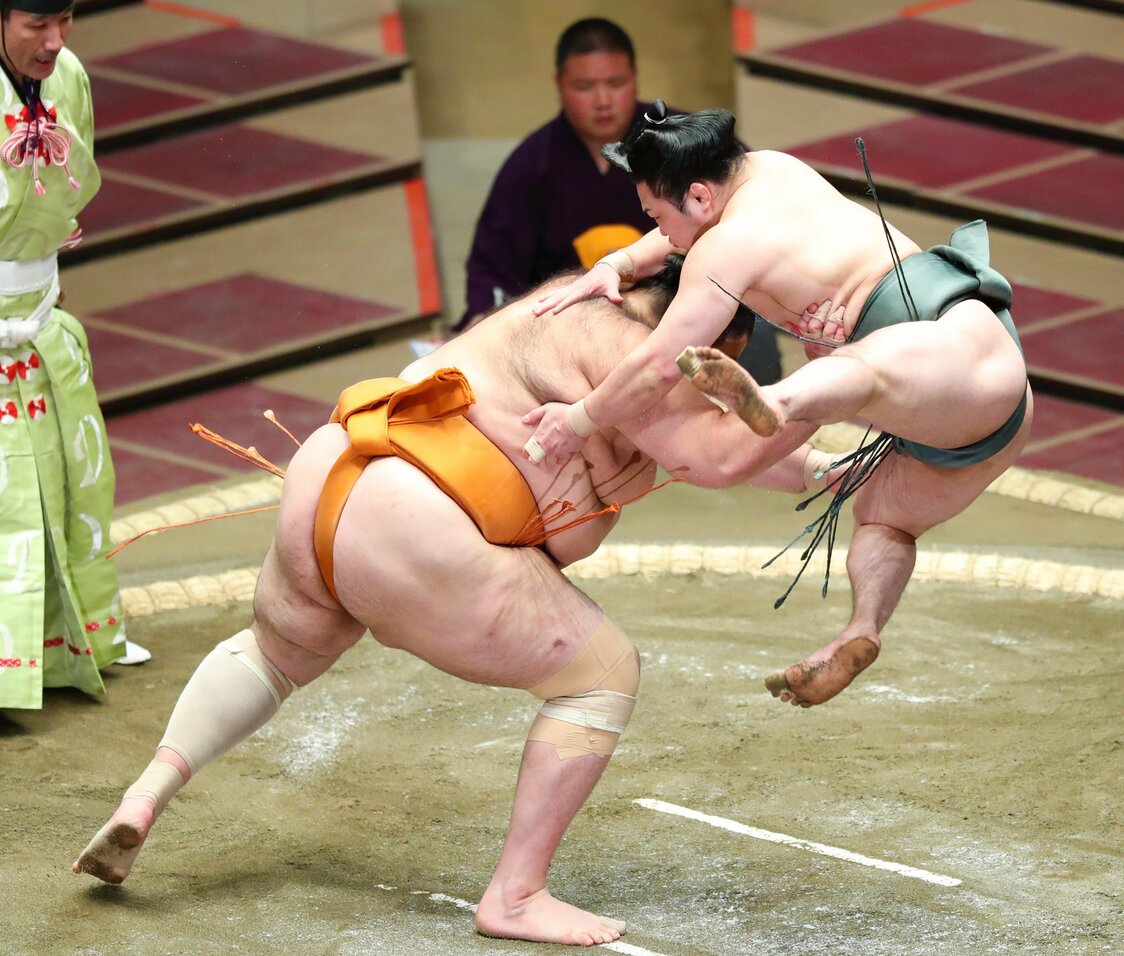
On the second day of the November 2020 basho, Enhō (right) takes a hassōtobi flying leap at the faceoff with fellow maegashira Kaisei. At 168 centimeters and 99 kilograms, Enho’s physique is almost identical to Mainoumi’s. Taken on November 9, 2020, at Tokyo Ryōgoku Kokugikan. (© Jiji)


 Read in other languages