-

Tokoroten noodles (left), an earlier dish from which kanten derives; kanten as cubes in a mitsumame dessert (right). (© Pixta)
-

A kanten drying station at the Nagano company Irisen, with the Tateshina mountain range in the background. (© Nomura Kazuyuki)
-
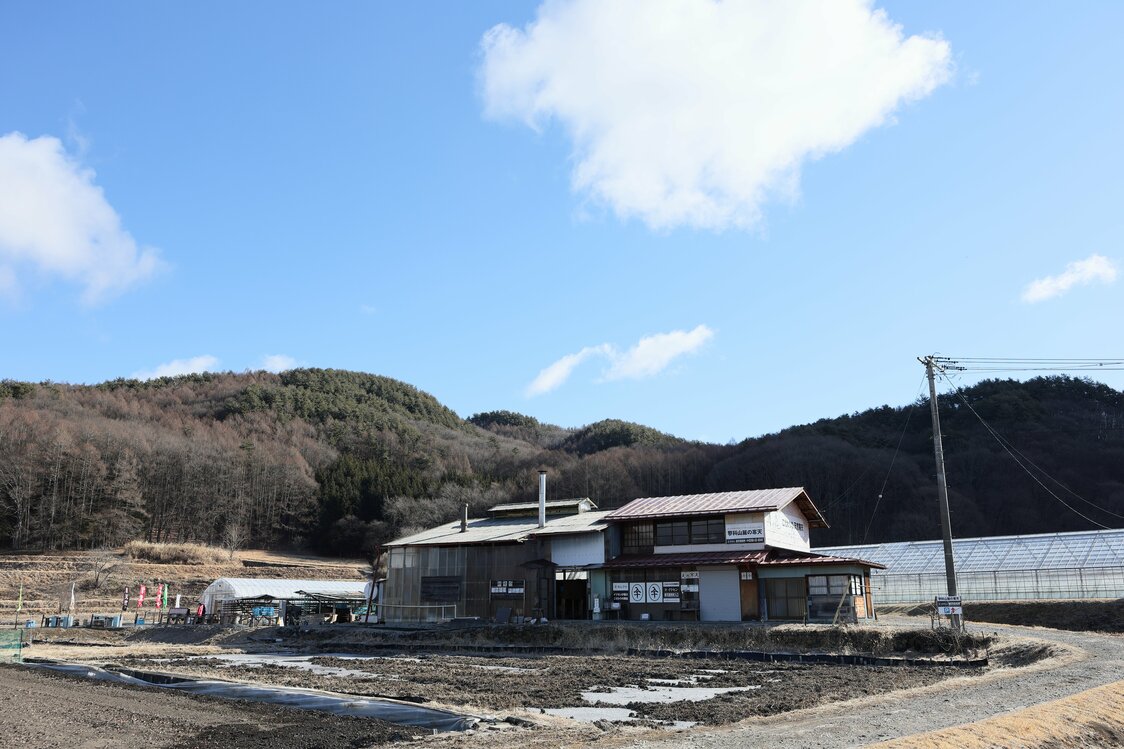
Irisen’s production site (© Nomura Kazuyuki)
-
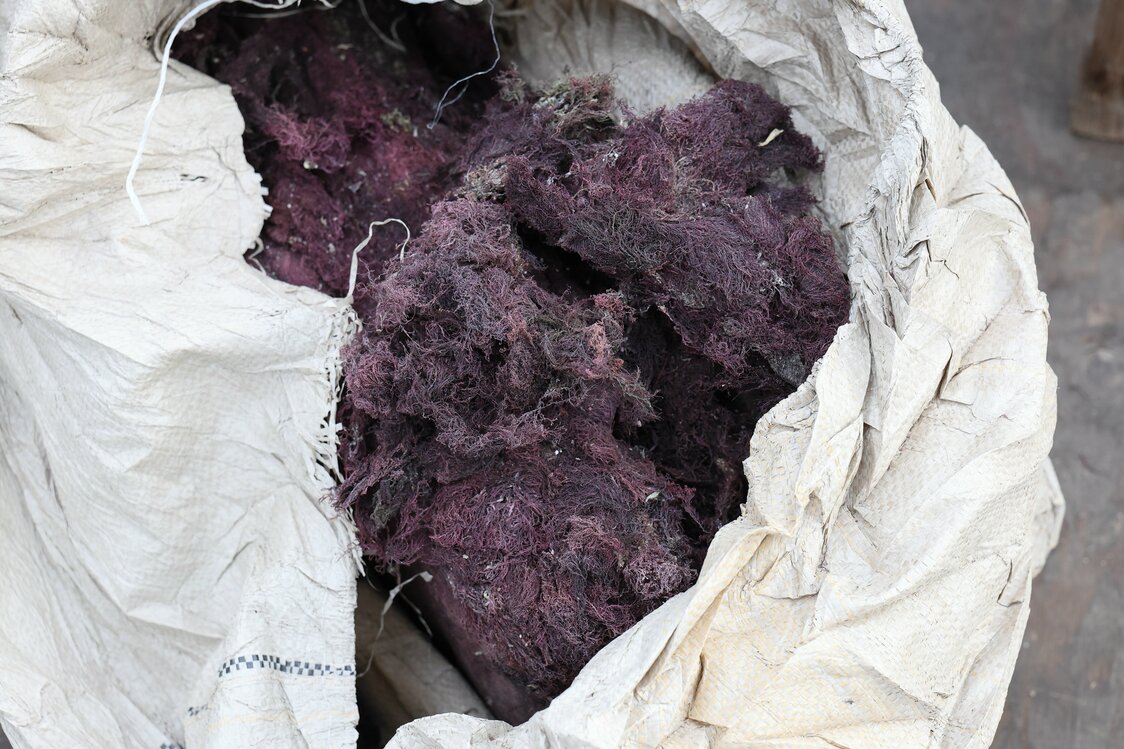
Tengusa that has been loosened up. (© Nomura Kazuyuki)
-
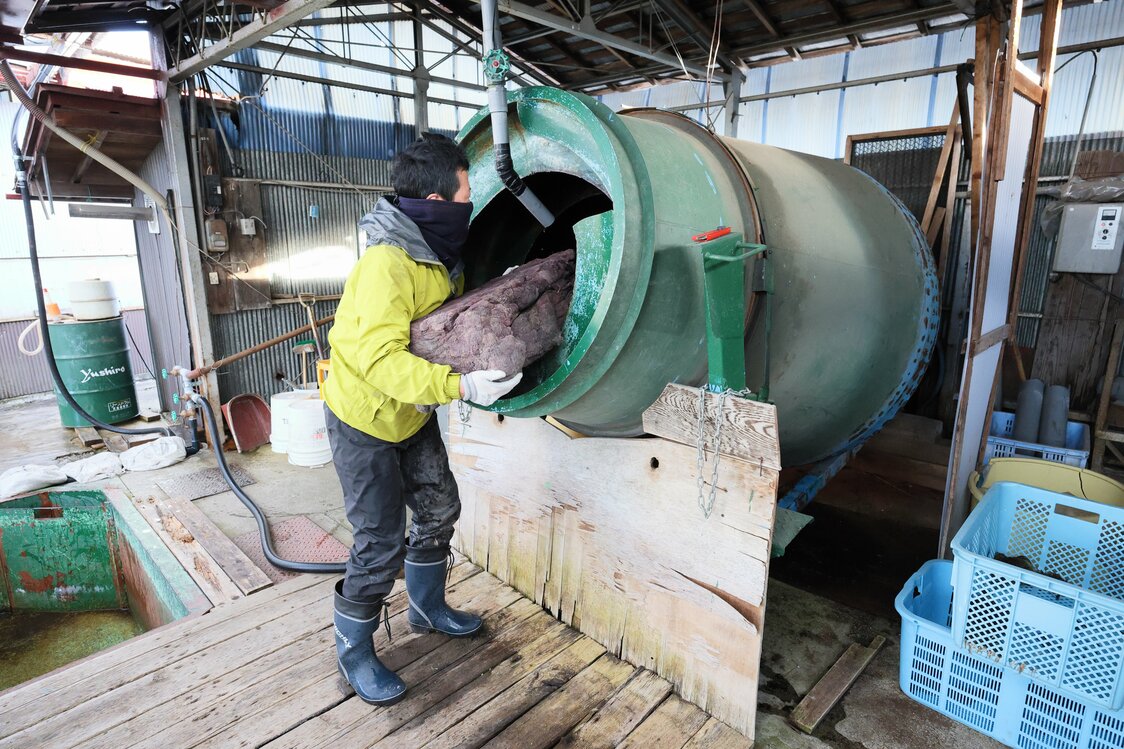
The tengusa is added to the drum in clumps. (© Nomura Kazuyuki)
-
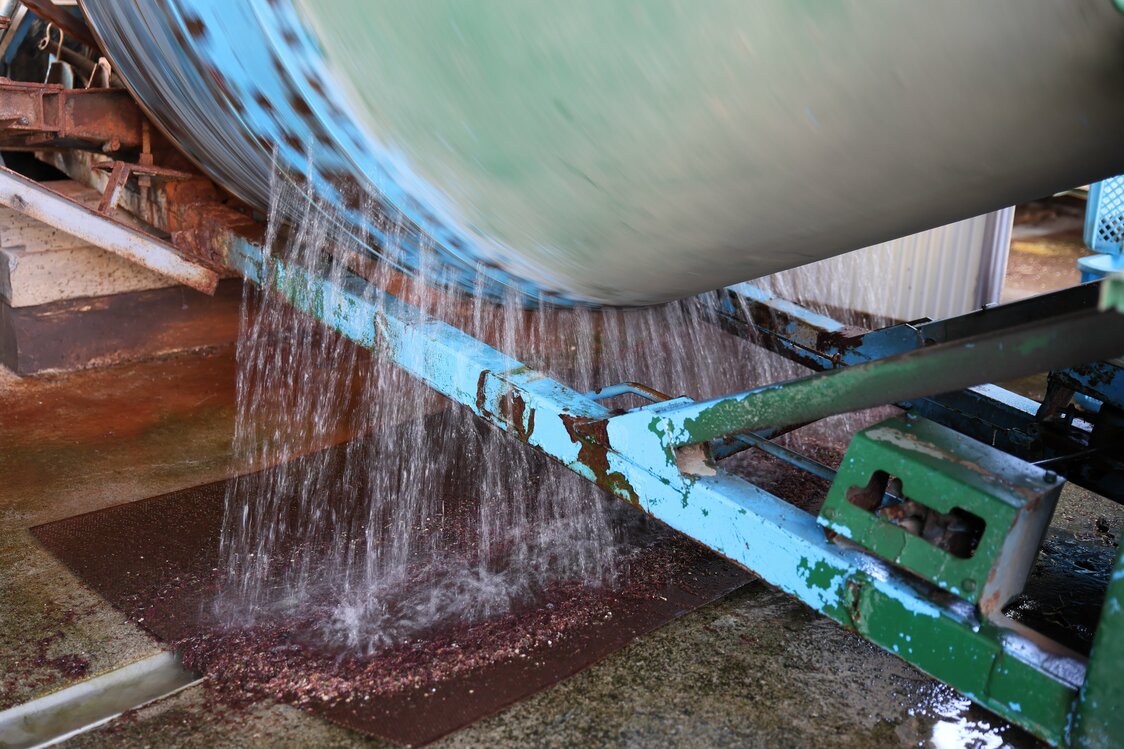
The dirty water is drained through holes in the drum. (© Nomura Kazuyuki)
-
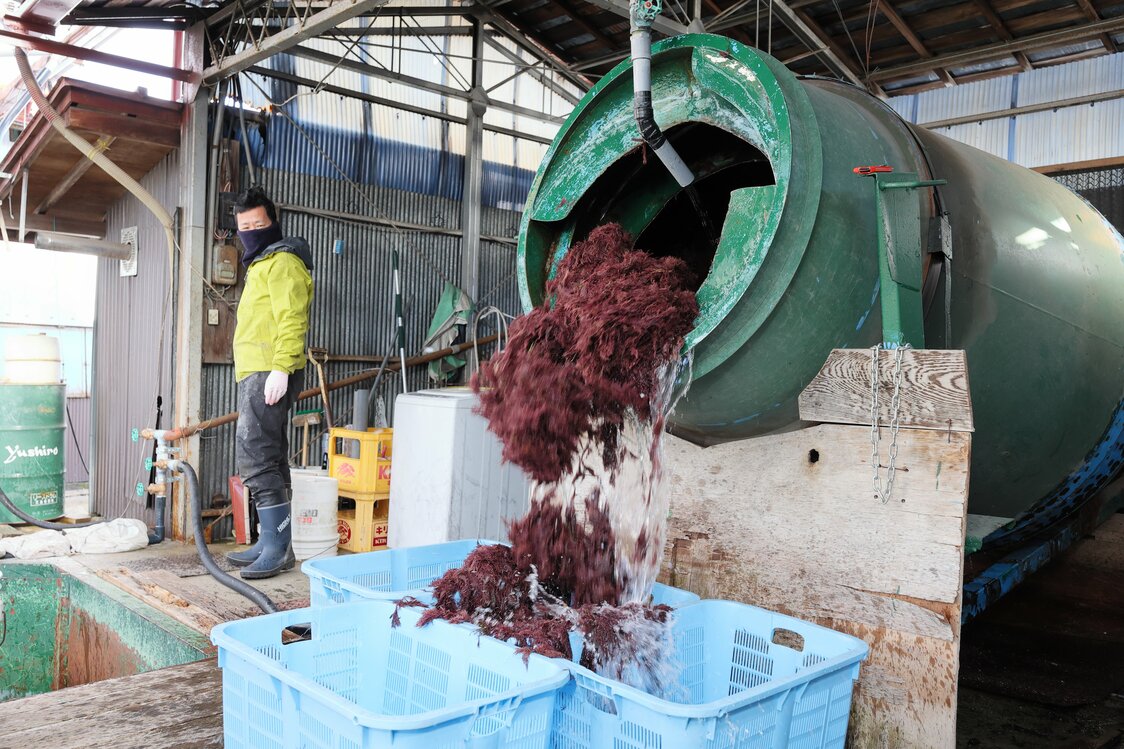
The washed tengusa is collected. (© Nomura Kazuyuki)
-
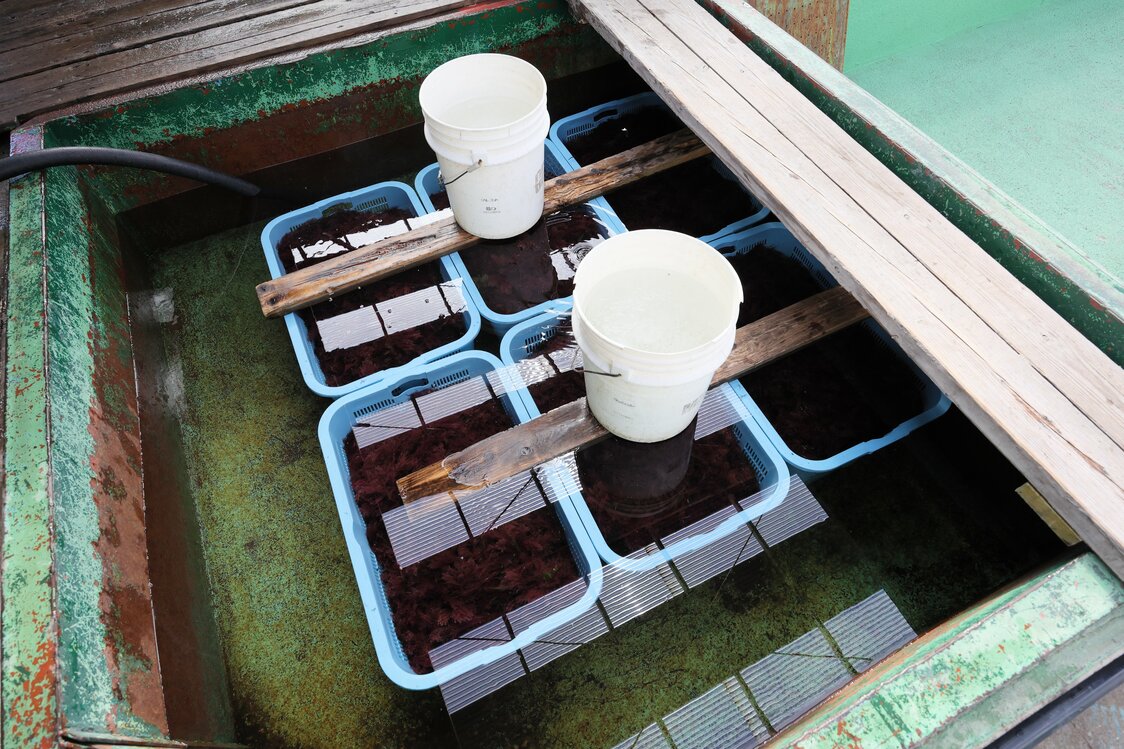
Weights are placed on top to stop the tengusa floating up. (© Nomura Kazuyuki)
-
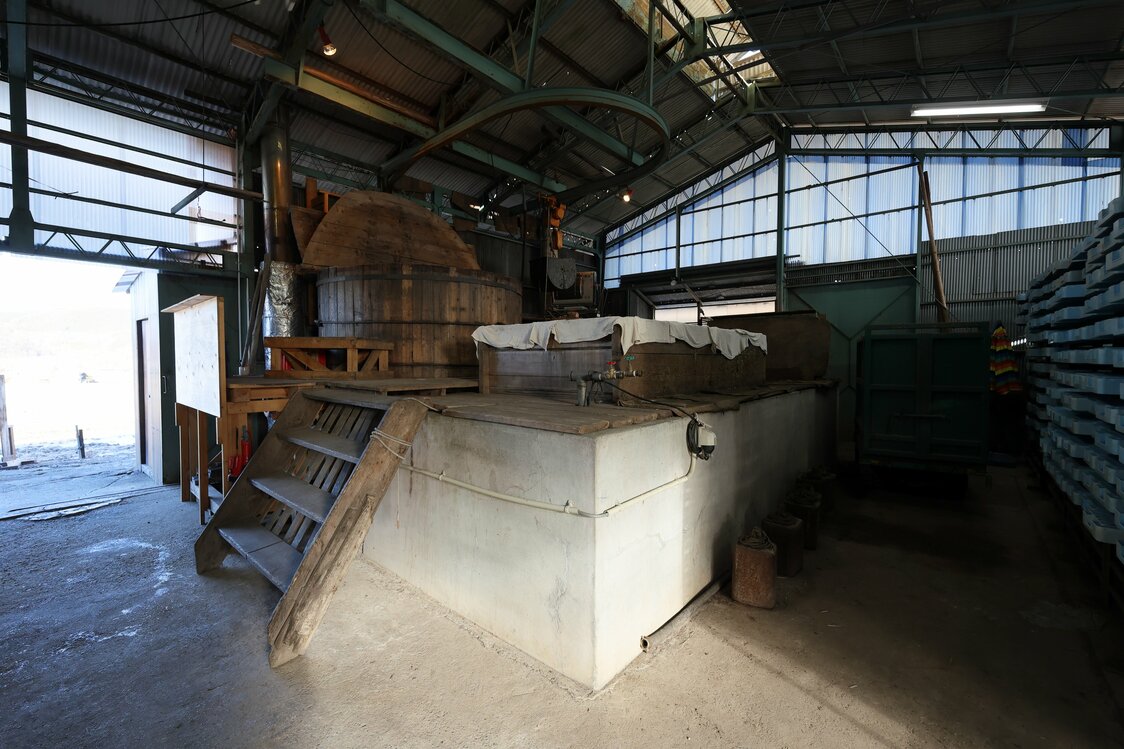
The ōgama pot is 3 meters high and 2.5 meters in diameter. (© Nomura Kazuyuki)
-
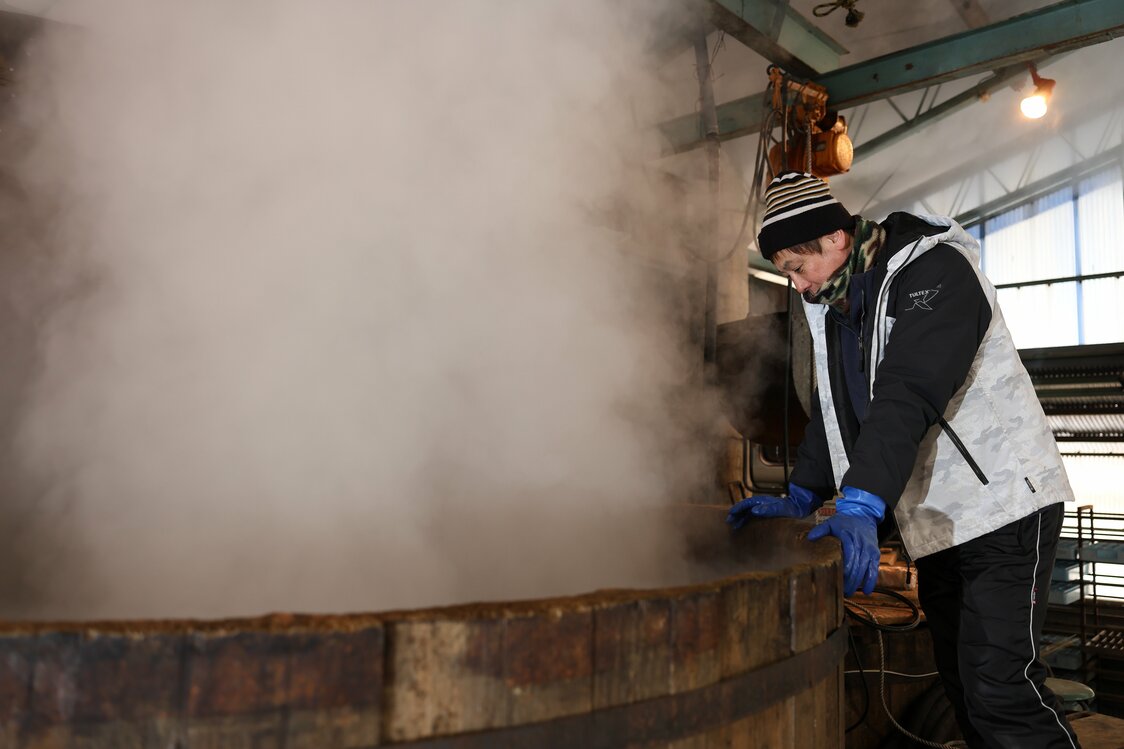
Chino, Irisen’s president, inspecting the ōgama pot. (© Nomura Kazuyuki)
-
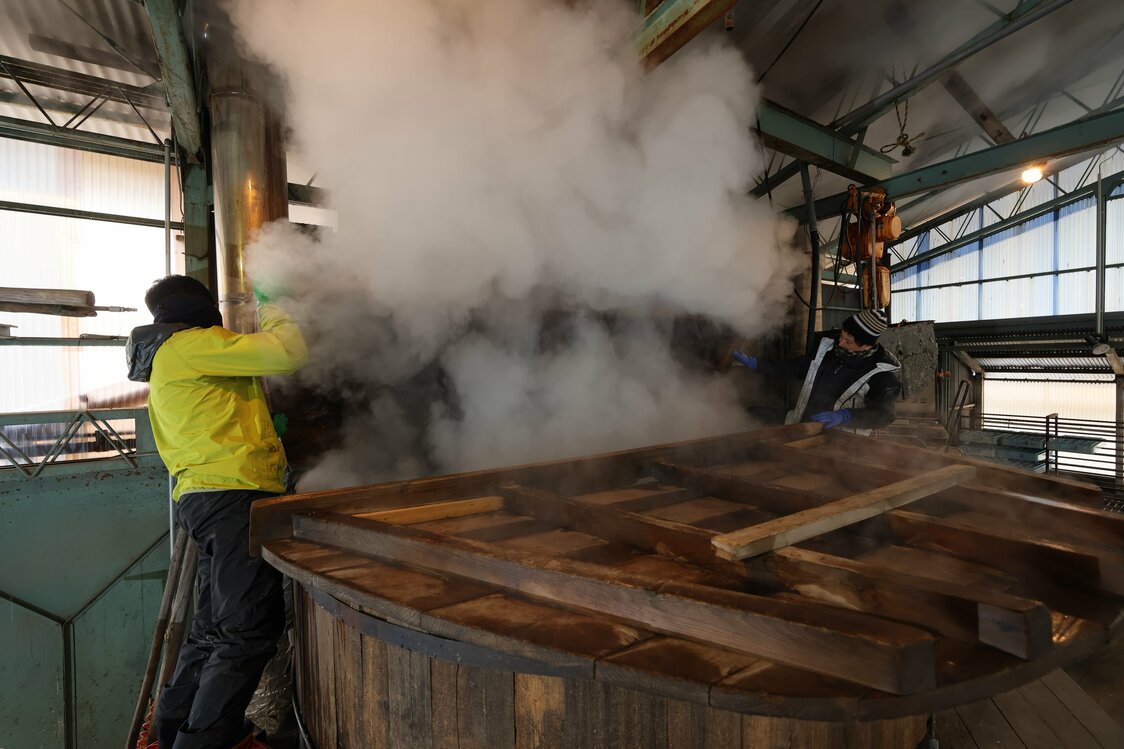
The three-piece lid takes two people to open it. (© Nomura Kazuyuki)
-
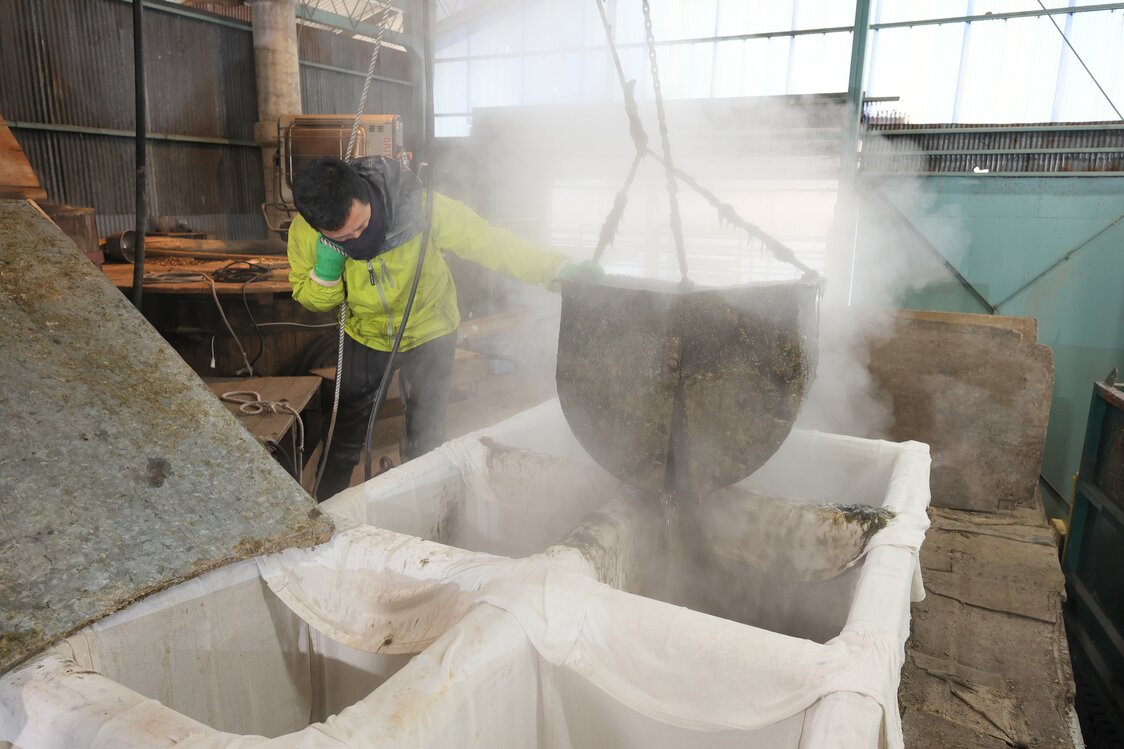
The strings on the bucket are pulled, opening it up so that the contents fall out. (© Nomura Kazuyuki)
-
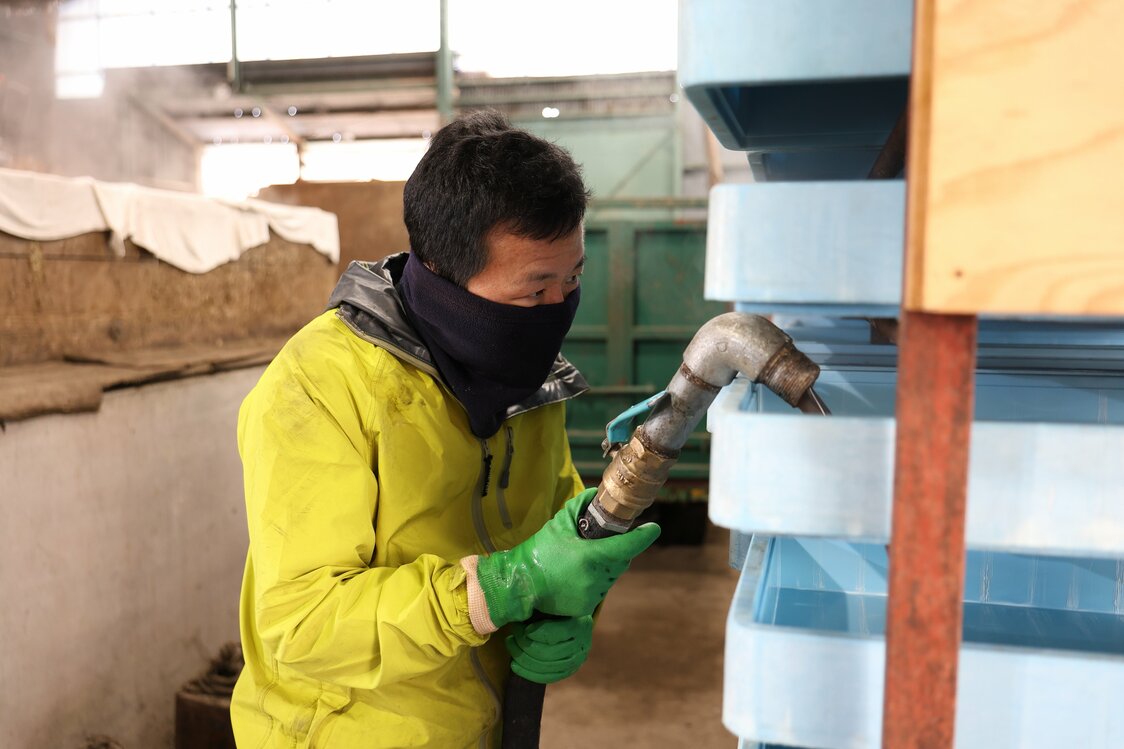
The liquid is poured into hundreds of morobuta tray containers. (© Nomura Kazuyuki)
-
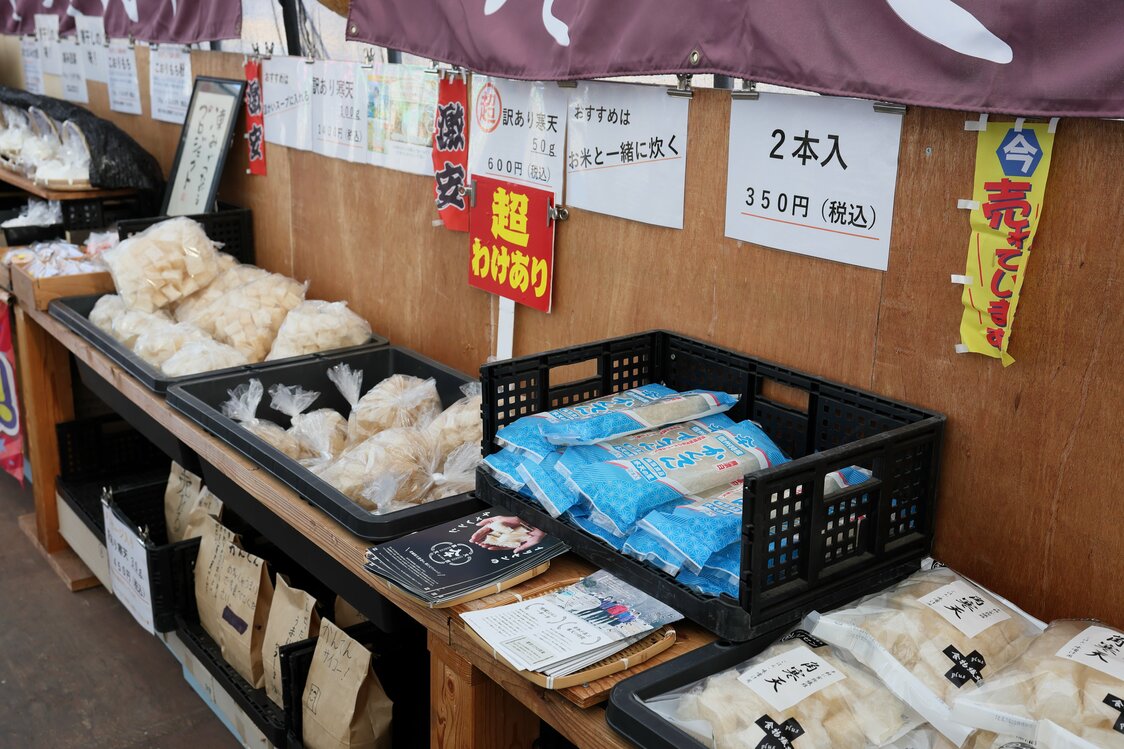
Misshapen kanten being sold at an Irisen retail space. (© Nomura Kazuyuki)
-
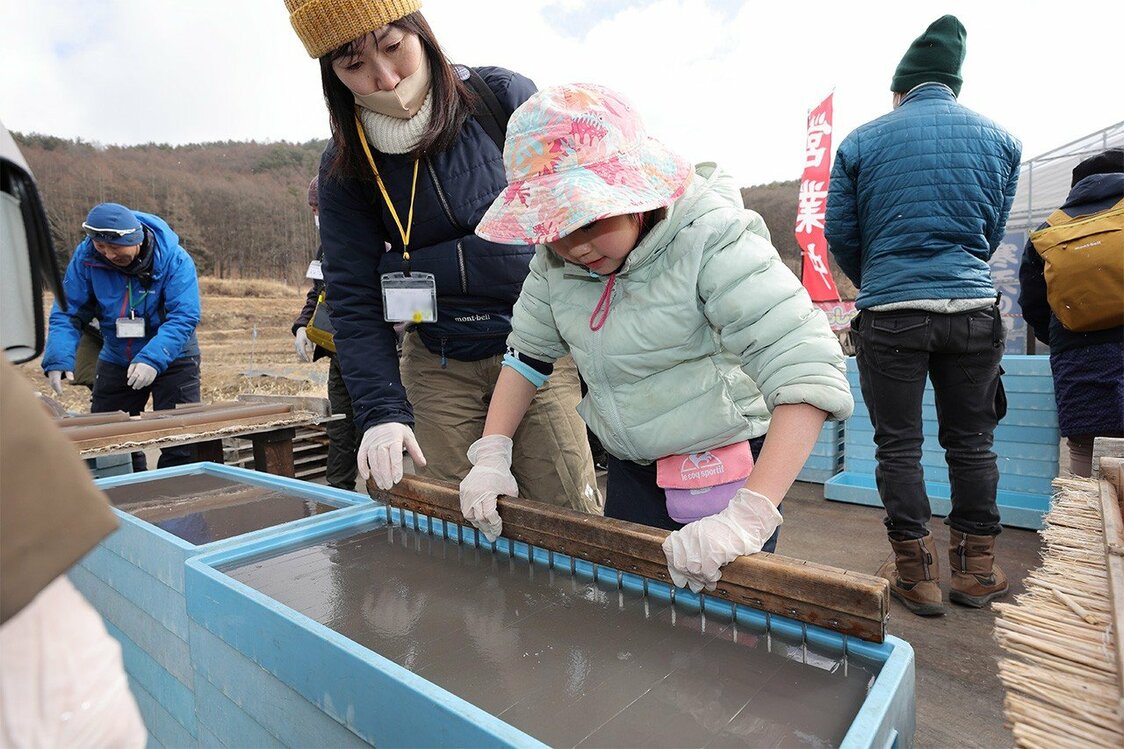
A comb-like blade is pressed into the kanten and then pulled to cut it. (© Nomura Kazuyuki)
-
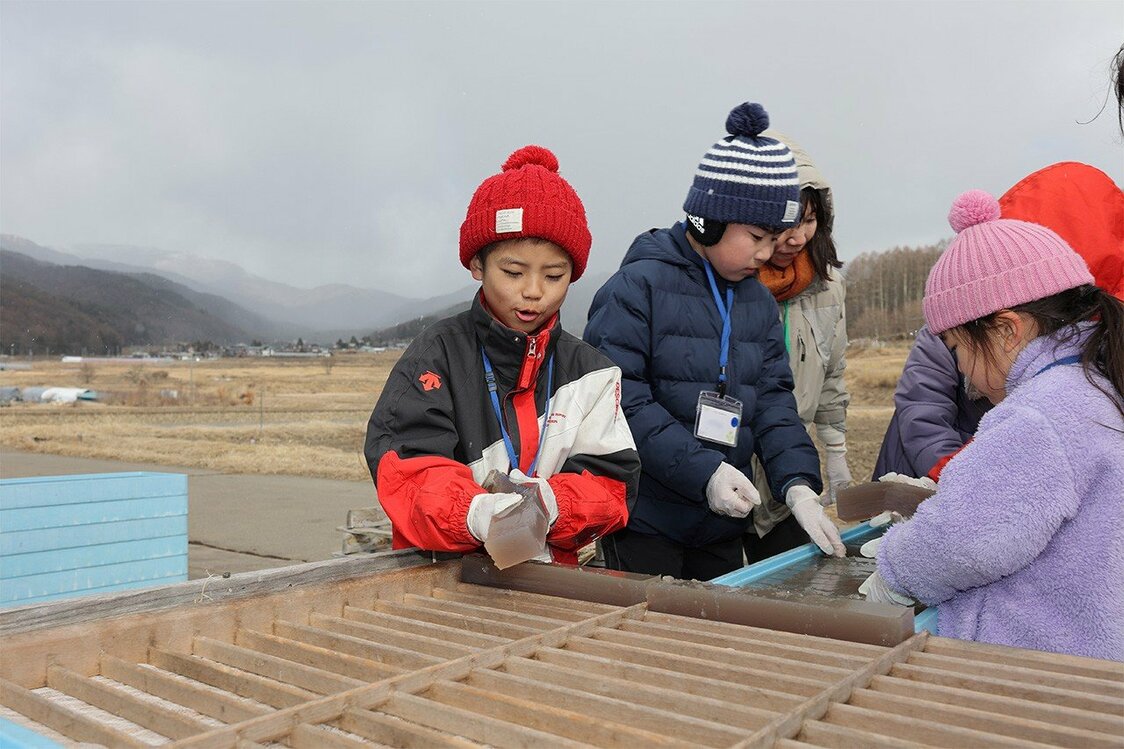
The kanten is arranged in wooden frames and at the end the frames are removed. (© Nomura Kazuyuki)
-
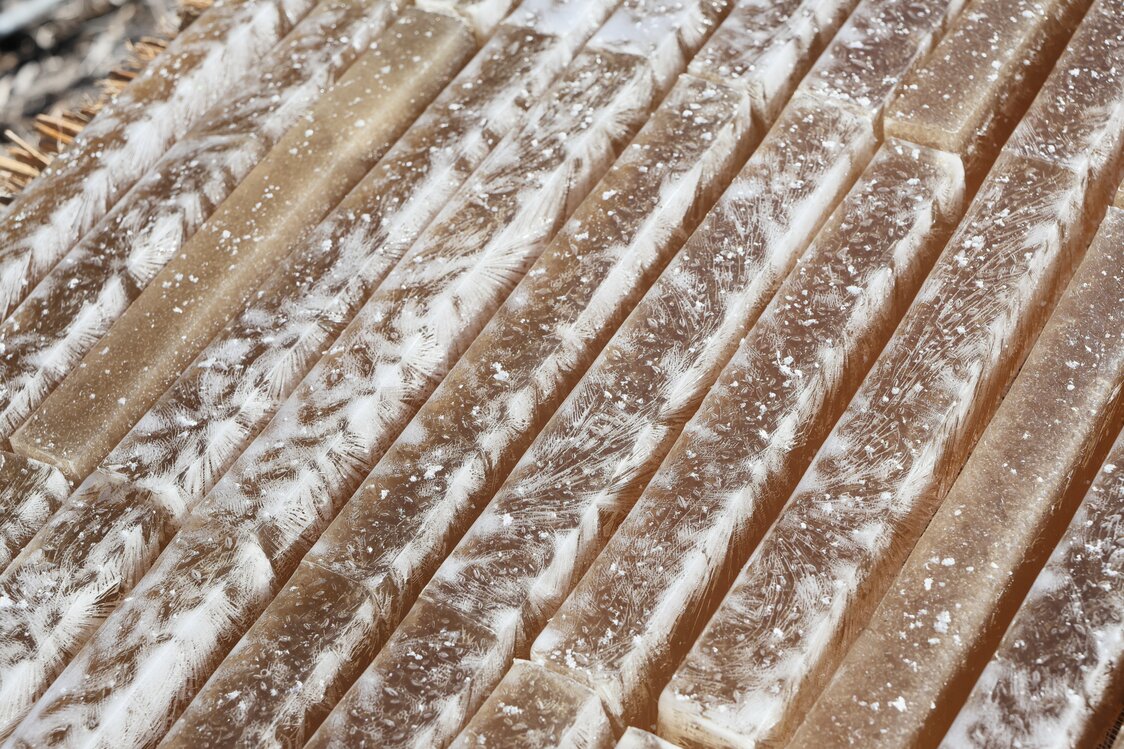
A naturally freeze-dried food (© Nomura Kazuyuki)
-
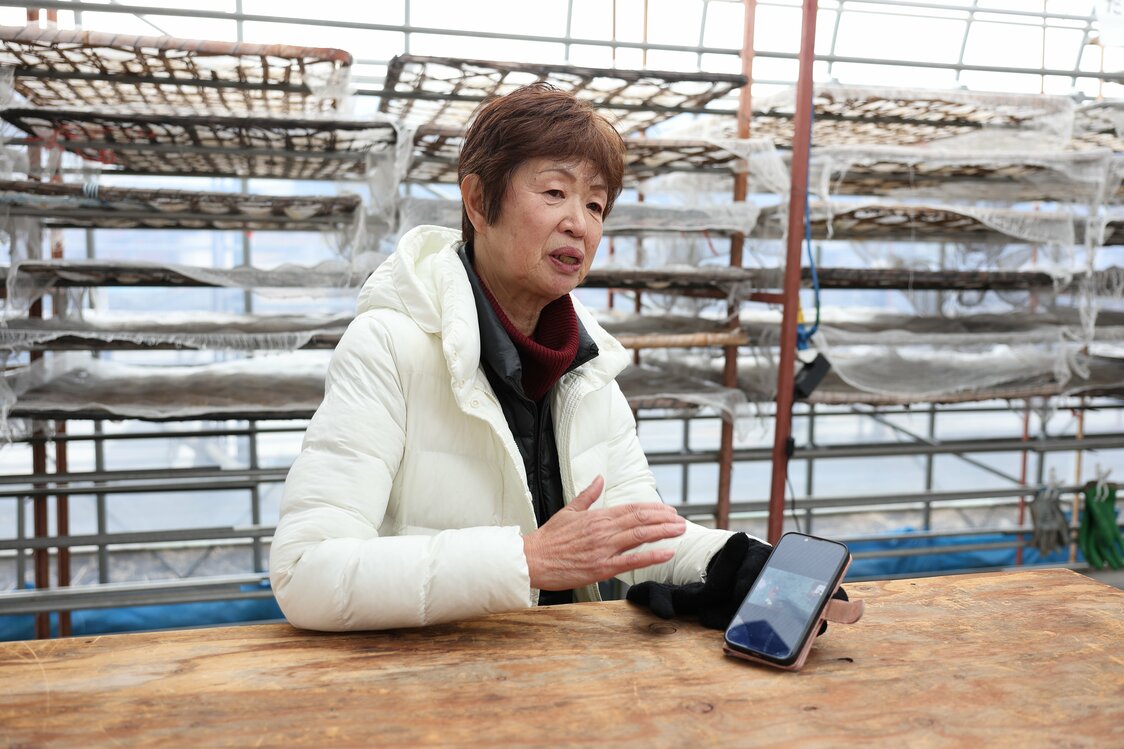
Ebata showing a freediving video. (© Nomura Kazuyuki)
-
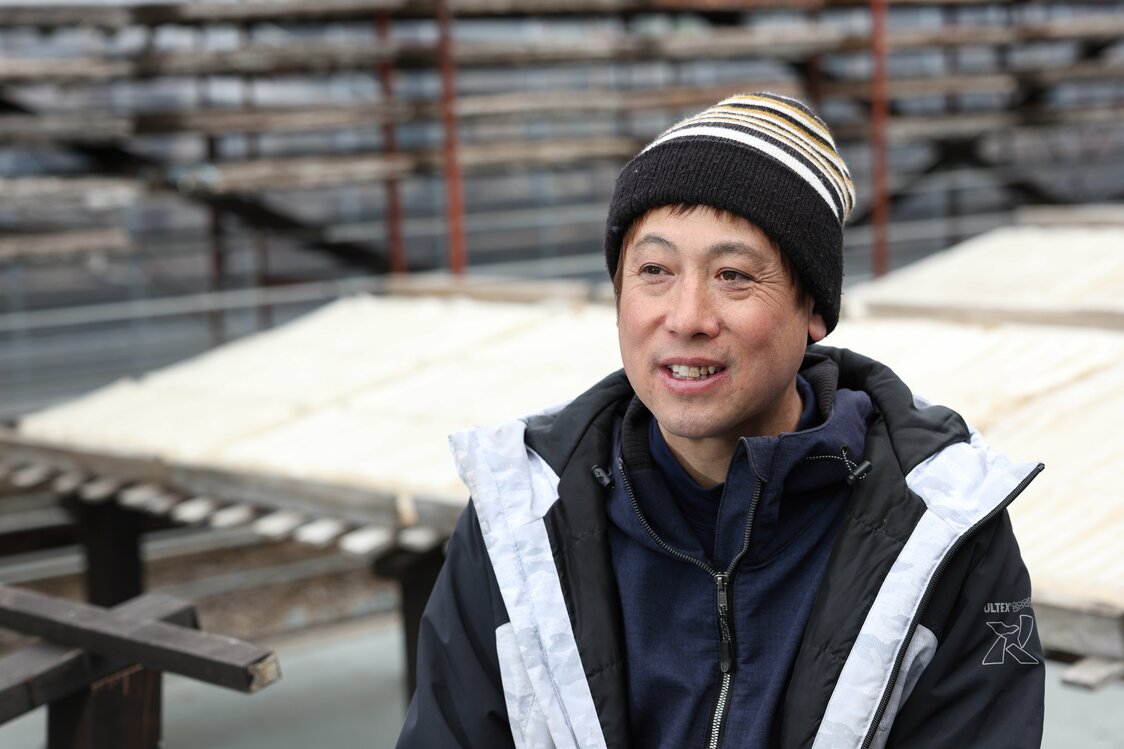
Chino wants more people to become kanten fans. (© Nomura Kazuyuki)


 Read in other languages