-
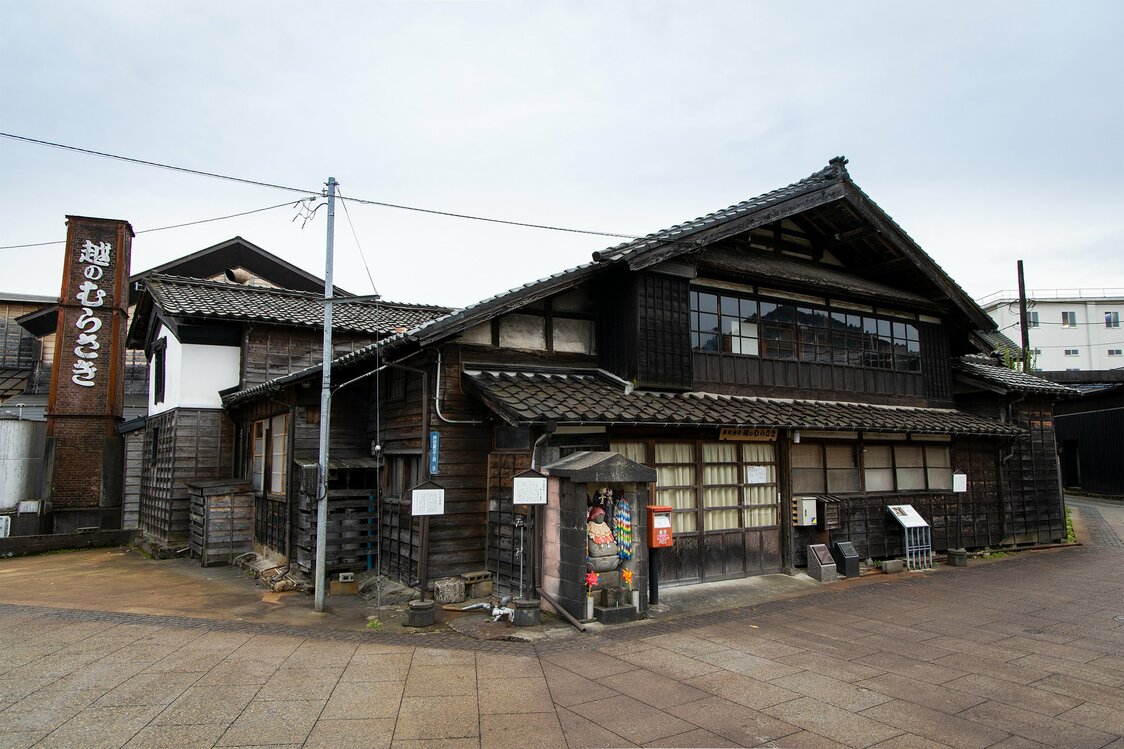
The headquarters of soy sauce brewer Koshino Murasaki was erected in 1877. The main building and storehouse behind are registered as cultural properties, while the brick chimney standing to the left is a Settaya landmark.
-
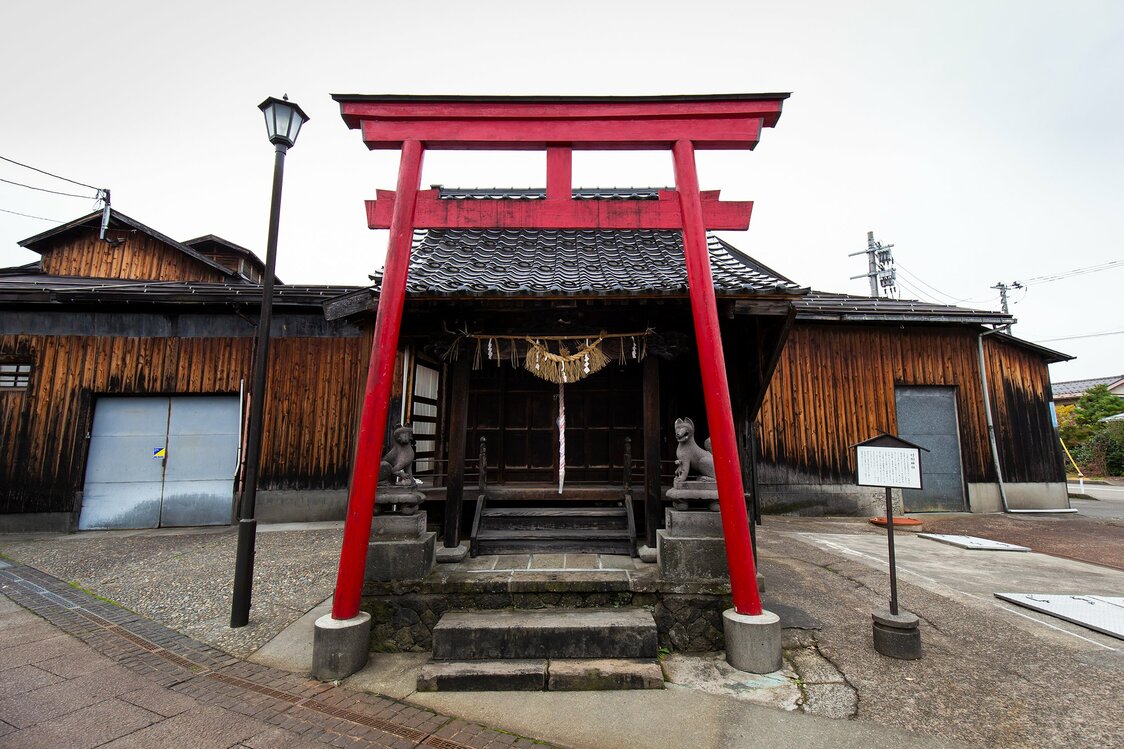
Takekoma Inari Shrine stands adjacent to the Koshino Murasaki property. The baby fox cuddled up to the guardian fox figure on the right adds charm.
-
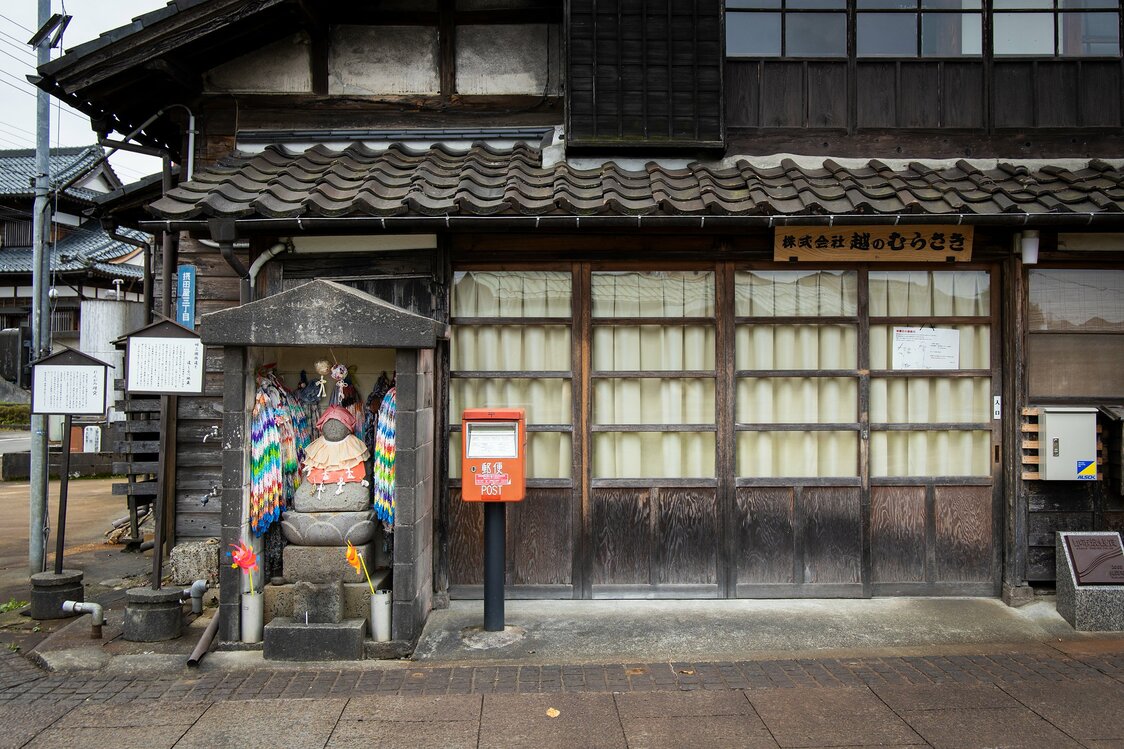
A small shrine dedicated to the Buddhist divinity Jizō in front of Koshino Murasaki served as a road marker on the Mikuni Kaidō. The base carries a carved inscription telling travelers “right to Edo, left to mountains.”
-
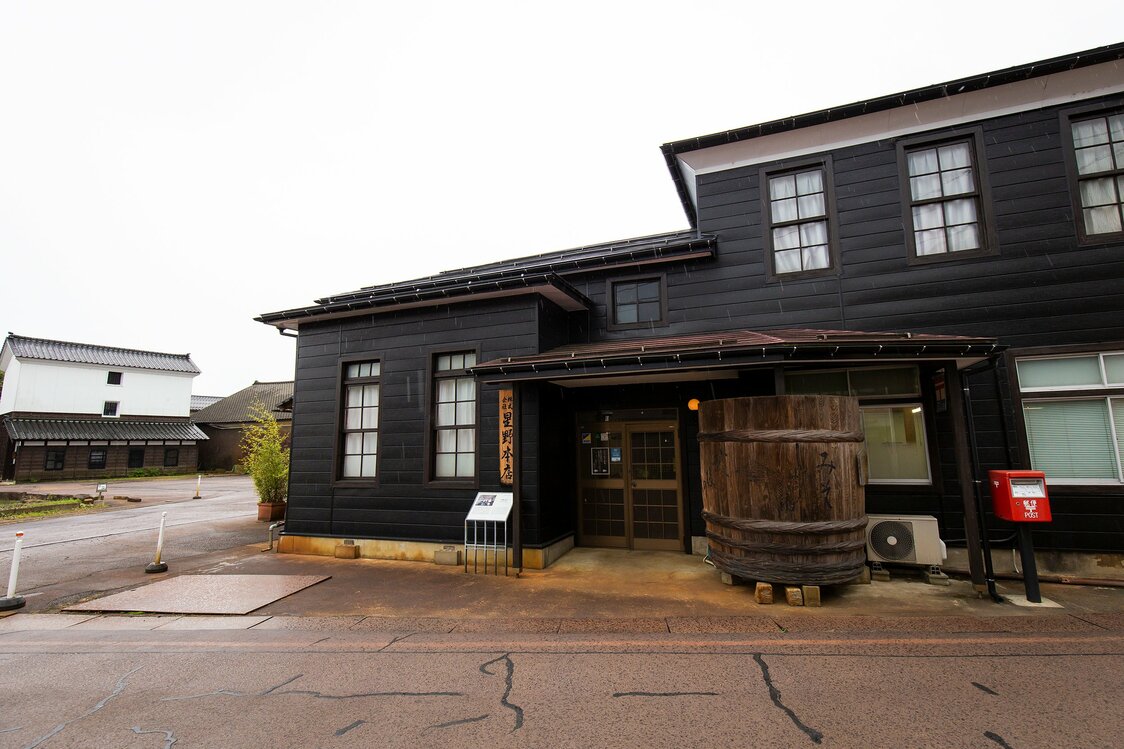
A large wooden tub stands in front of Hoshino Honten, a manufacturer of miso and soy sauce. The storehouse at the far left, registered as a cultural asset, is notable for having three stories.
-
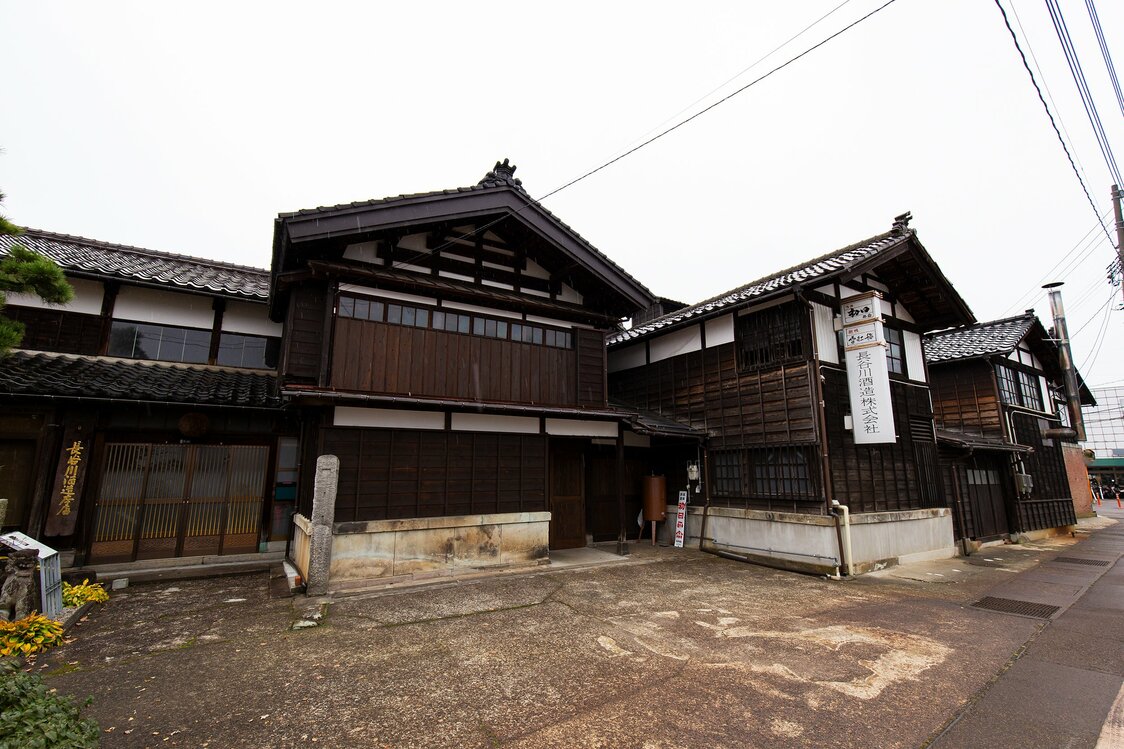
The main structure of brewer Hasegawa Shuzō, maker of sake brand Echigo Sekkōbai, was built in 1886 and refurbished in the mid-1920s. It is registered a cultural property.
-
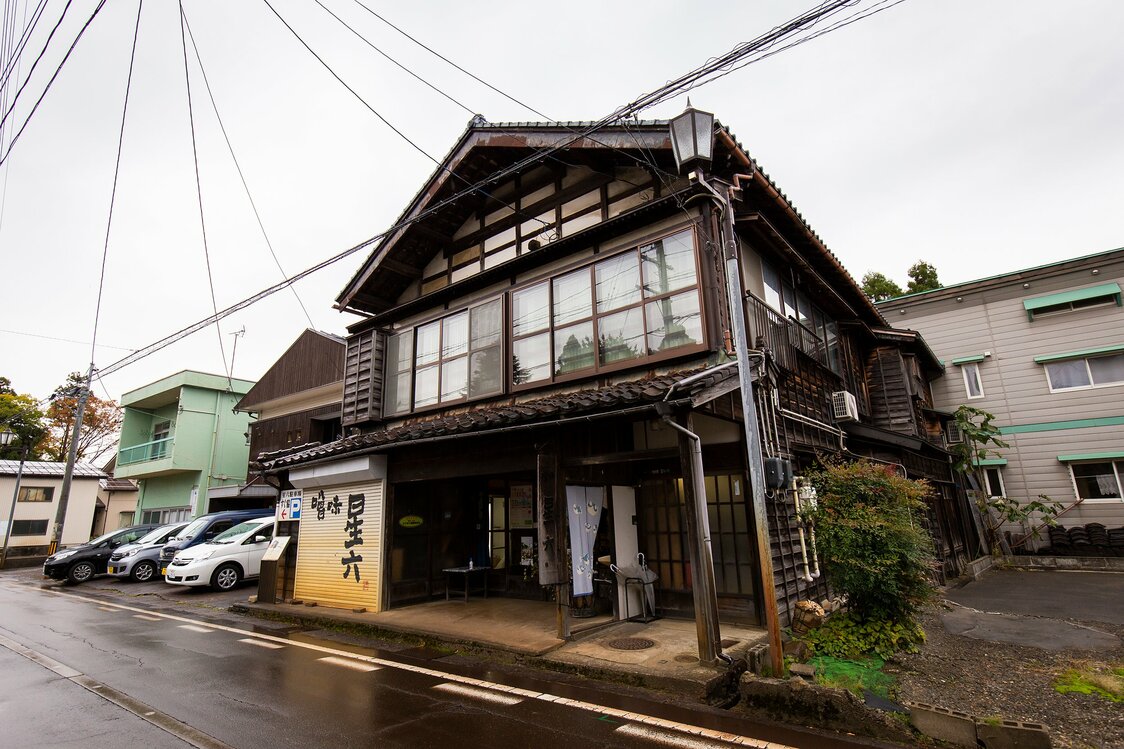
Miso Hoshiroku continues making its products using traditional methods. This storehouse, registered as a cultural property, gained nationwide fame when it was featured in the popular manga series Oishinbo.
-
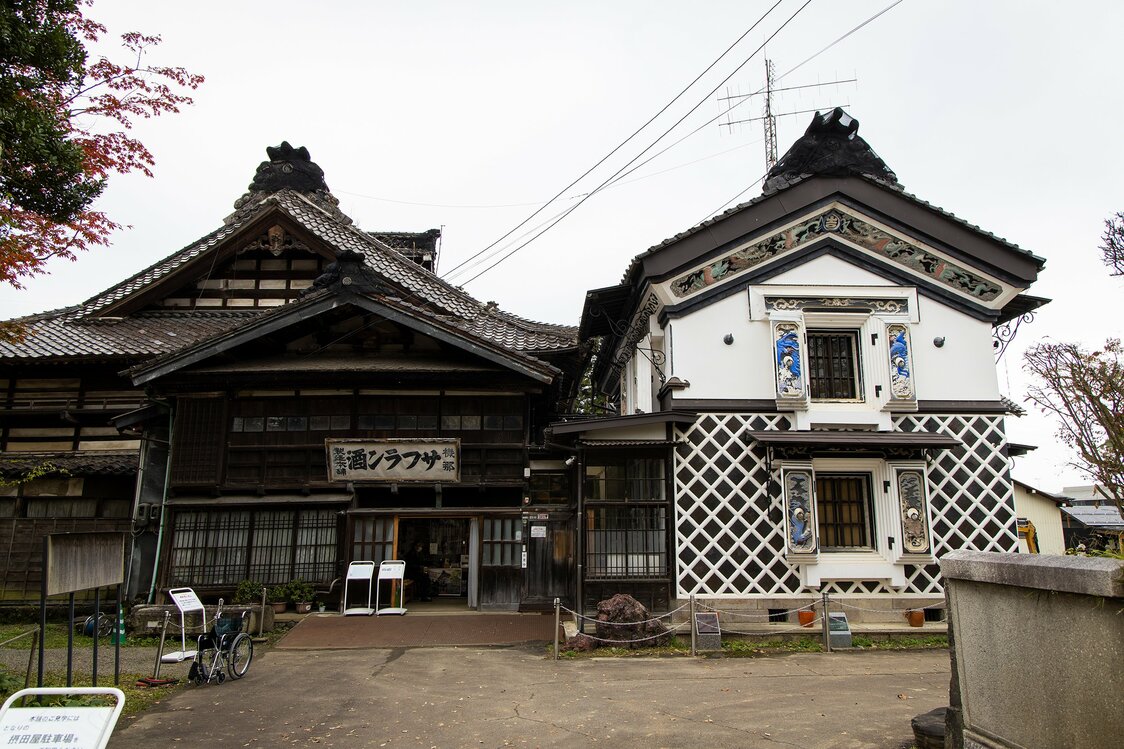
At the left is the main building of Kina Safuran-shu Honpo and at the right is a storehouse featuring raised stucco decorations called kote-e.
-

The storehouse’s north façade is decorated with kote-e that depict the 12 zodiacal animals in the Chinese astrological calendar and other motifs.
-
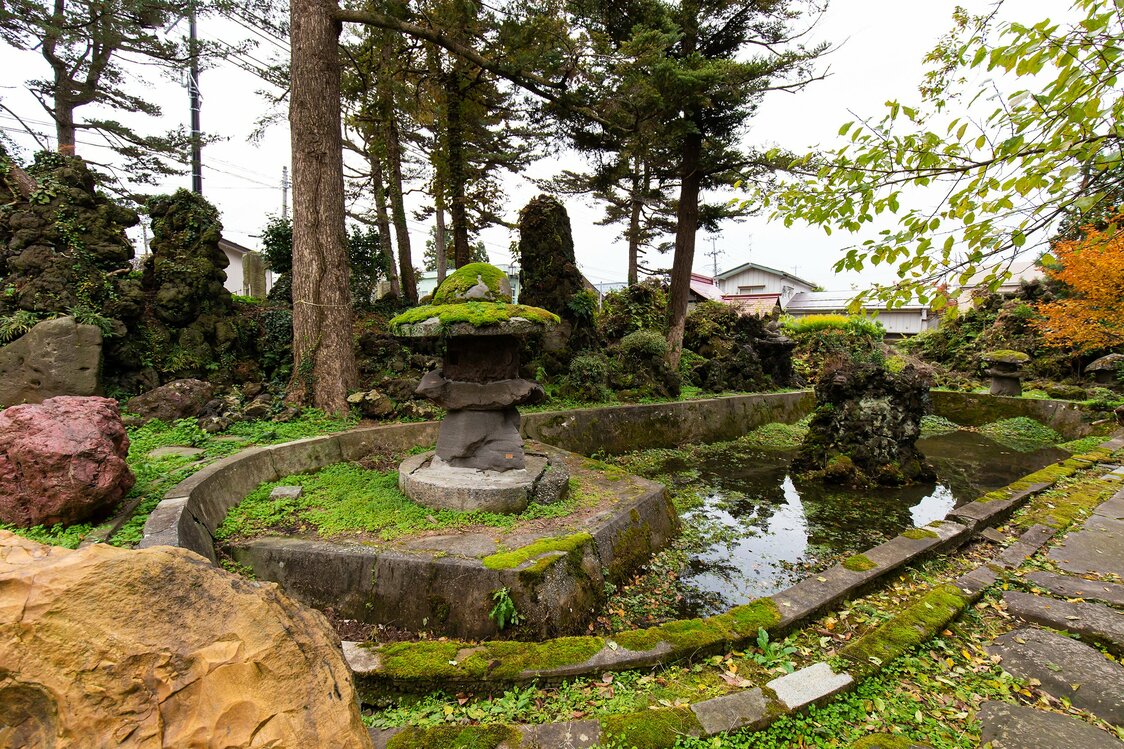
The garden, which is only open to visitors on weekends, showcases Yoshizawa’s distinctive esthetic. Some of the stone statues are said to have been created by Yoshizawa himself.
-
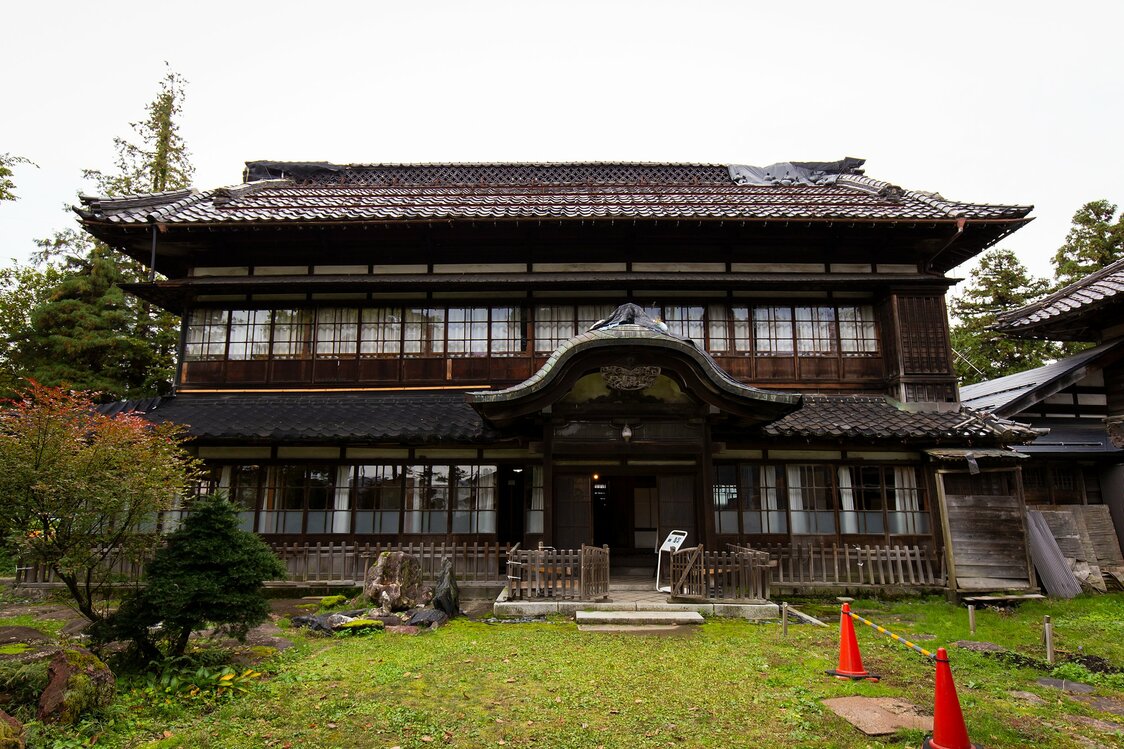
The entrance to the annex facing the garden is topped with a karahafu-style undulating gable. It once bore carp-like shachihoko figures at both ends of the roofline, but these were removed due to concerns about their ability to withstand earthquakes.
-
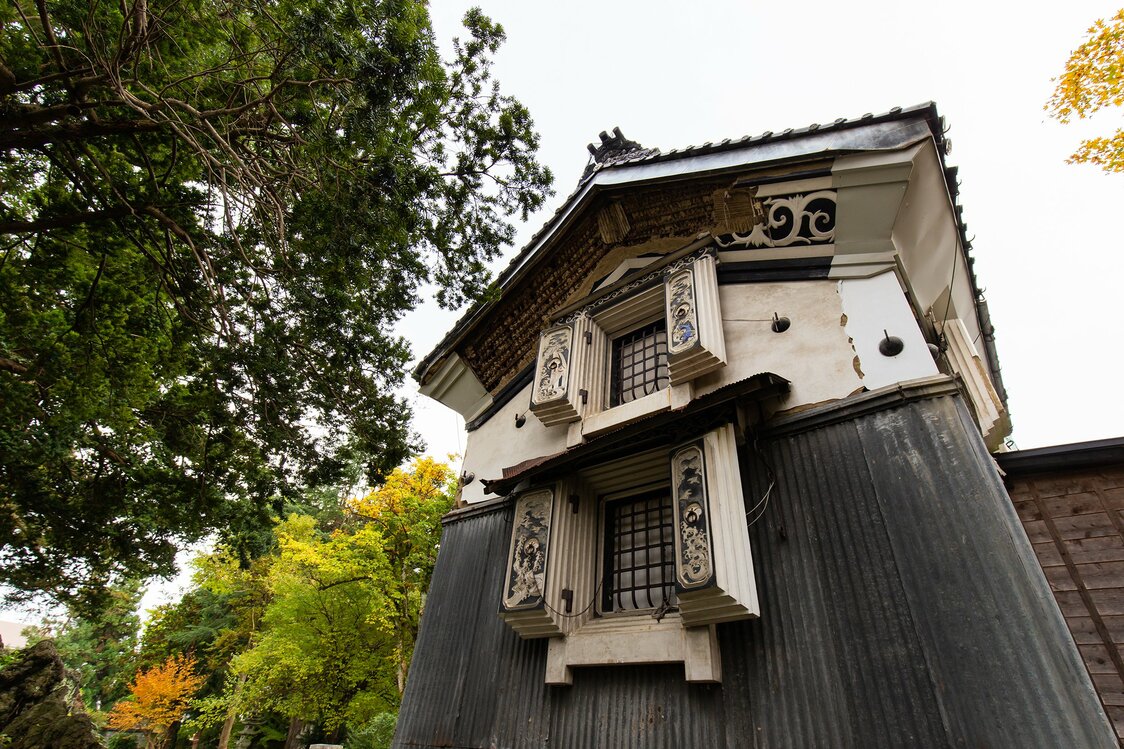
The ishō gura (clothing storehouse) prior to restoration. The quake shook the plaster off some sections of the building.
-

The façade on the east side of the storehouse after restoration shows kote-e depicting animals real and mythical and several types of plants originally done by master plasterer Kawakami Ikichi, a great friend of Yoshizawa who shared his artistic taste.
-
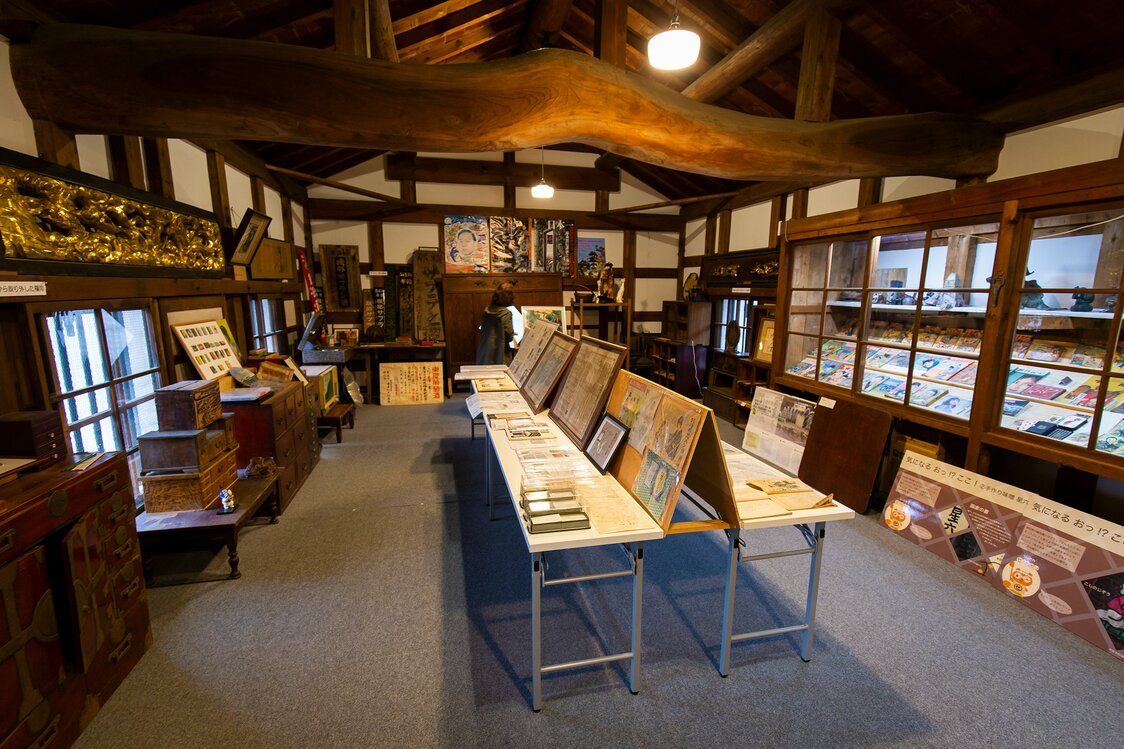
The storehouse has been transformed into an exhibition space displaying old signs, advertisements, and furnishings that had been stored in the building.
-
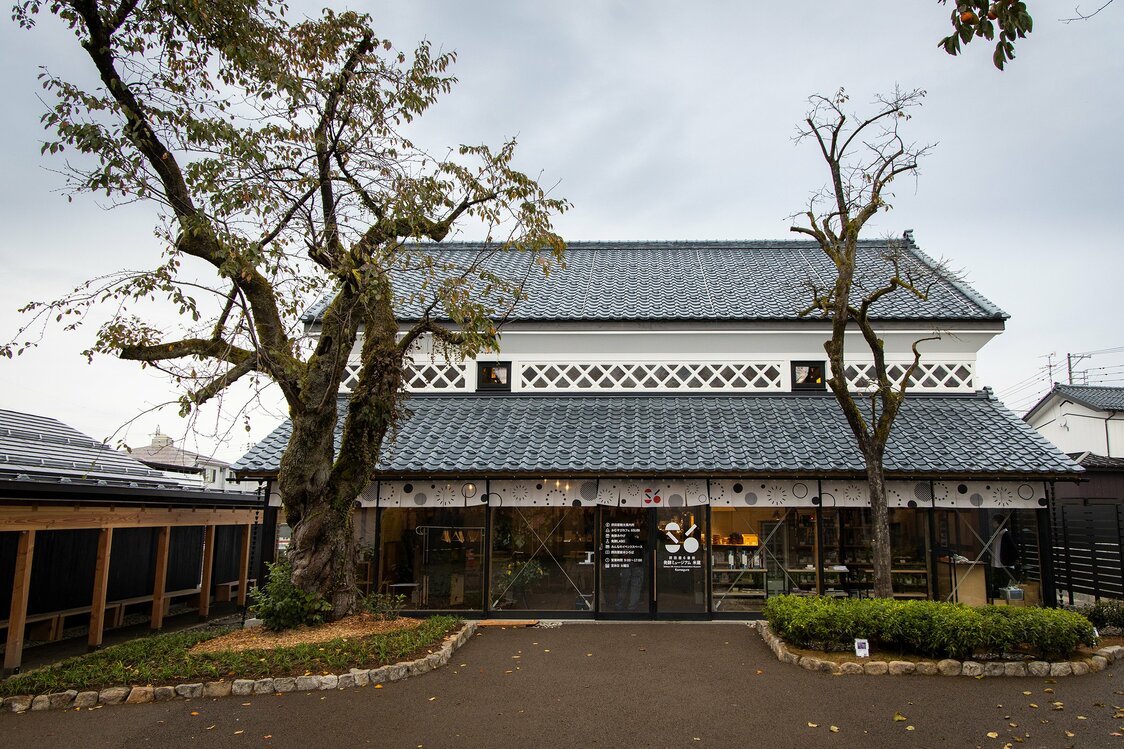
The Settaya Sixth Avenue Fermentation Museum Komegura serves as the sightseeing base for Settaya.
-
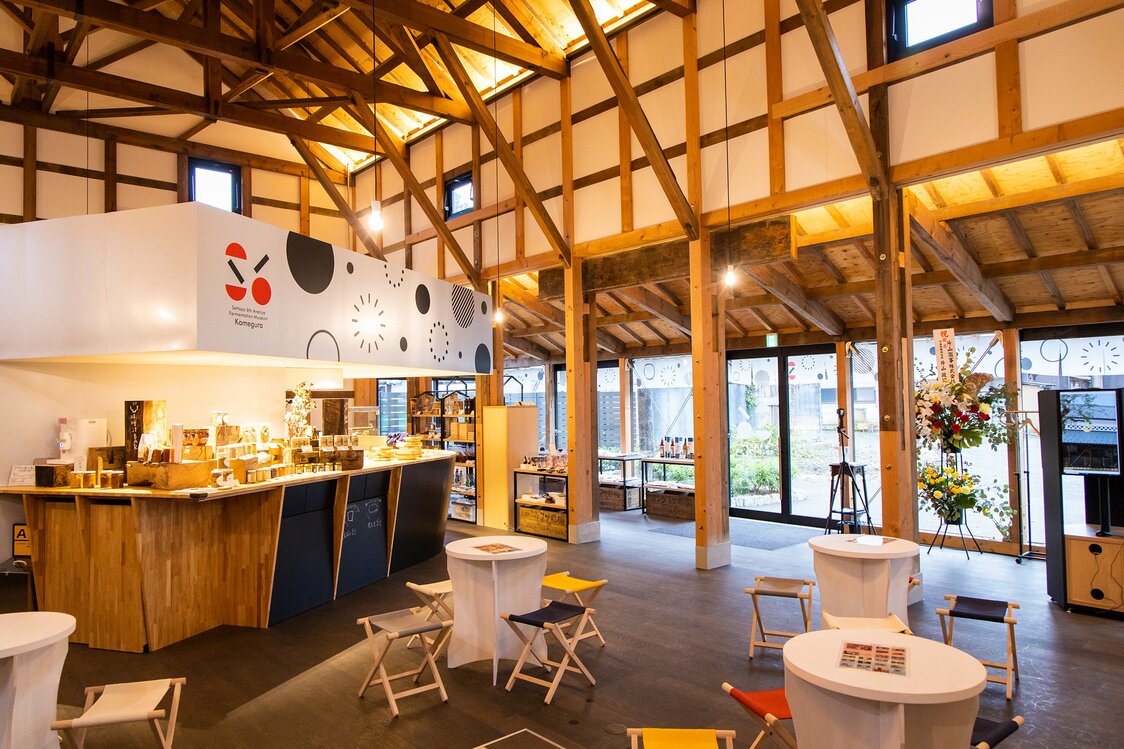
Inside the museum are the Settaya tourism information booth, a laboratory where visitors can learn about fermentation, and a café serving locally-sourced foods.
-
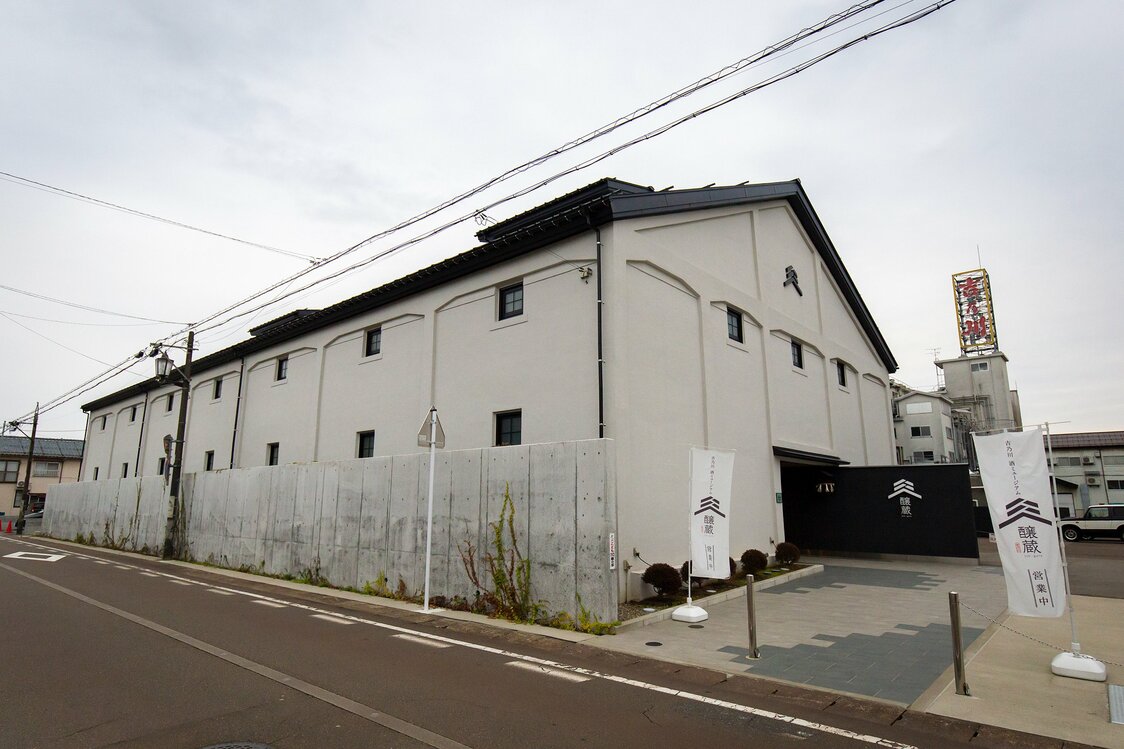
Formerly housing a sake bottling operation, the storehouse, built in 1923, was renovated and opened as an exhibition space in October 2019.
-
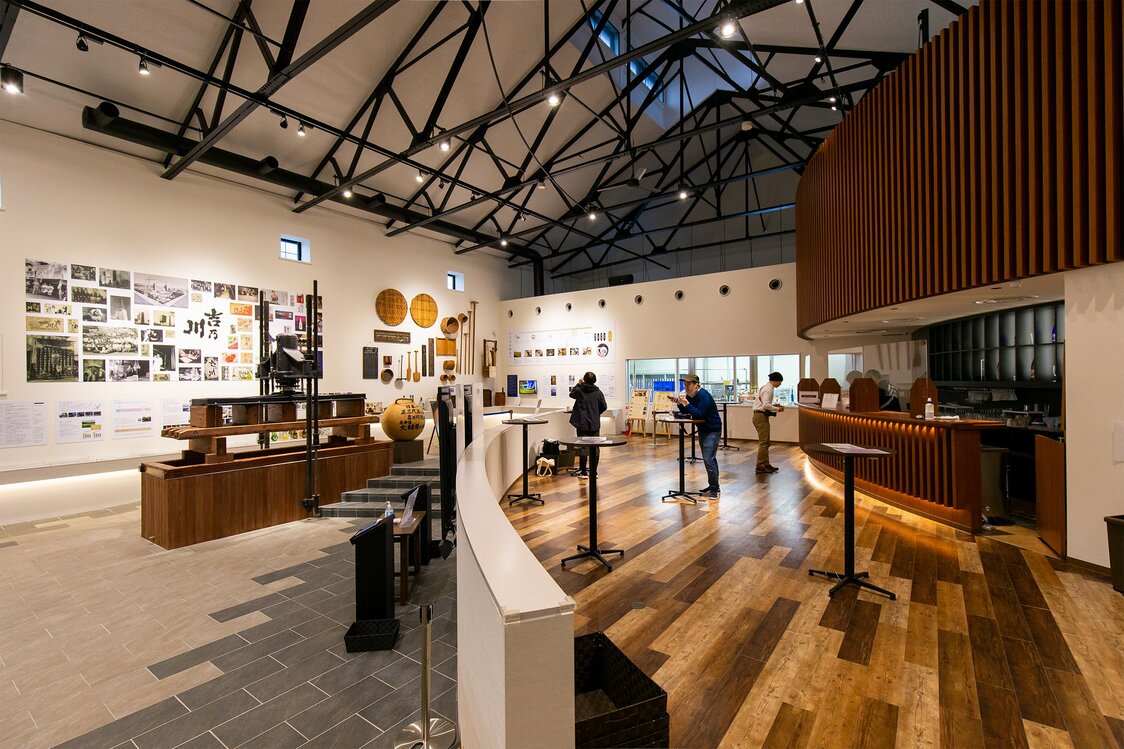
At Jōgura, a sake bar sits next to the exhibition space. The bar serves Yoshinogawa sake ranging from standard products to special varieties. Tastings are available for a fee.
-

Displays of Gokujō Yoshinogawa, the brewery’s premium product, and other items developed jointly with local businesses.
-
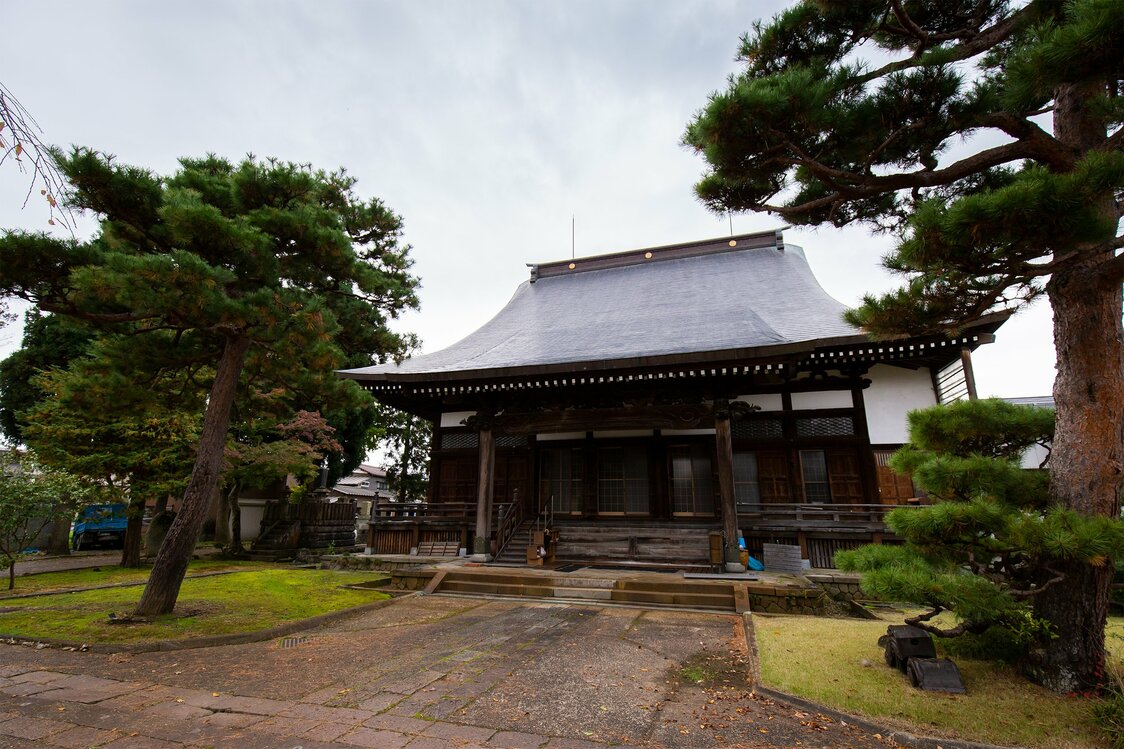
Settaya’s famed temple Kōfukuji.
-
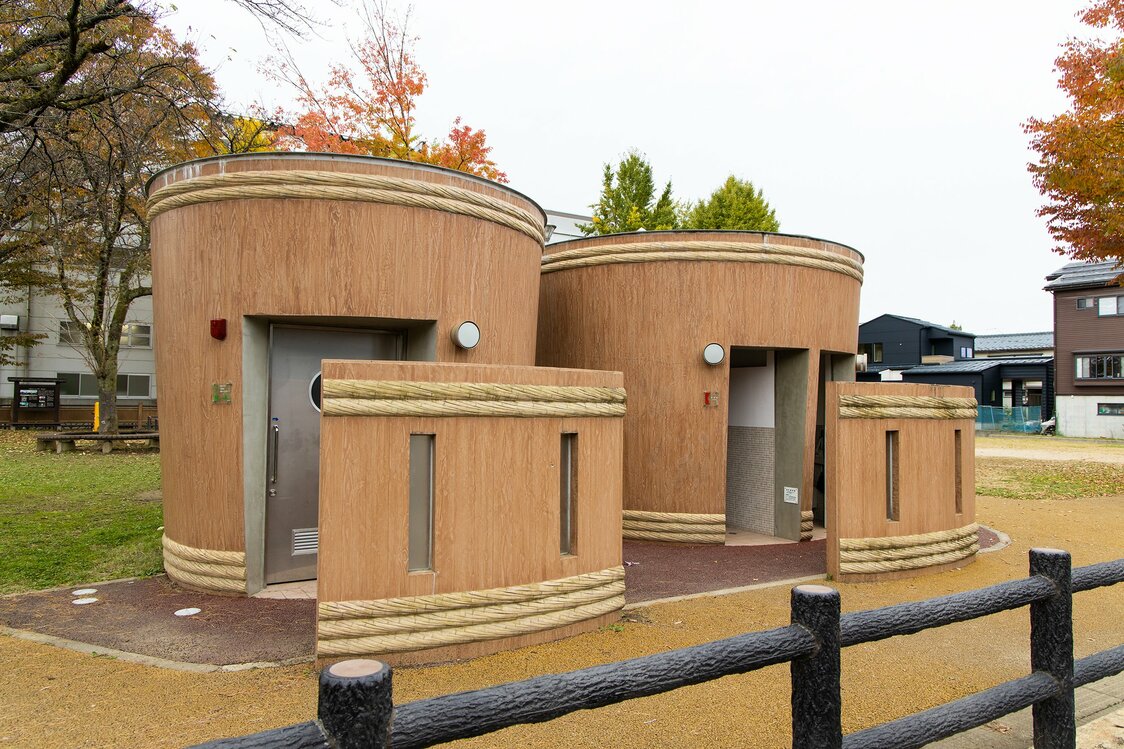
The public restrooms in Settaya Park are constructed to look like wooden barrels used to ferment products like sake and miso.


 Read in other languages