-
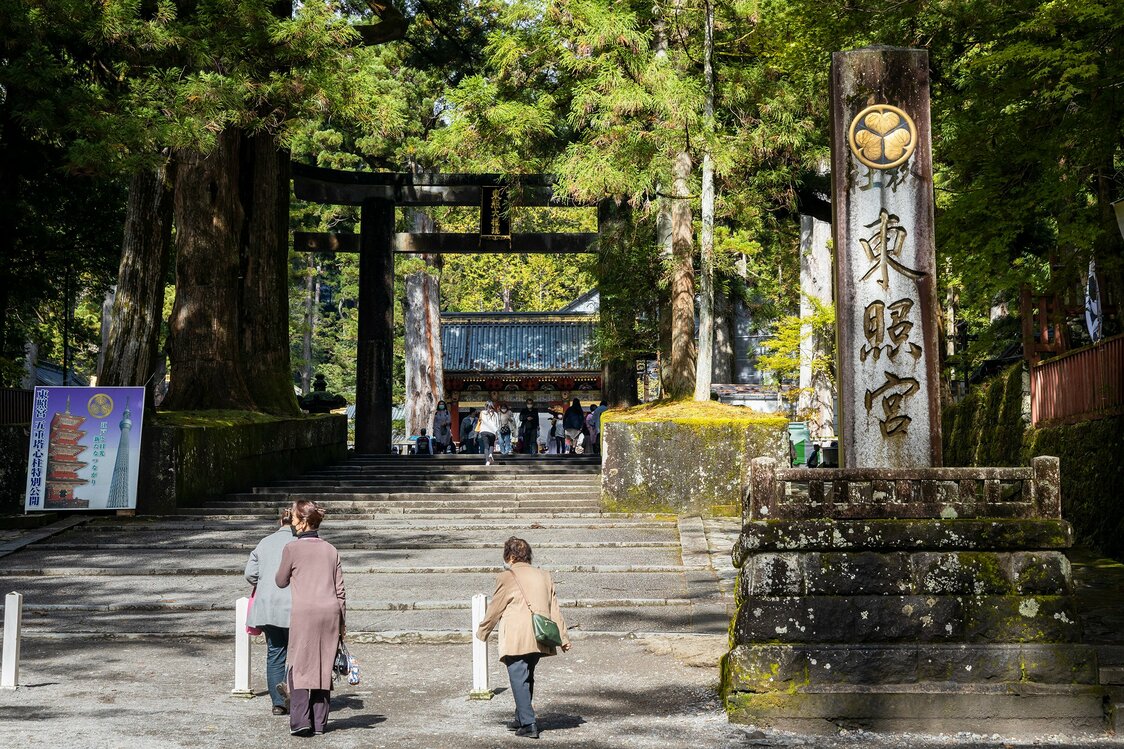
The stone monument flanking the approach to the shrine bears the triple hollyhock crest of the Tokugawa clan.
-
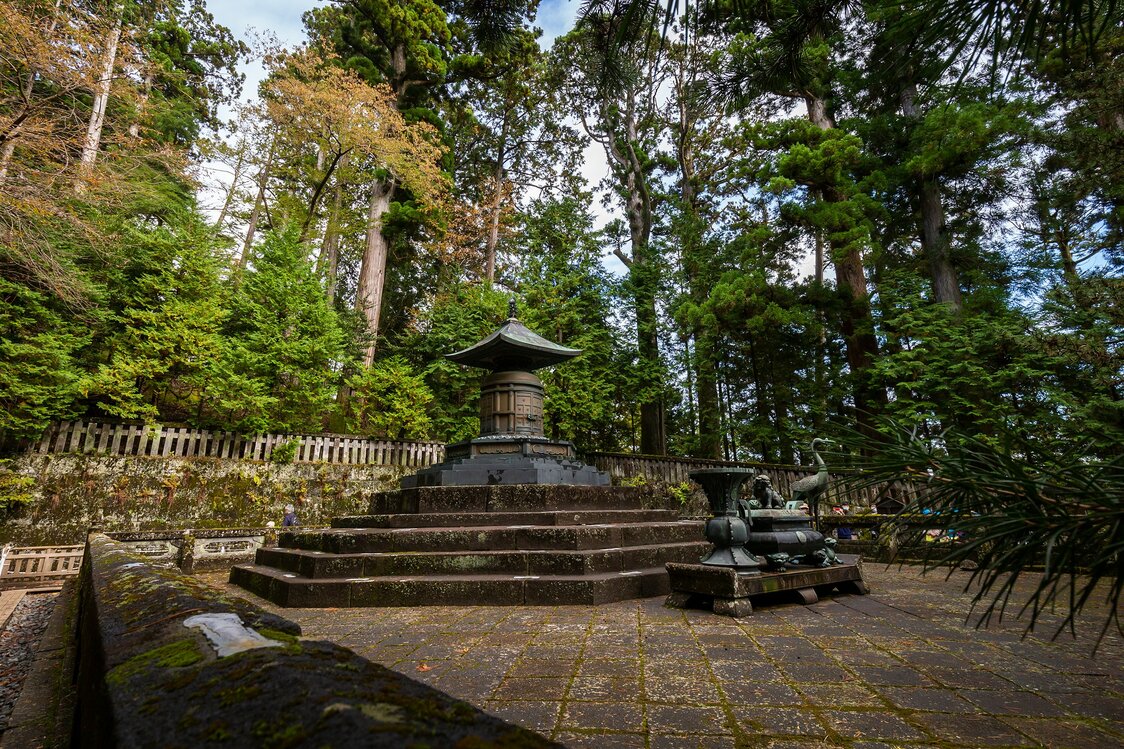
A copper pagoda-shaped tomb in the okumiya, behind the main shrine, holds Ieyasu’s remains. A candlestick in the shape of a crane along with an incense burner and a vase with shishi lion motifs stand in front of the tomb.
-
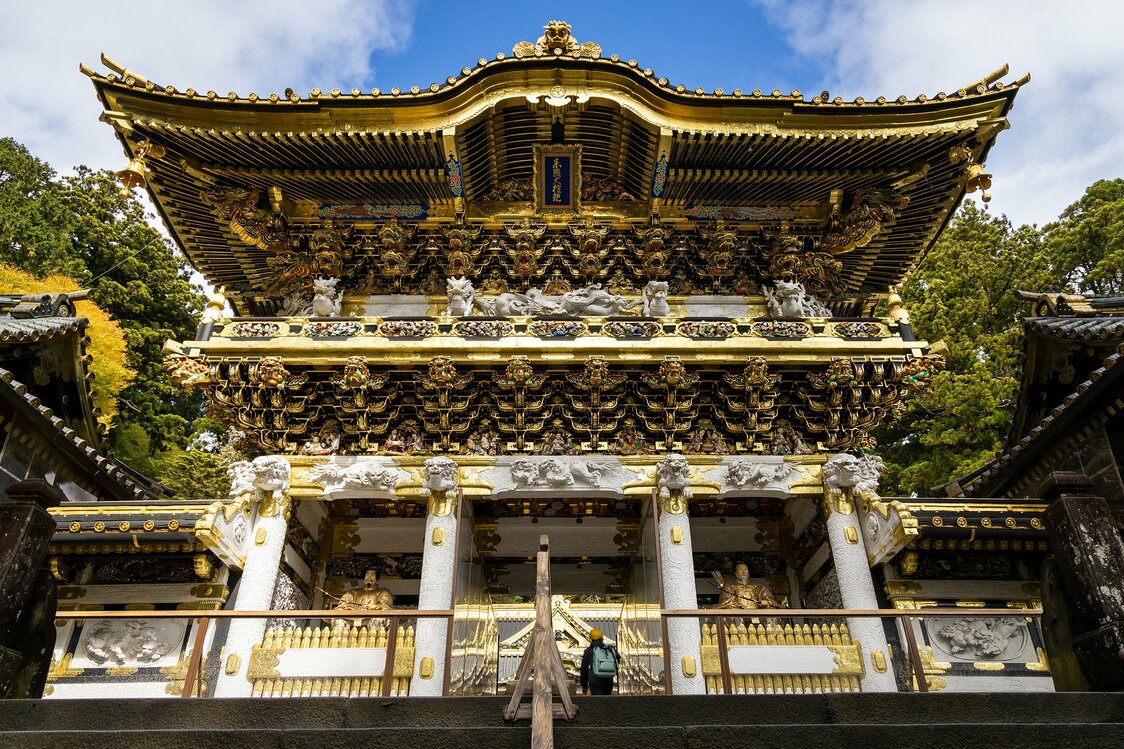
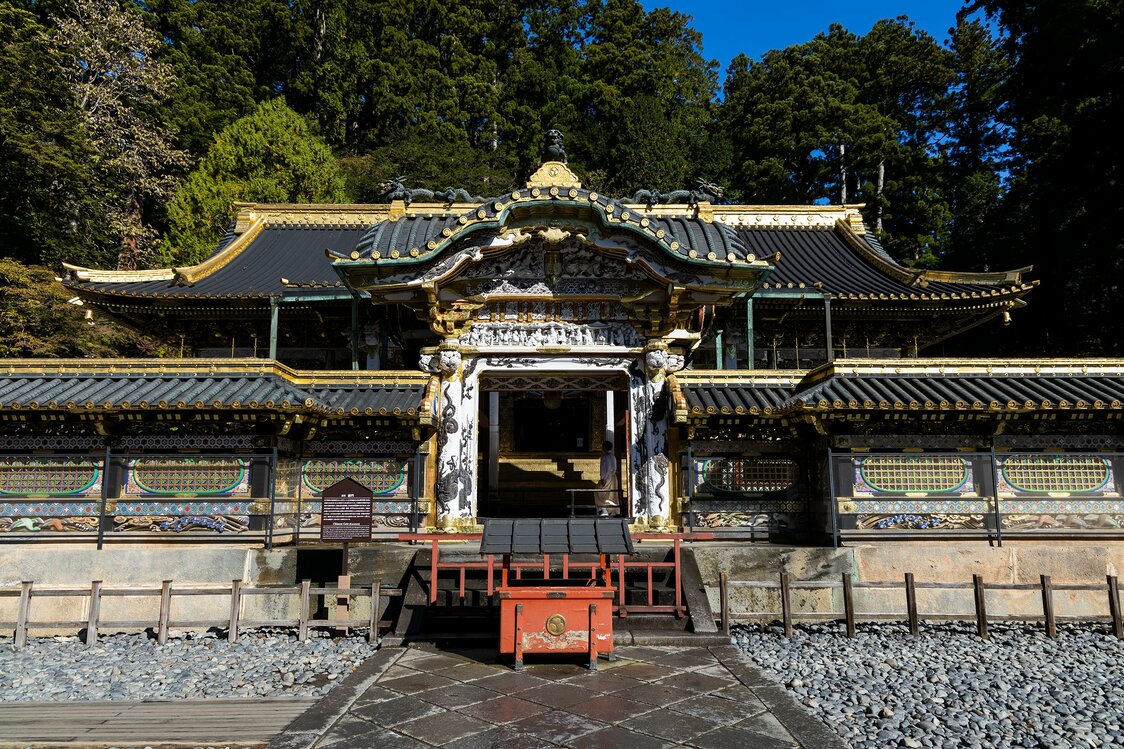
A popular saying has it that the magnificence of the Yōmeimon, also known as the Higurashimon (twilight gate), is such that one could gaze at it from morning till night.
-
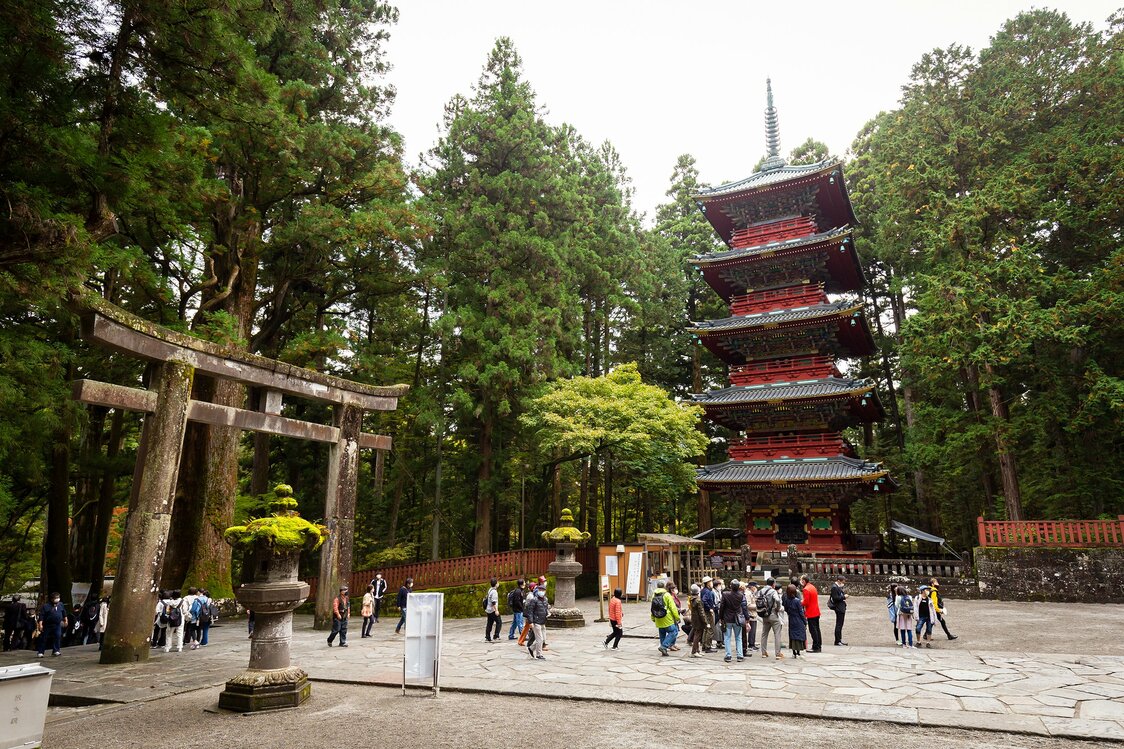
The stone torii on the left was donated by Kuroda Nagamasa, lord of the Chikuzen domain in Kyūshū. To the right, the five-storied pagoda was a gift to the shrine from Sakai Tadakatsu, lord of the Obama domain in western Japan.
-
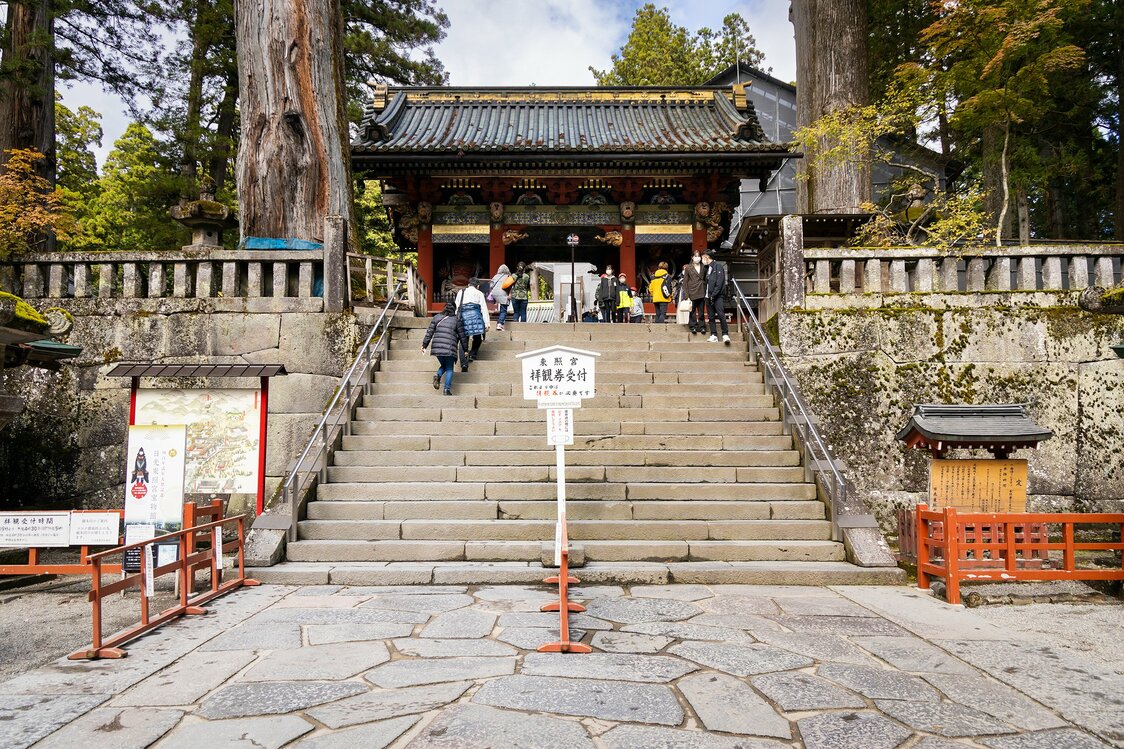
The shrine’s main area, requiring an entrance fee, begins past the Omotemon, an important cultural property. The gate is also known as the Niōmon, after the fierce-looking guardian deities standing on either side.
-
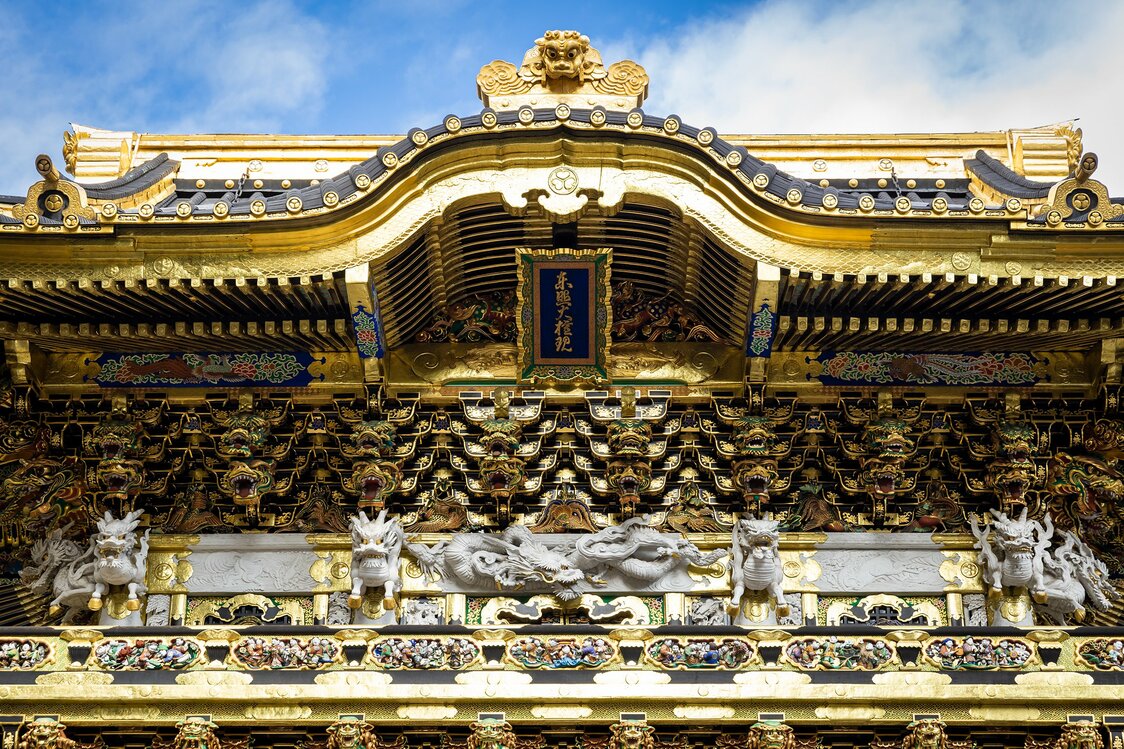
The splendidly decorated Yōmeimon.
-
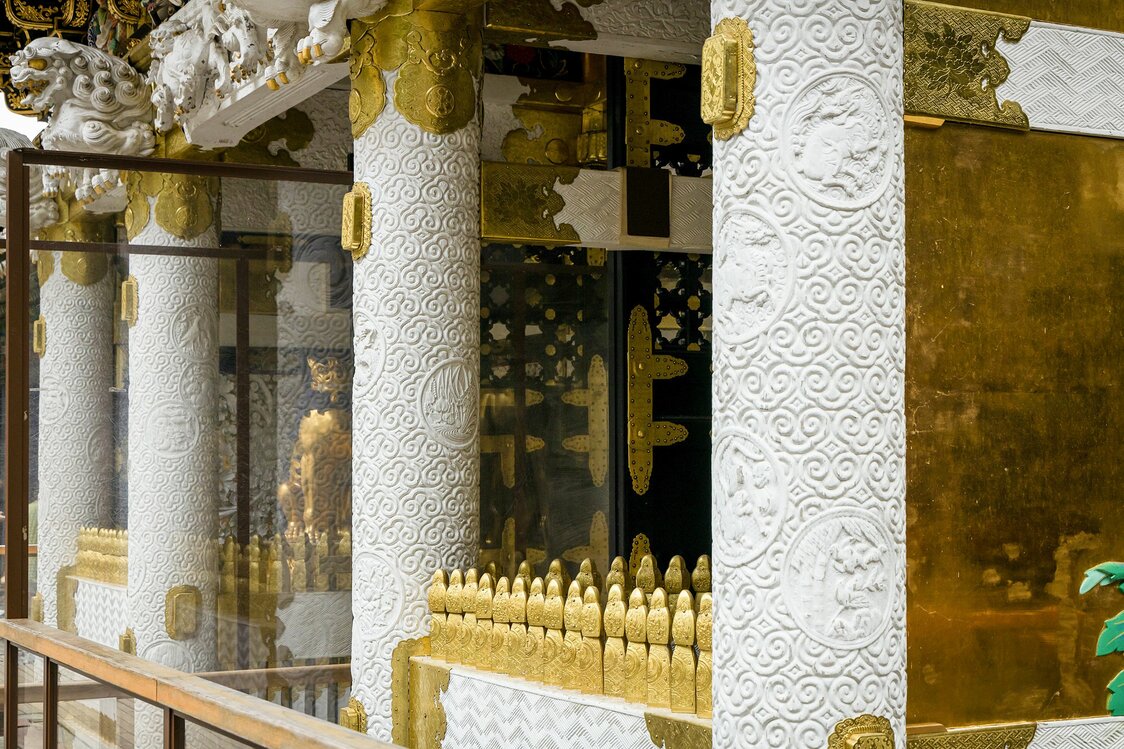
The second pillar from the right was deliberately reversed, its decorative motifs running in the opposite direction of the other pillars.
-
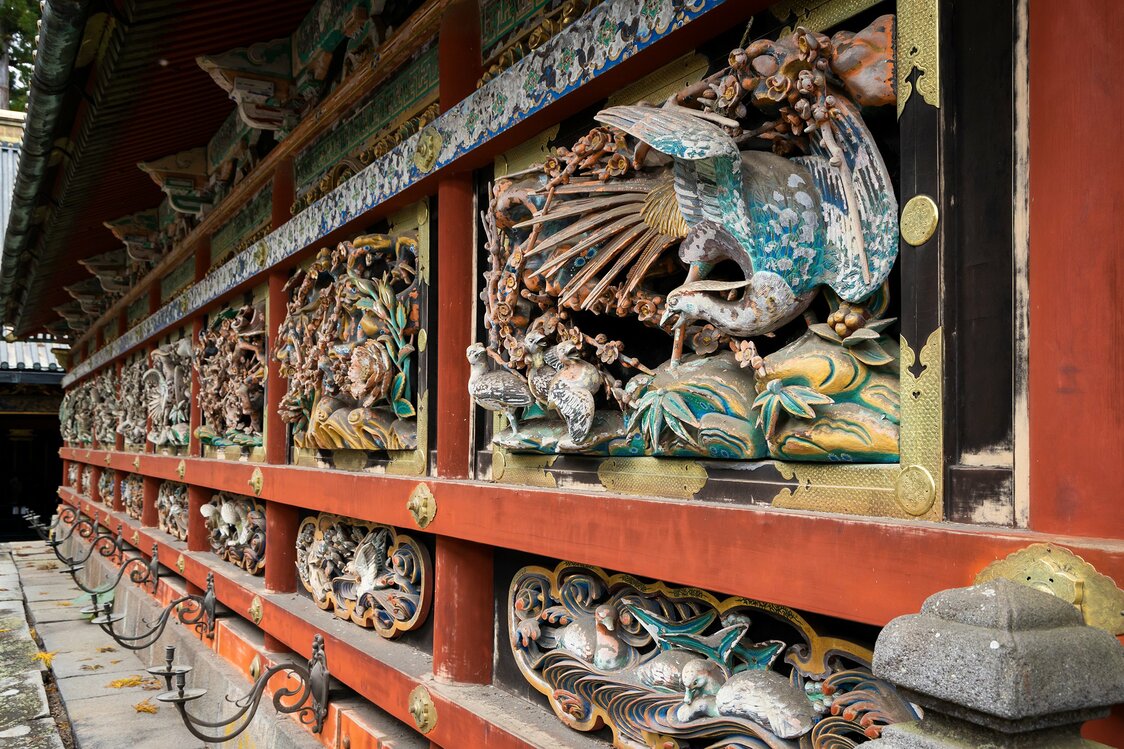
The corridors to the left and right of the Yōmeimon are also national treasures. Their vividly colored figures are all sculpted from single pieces of wood.
-
Beyond the Karamon lies the gohonsha, entered beyond the gate to the right.
-
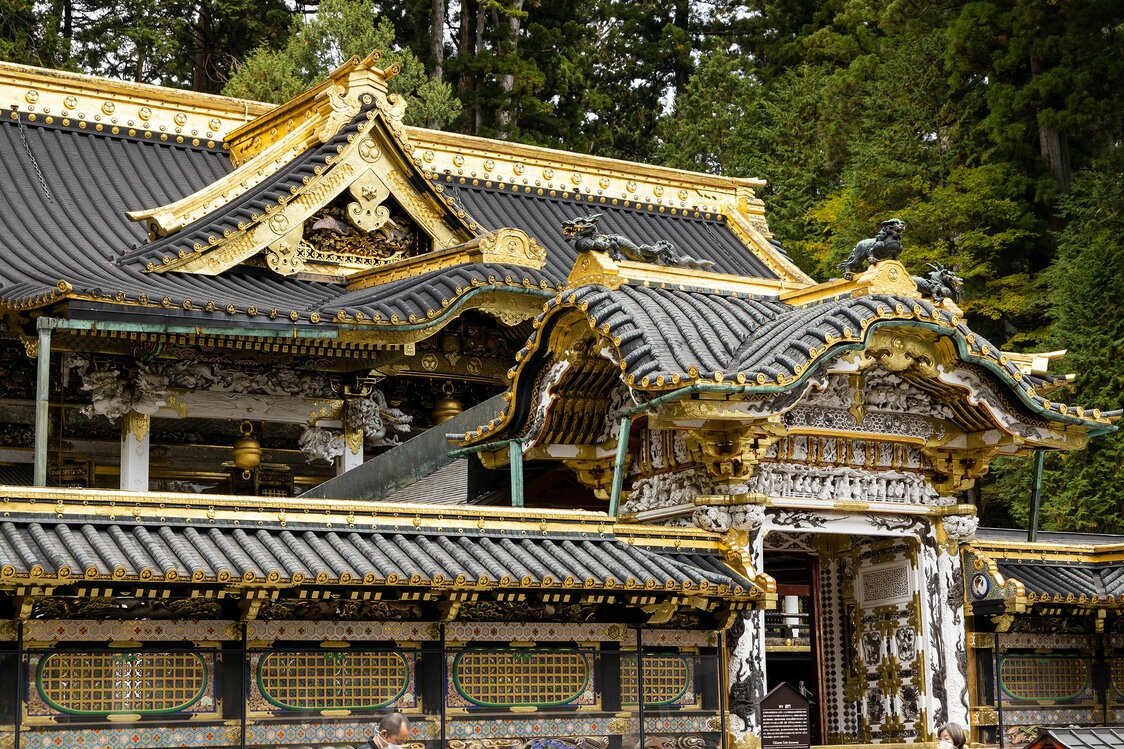
The Karamon is also elaborately decorated, as are the interiors of the honden and the haiden.
-

A hush envelops the path leading to the okumiya. Each of the 207 steps to the summit is fashioned from a single stone.
-
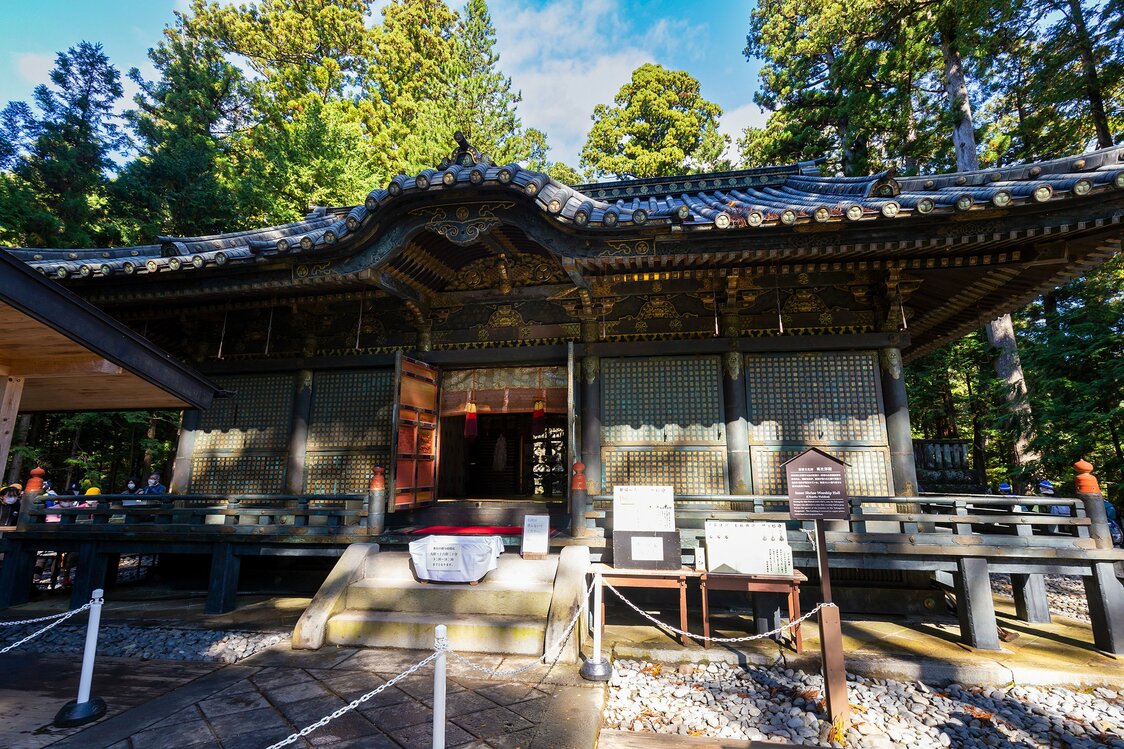
The okumiya’s prayer hall is an important cultural property. The Inukimon and Ieyasu’s tomb are behind the building.
-
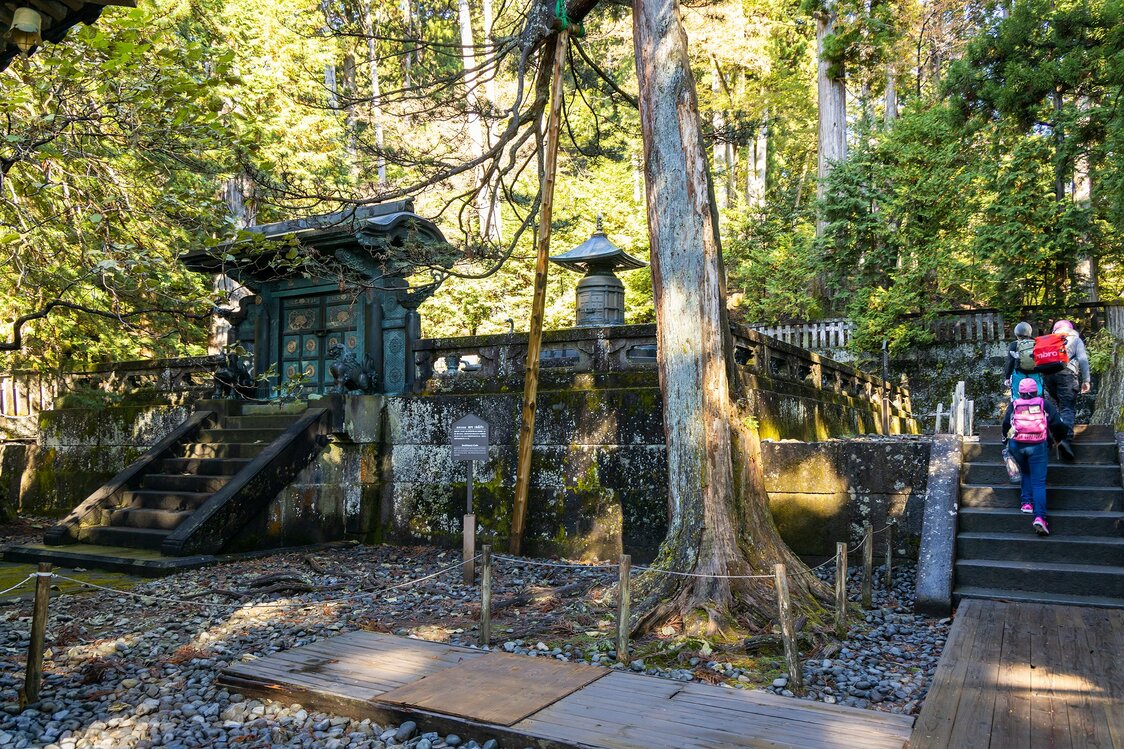
Except for its door, the stately Inukimon was cast from a single mold.
-
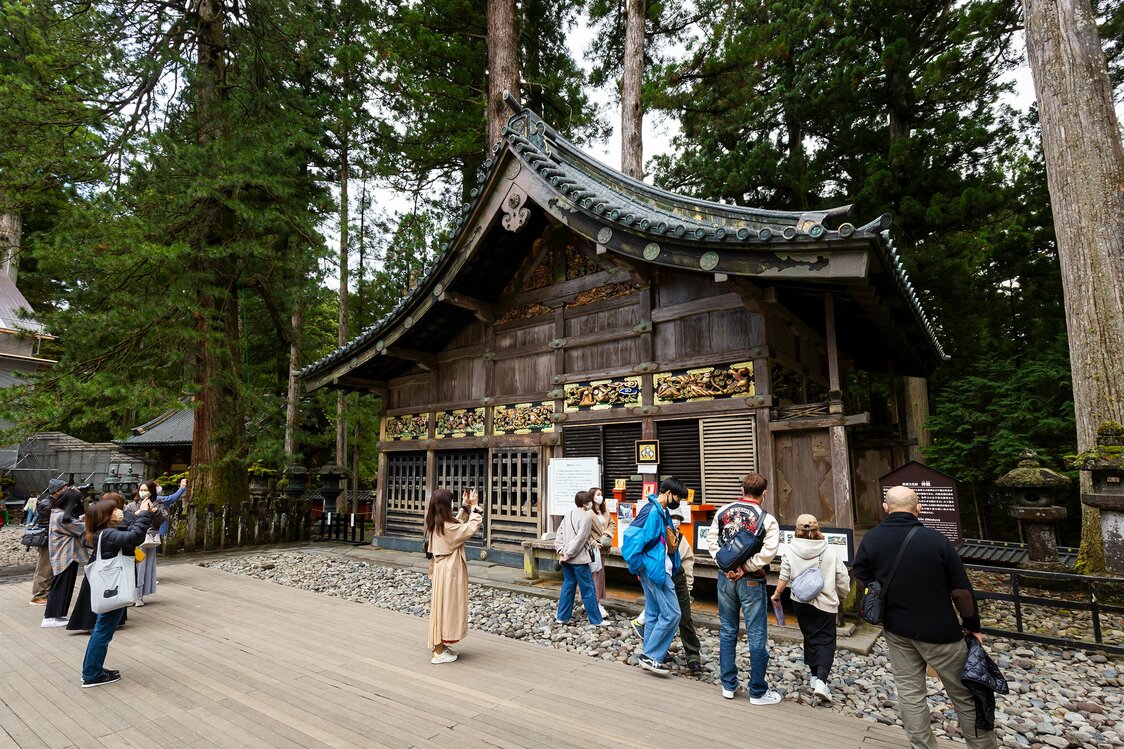
Many visitors stop to photograph the sacred stable and the carving of the three monkeys.
-
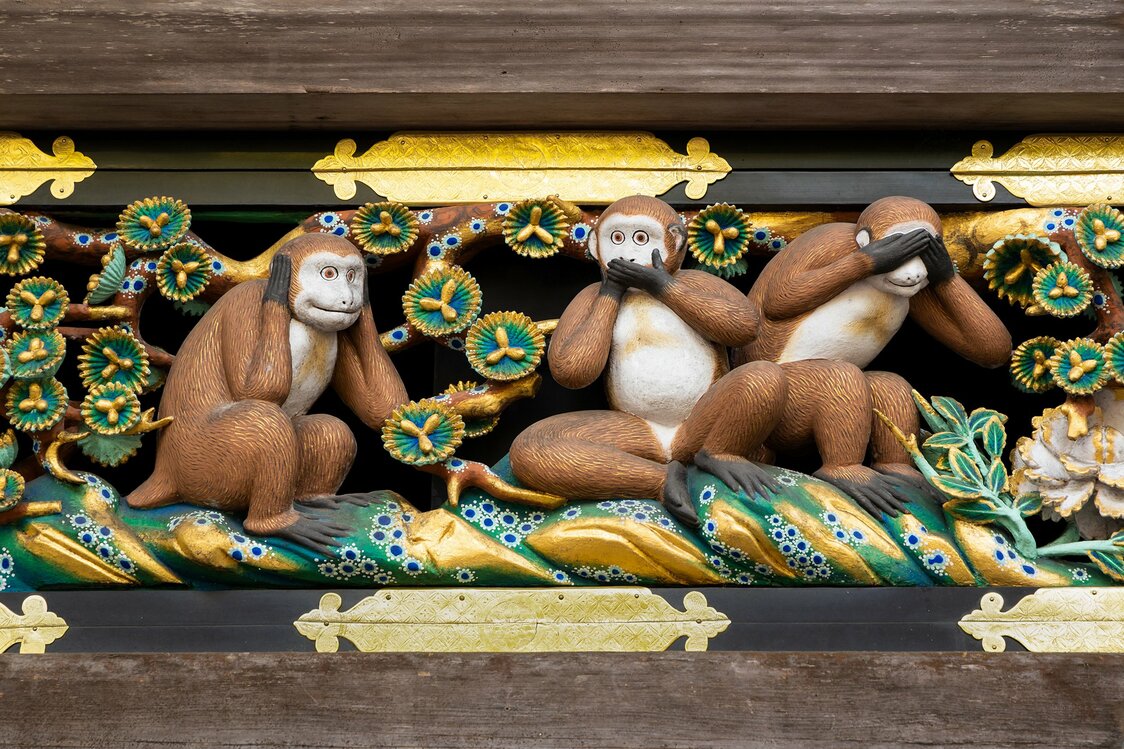
This famous carving of mizaru, kikazaru, and iwazaru.
-
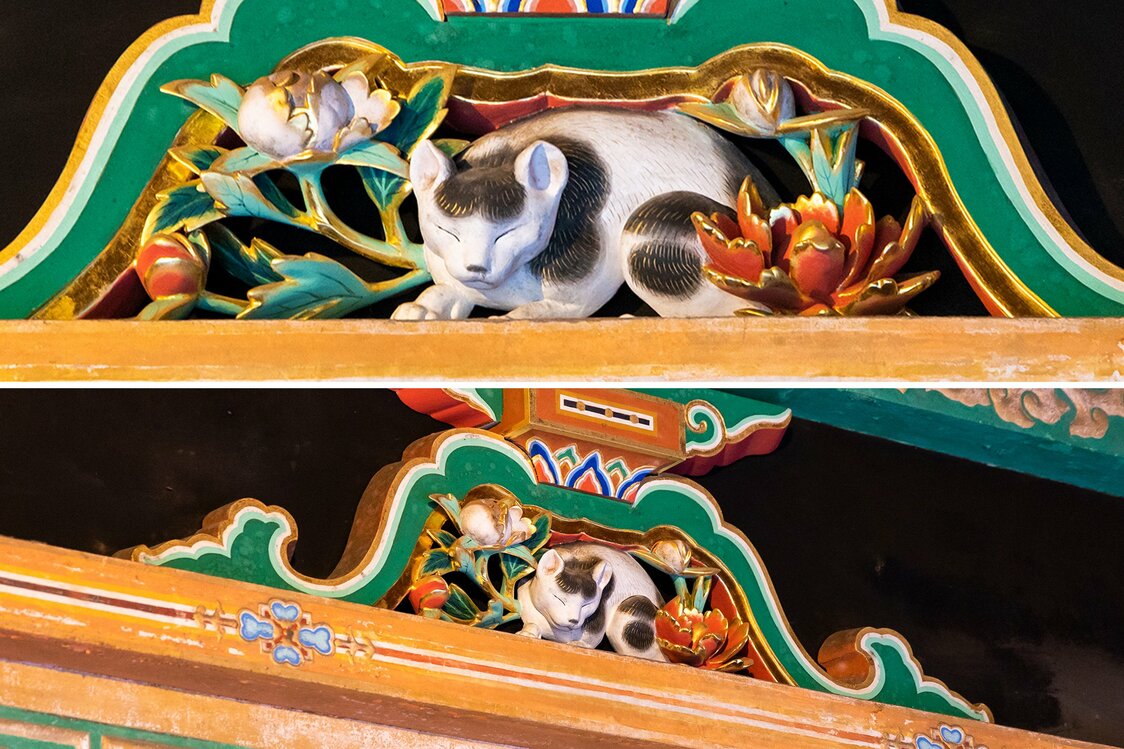
When viewed from the front, the cat seems to be sleeping, while from the side, it looks as though it is stalking prey.
-
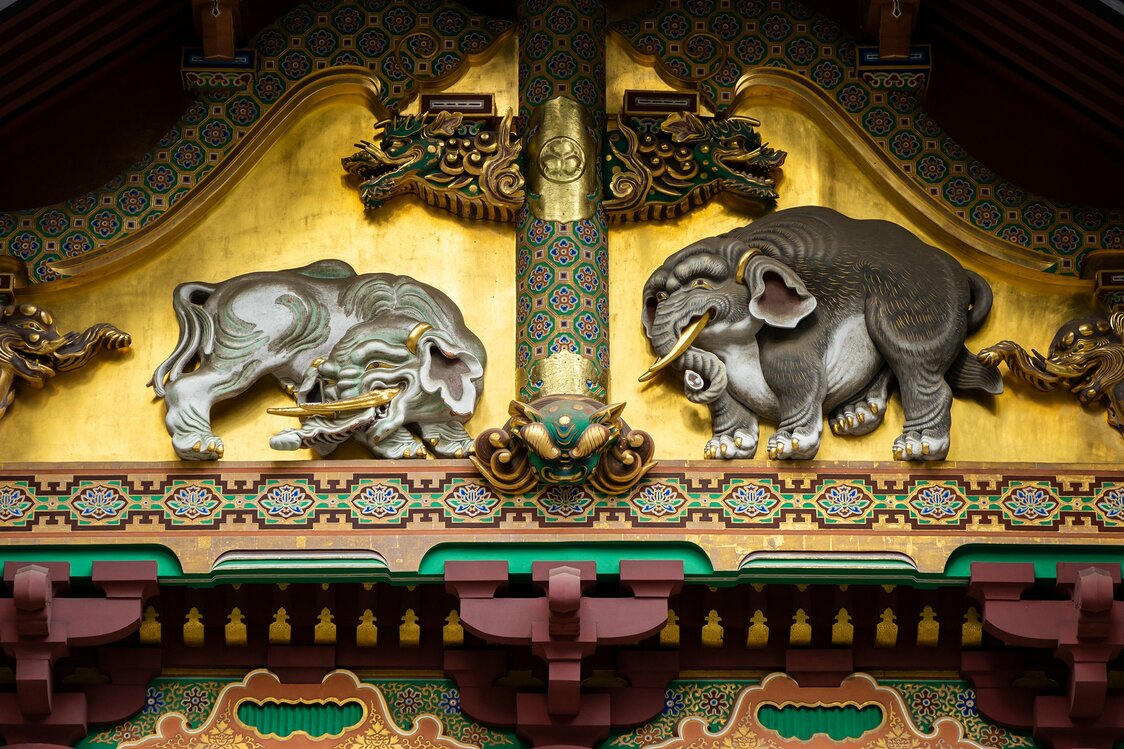
Many visitors also stop at the Kami Jinko upper storehouse to view the carvings of the imaginary elephants, so named because the sculptor who created them had never actually seen the beasts.
-
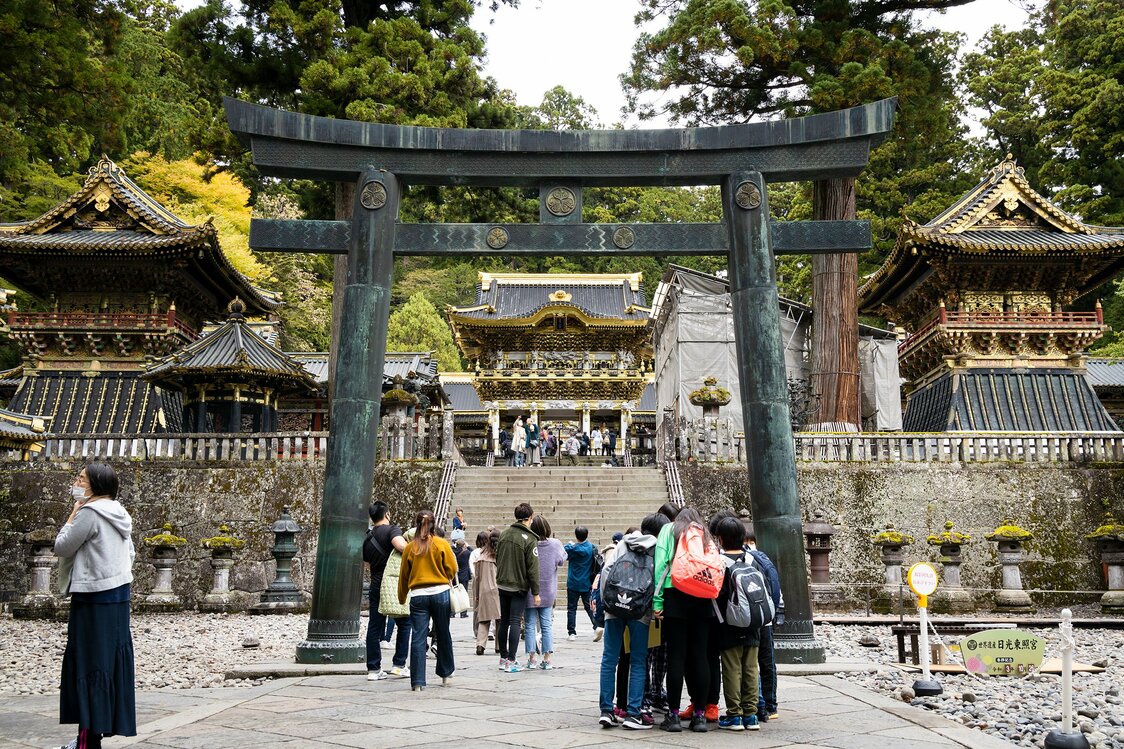
The Karadō torii is an important cultural property. The saying goes that visitors can win divine favor if they stand in such a way that it frames the Yōmeimon.
-
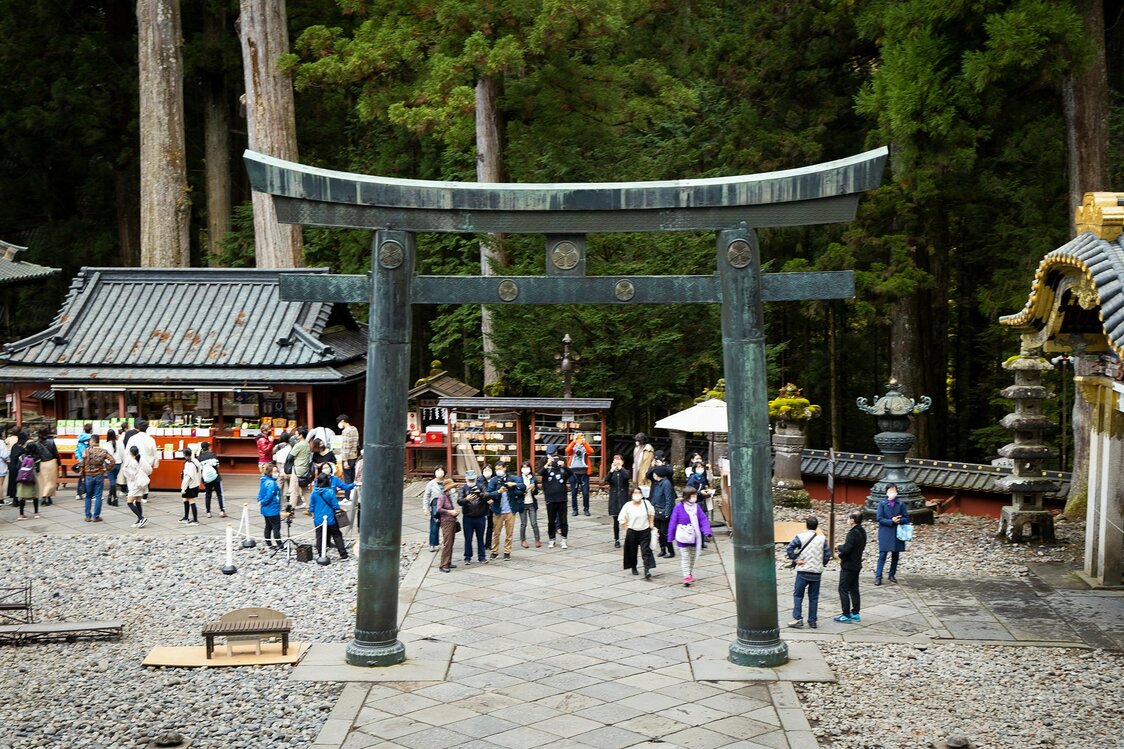
The torii viewed from the Yōmeimon.
-
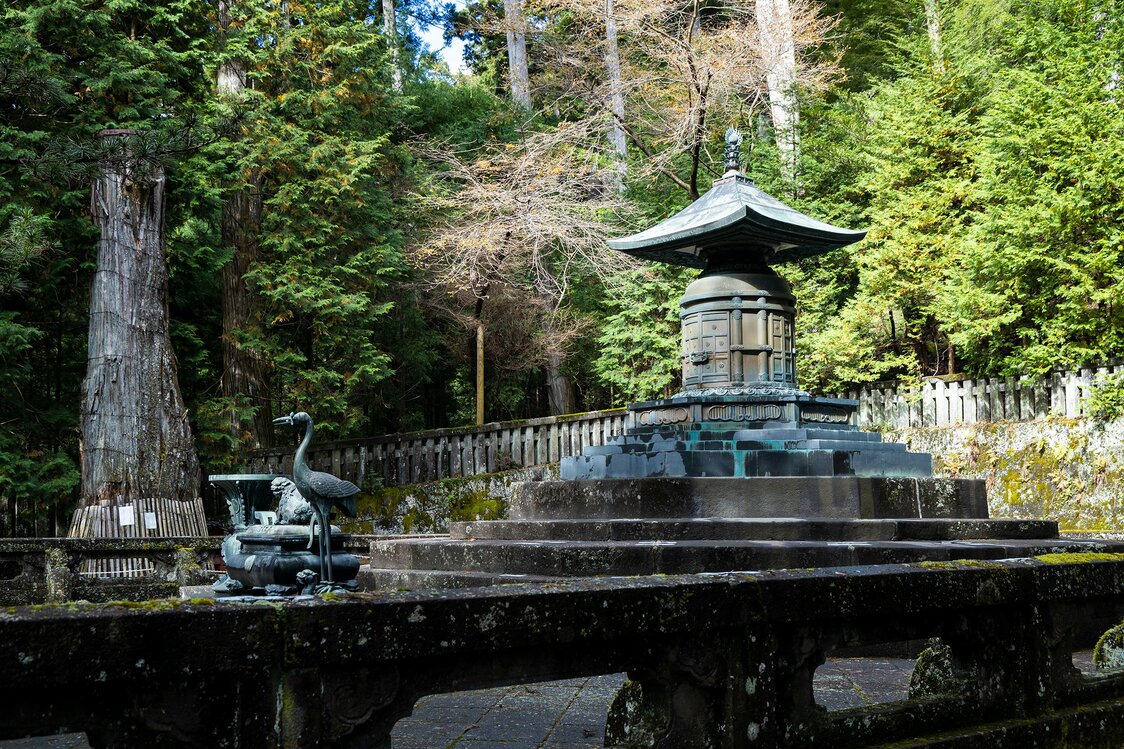
The large cedar to the left of the crane-shaped candlestick is known as kanaesugi. Its age is unknown, but it was standing even before the shrine was built.
-
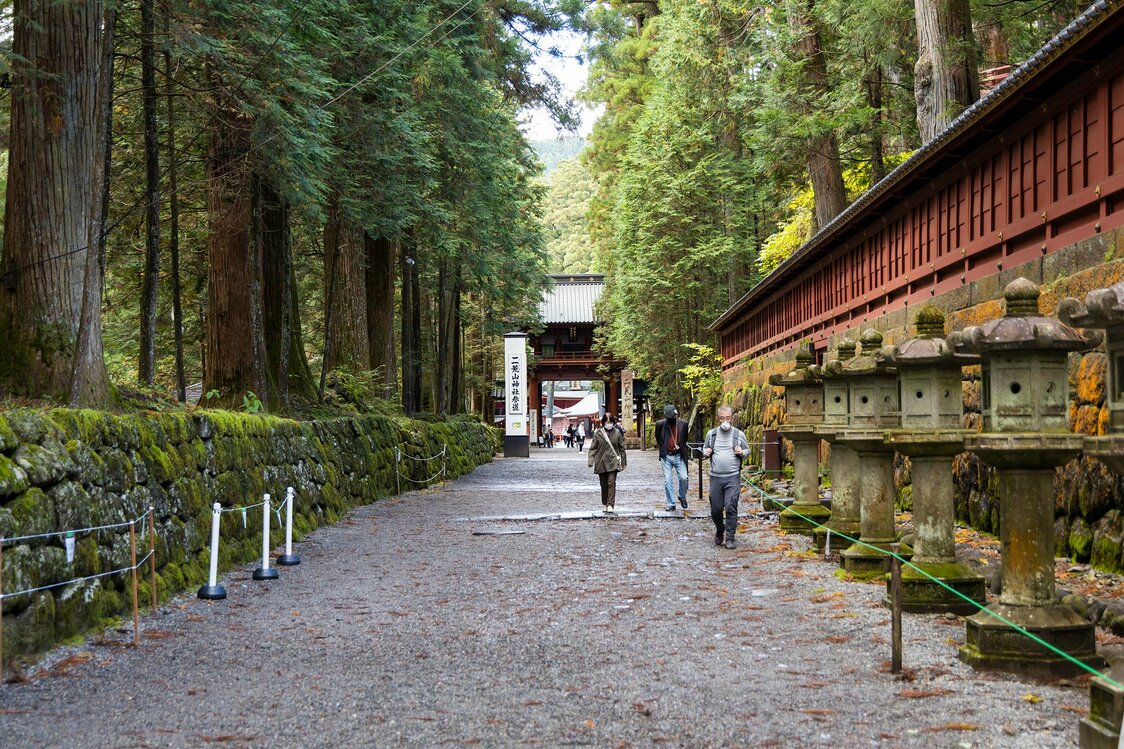
The kamishinmichi leads to Futarasan Shrine, visible in the background.


 Read in other languages