-
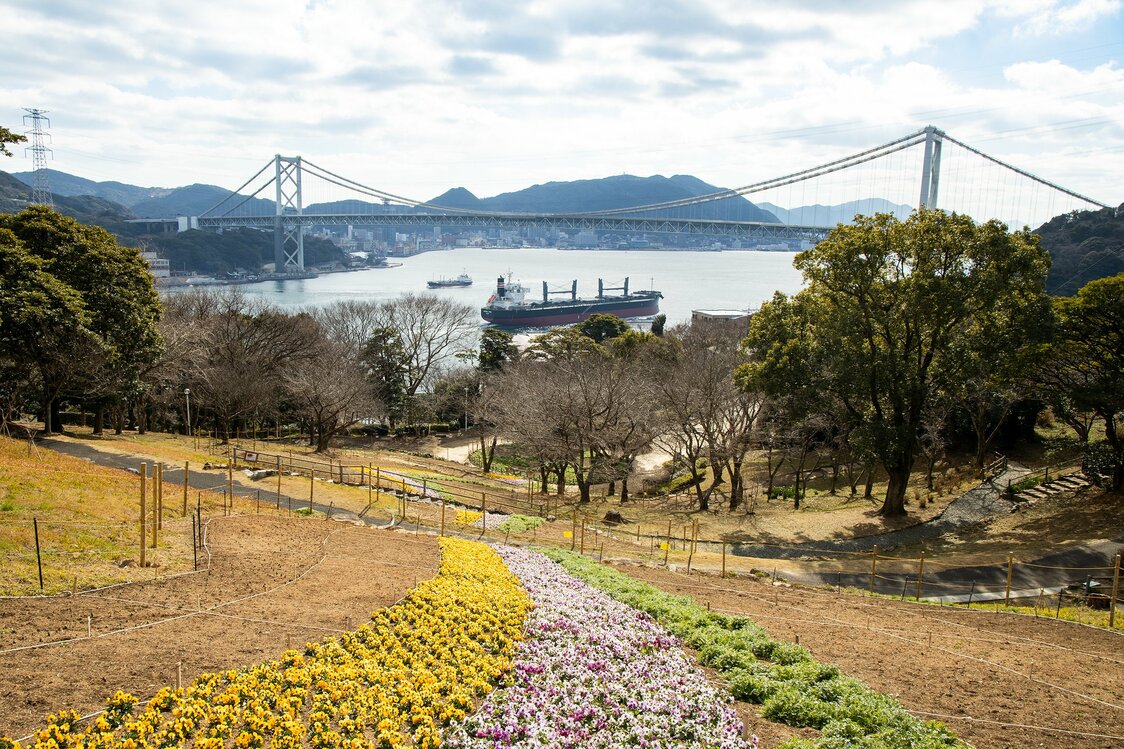
Kanmon Strait viewed from Hinoyama Park. Just 700 meters across the waters is the Mekari area in Kitakyūshū.
-
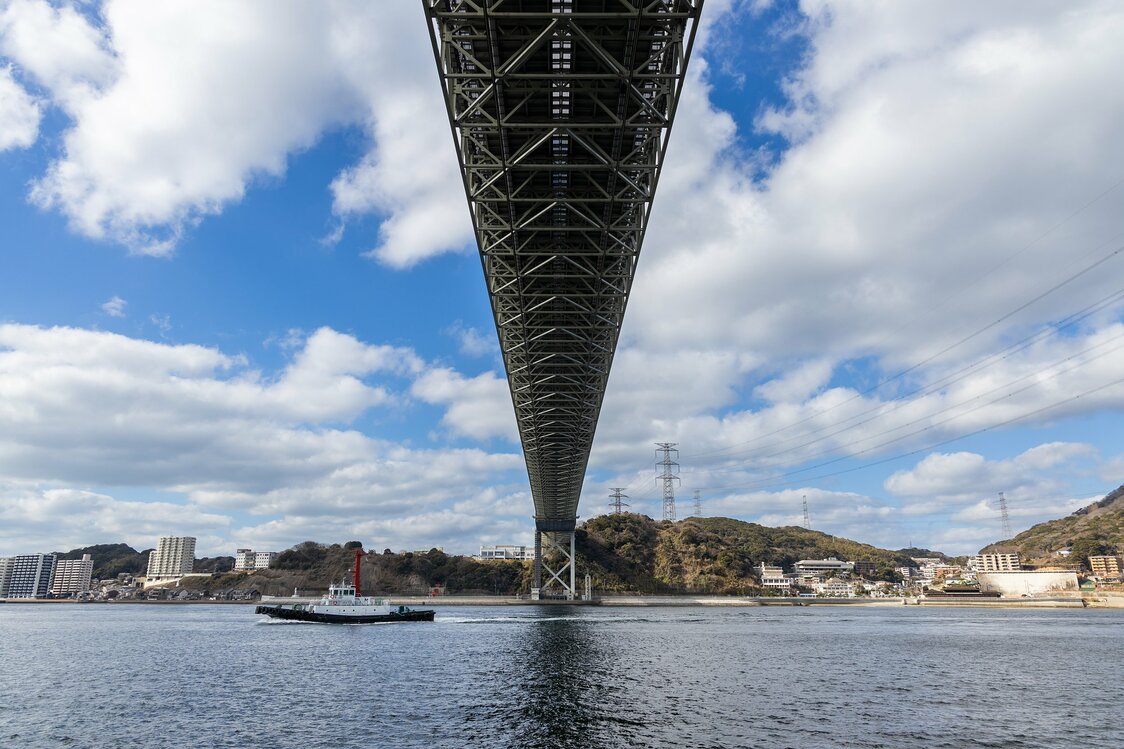
Dannoura-chō viewed from the Kyūshū side of Kanmon Bridge. The buildings to the right are the Mimosusogawa area, where the Dannoura Battlefield and Honshū entrance to the Kanmon Pedestrian Tunnel are located.
-
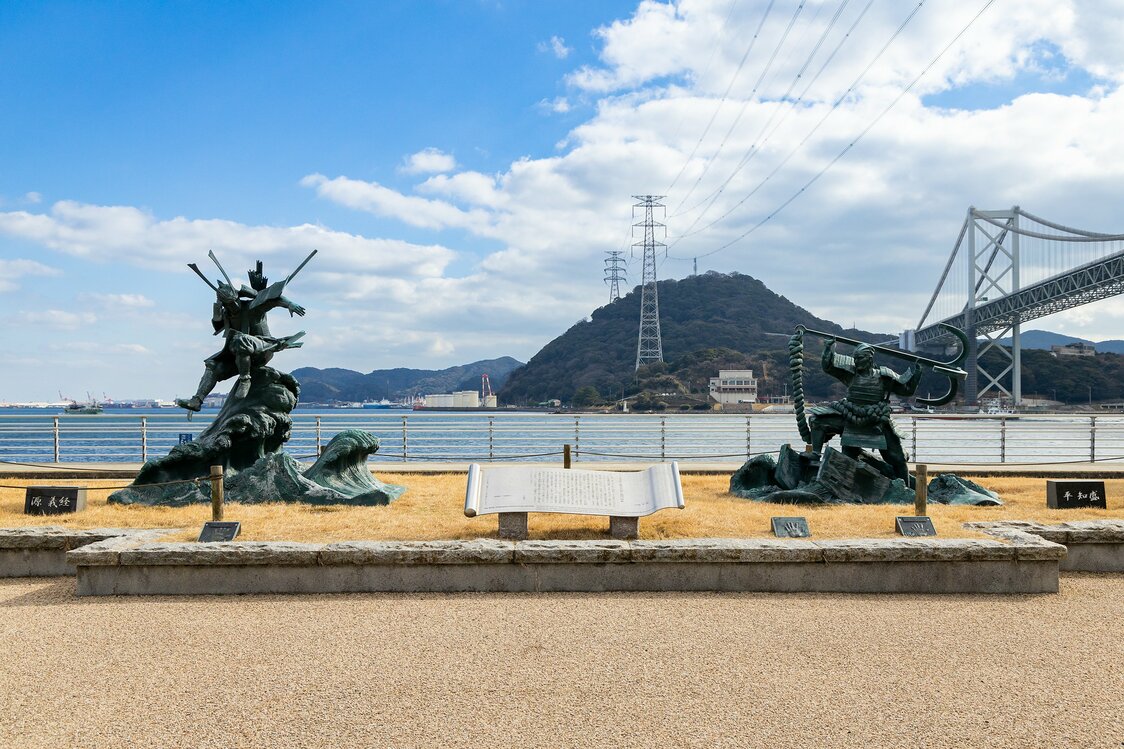
Statues of warriors Yoshitsune and Tomomori. The current through Hayatomonoseto can flow at up to 10 knots, or 18 kilometers an hour.
-
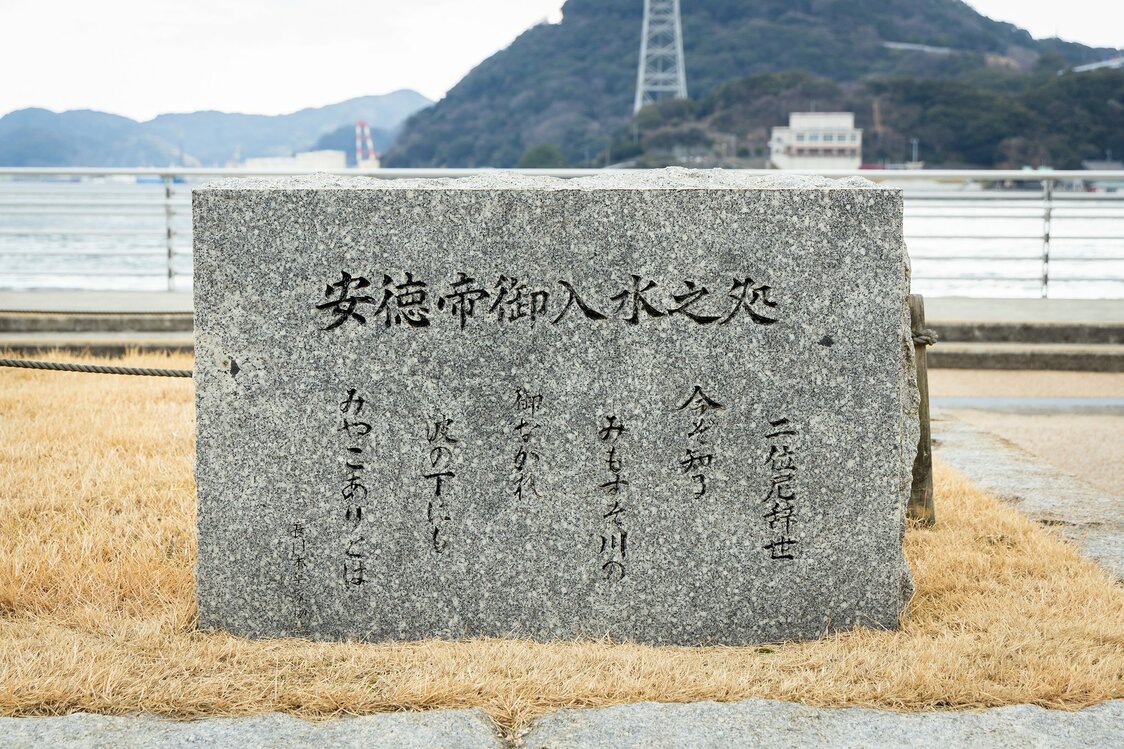
Memorial to Emperor Antoku’s drowning. Mimosusogawa derives its name from the death poem of his grandmother Taira no Tokiko, inscribed on the monument.
-
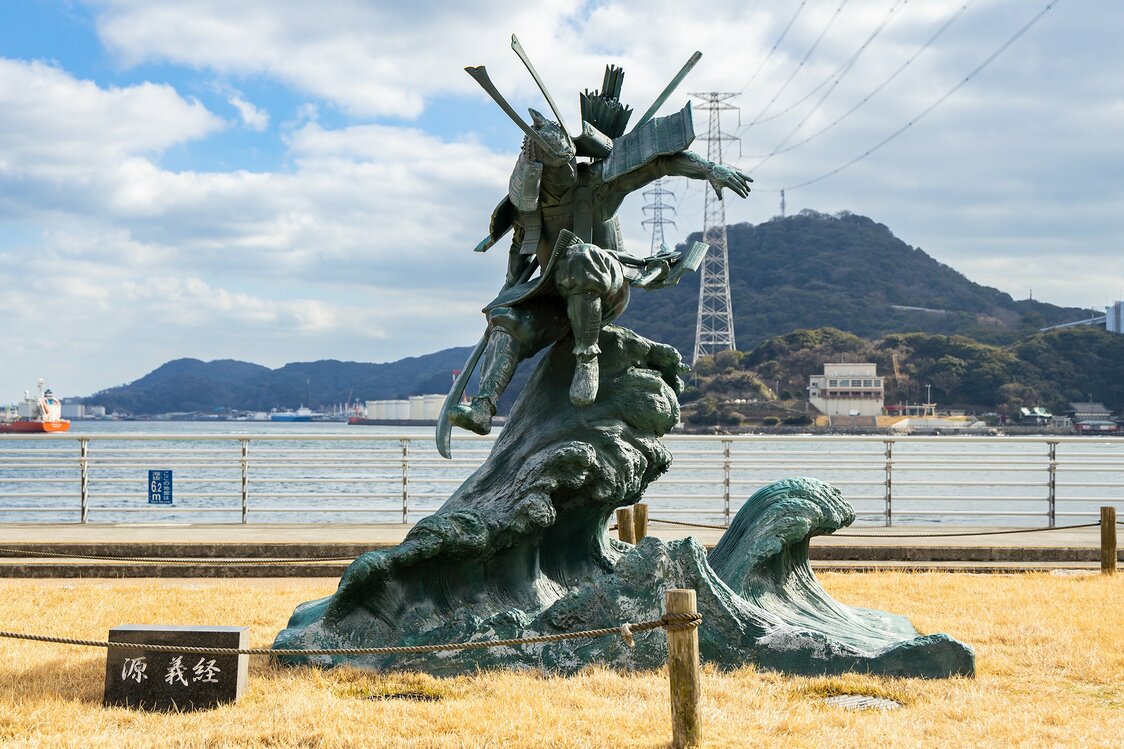
Statue of Yoshitsune, in heavy armor, leaping over eight boats.
-
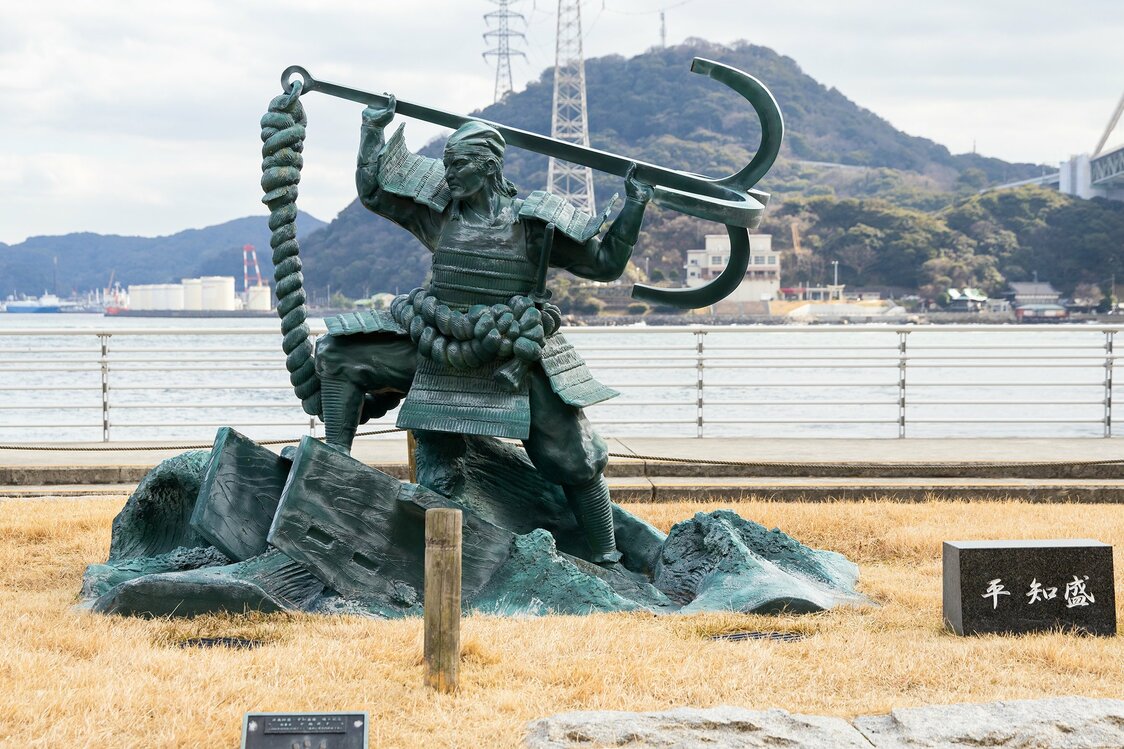
Statue of the gallant Tomomori with anchor. The statue recreates a famous scene in the Bunraku and Kabuki play Yoshitsune senbon-zakura (Yoshitsune and the Thousand Cherry Trees).
-

A creek that ran here was called Mimosusogawa. It now flows beneath the park, but an old bridge still stands near the statues of Yoshitsune and Tomomori.
-
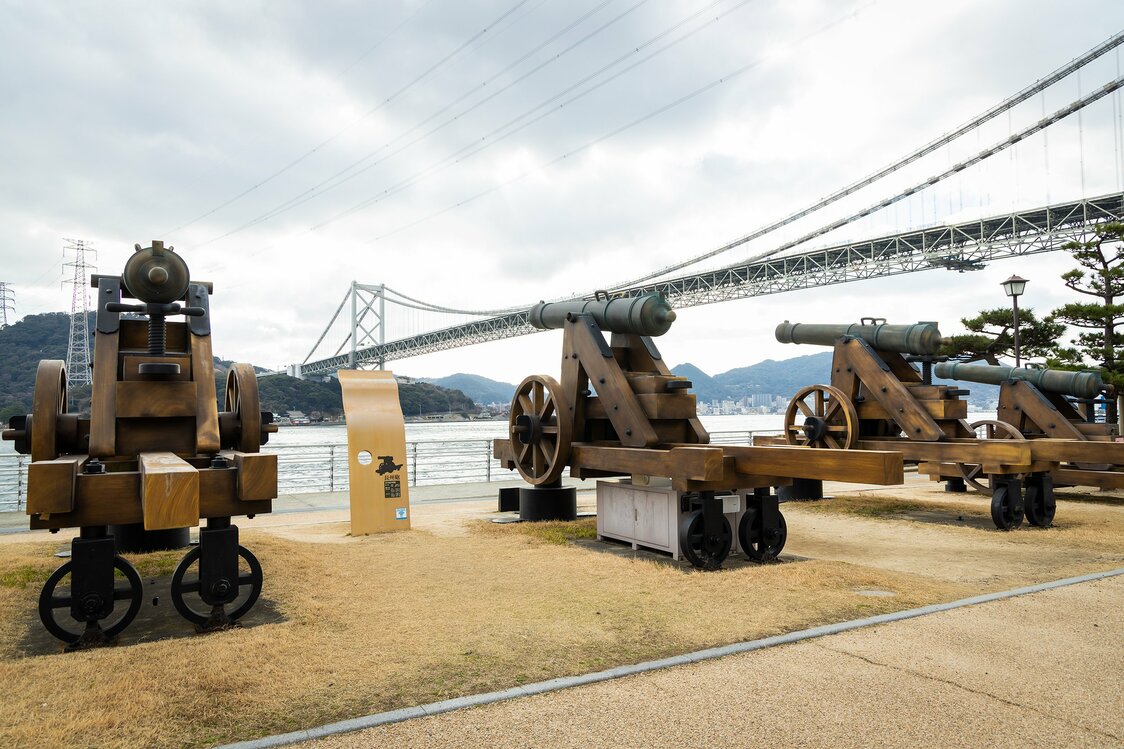
The Chōshū cannons alongside Kanmon Strait.
-
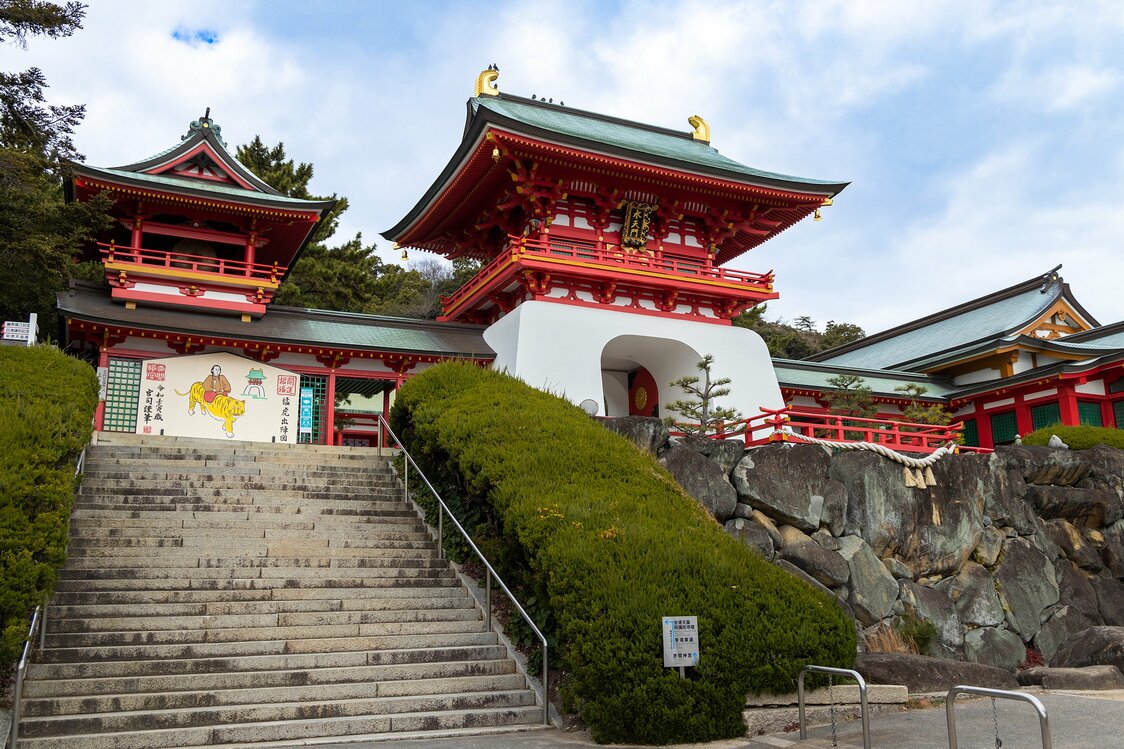
The flamboyant shrine gate, Suitenmon, seen from Highway 9.
-
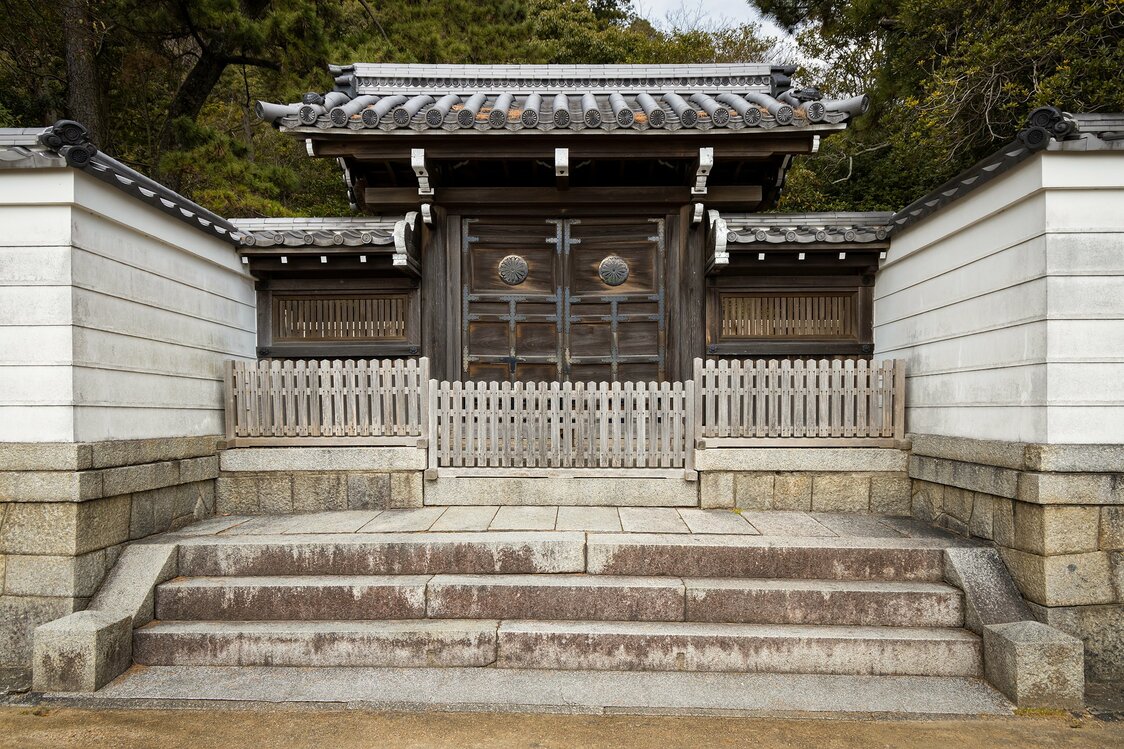
The tomb of Emperor Antoku, near Akama Jingū, is under the jurisdiction of the Imperial Household Agency.
-
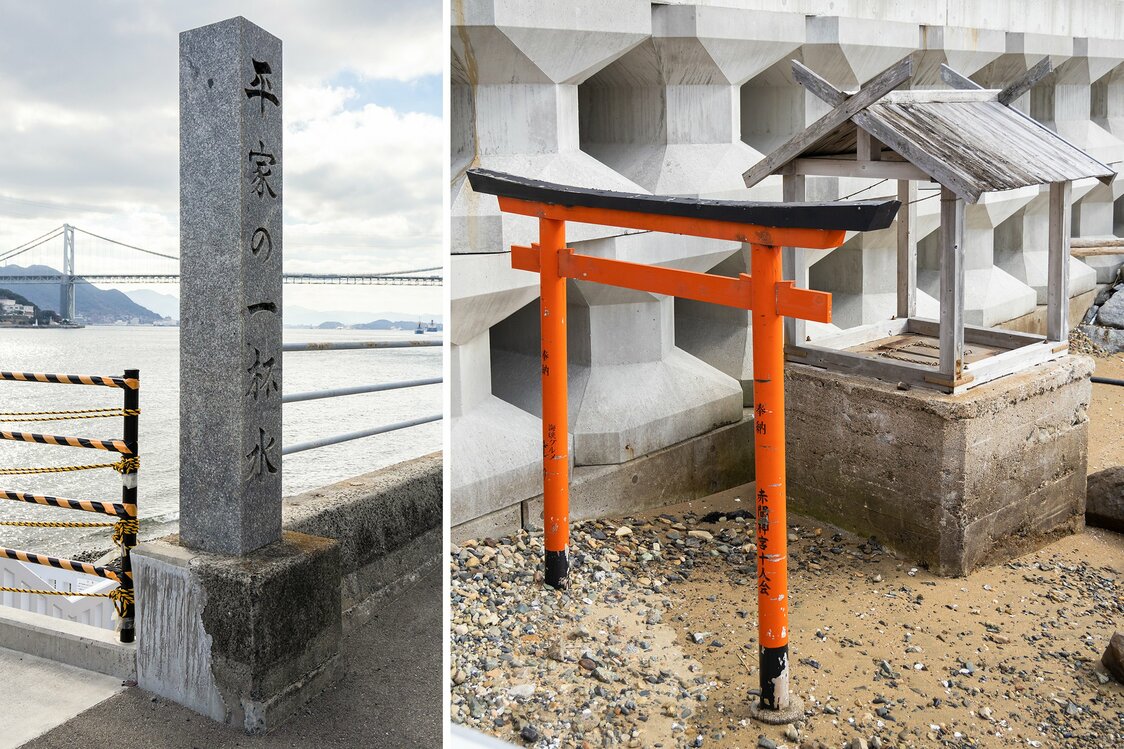
Heike no ippaimizu memorial is underwater at high tide. Opposite, on the Kyūshū shore , is a dried-up well bearing the same name.
-
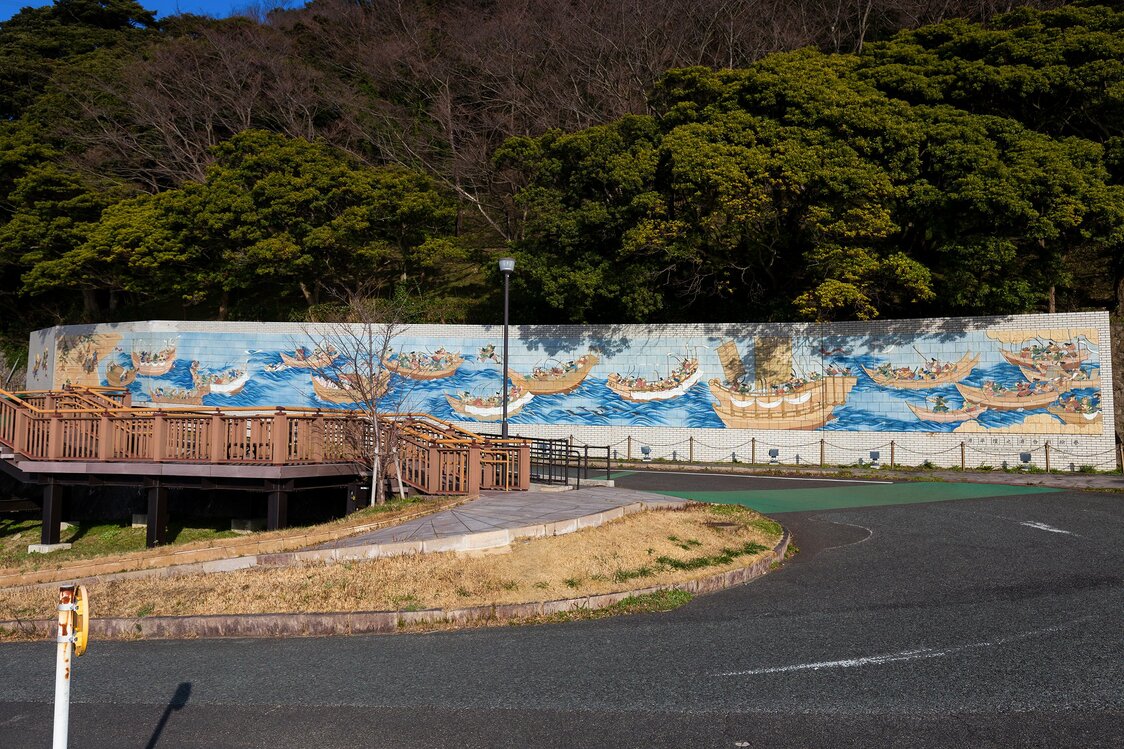
The 50-meter wide mosaic is made from Arita porcelain and recreates images from a picture scroll of the Dannoura battle.
-
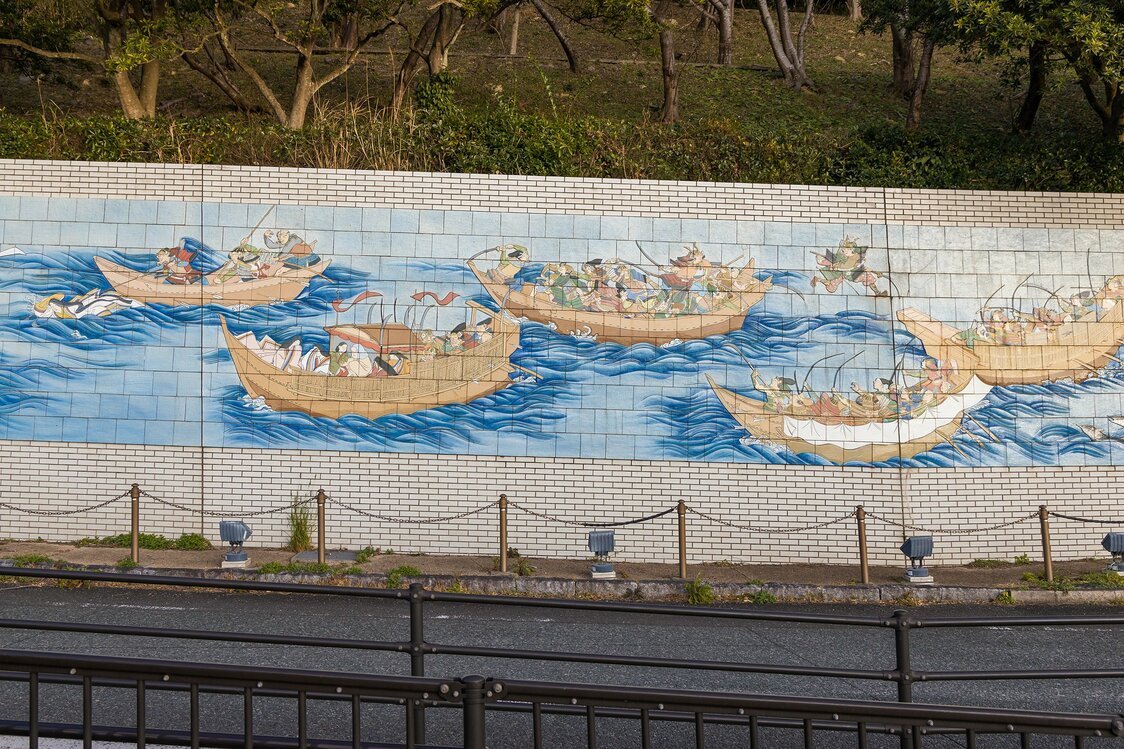
The dowager empress is seen jumping from the boat to the left, and below, to the right, is Taira no Tokiko embracing Emperor Antoku. In the upper right is Yoshitsune making his eight-boat leap.
-
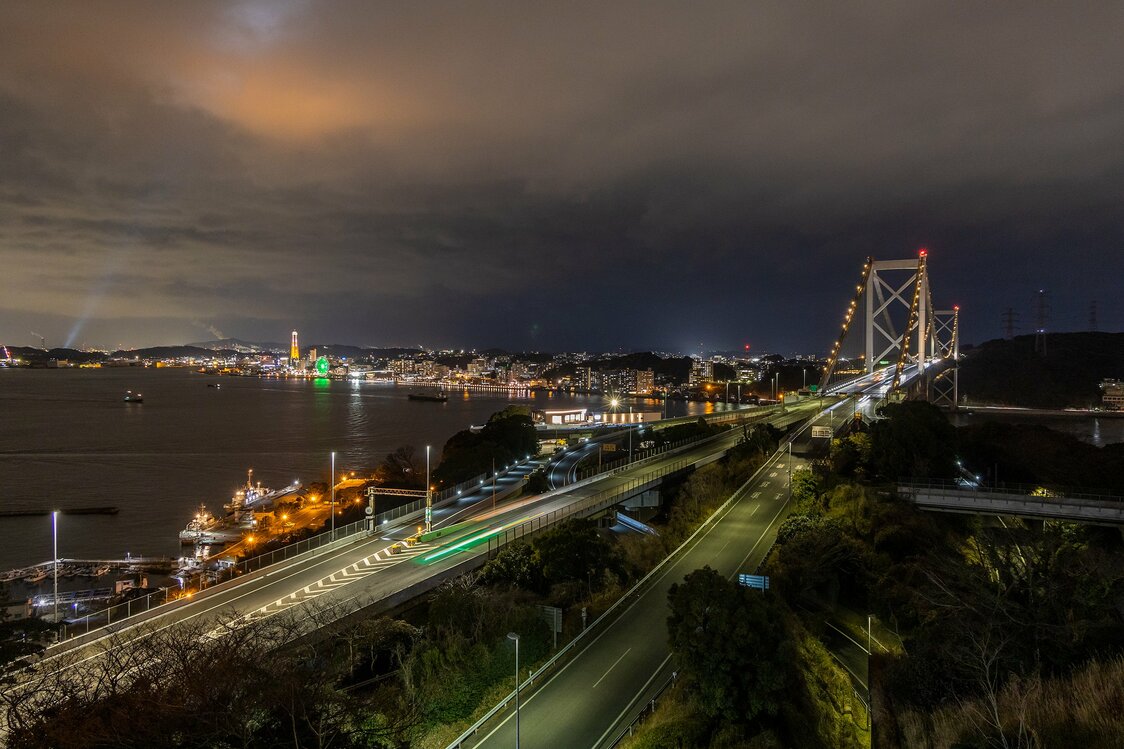
The spectacular view of the Kanmon Strait from Second Observation Deck in Mekari Park hardly evokes a battle scene.


 Read in other languages