-
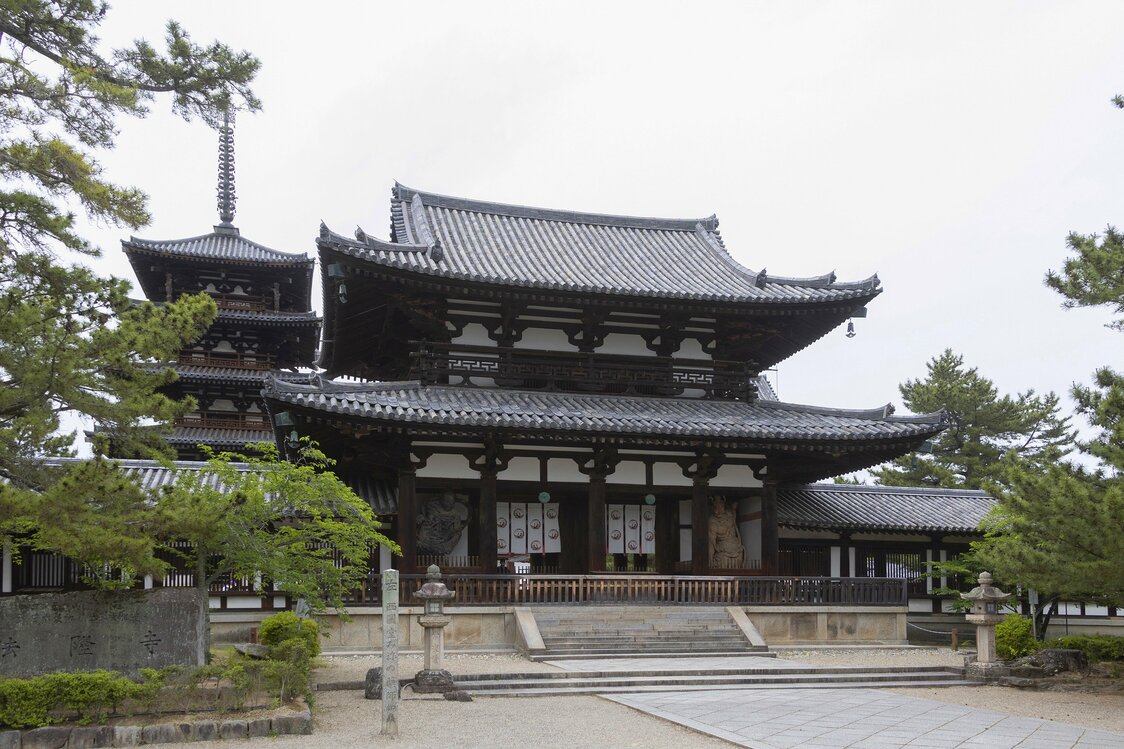
The Chūmon gate is flanked by a pair of Kongō Rikishi guardian figures. Beyond the gate is the Sai-in western complex where the performances took place. (© Kinoshita Kiyotaka)
-
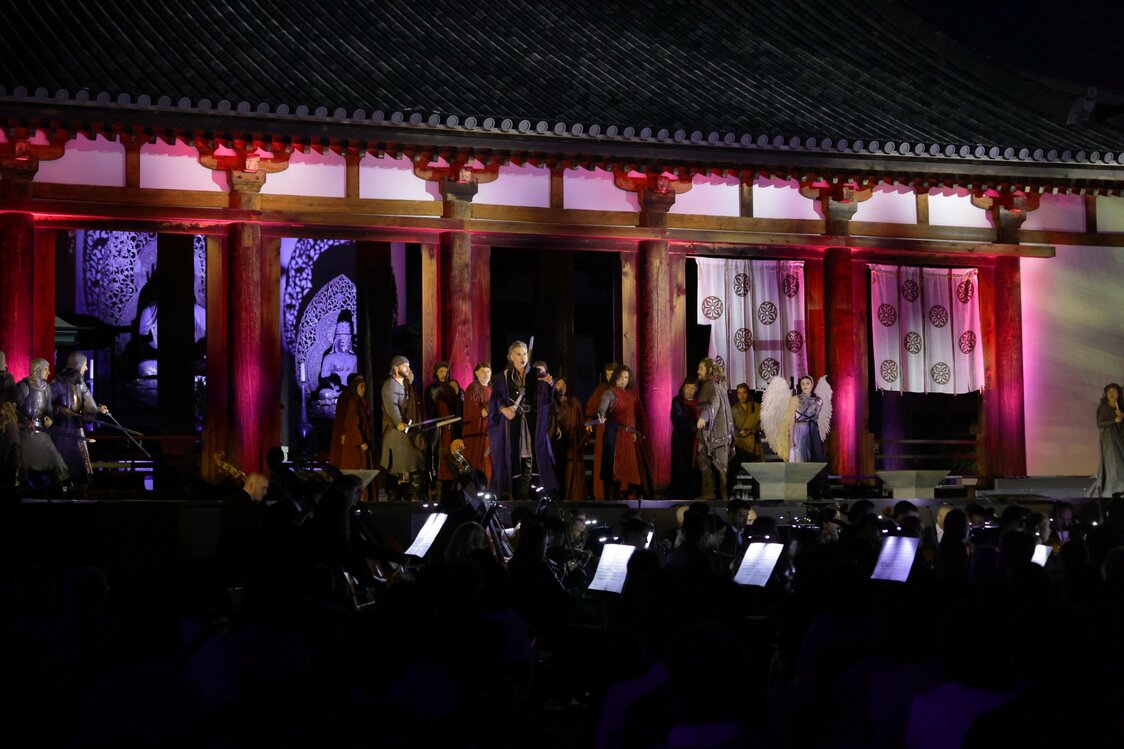
The Daikōdō serves as a backdrop to the stage. Both the building and the statues in the inner sanctum, dating from the Heian period (794–1185), are national treasures. (© Sawakami Opera Foundation)
-
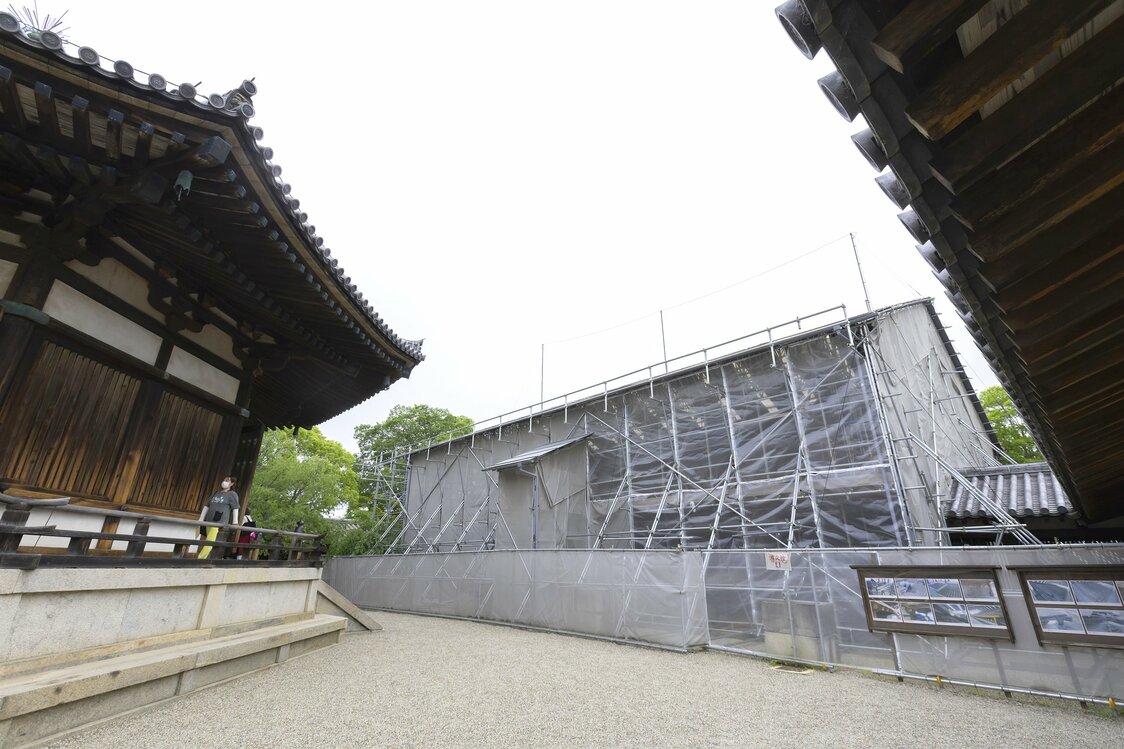
The Tō-in Raidō prayer hall, next to the Yumedono, is shrouded for restoration work. (© Kinoshita Kiyotaka)
-
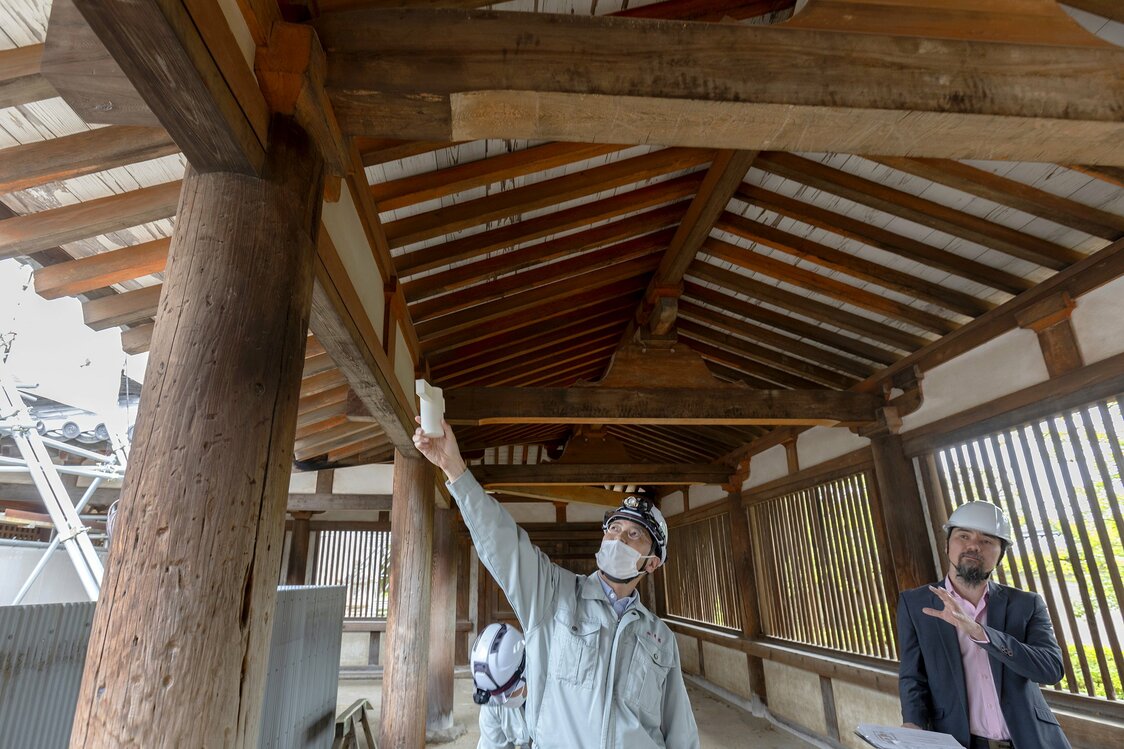
Yoshida uses a model to explain how the corridor is built. Pillars and beams are connected using wood joinery, a nail-free technique characteristic of Japanese architecture. (© Kinoshita Kiyotaka)
-
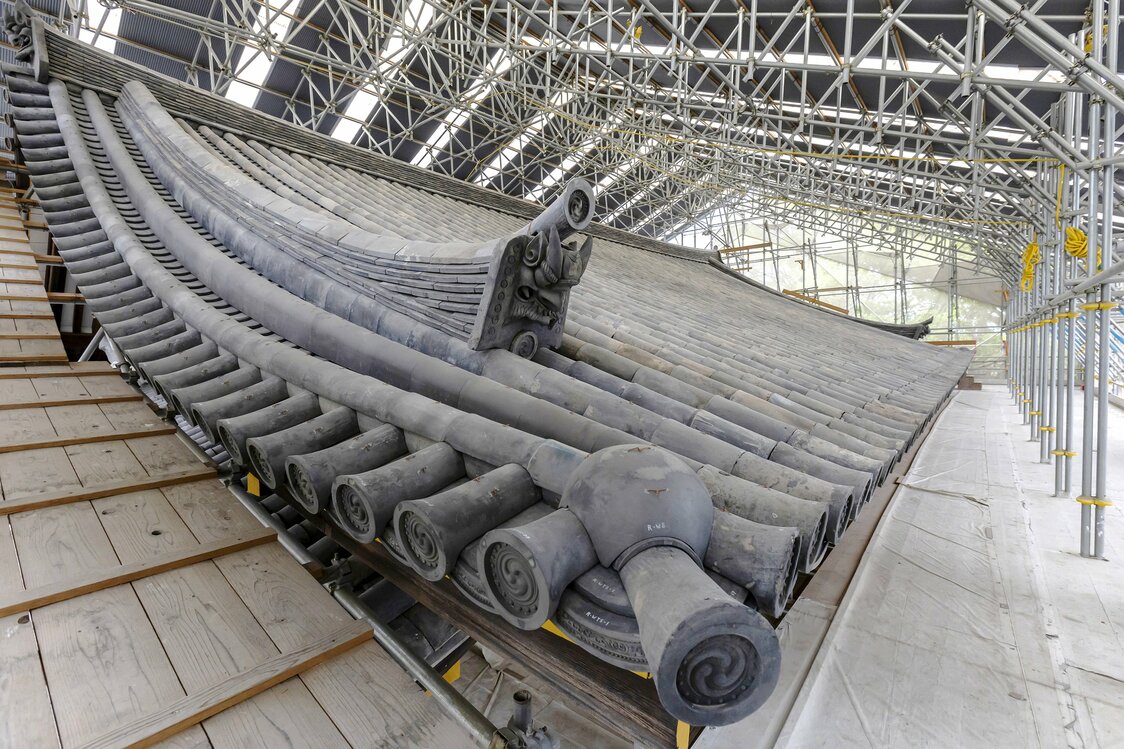
A view of the partially restored roof of the Raidō. Some of the tiles date from 1,300 years ago. (© Kinoshita Kiyotaka)
-
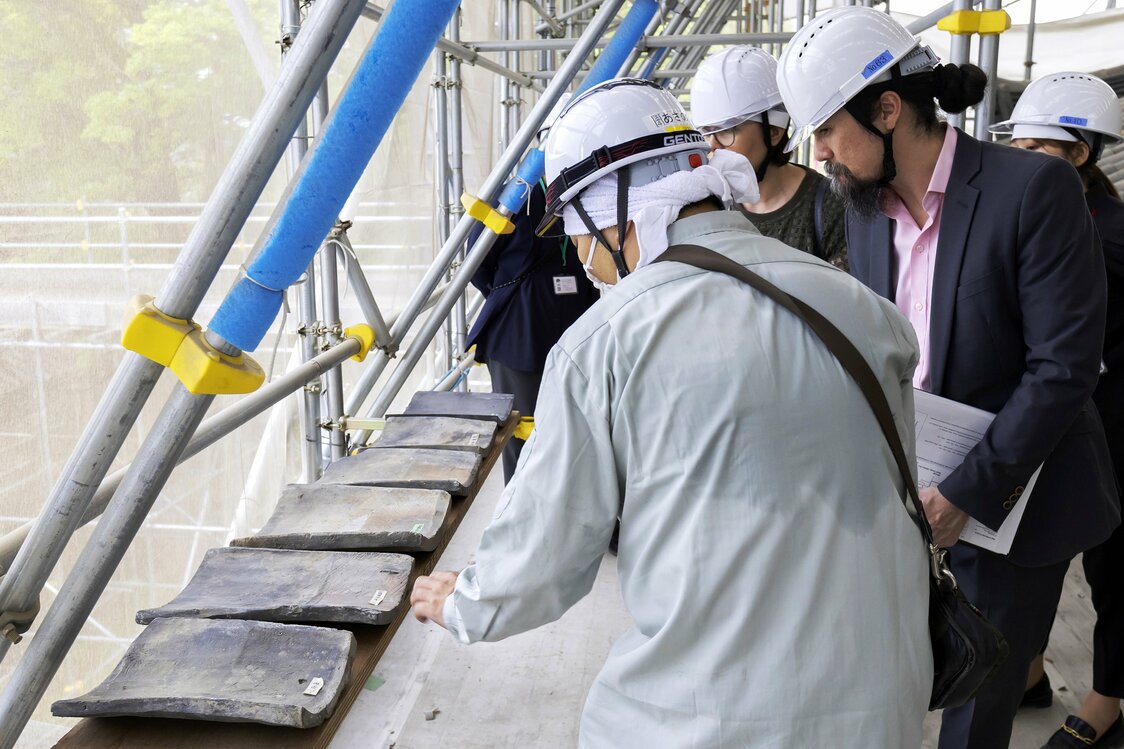
Comparing roof tiles produced in different eras, starting from 1,300 years ago to the recent past. (© Kinoshita Kiyotaka)
-
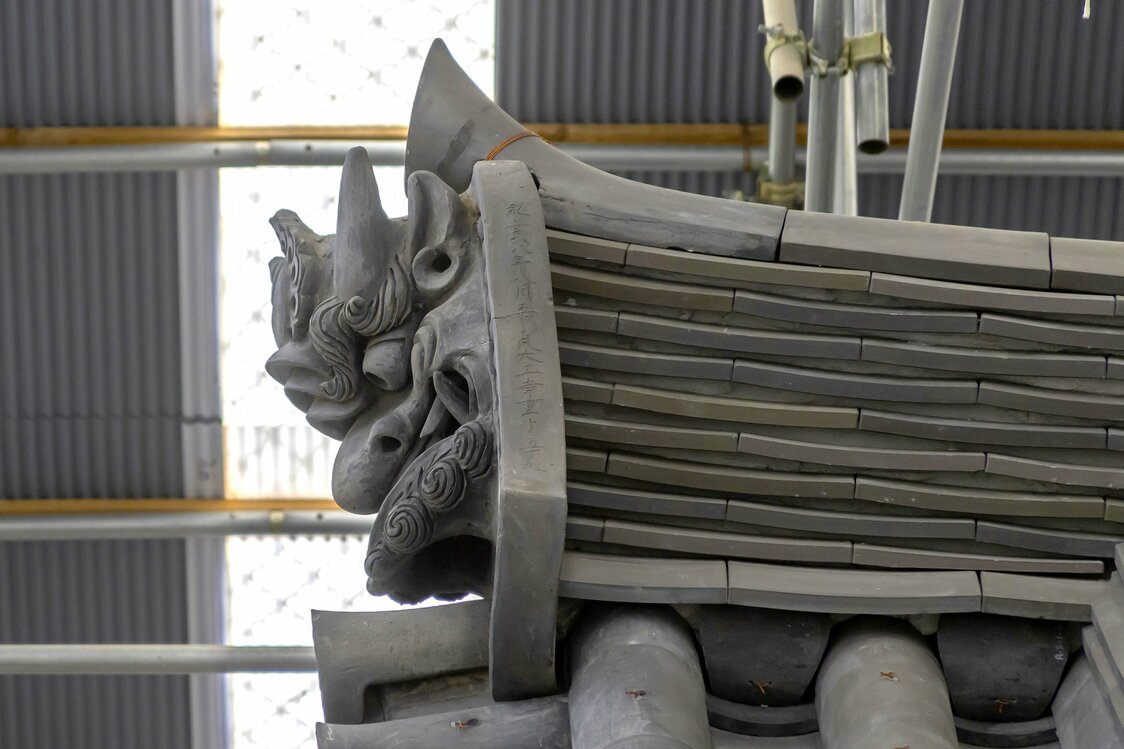
This onigawara ridge-end tile dating from the Muromachi period (1333–1568) bears the name and age of its maker and its production date. (© Kinoshita Kiyotaka)
-
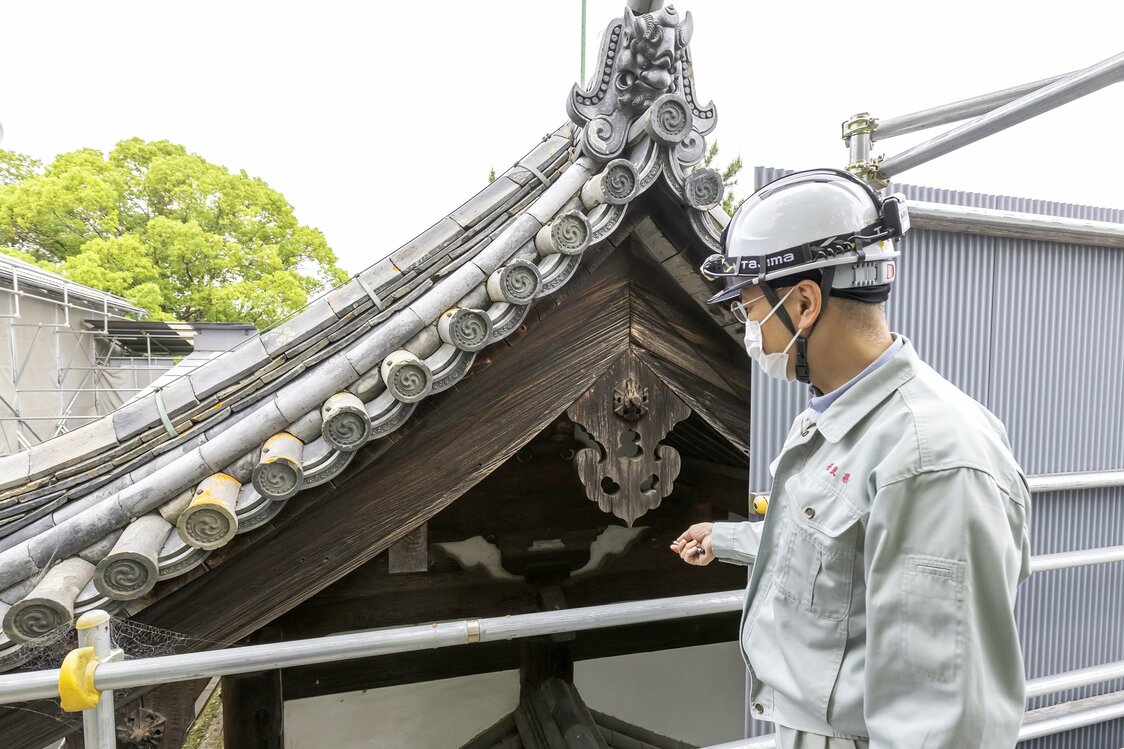
A close-up view of the roof ornamentation on the Tō-in Nanmon gate is only possible during restoration work. (© Kinoshita Kiyotaka)
-
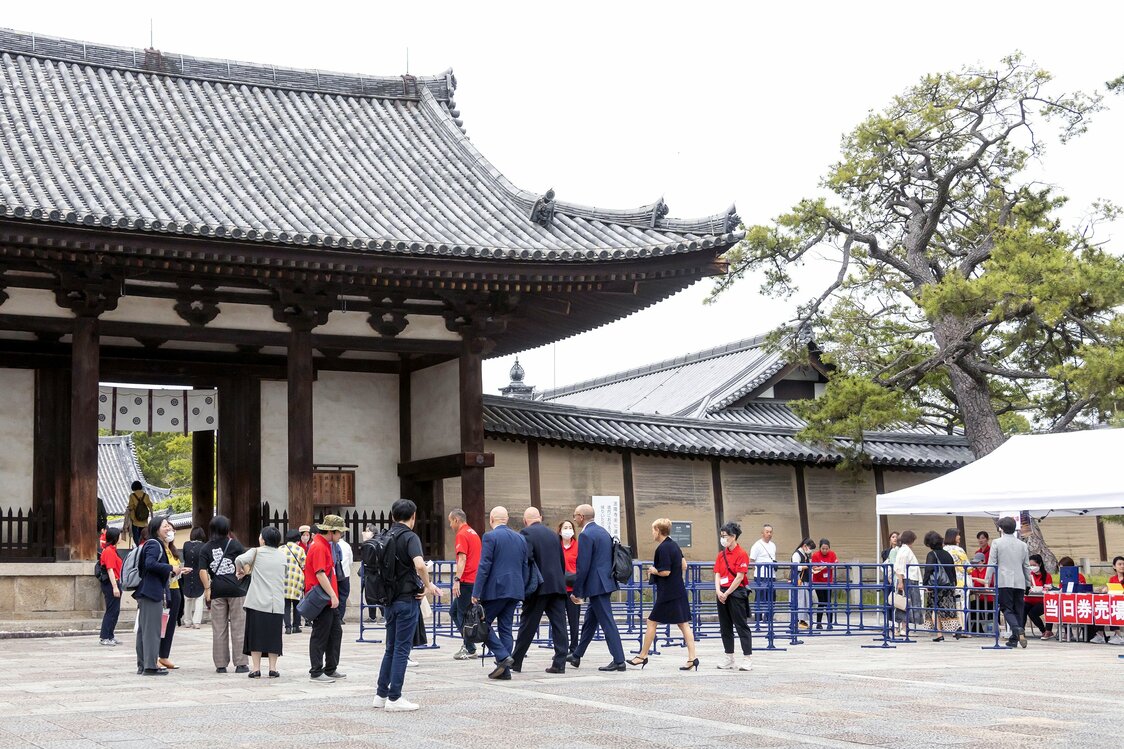
Guests for the performance gather at the Nandaimon gate after the temple has closed for the day to ordinary visitors. (© Kinoshita Kiyotaka)


 Read in other languages