-
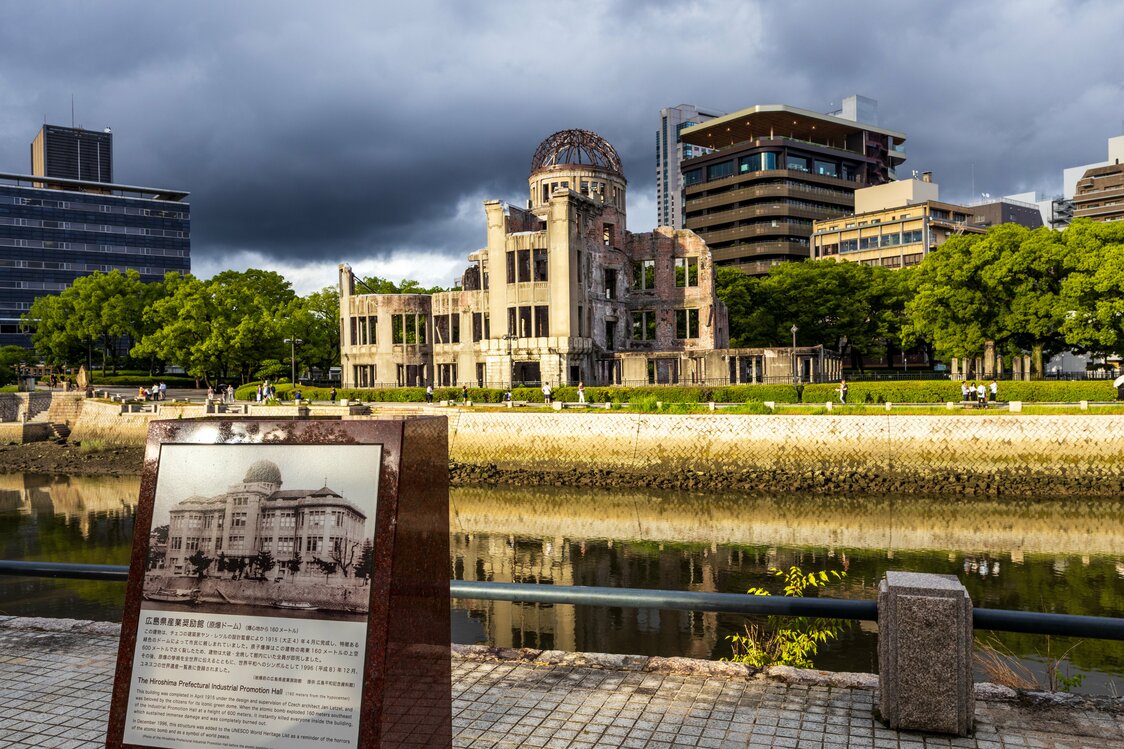
The A-Bomb Dome viewed across the Motoyasu River. The Orizuru Tower, seen in the background, offers an observation space on its upper floors. (© Nippon.com)
-
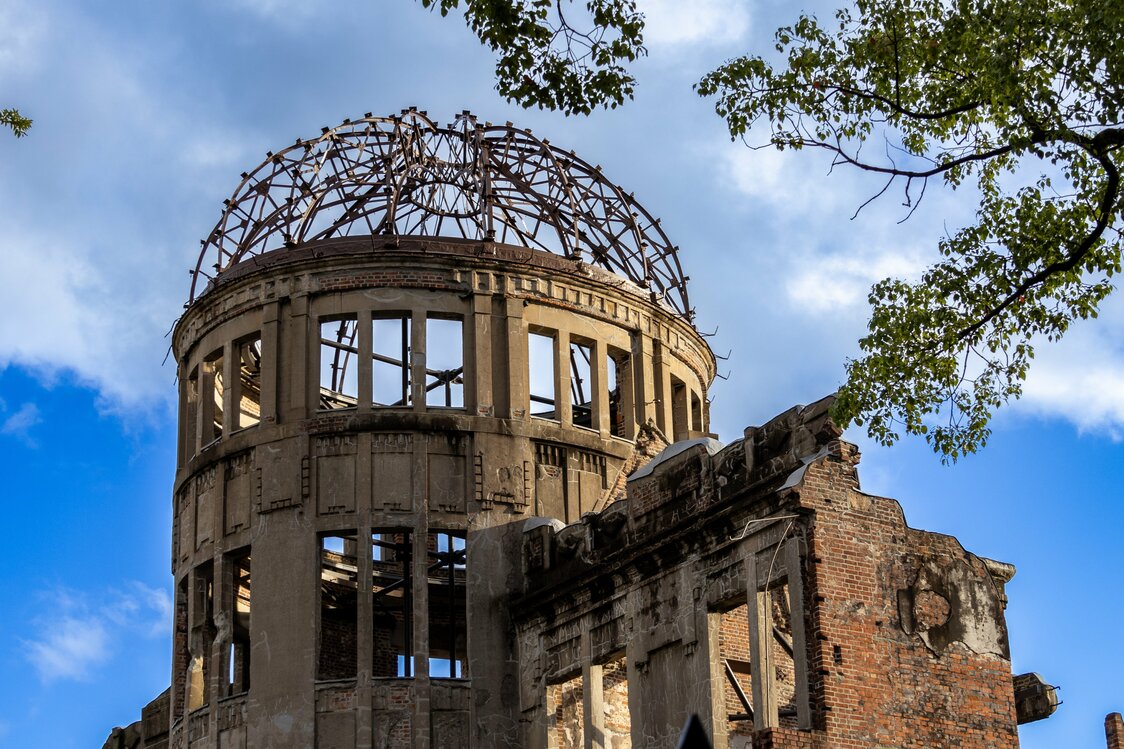
Much of the structure’s brick facade and the copper plating on the dome are gone, leaving the underlying structure plain to see. (© Nippon.com)
-
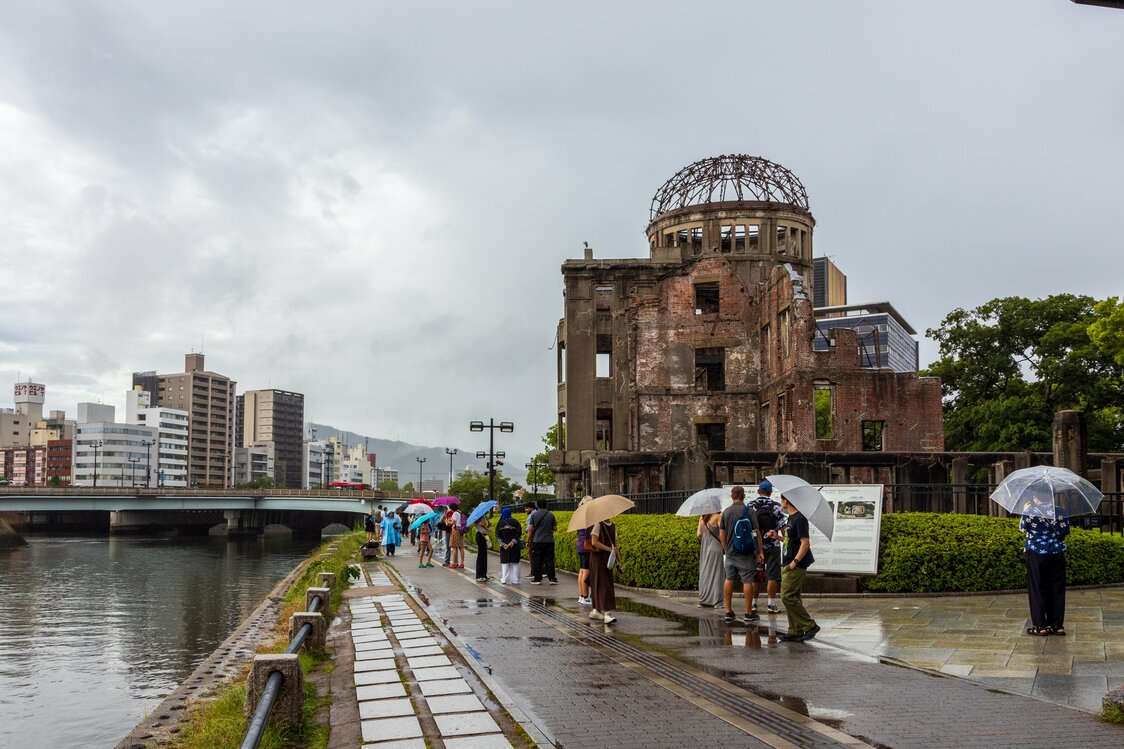
Visitors flock to the site year-round, rain or shine. (© Nippon.com)
-
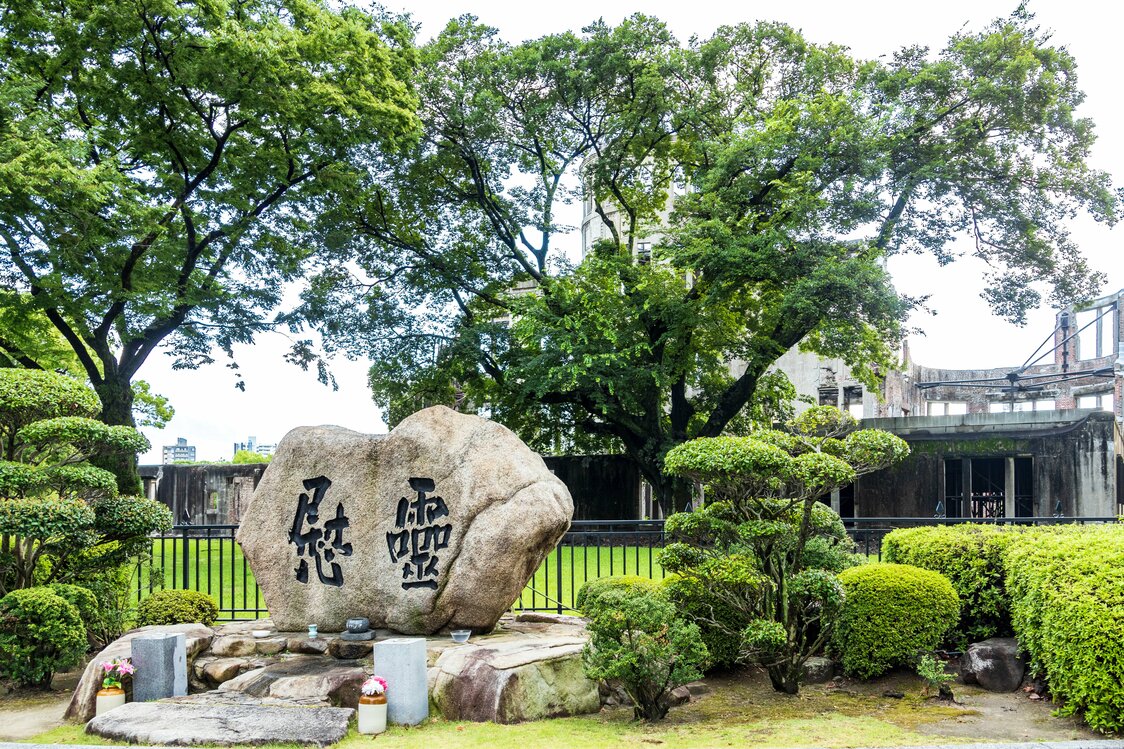
A memorial cenotaph erected on the east side of the dome. (© Nippon.com)
-
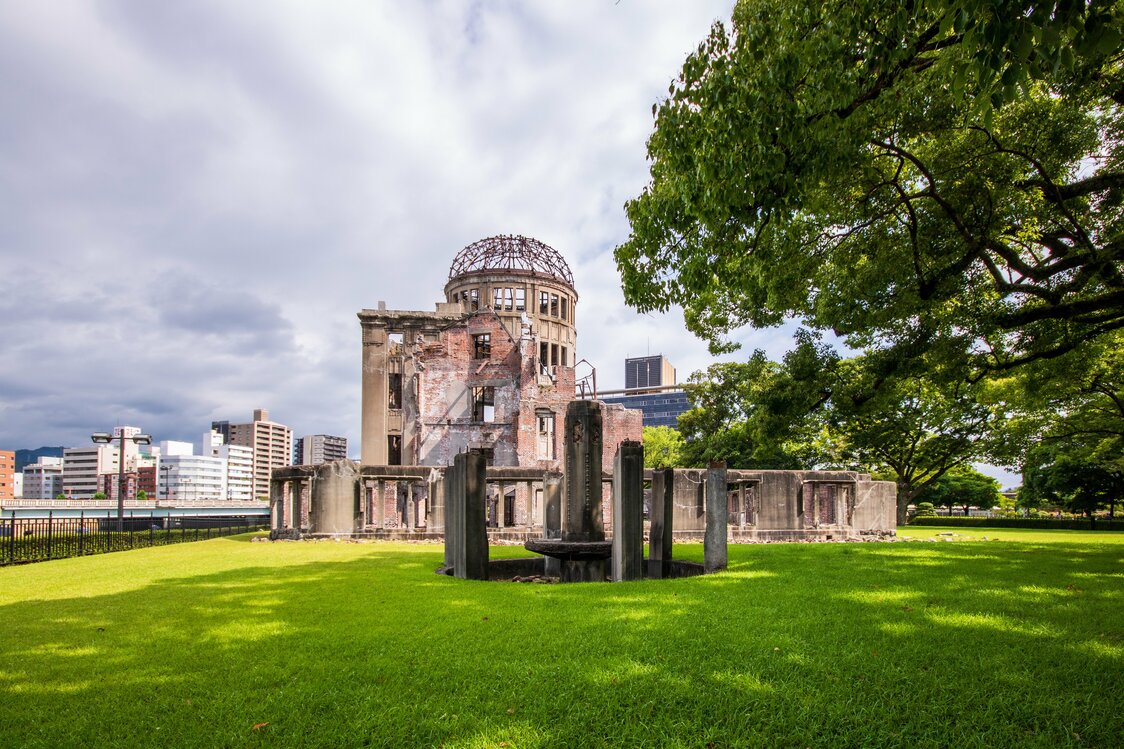
The remnants of a fountain on the lawn to the south of the structure, a space that was once the exhibition hall’s Western-style garden. (© Nippon.com)
-
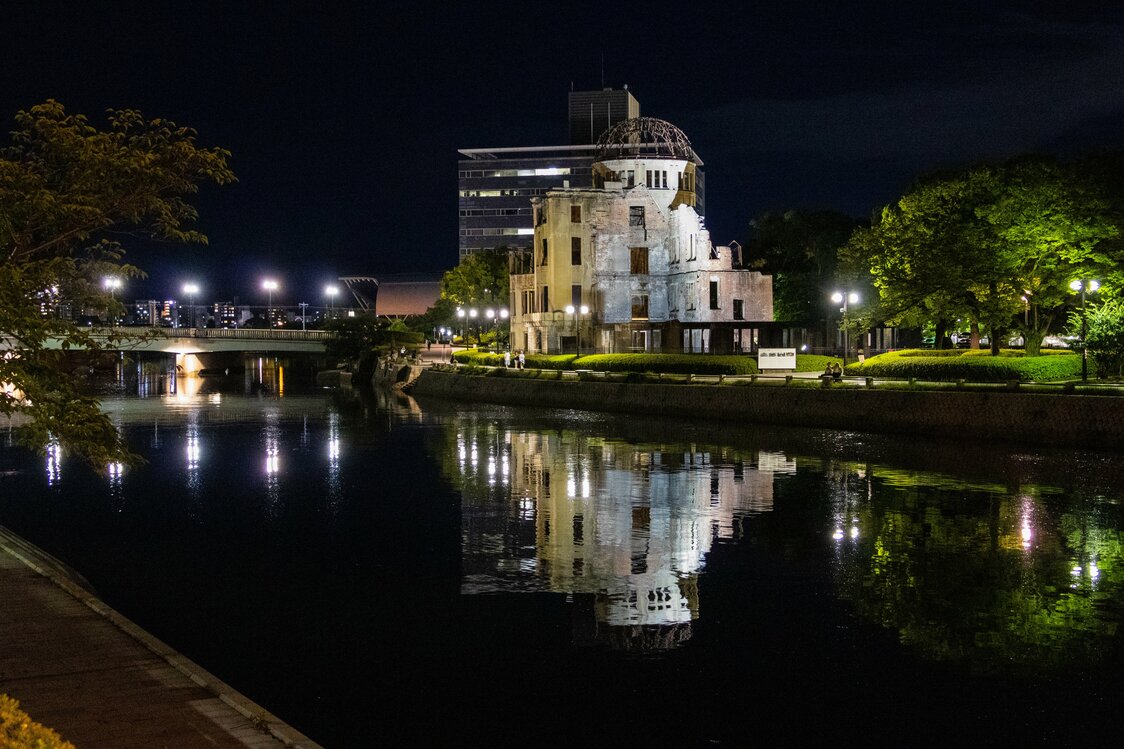
The dome illuminated after dark. (© Nippon.com)
-
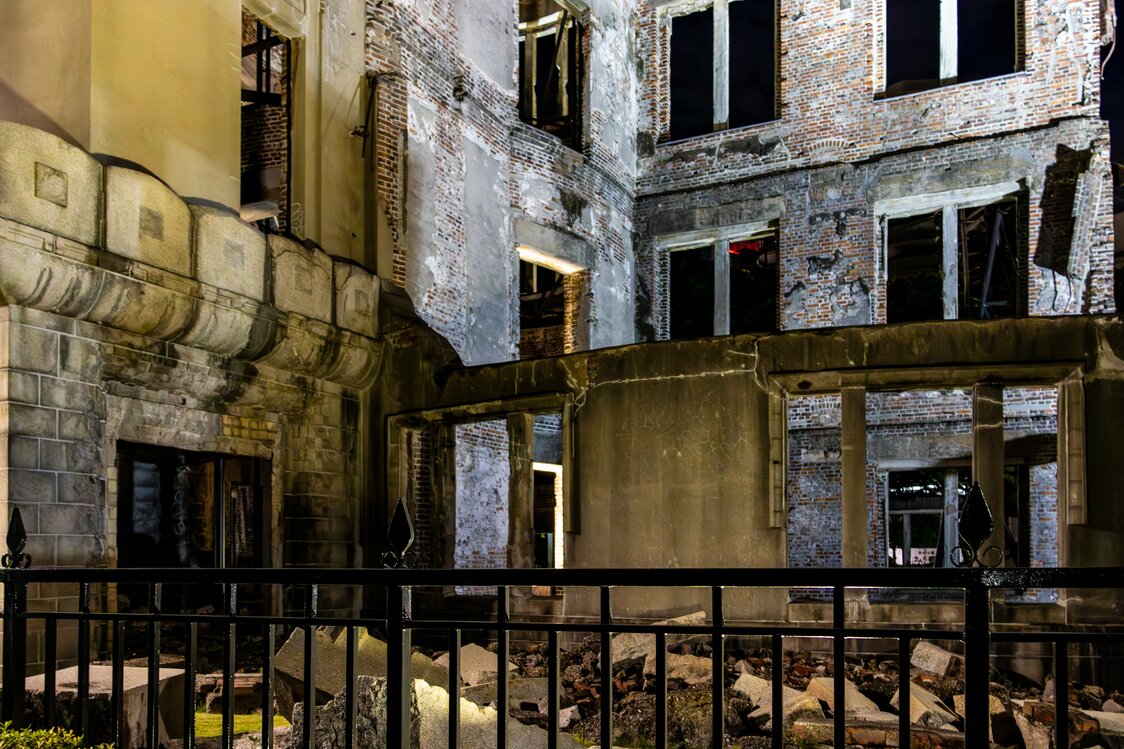
Rubble lies where it fell in the building’s interior. (© Nippon.com)
-
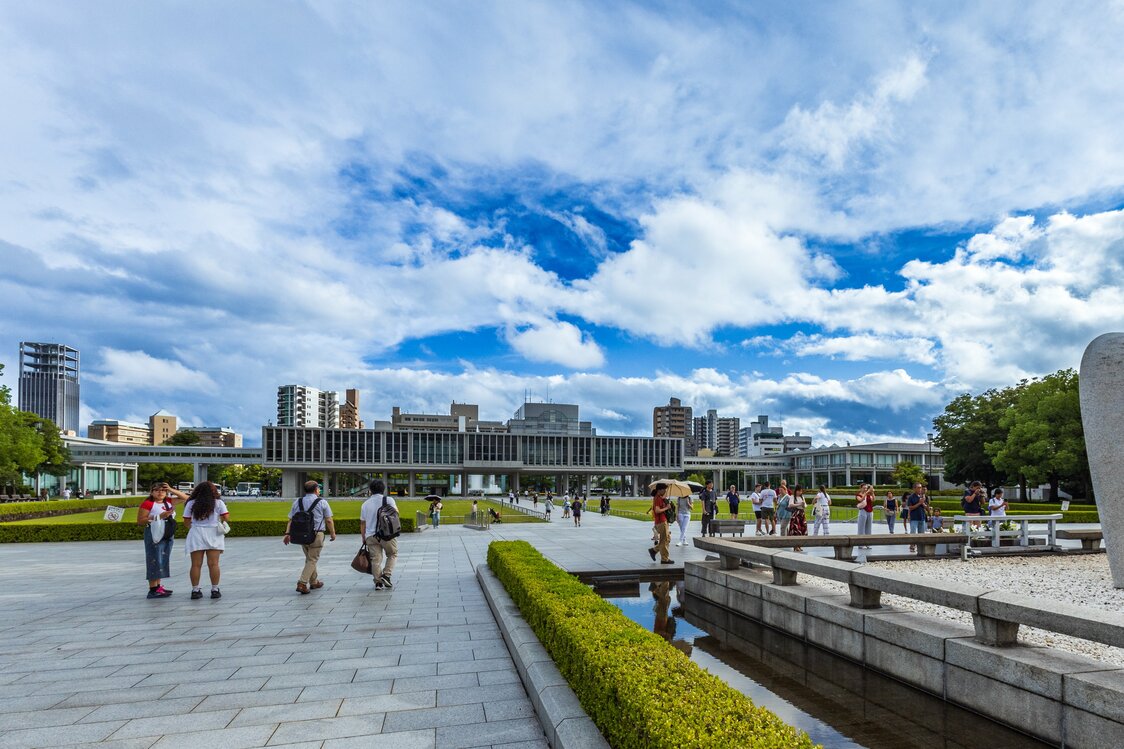
The two main museum structures are connected to the International Conference Center Hiroshima. (© Nippon.com)
-
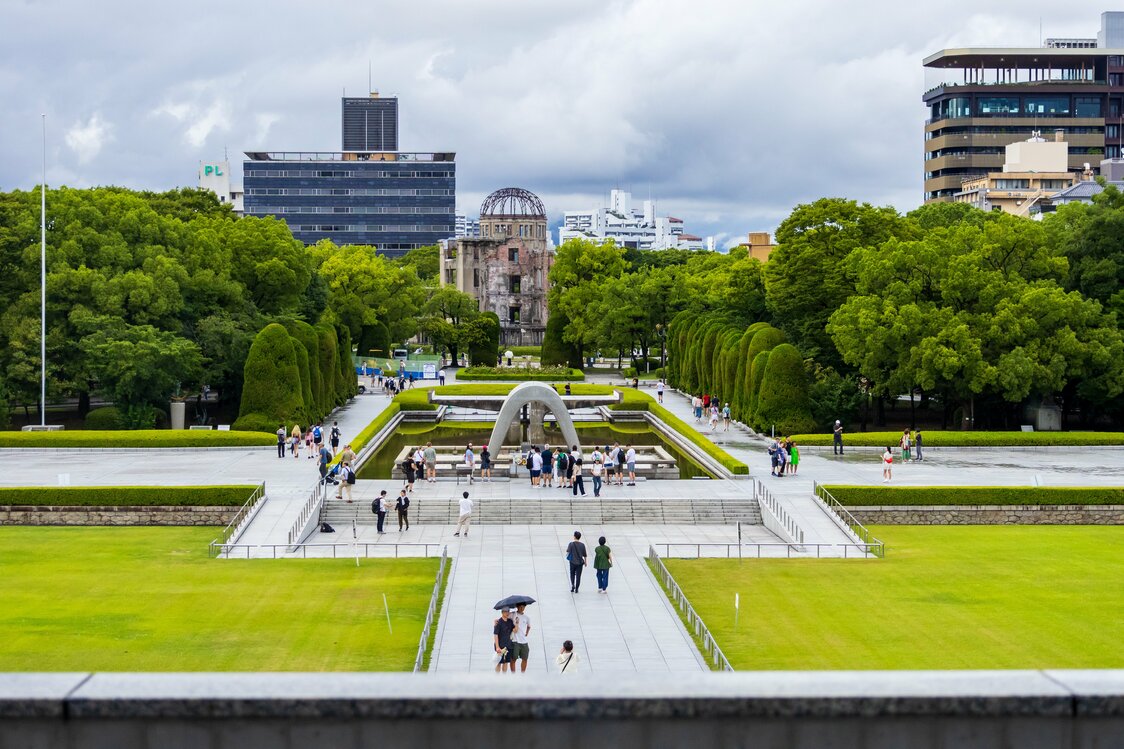
Looking north from the museum toward the Cenotaph for the A-Bomb Victims and the dome beyond. (© Nippon.com)
-
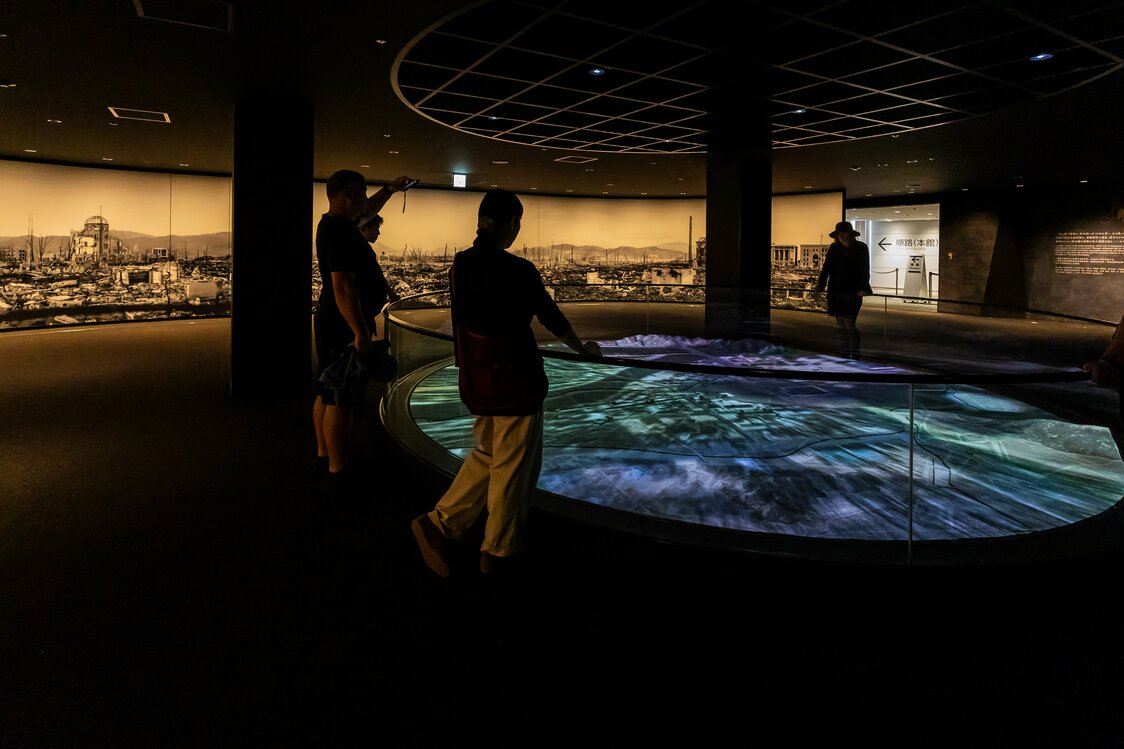
The Introductory Exhibit space shows how the blast impacted the city. (© Nippon.com)
-
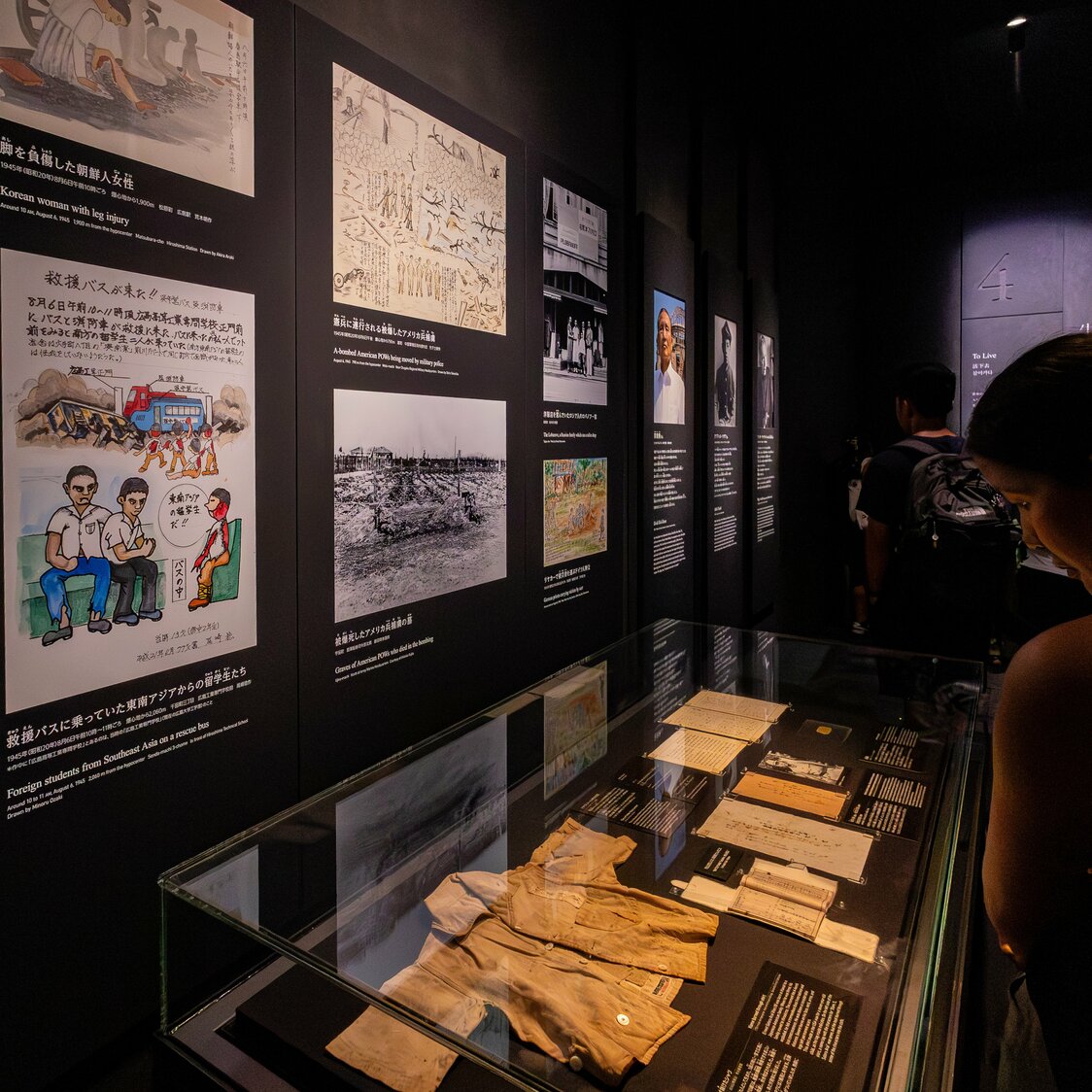
A new permanent exhibit displays artifacts related to non-Japanese victims of the bombing. (© Nippon.com)
-
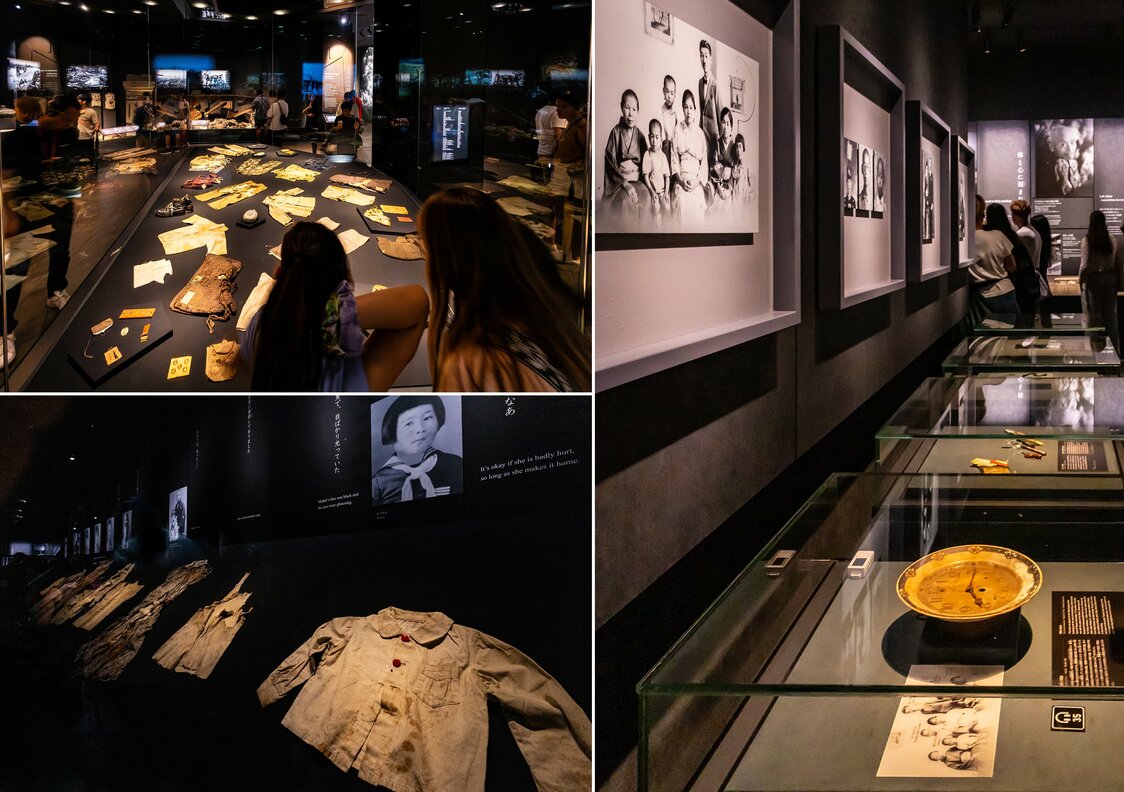
The exhibits tell personal tales, complete with names, photos, and episodes from the lives of those lost. (© Nippon.com)
-
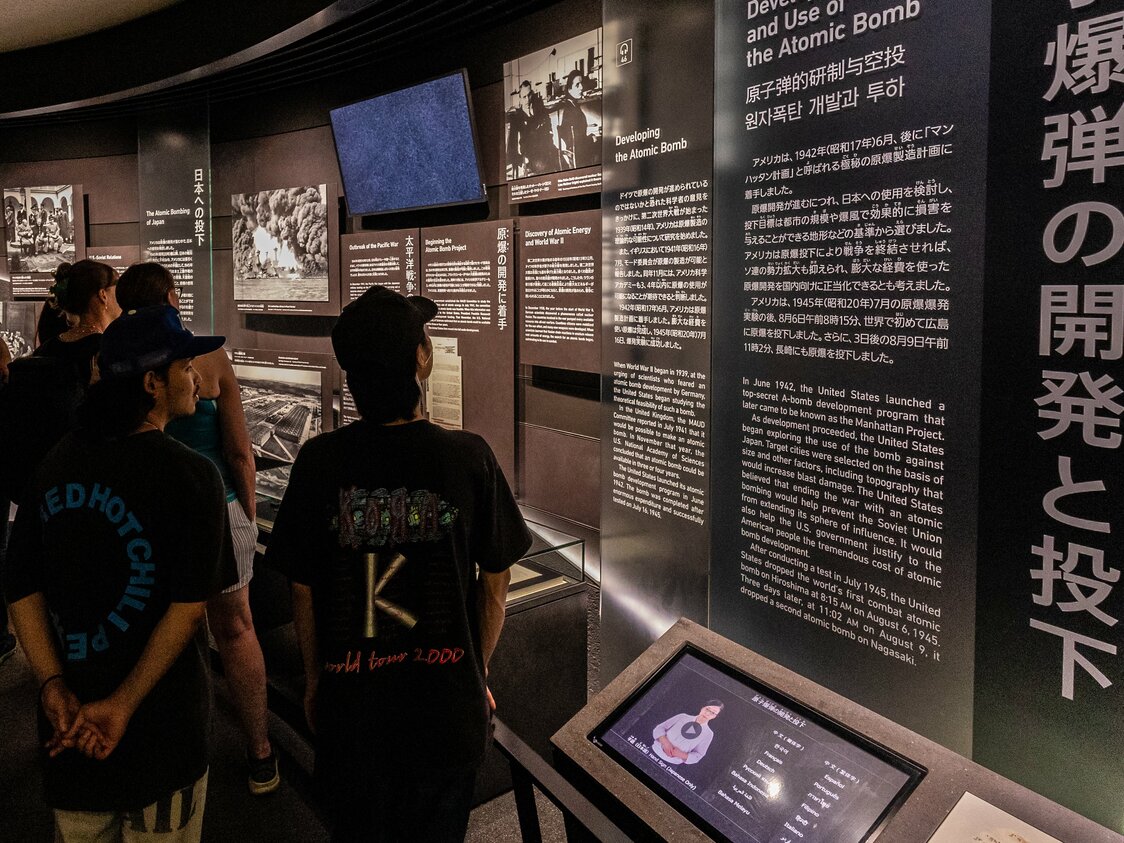
Exhibit information is available in languages including English, Chinese, and Korean, and Japanese sign language is added to much of the video content. (© Nippon.com)
-
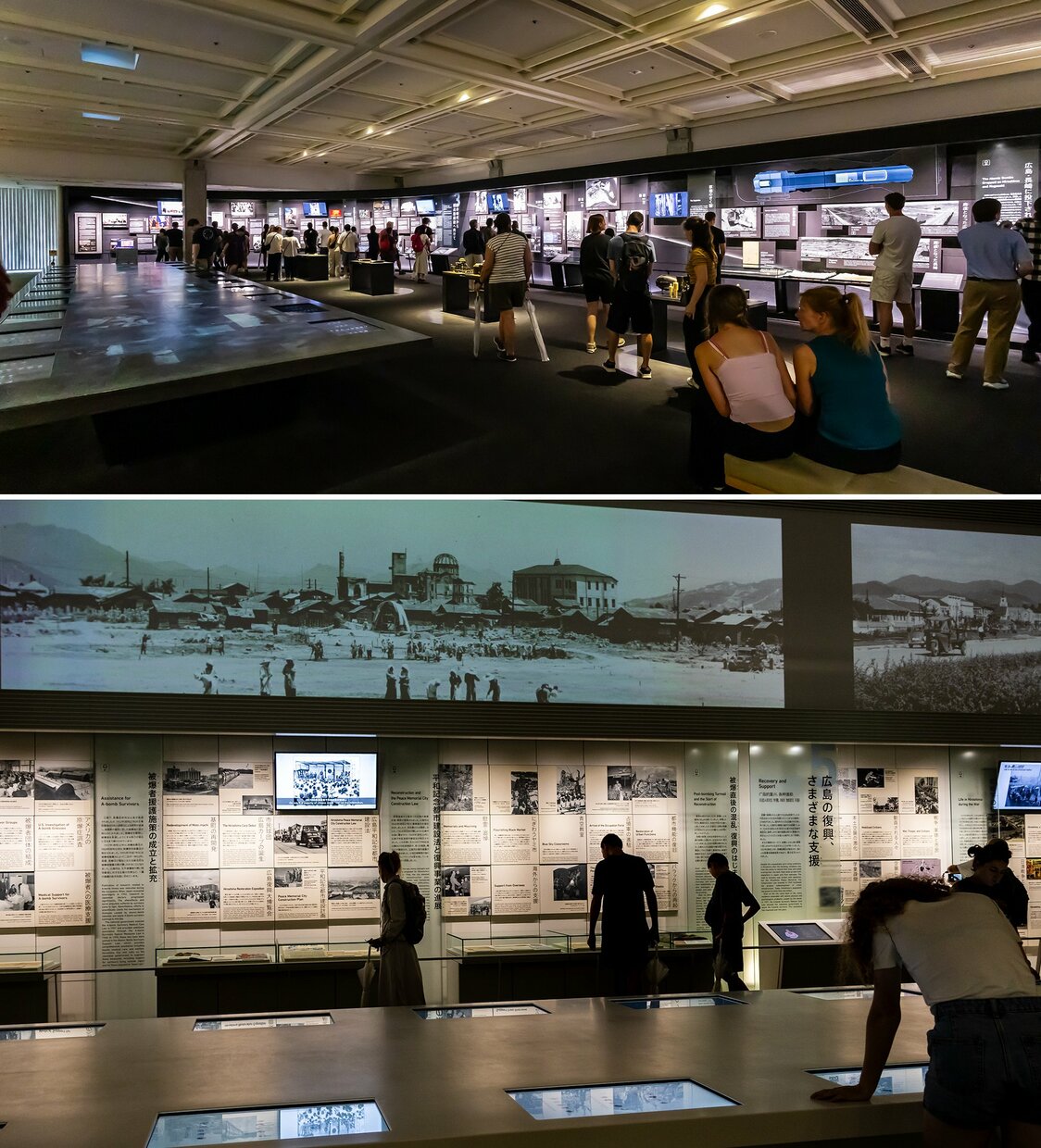
The museum route takes visitors from the Introductory Exhibit through an exploration of the blast’s impact and the threat of nuclear weapons (above) and the history of Hiroshima. (© Nippon.com)
-
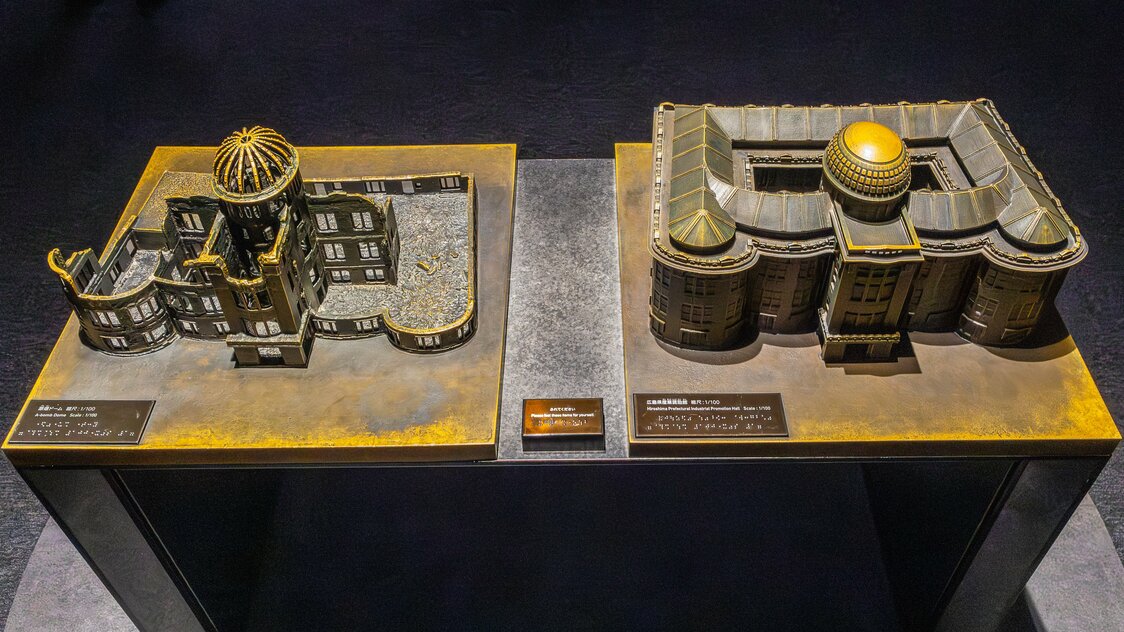
A tactile exhibit allows the sight-impaired to experience the Hiroshima Prefectural Commercial Exhibition Hall as it once stood (at right) and the A-Bomb Dome today. (© Nippon.com)
-
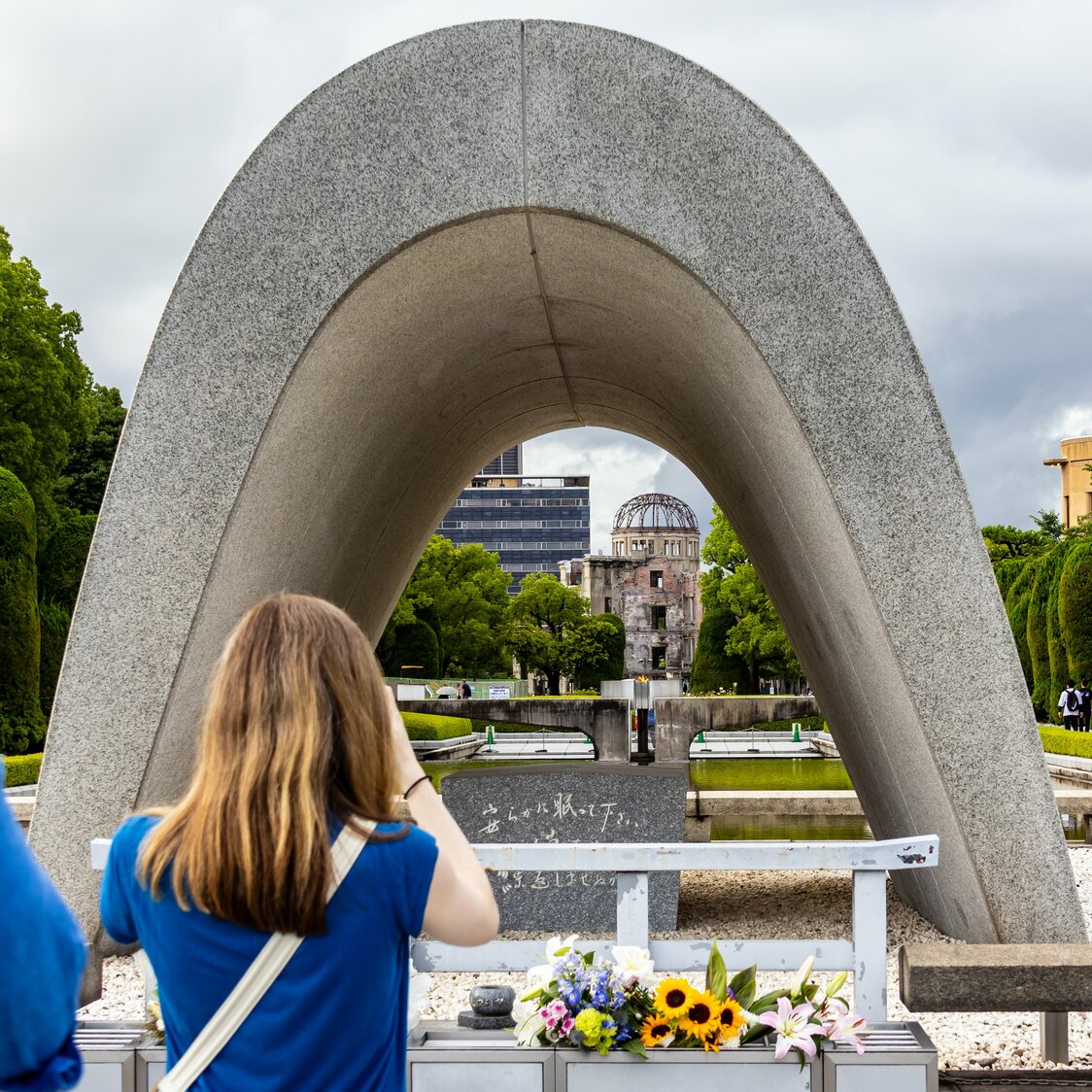
The cenotaph’s stone chest beneath an arched roof was inspired by Japan’s prehistoric haniwa pottery once used to decorate tombs. (© Nippon.com)
-
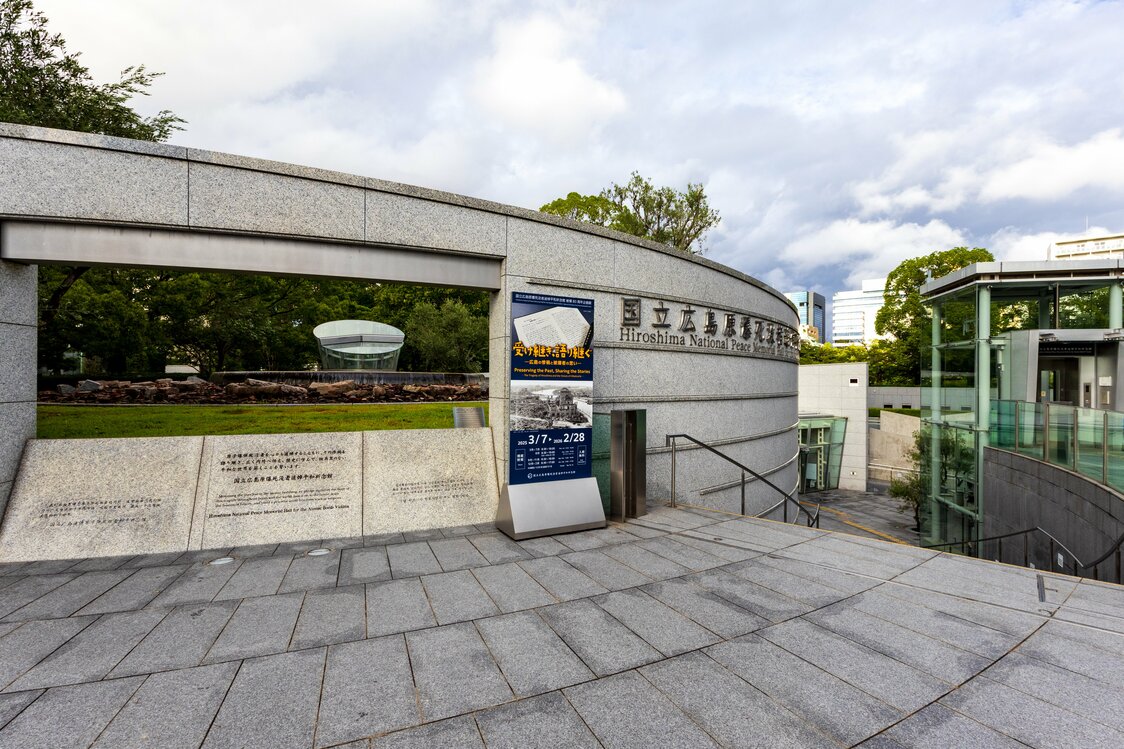
The memorial hall houses video and written records of the experiences of people who lived through the bombing. (© Nippon.com)
-
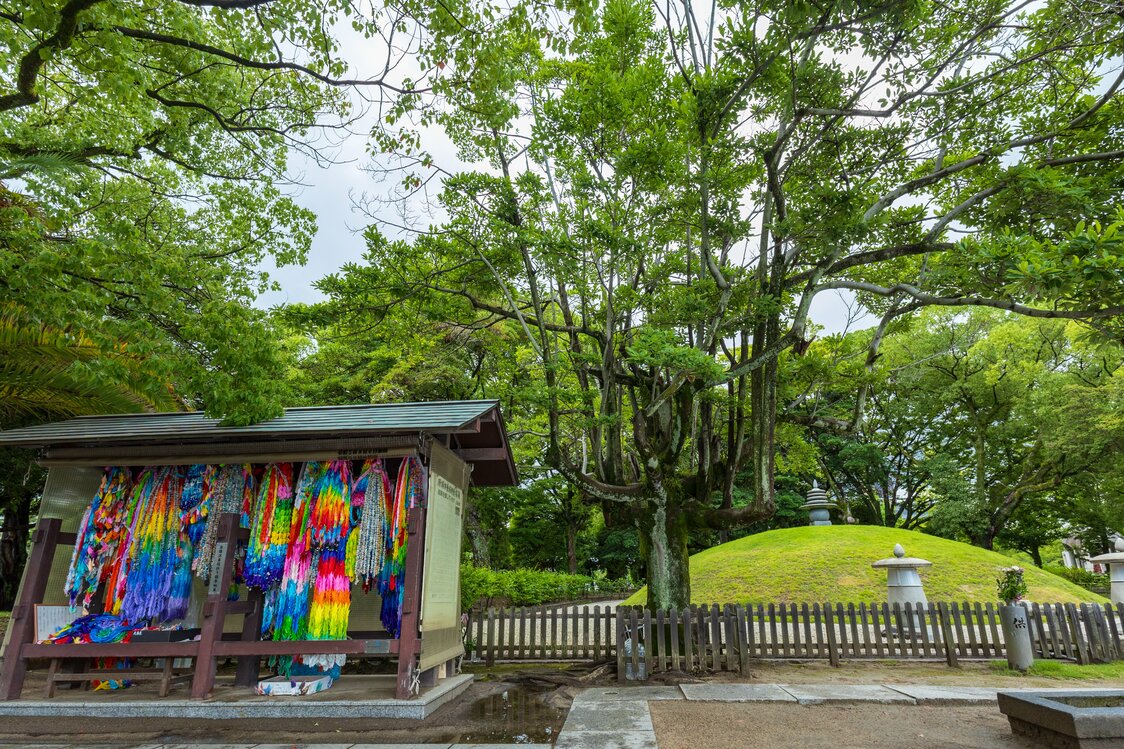
Visitors’ donations of origami cranes hang before the burial mound. (© Nippon.com)
-
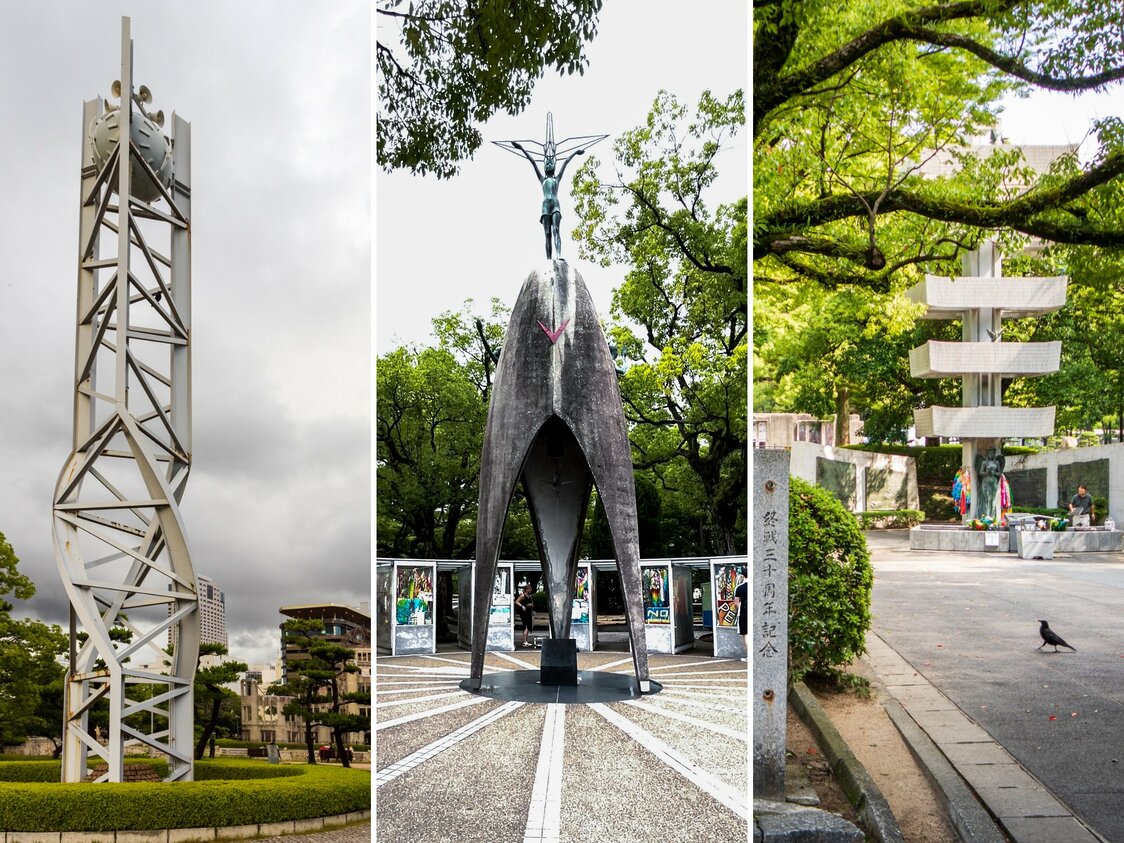
From left: the Clock Tower of Peace, which chimes at 8:15 each morning; the Children’s Peace Monument, dedicated to young victims of the bombing and the radiation-related sickness that followed; and the Memorial Tower Dedicated to Mobilized Students, memorializing more than 6,000 who lost their lives. (© Nippon.com)
-
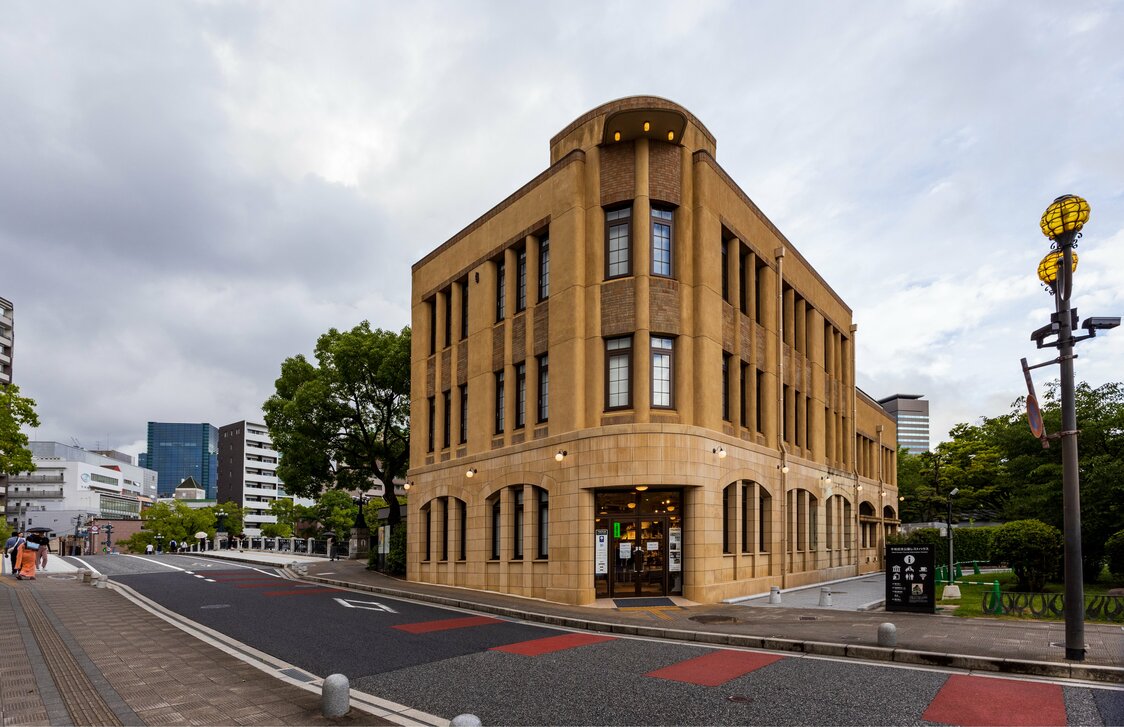
The Peace Memorial Park Rest House, built around the ruins of a structure destroyed in the bombing, exhibits its still-intact basement area and historical displays, as well as housing a café and gift shop. (© Nippon.com)


 Read in other languages