-
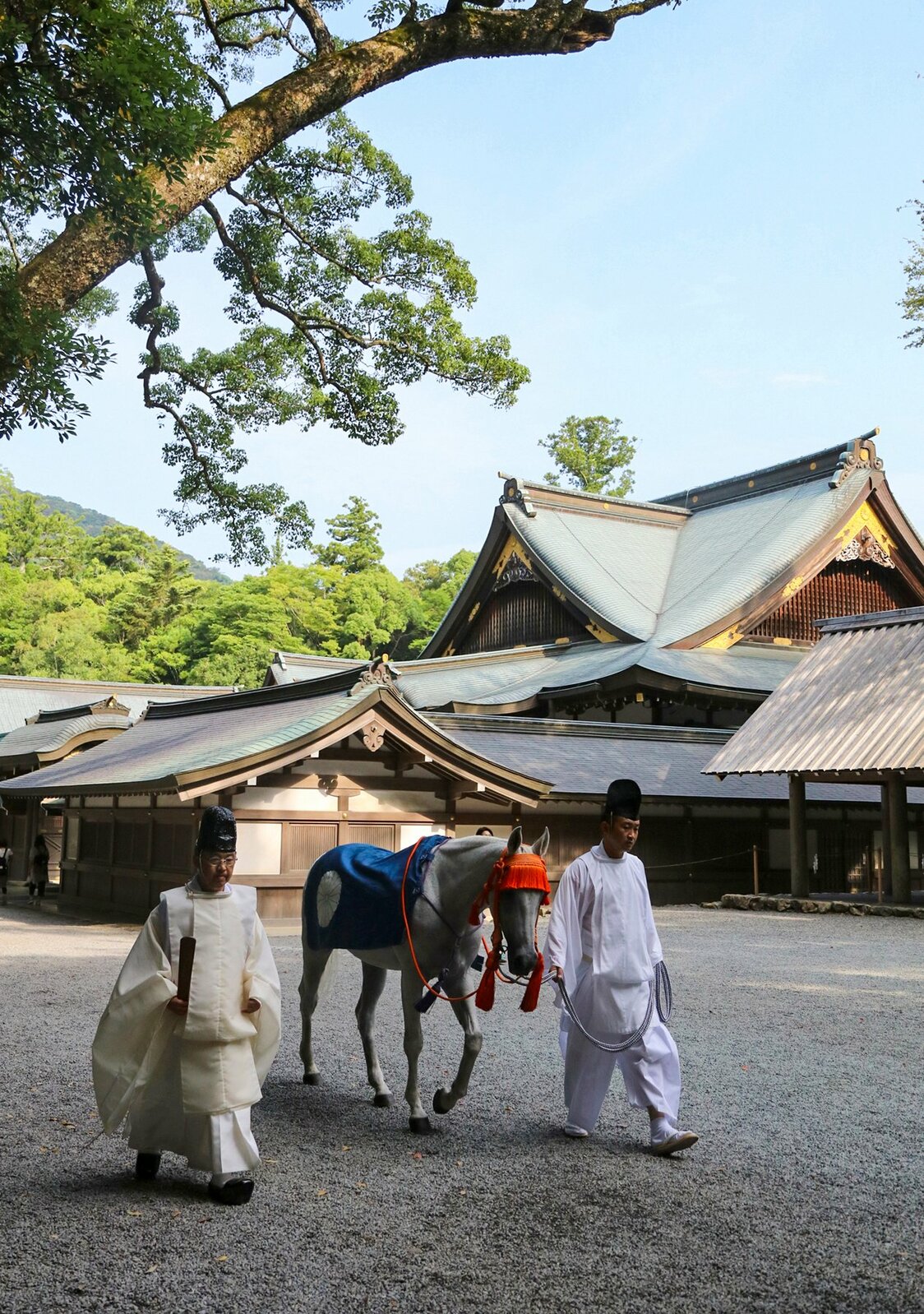
A sacred horse being led to the main sanctuary of the naikū inner shrine of Ise Shrine. (© Jingūshichō)
-
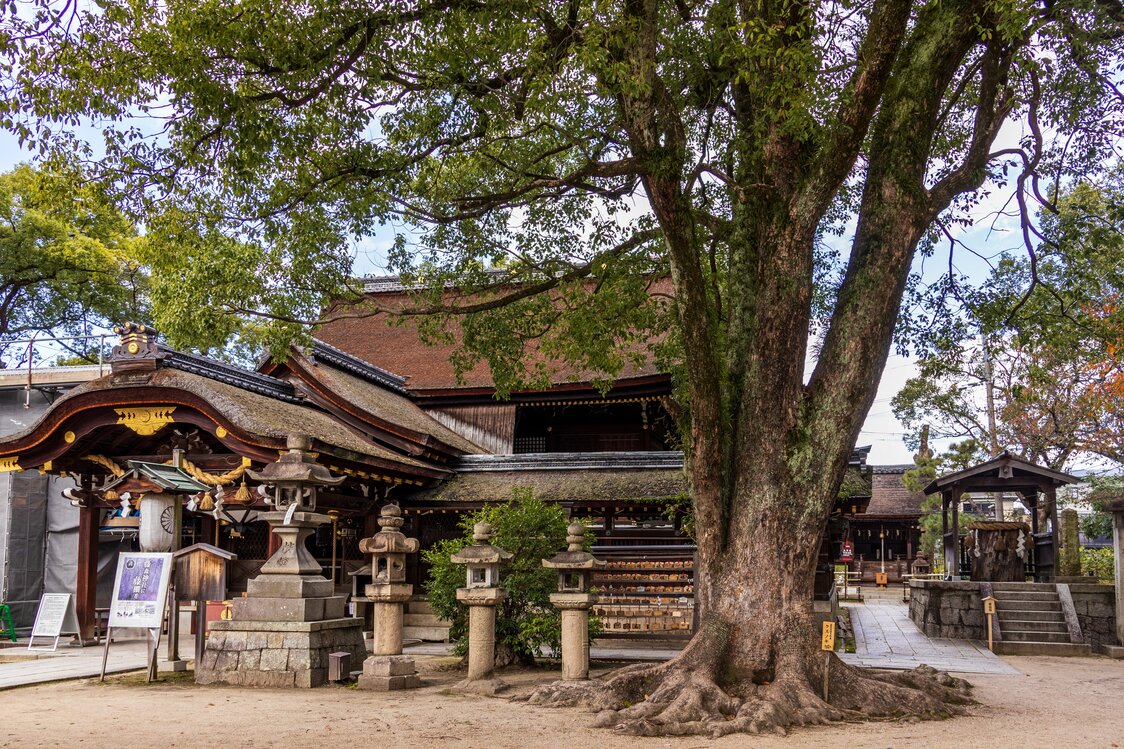
The shrine’s main sanctuary was donated by an Edo period (1603–1868) emperor. To the right is the hatazuka, a mound where empress Jingū erected a banner and conducted a rite. (© Nippon.com)
-
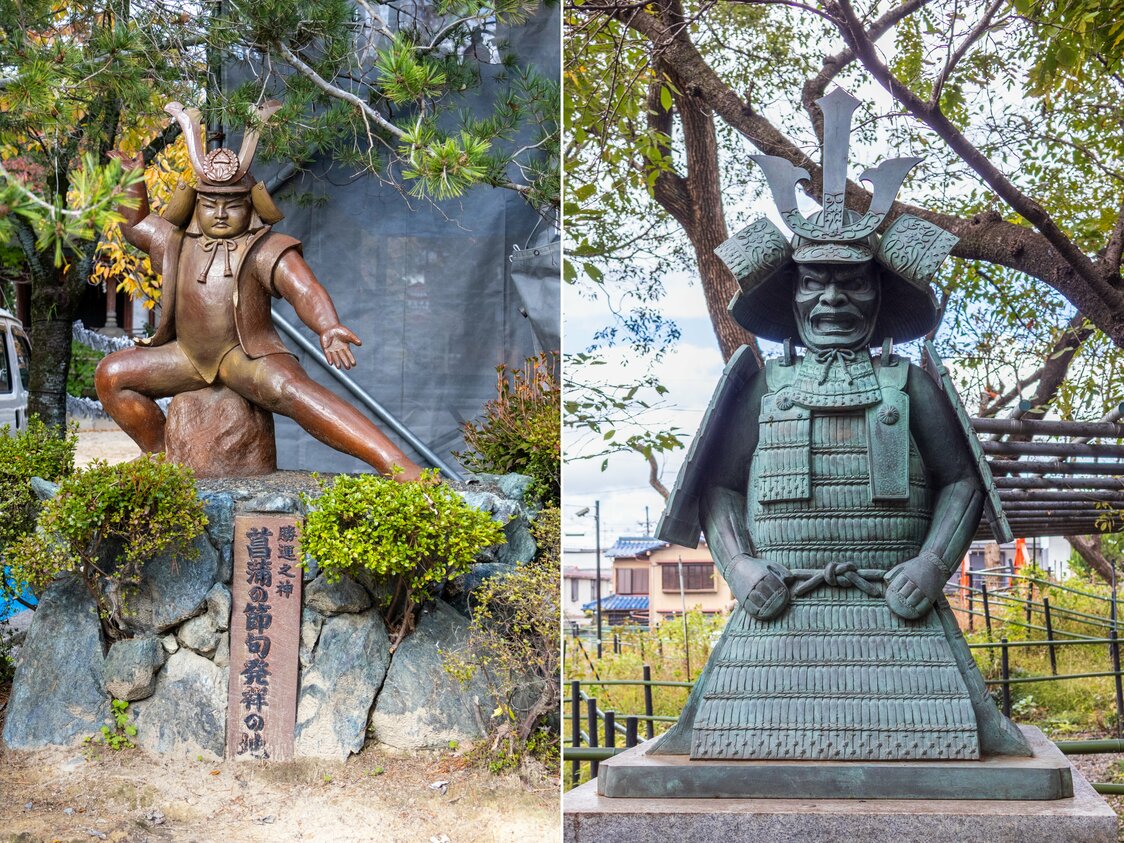
These statues tell the shrine’s story as the originator of the May 5 shōbu no sekku observance. (© Nippon.com)
-
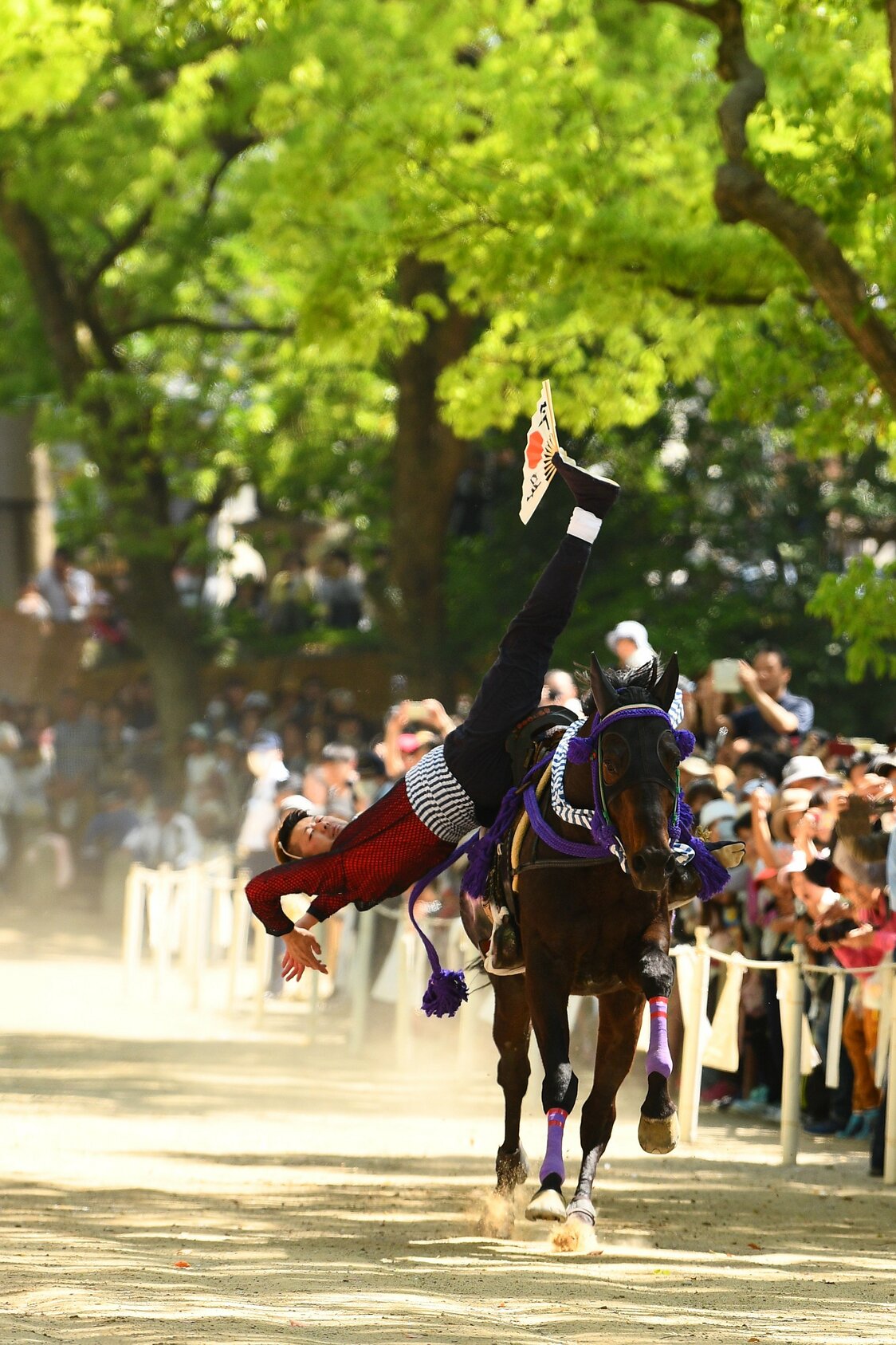
A rider performs a daredevil maneuver atop a galloping horse in the kakeuma rite. (Courtesy Kyoto Design)
-
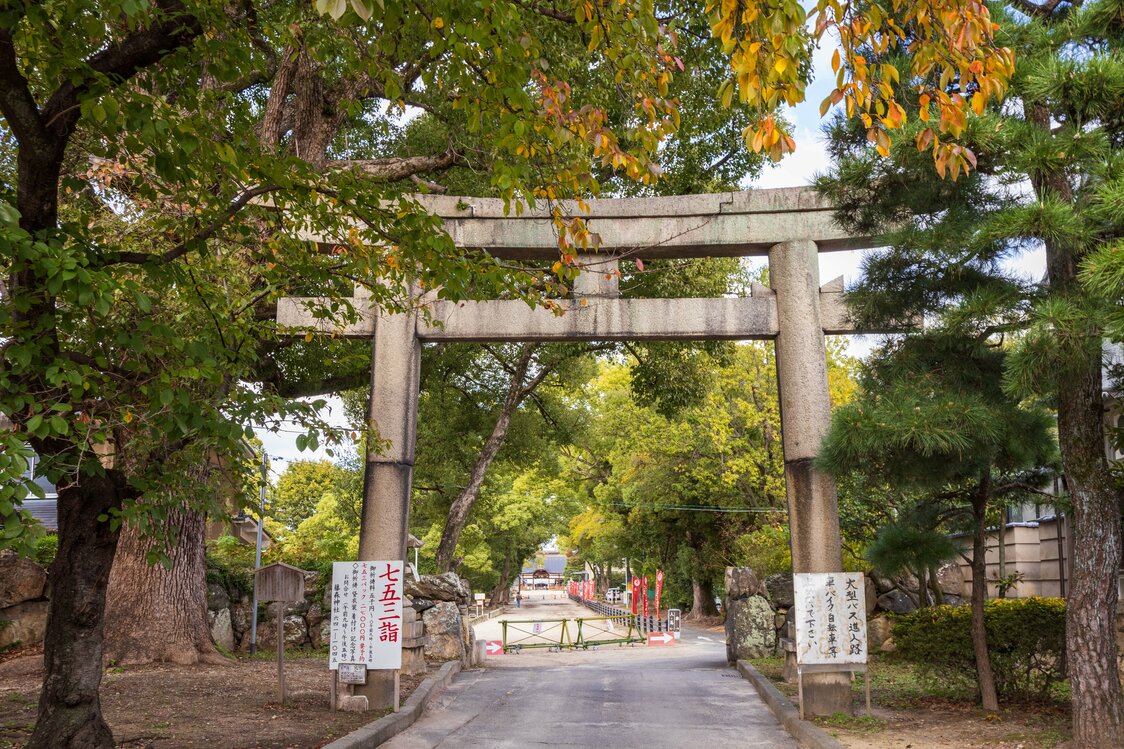
Horses are ridden along the long approach to the shrine. (© Nippon.com)
-
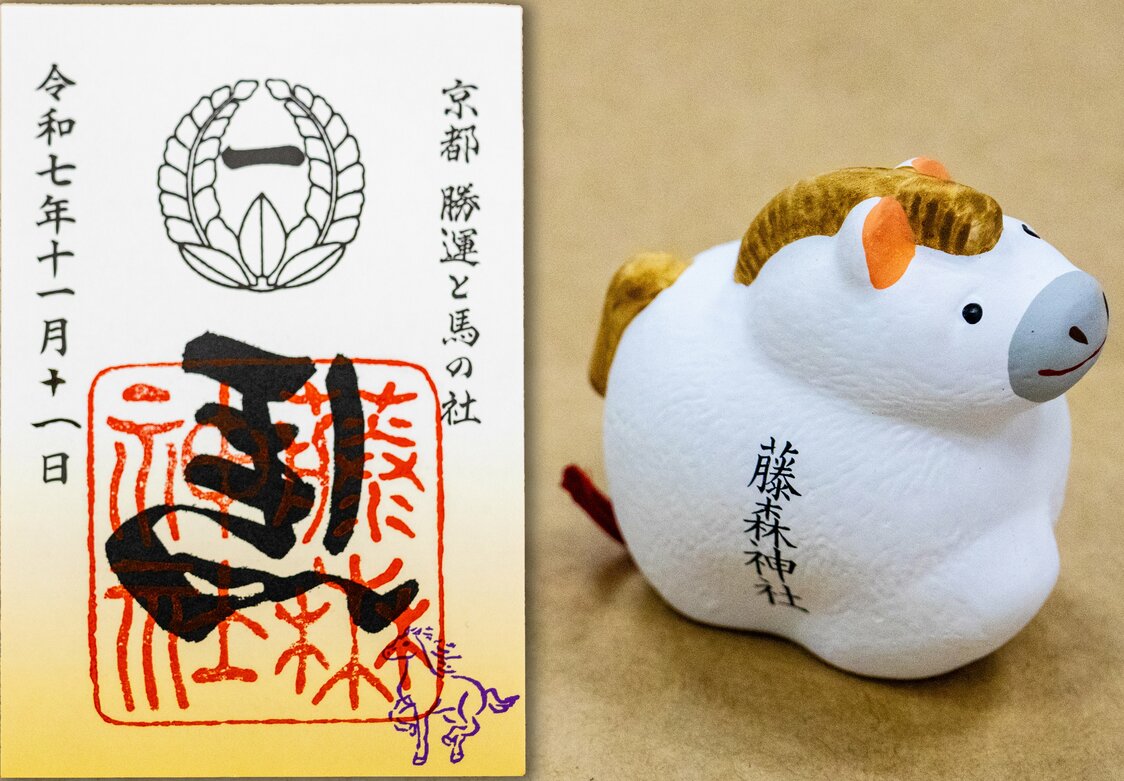
The special goshuin stamp used only during the Shinshinsai festival, which takes place yearly in November. Horse figures containing mikuji fortunes are also available. (© Nippon.com)
-
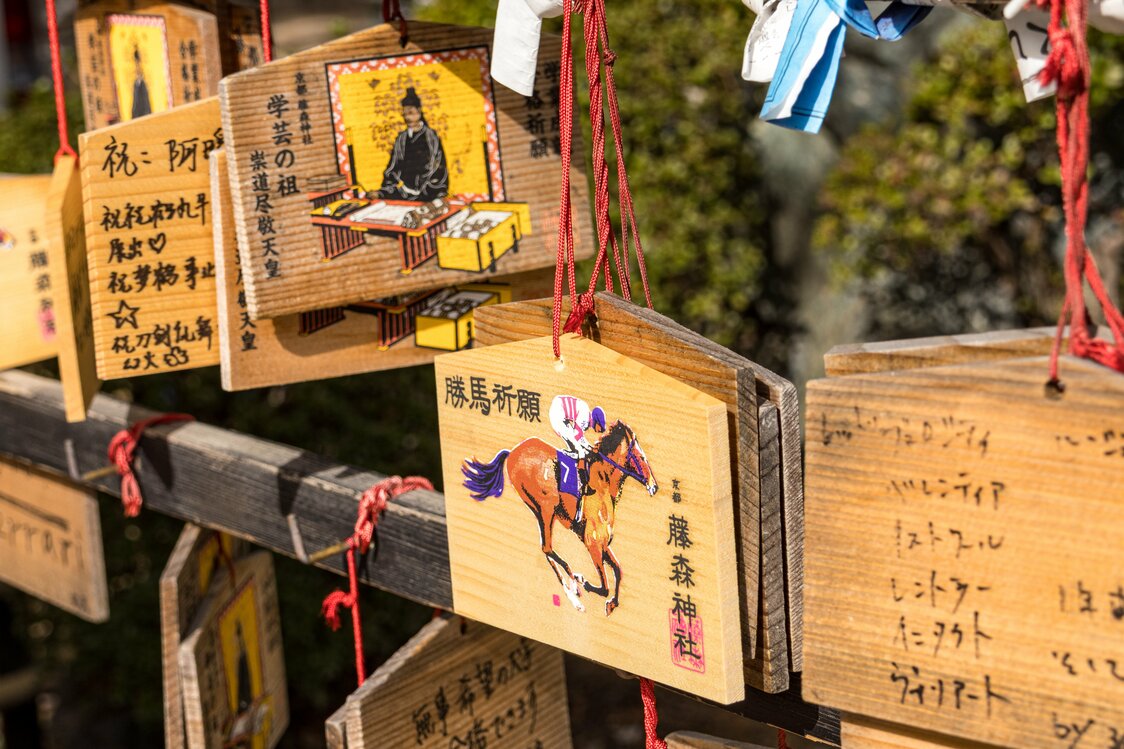
Ema depicting racehorses are popular among bettors hoping for a win. (© Nippon.com)
-
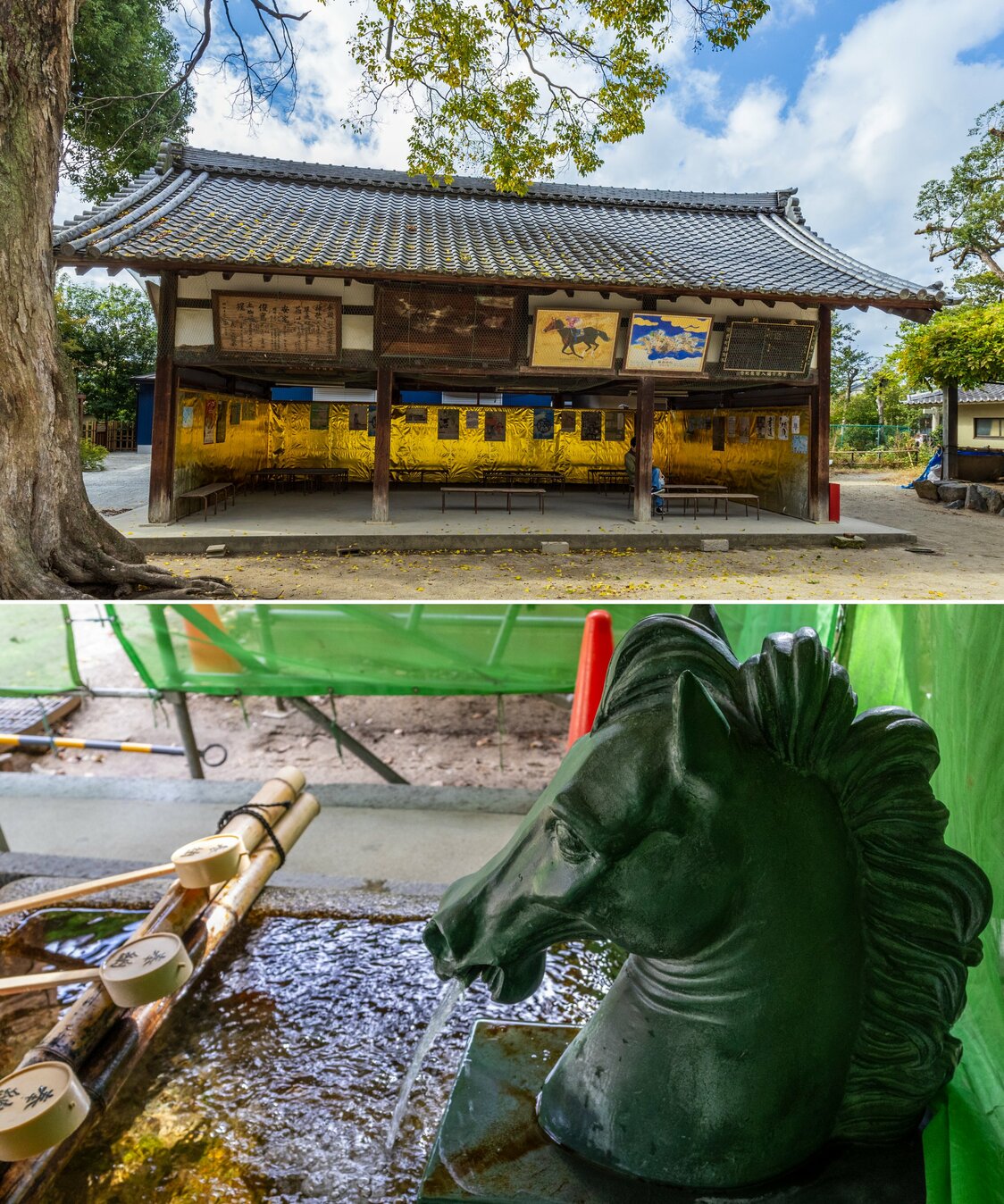
Top: This structure displays ema from the Edo period (1603–1868). Bottom: Water flows from a horse’s head at the shrine’s temizuya ritual purification basin. (© Nippon.com)
-
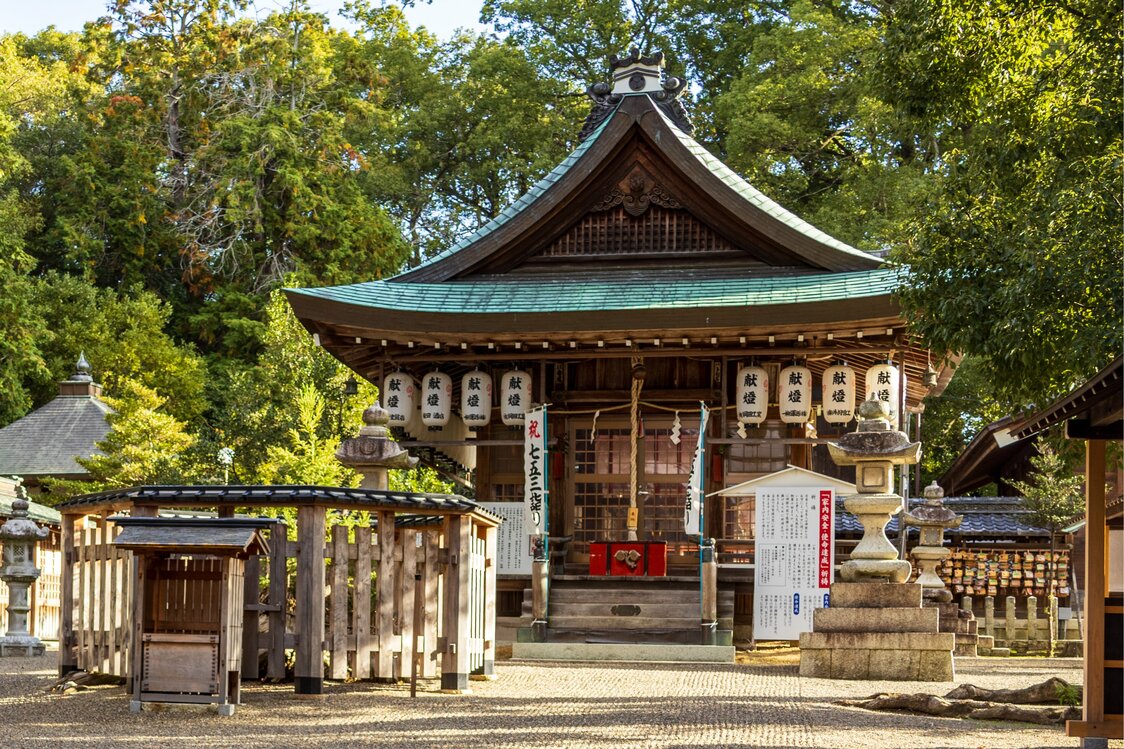
The stump of the shrine’s sacred tree, ringed by a wooden fence, fronts the shrine’s worship hall. (© Nippon.com)
-
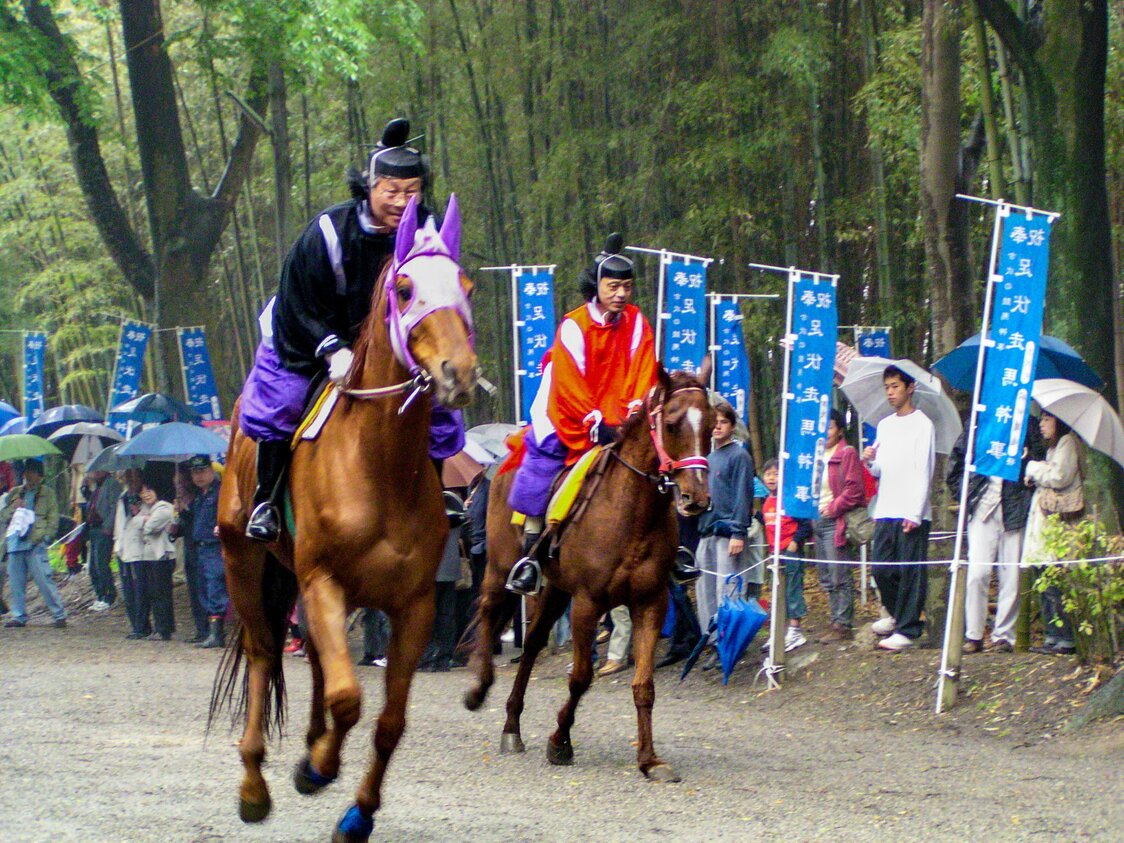
Horses race along a 400-meter-long stretch at the shrine. (© Biwa Visitors Bureau)
-
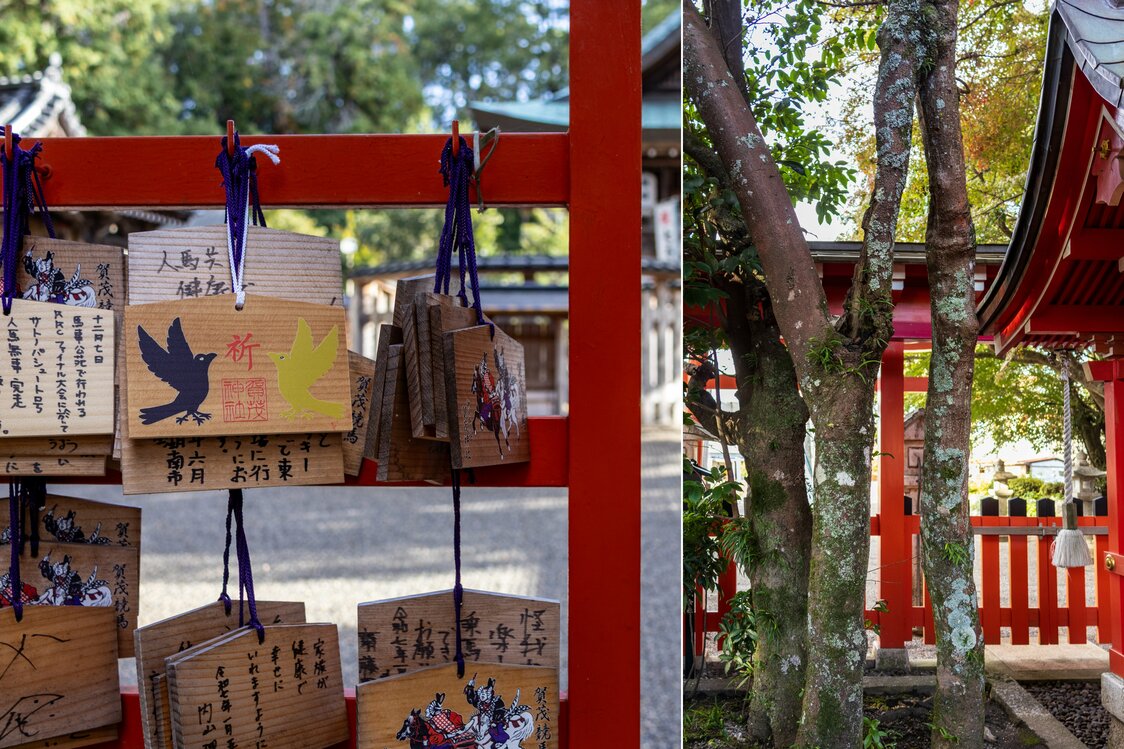
Left: Many ema show horse-related wishes. Right: A sacred sakaki tree with a forked trunk. (© Nippon.com)
-
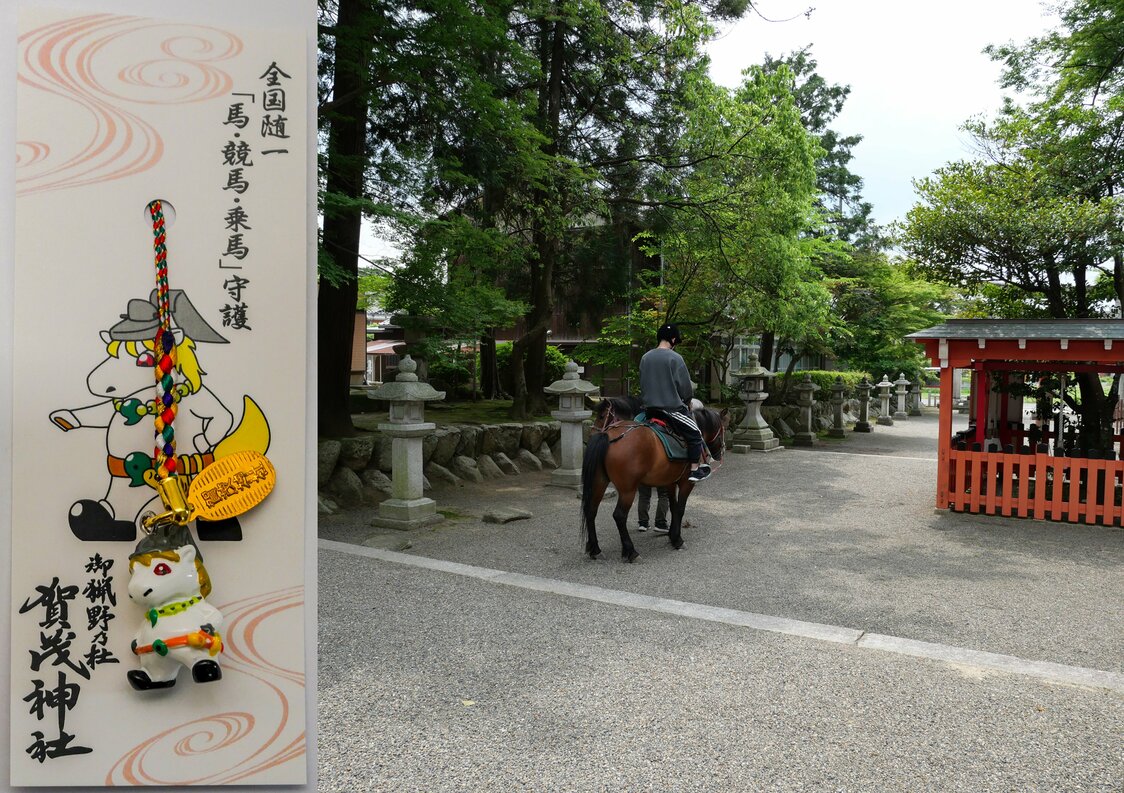
Left: A horse-shaped amulet. Right: A horse from Mikarino no Mori is led to the shrine. (© Shibuya Nobuhiro)
-
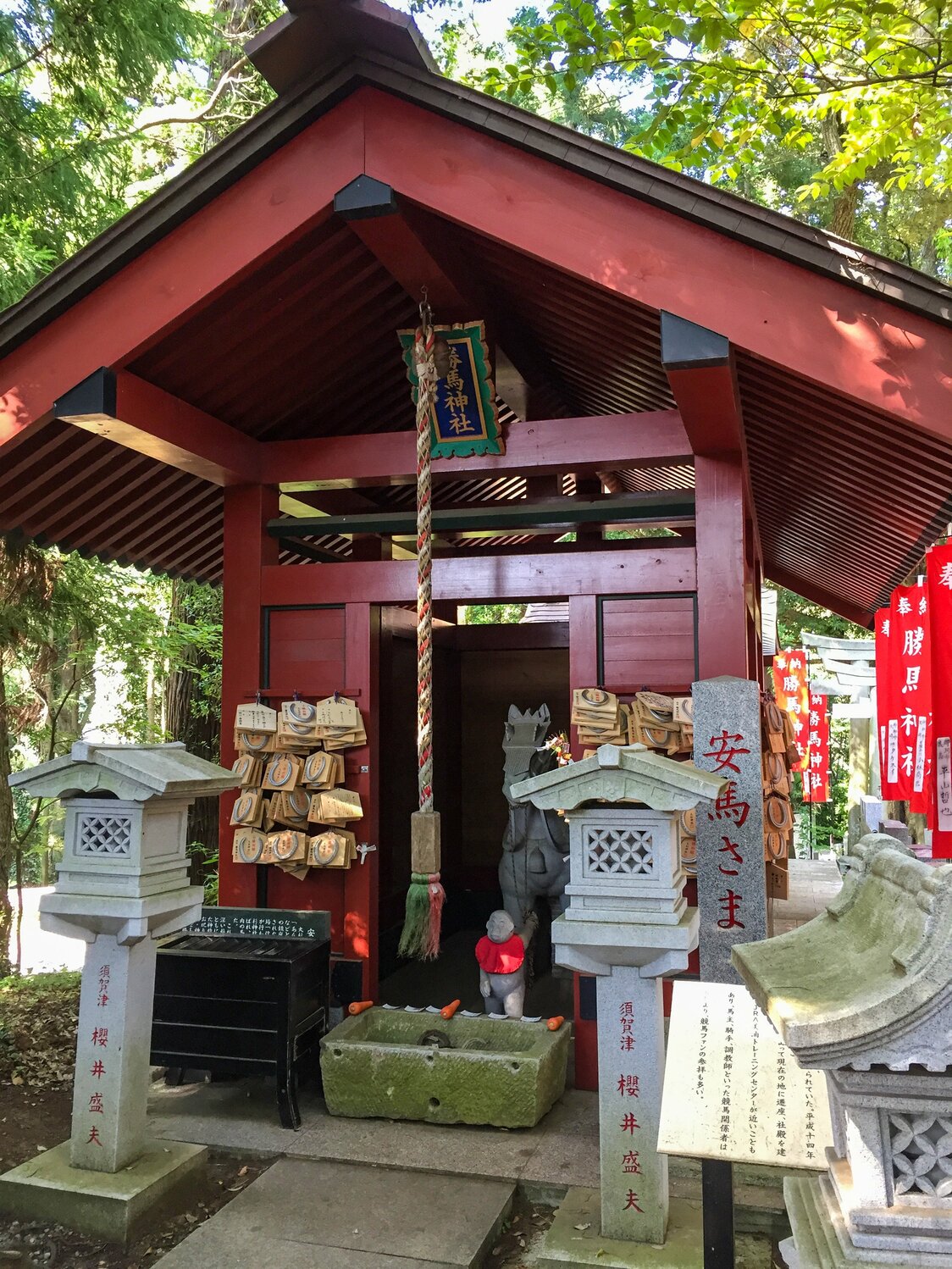
Kachiuma Shrine, an auxiliary to the nearby Ōsugi Shrine. (© Pixta)
-
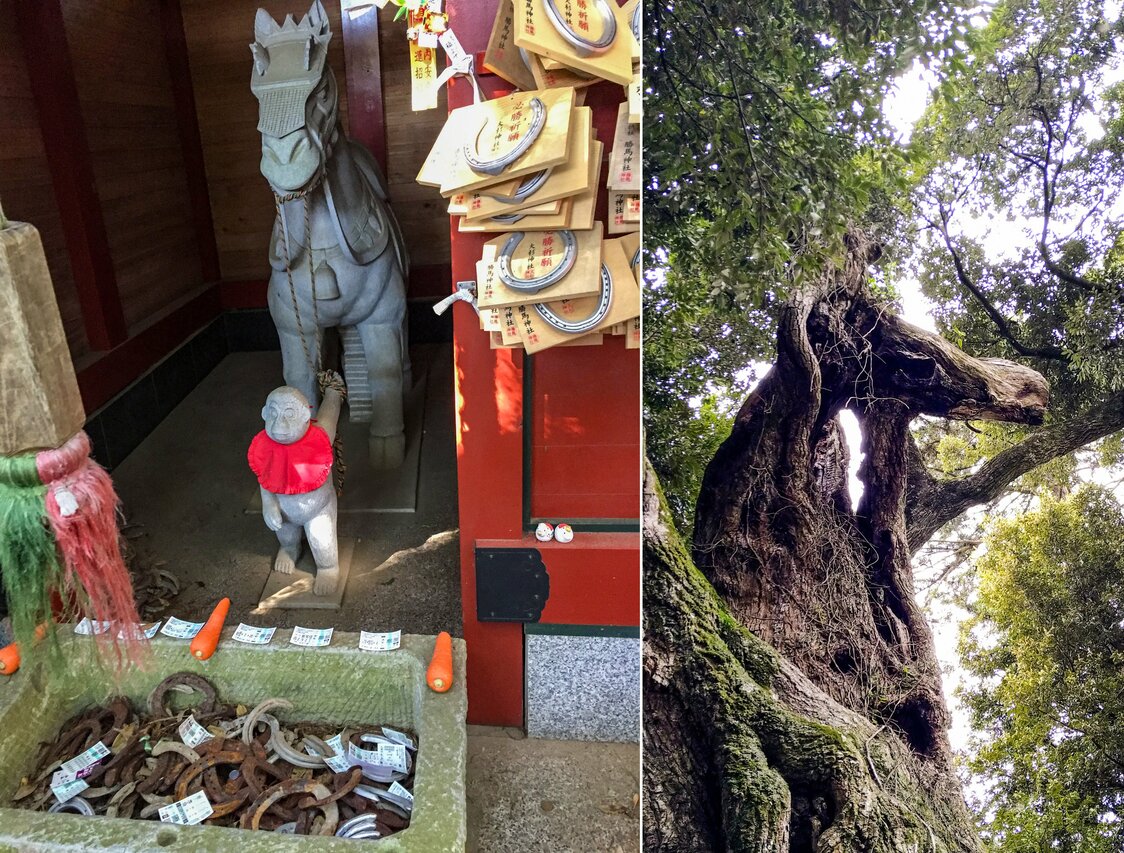
The sacred monkey Anba, leading a sacred horse (left). The tree’s branch resembles a horse head (right). (© Pixta)
-
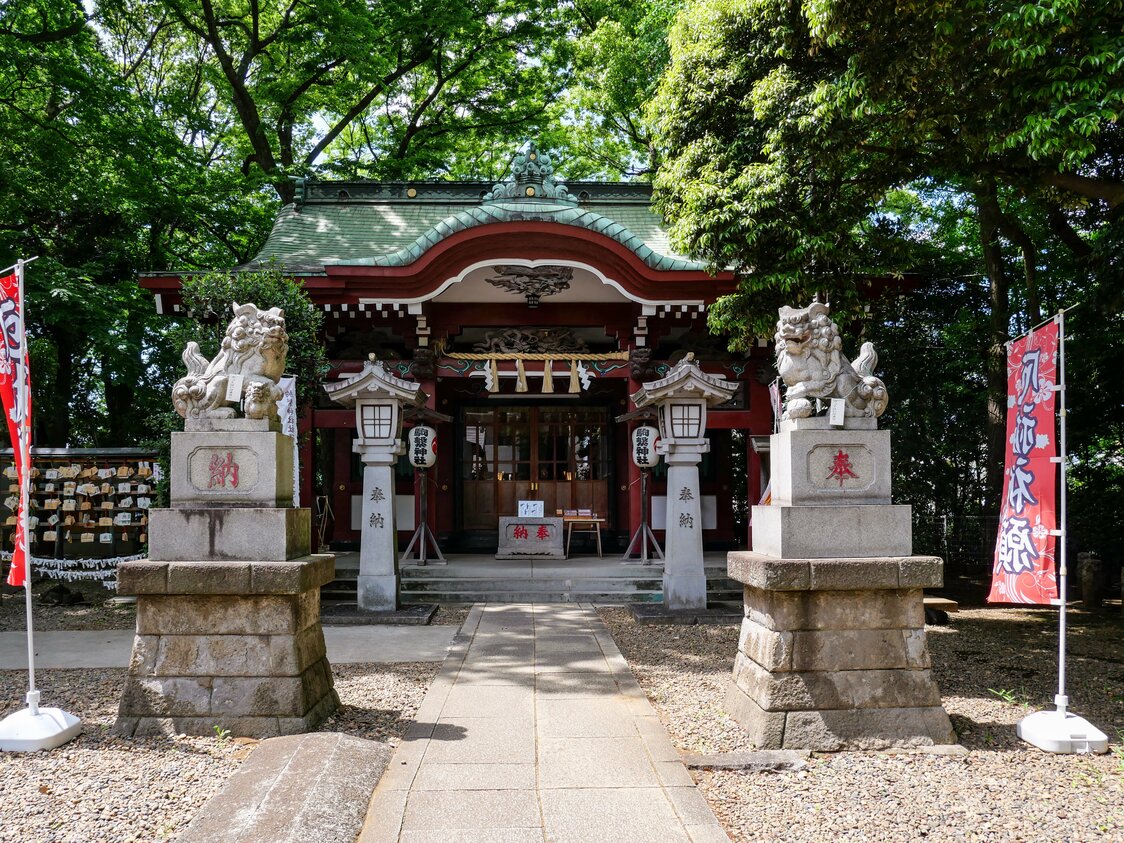
Komatsunagi Shrine in Shimouma, Setagaya. (© Shibuya Nobuhiro)
-
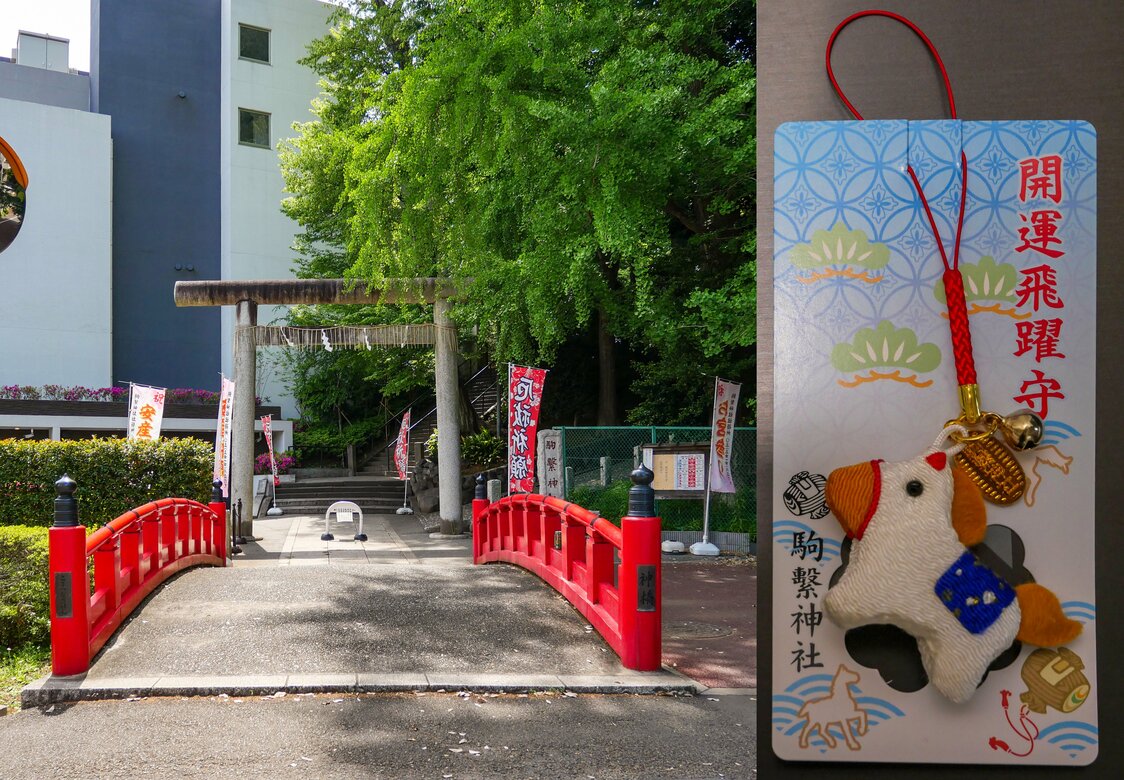
A vermillion bridge crosses the stream, which now runs underground (left). A horse-shaped amulet (right). (© Shibuya Nobuhiro)
-
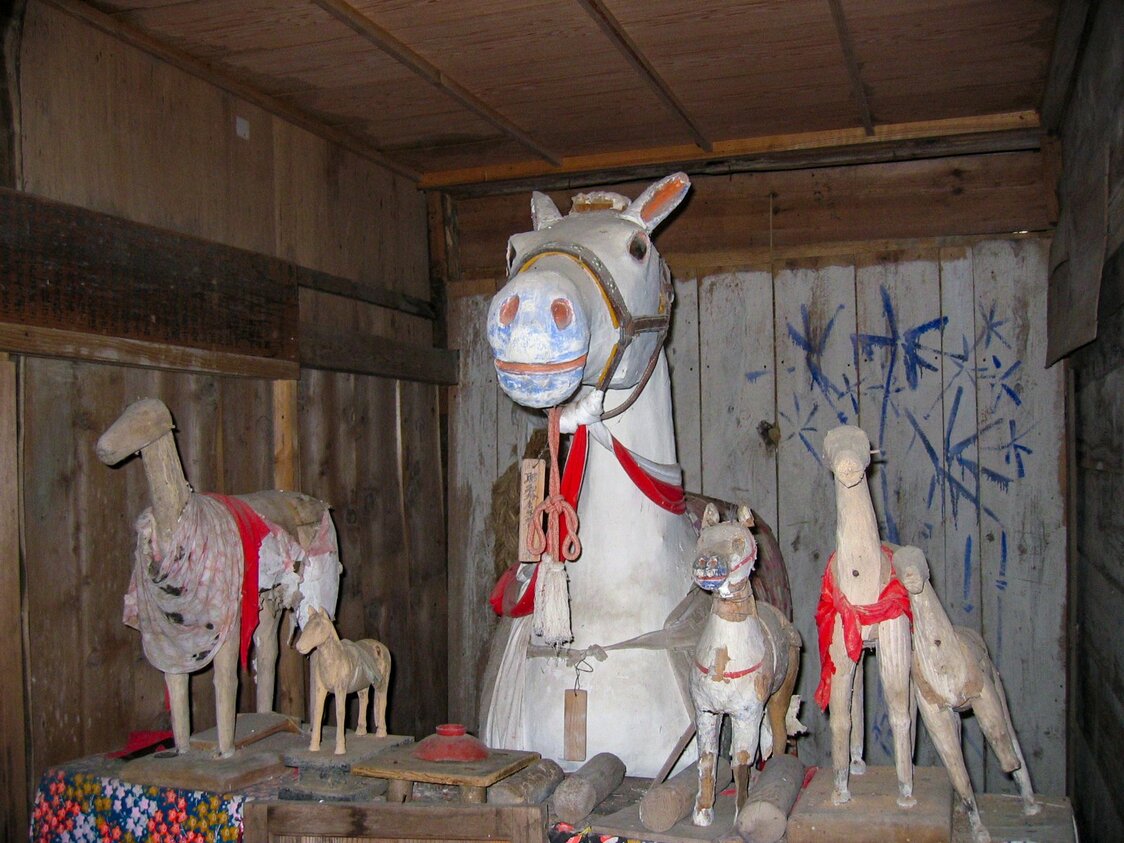
Horse figures presented as offerings to Arakawa Komagata Shrine. (© Tōno Tourism Association)
-
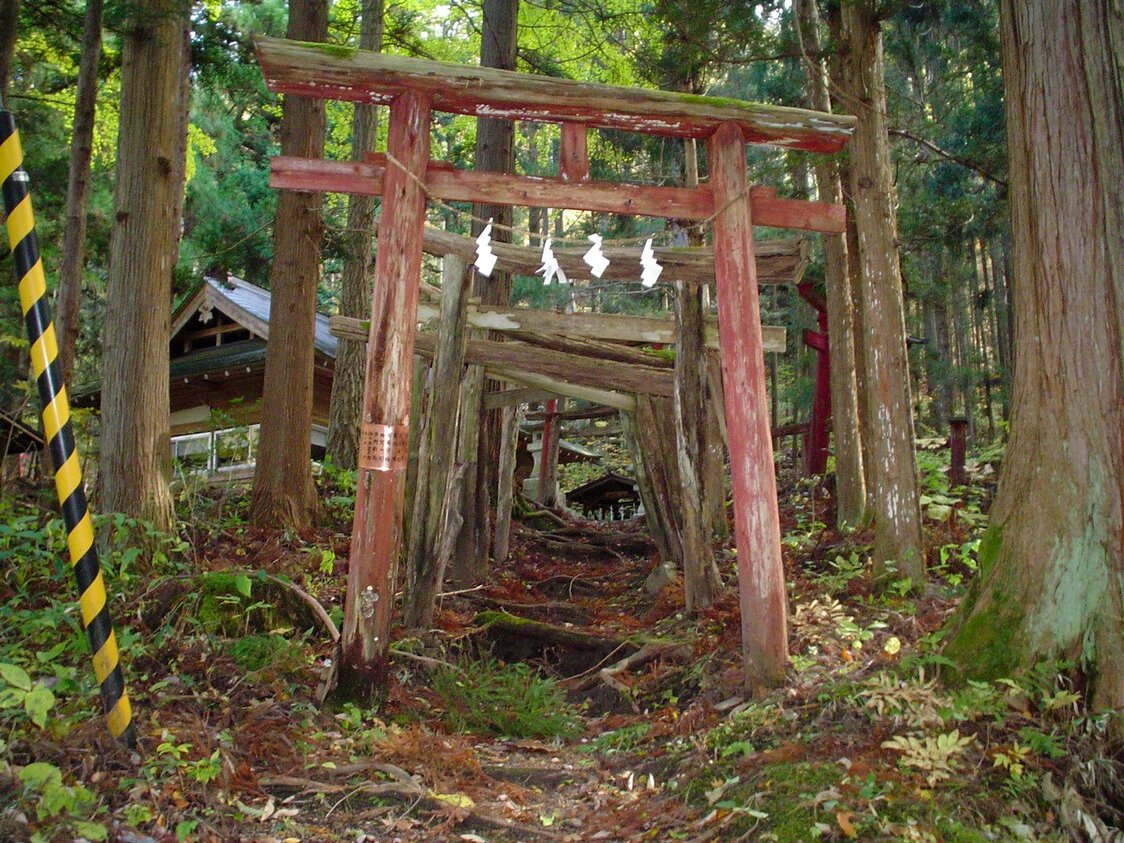
The shrine’s weathered torii gates. (© Tōno Tourism Association)


 Read in other languages