-
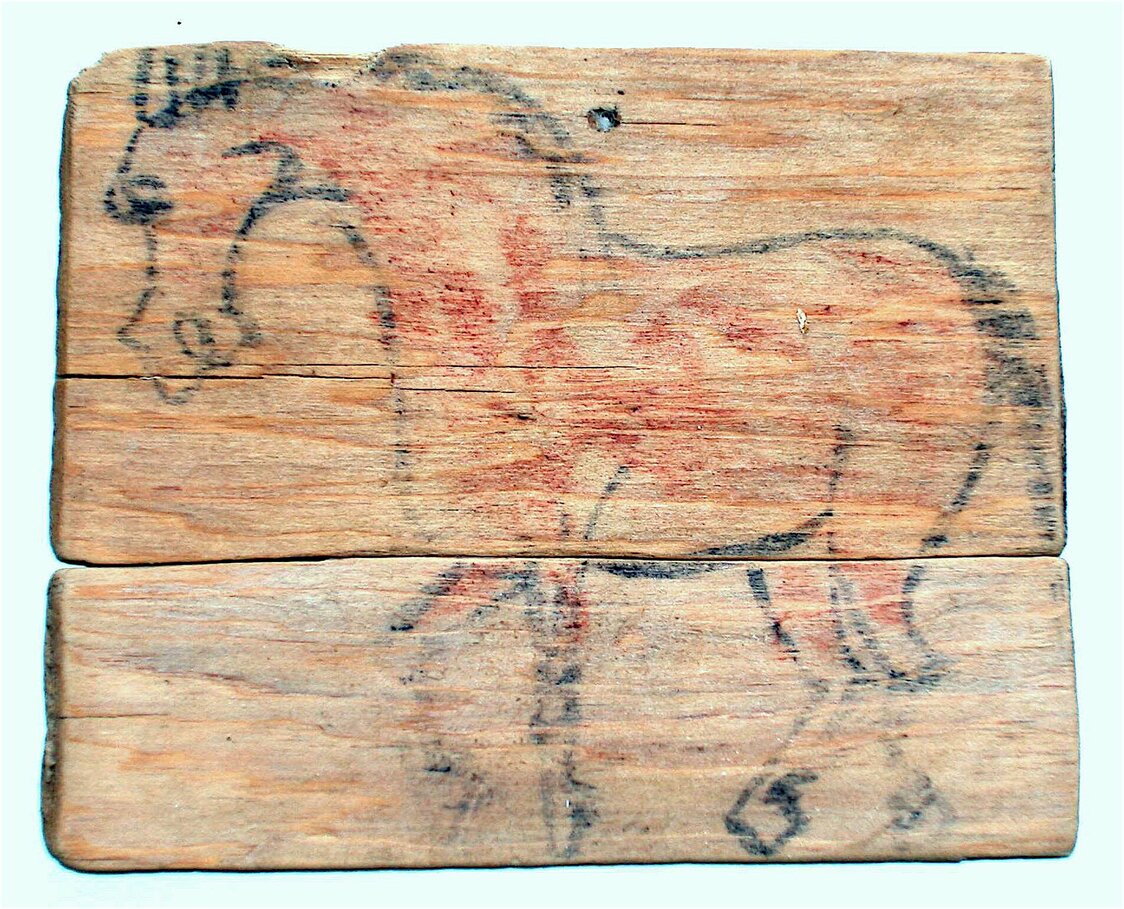
One of the oldest ema votive tablets in Japan, excavated from the Iba archaeological site. (Courtesy Hamamatsu City History Museum)
-
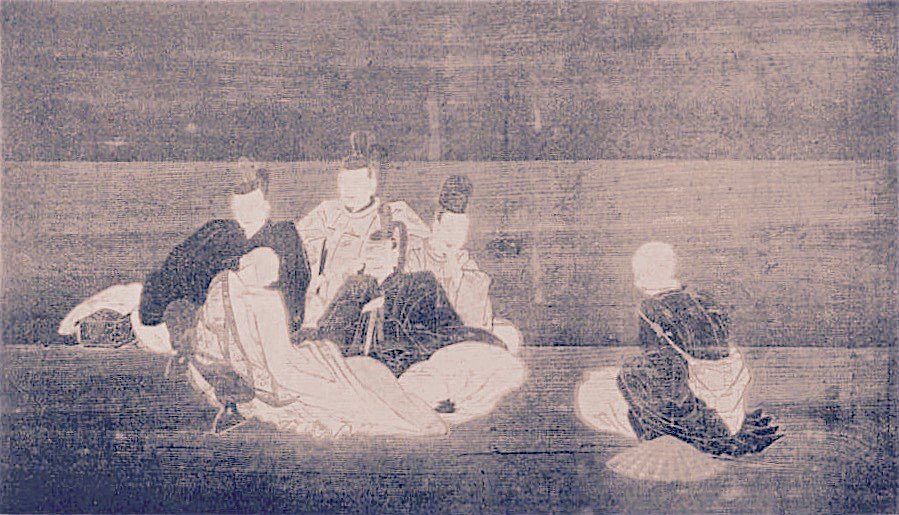
An ema from 1787 at Kotohiragū Shrine depicting the Rokkasen, six notable mid-ninth-century Japanese poets, including Ariwara no Narihira and Ono no Komachi. From the Kotohiragū ema kagami compilation of ema at Kotohiragū Shrine. (Courtesy National Diet Library)
-
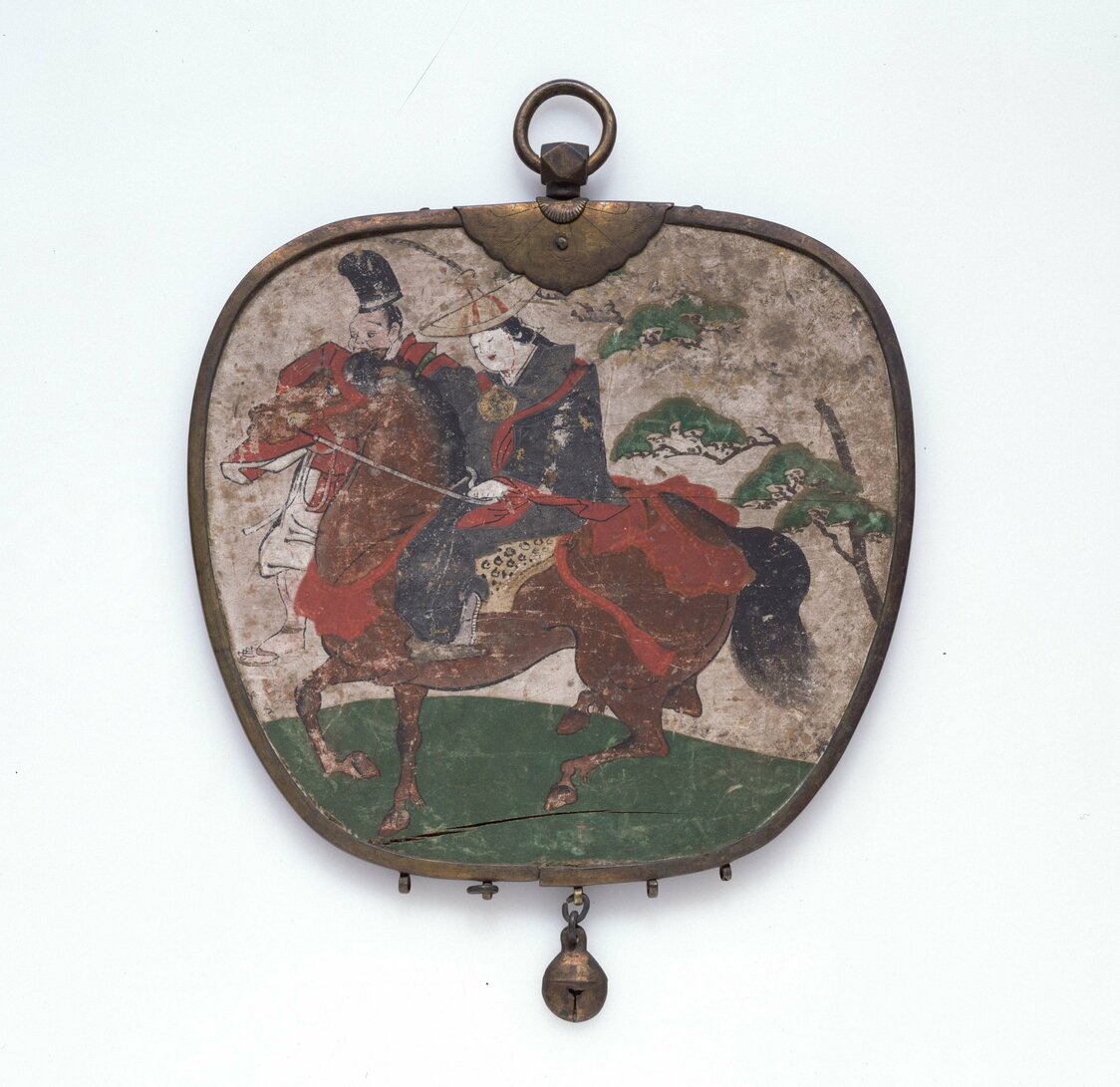
A wooden Buddhist decoration with the painting of a woman on horseback. Although different from the ema at Ōtokonushi Shrine, this is an early example of women appearing as a motif, from the Muromachi period. Its fan-shape is characteristic and represents the kind of elaborate designs for ema that began appearing in the fifteenth century. (Courtesy Tokyo National Museum)
-
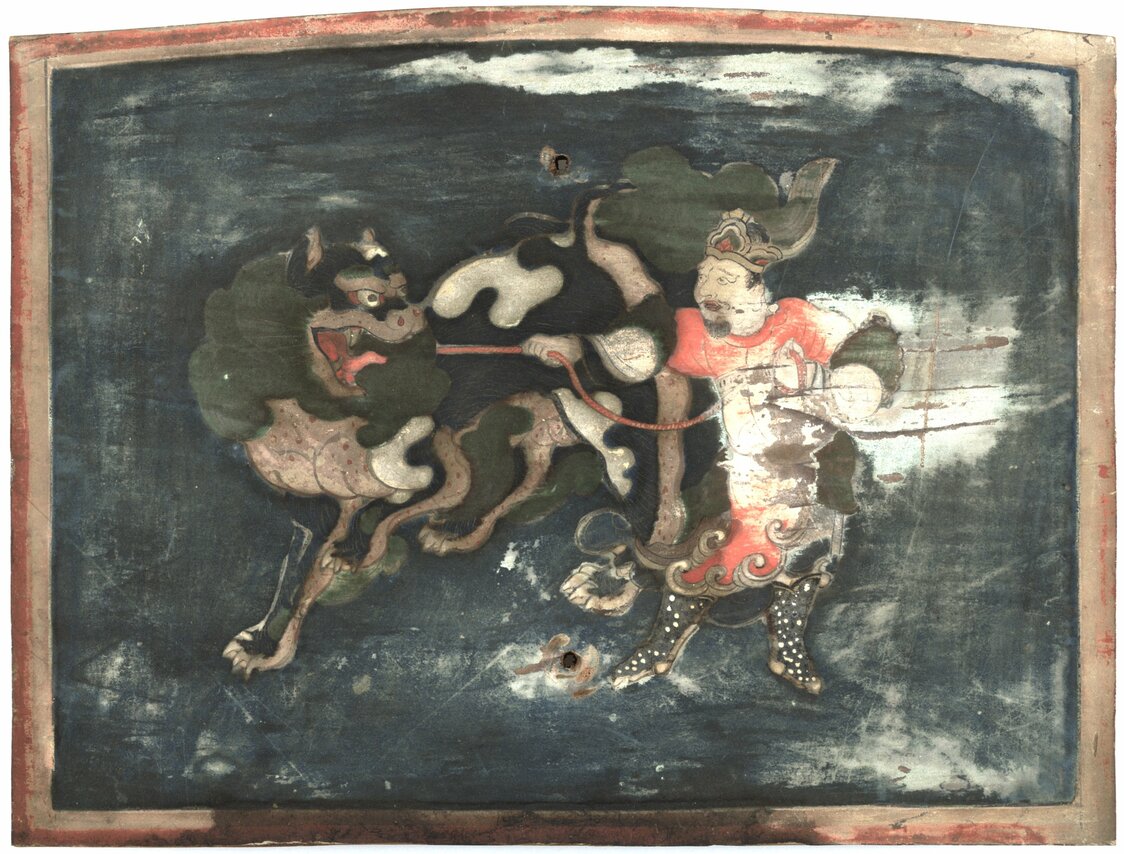
A depiction of Udennō (Udayana) with a lion. It was created in around 1554. (Courtesy Tokyo National Museum)
-
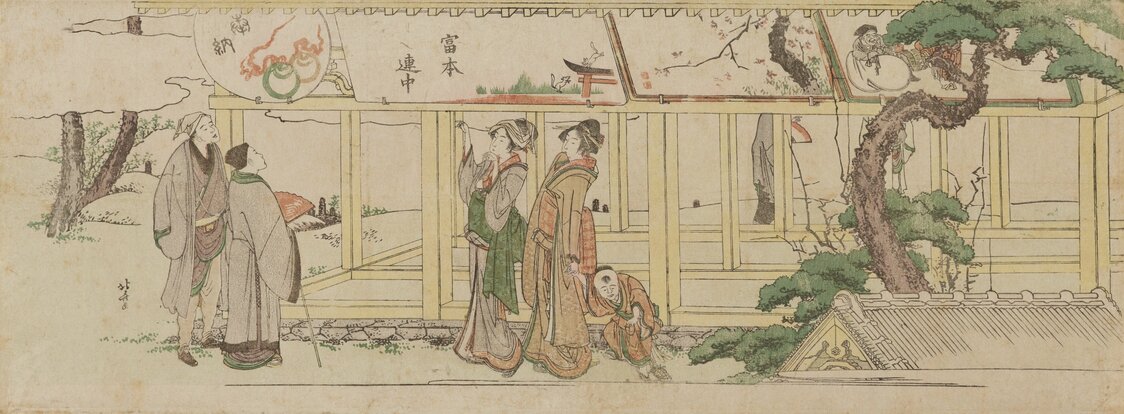
A nineteenth century emadō votive tablet hall, painted by Katsushika Hokusai (1760–1849). (Courtesy Tokyo National Museum)
-
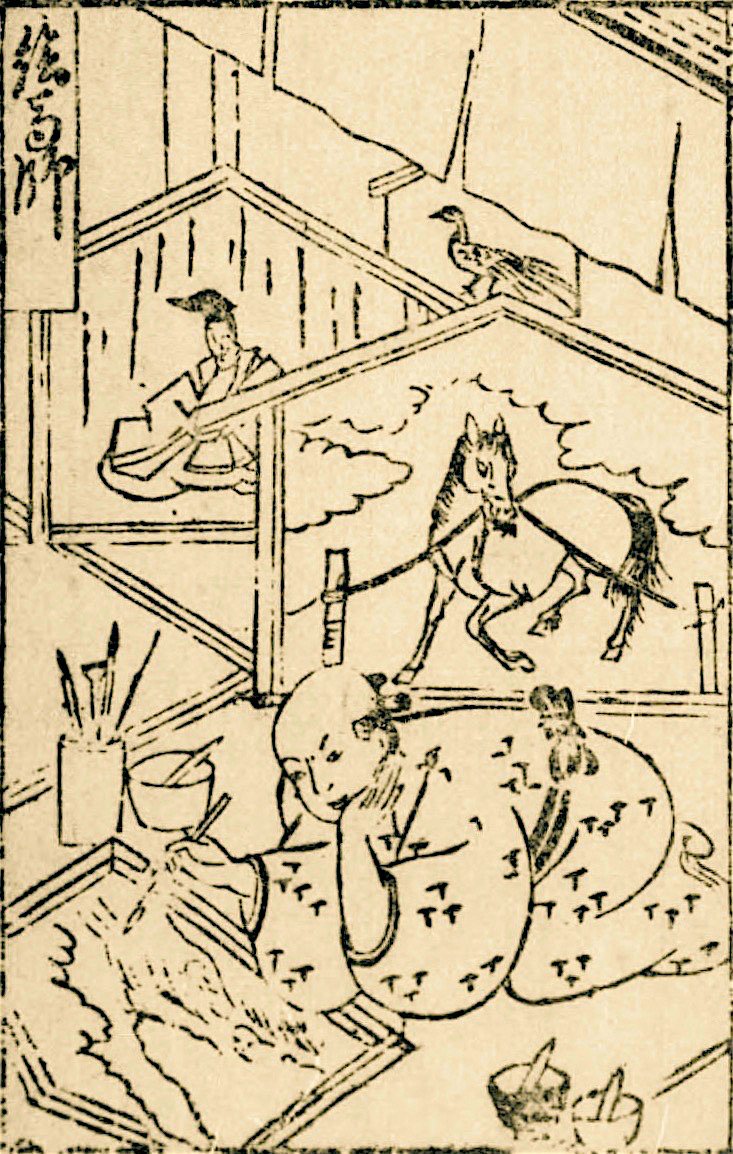
An ema artisan from the Edo period illustrated book of occupations, Jinrin kinmō zui (An Illustrated Encyclopedia of Humanity). (Courtesy National Diet Library)
-
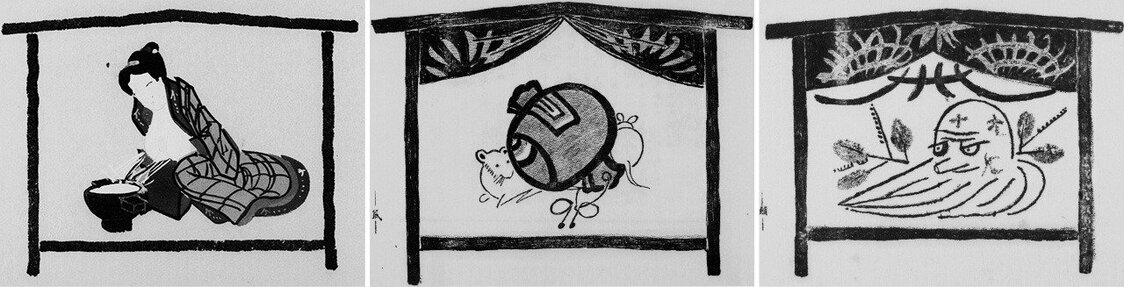
From the Meiji era, compilation booklets containing photographs of new types of ema began being published. The motifs shown here (from left to right) are “breastfeeding” to wish for children’s growth, the “rat” signifying the first animal in the Chinese Zodiac, and an “octopus” to pray for the removal of warts and calluses. This last one is a play on the Japanese word tako, which can mean both “octopus” and “wart.” All of these ema were dedicated at Takoyakushi Jōjuin temple in Meguro, Tokyo.


 Read in other languages