-
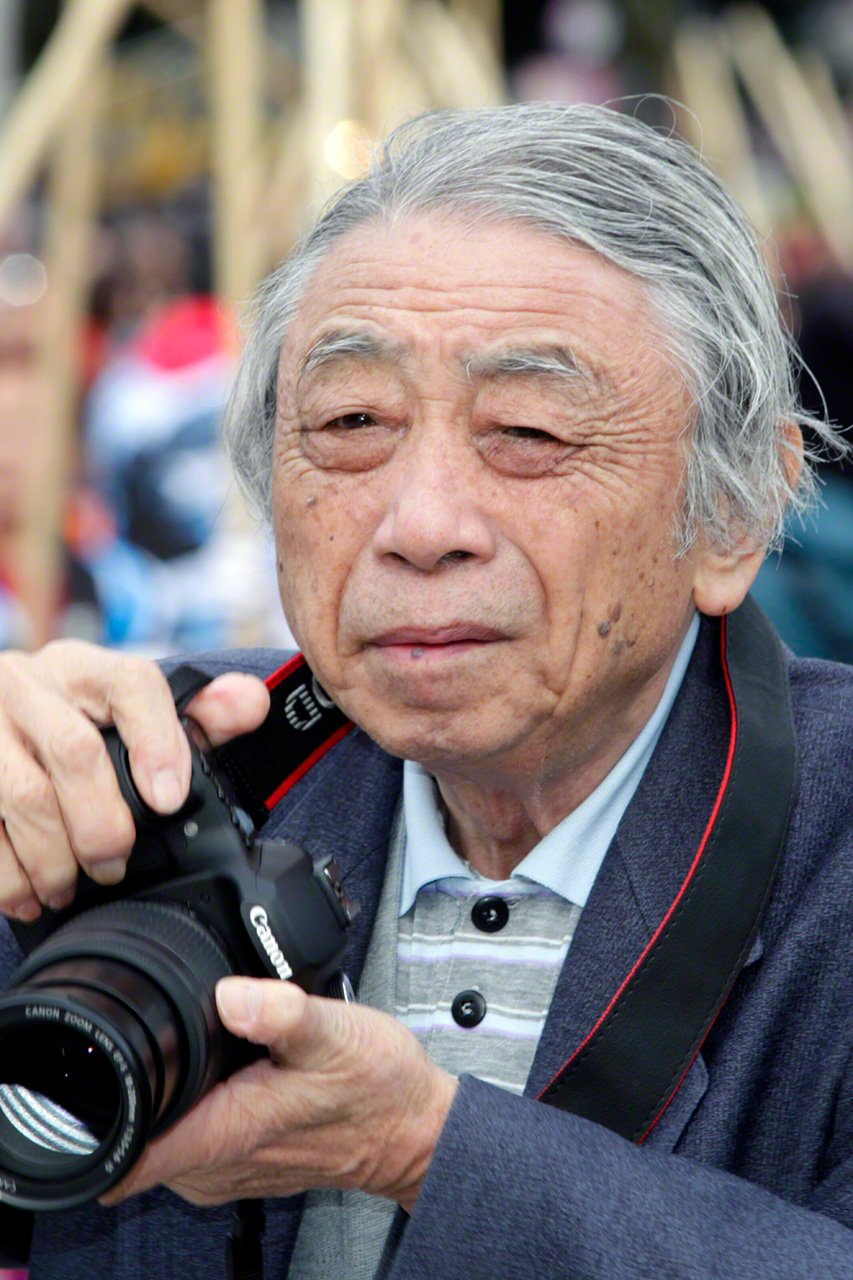
(© Haga Library)
-
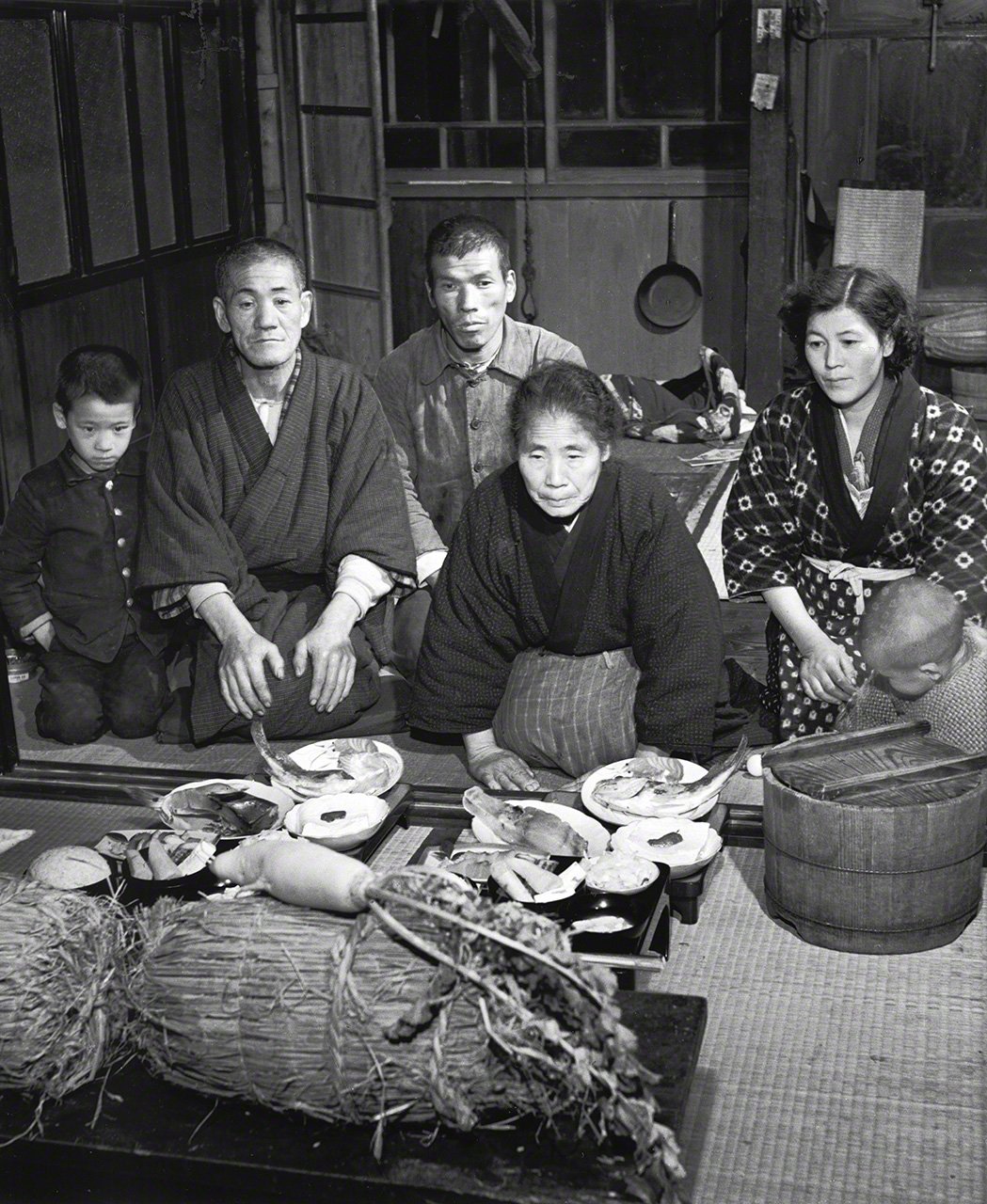
Aenokoto, a Noto Peninsula ritual conducted yearly in early December. Here a family offers thanks for the year’s rice harvest by presenting food and a bale of rice to the rice paddy deity. Although the deity is invisible, it is feted as though it were an actual physical presence. Ishikawa Prefecture, 1954. (© Haga Hideo)
-
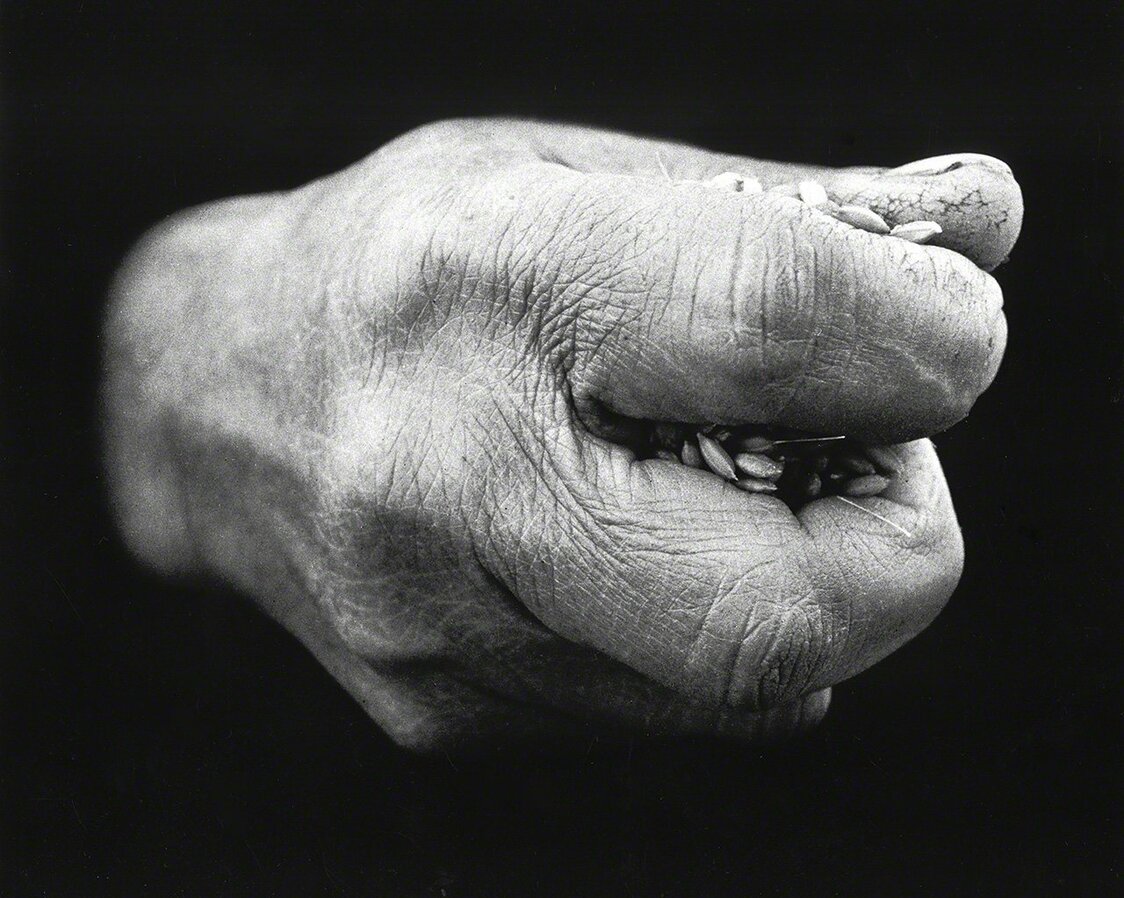
The tanemaki iwai seed scattering ceremony. A man’s hand grasping unhulled rice is photographed against a black background, giving the impression that the hand is floating. Aichi Prefecture, 1956. (© Haga Hideo)
-
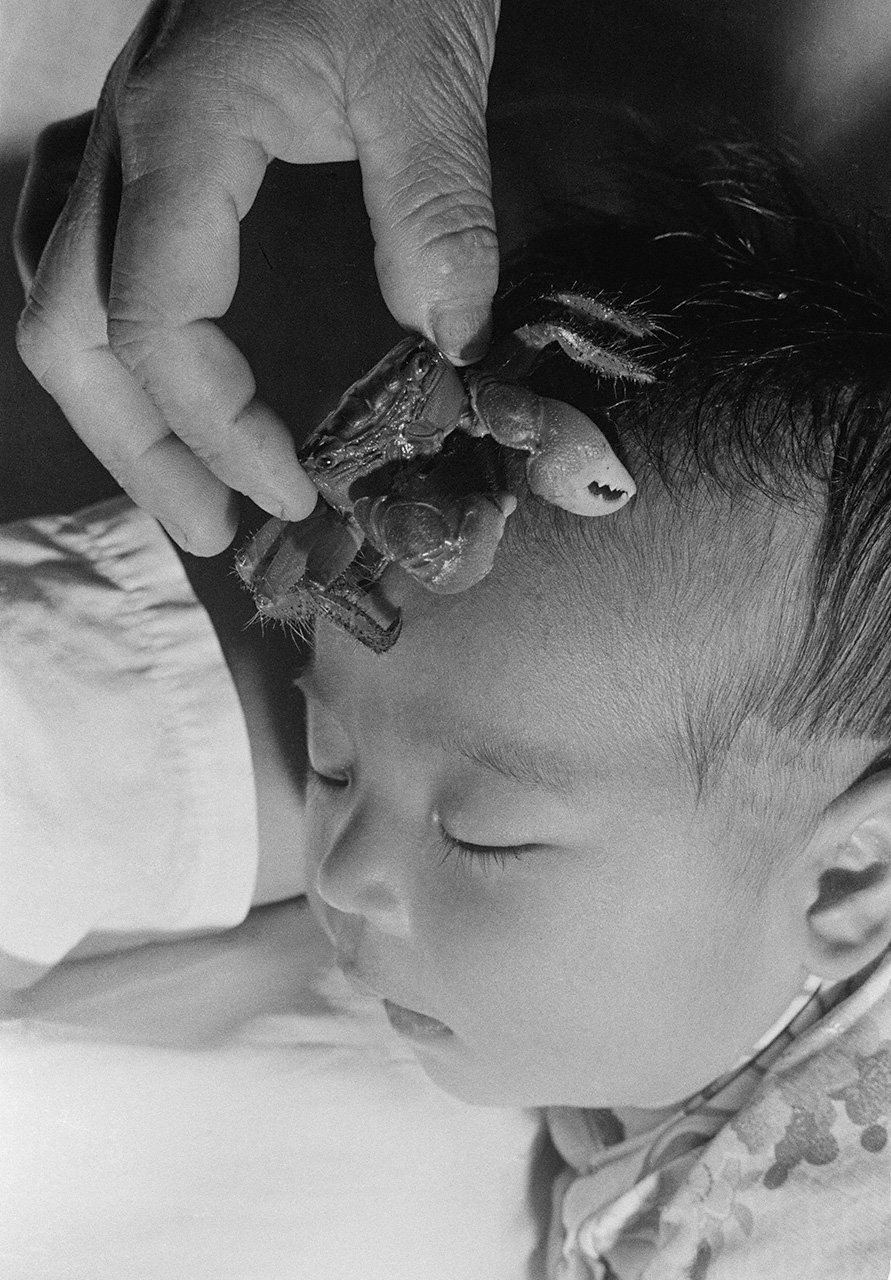
Nanoka iwai: A crab is placed on a seven-day-old baby’s head. The ceremony expresses the wish that the child will make it to the next stage of early life, crawling like a crab. Okinoerabujima, Kagoshima Prefecture, 1956. (© Haga Hideo)
-
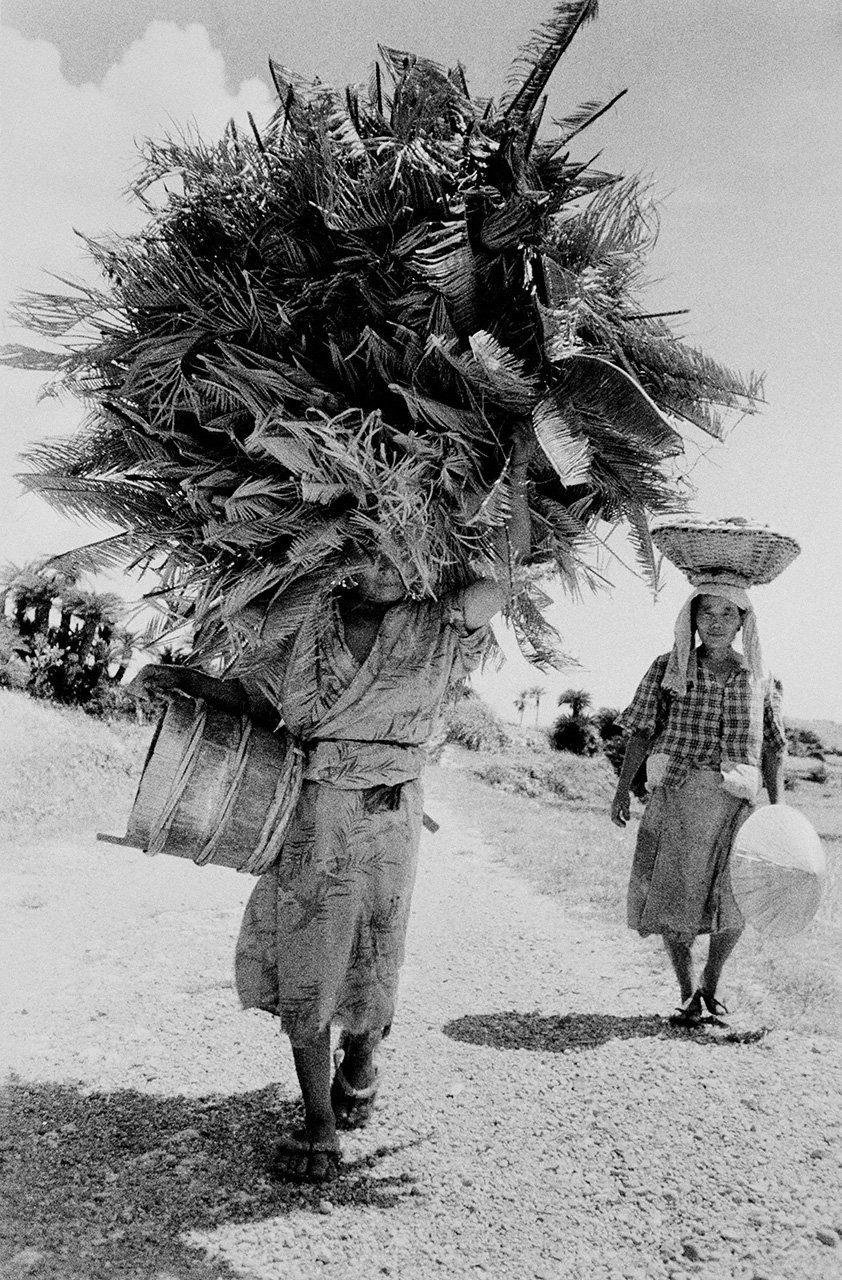
Zujō unpan: Carrying a load on the head was a common sight in Japan’s southern islands. Here, the woman on the left is carrying cycad leaves to use as fuel. Kagoshima Prefecture, 1956. (© Haga Hideo)
-
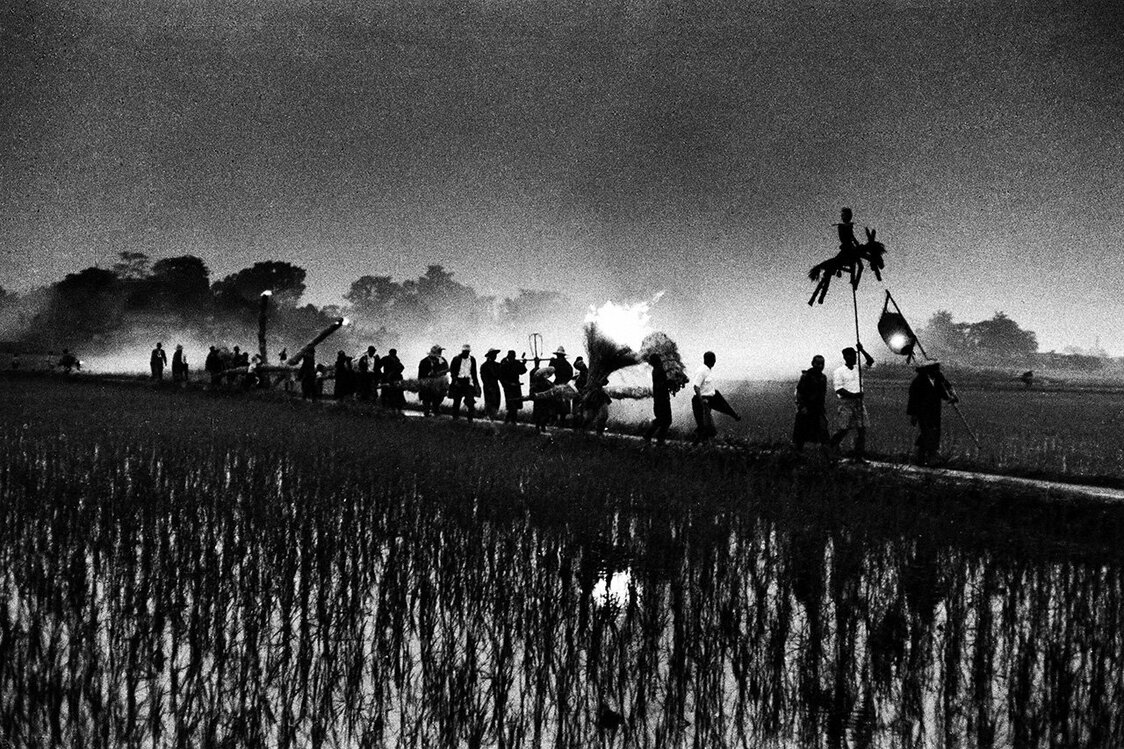
Mushiokuri: A phantasmagorical scene of people walking along a rice paddy footpath at dusk, with a straw effigy at the head of the procession. Aichi Prefecture, 1957. (© Haga Hideo)
-
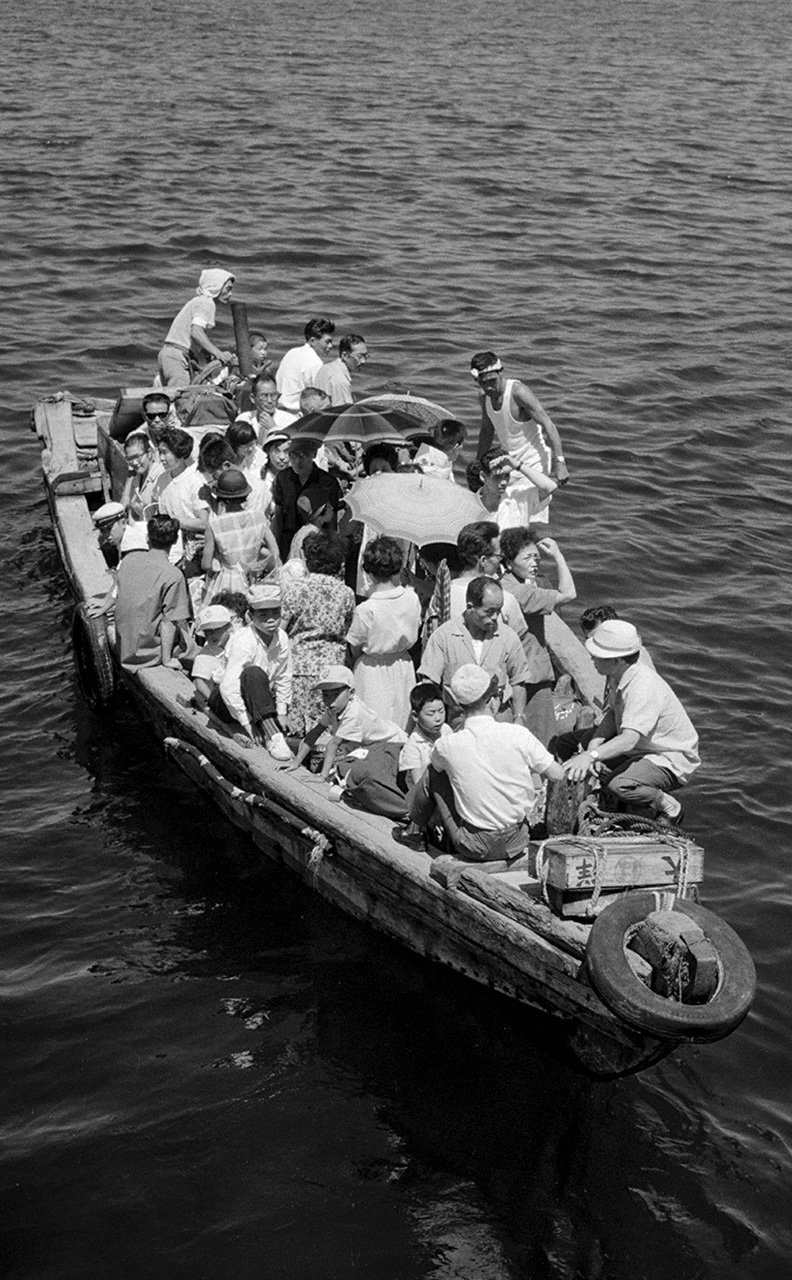
Shima ni kaeru: An aerial shot of a small boat plying the route between two islands in the Gotō Island chain. The sea that day was calm, but rough weather could interrupt transport. Nagasaki Prefecture, 1962. (© Haga Hideo)
-
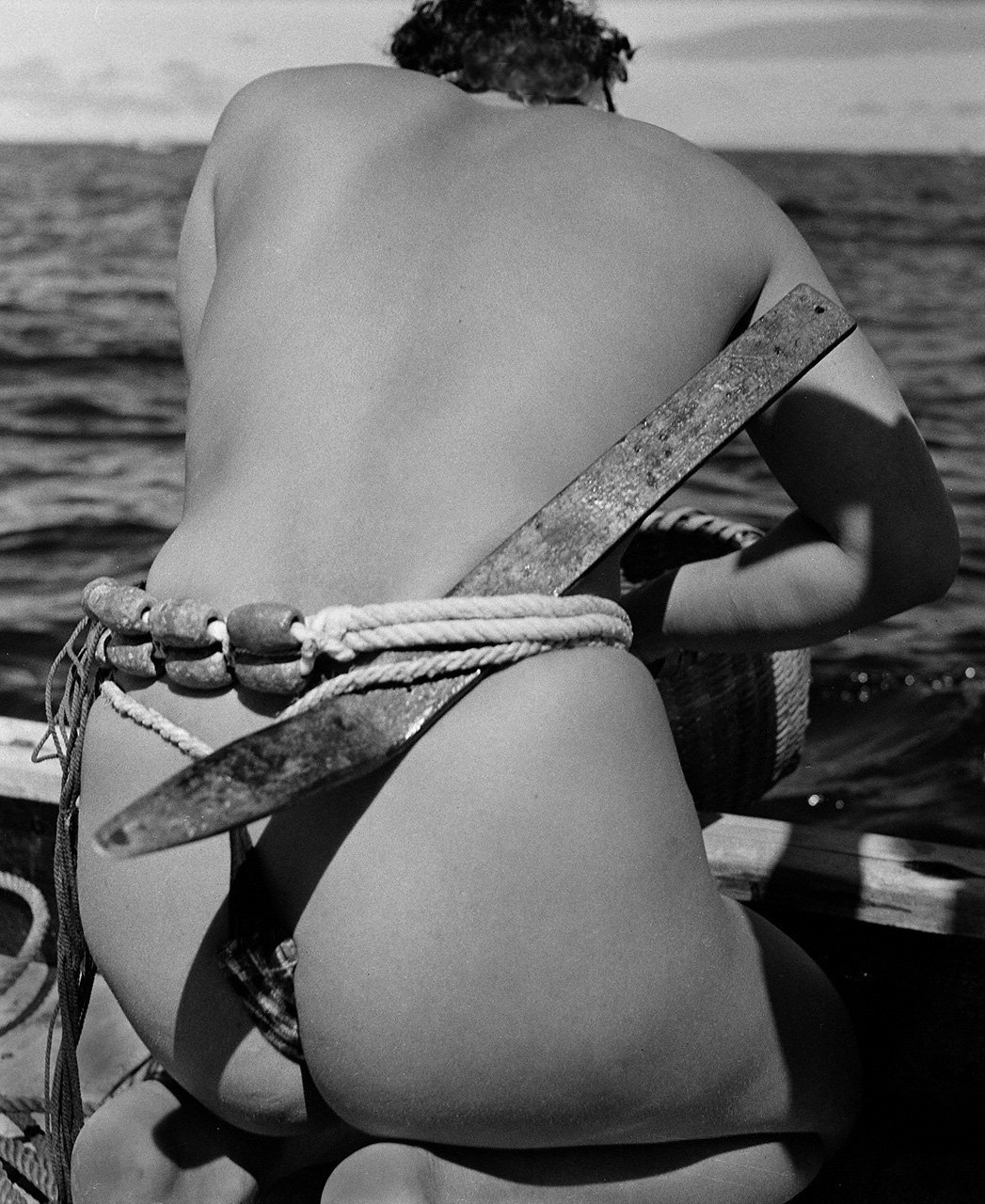
An ama female free diver, with a rope around her waist holding the tool she will use to harvest shellfish. She lightly taps the gunwale as a prayer for safety before diving in. Ishikawa Prefecture, 1962. (© Haga Hideo)
-
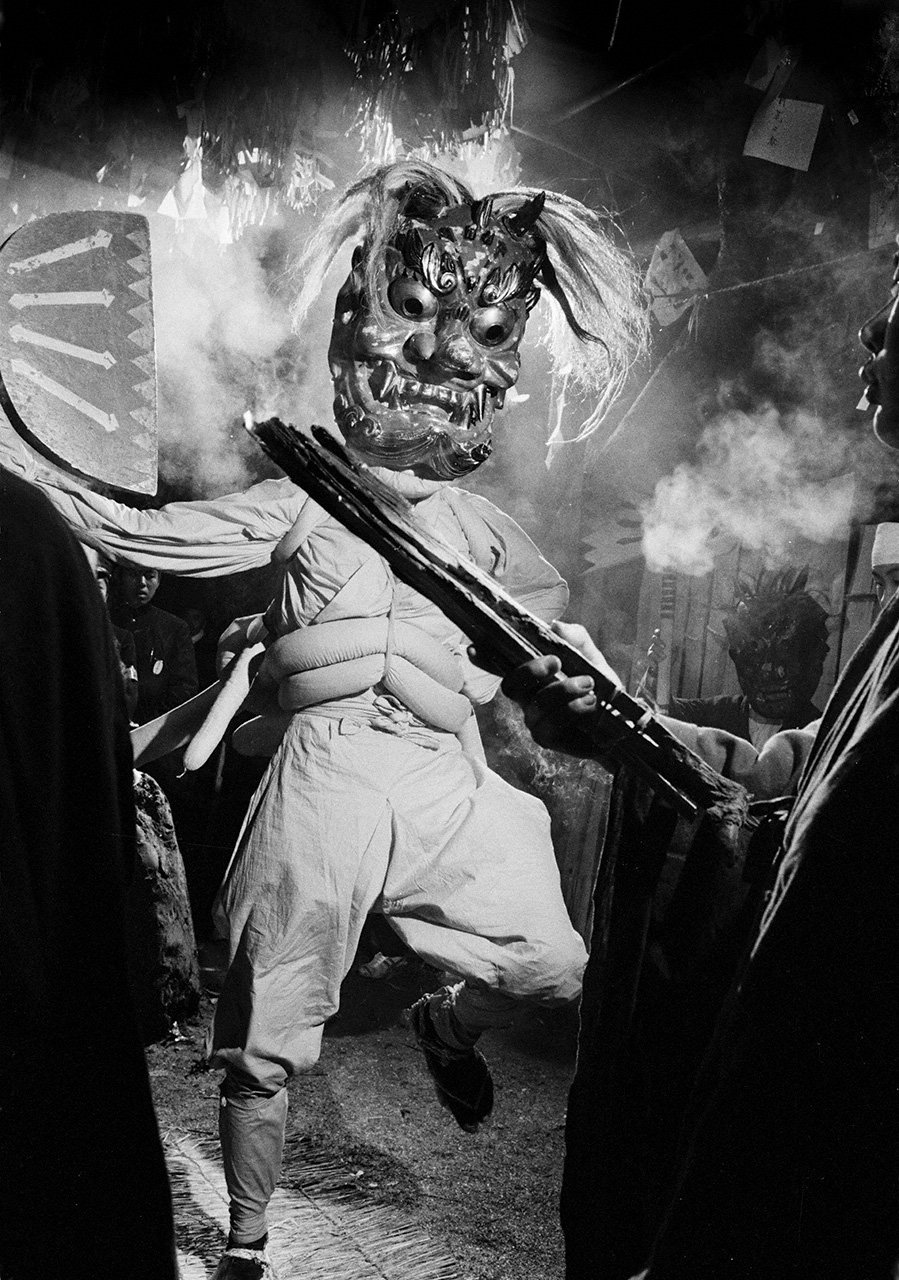
Sakaki oni: The Hana Matsuri, which takes place in northern Aichi Prefecture annually from November to January, climaxes with the appearance of the sakaki oni ogre. Wearing the ogre mask, the performer embodies the deity and acquires the endurance needed to swing a massive ax throughout the ceremony. Aichi Prefecture, 1972. (© Haga Hideo)
-
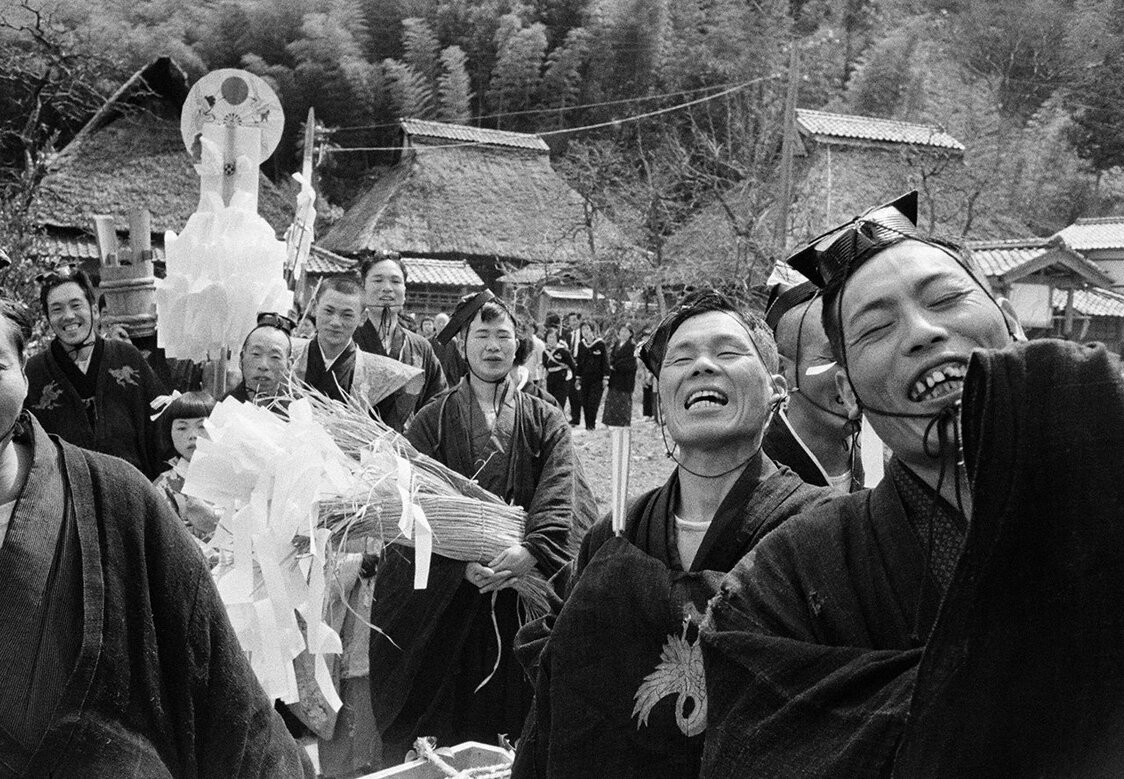
Muradachi: A scene from Kunitsu Shrine, a local shrine festival. After a festive meal hosted by the lead parishioner, merry worshipers carry a gohei pole decorated with paper streamers back to the shrine. Fukui Prefecture, 1973. (© Haga Hideo)
-
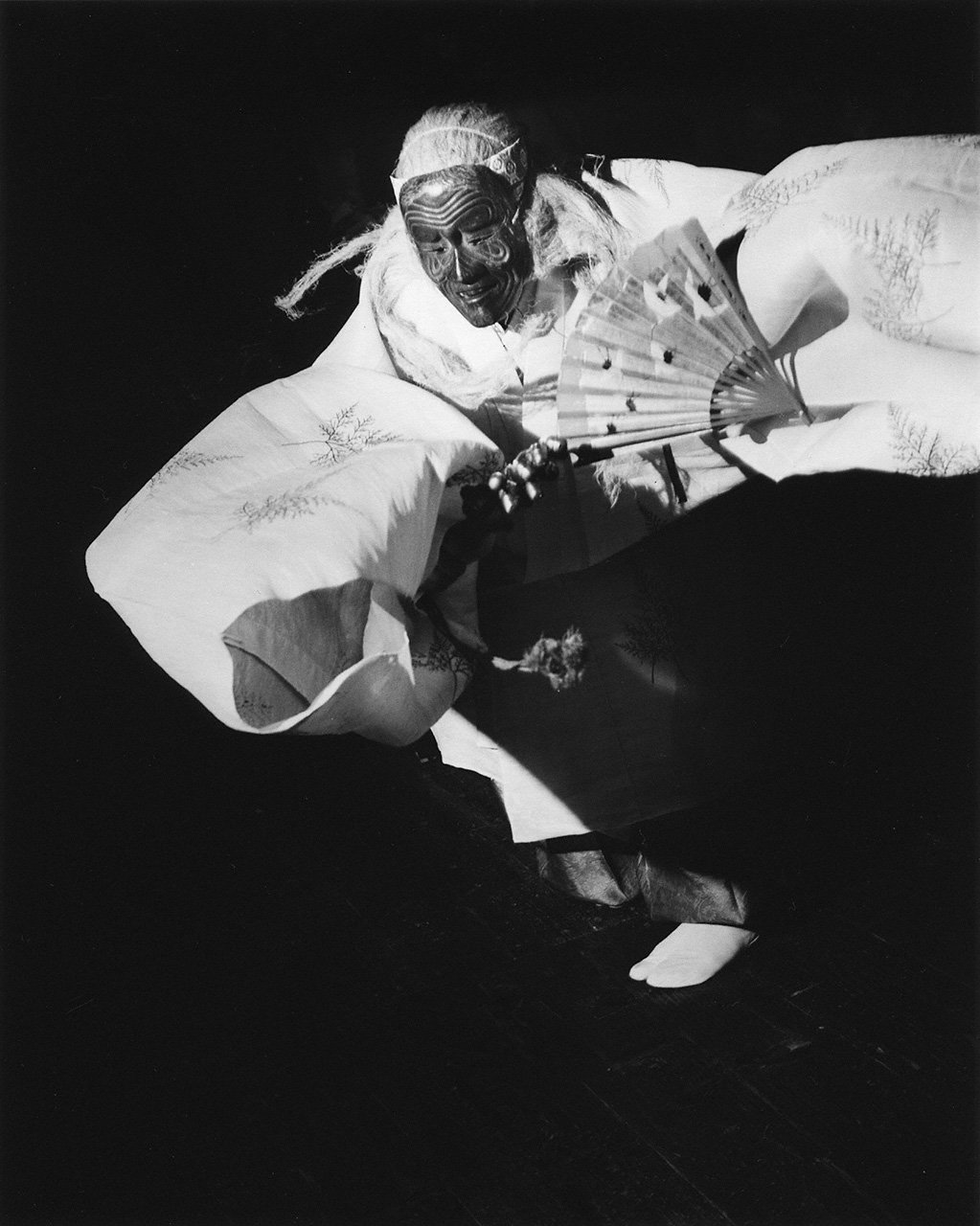
Ennen no mai: This photo, taken from an unusual perspective, depicts the dynamic movement of the ennen no mai, a ritual longevity dance performed at the temple Mōtsūji in Hiraizumi every year on January 20. Iwate Prefecture, 1979. (© Haga Hideo)
-
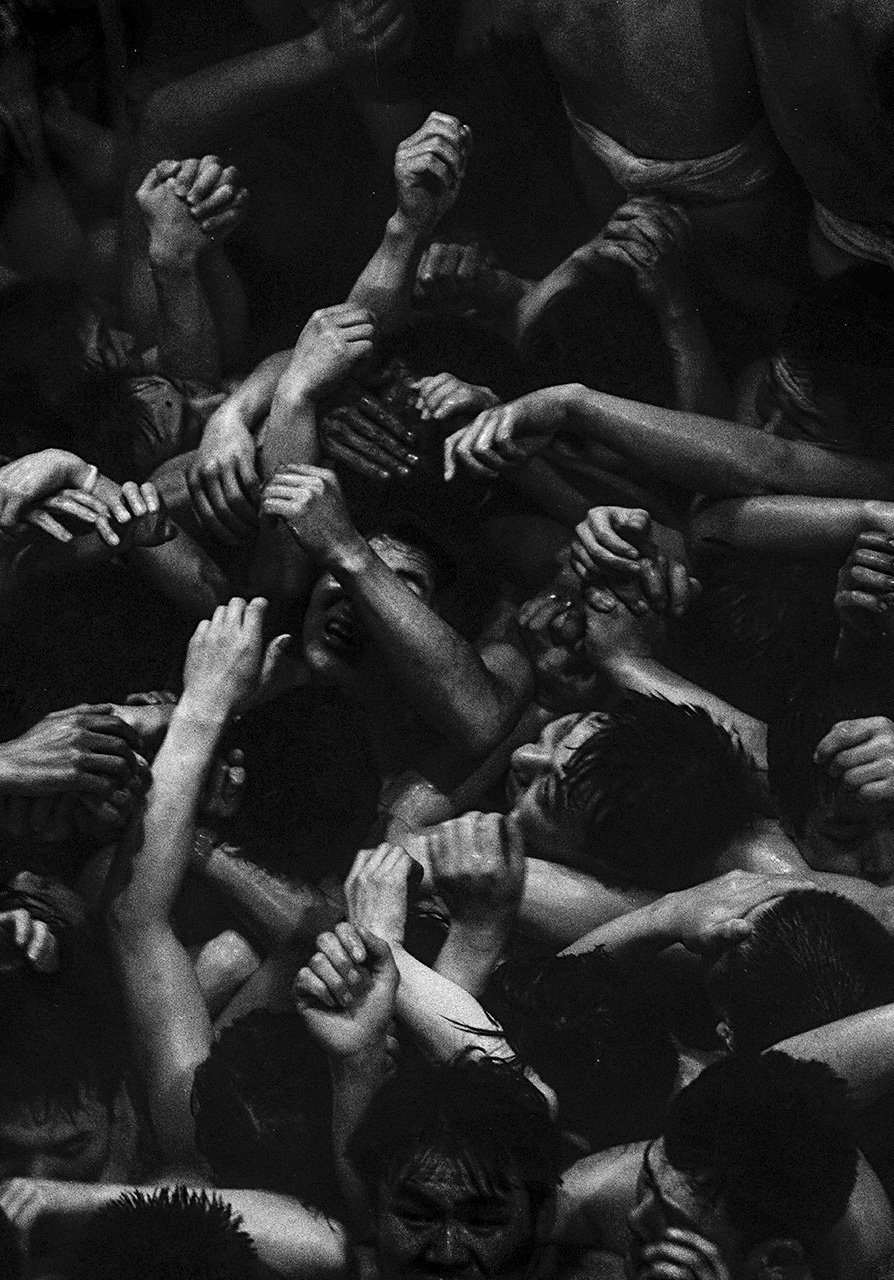
Saidaiji eyō: The yearly February eyō ritual of the temple Saidaiji is known for its hadaka “naked” festival. The energy of the naked men grappling to get hold of the shingi sacred amulet comes through well in this photo. Okayama Prefecture, 1979. (© Haga Hideo)
-
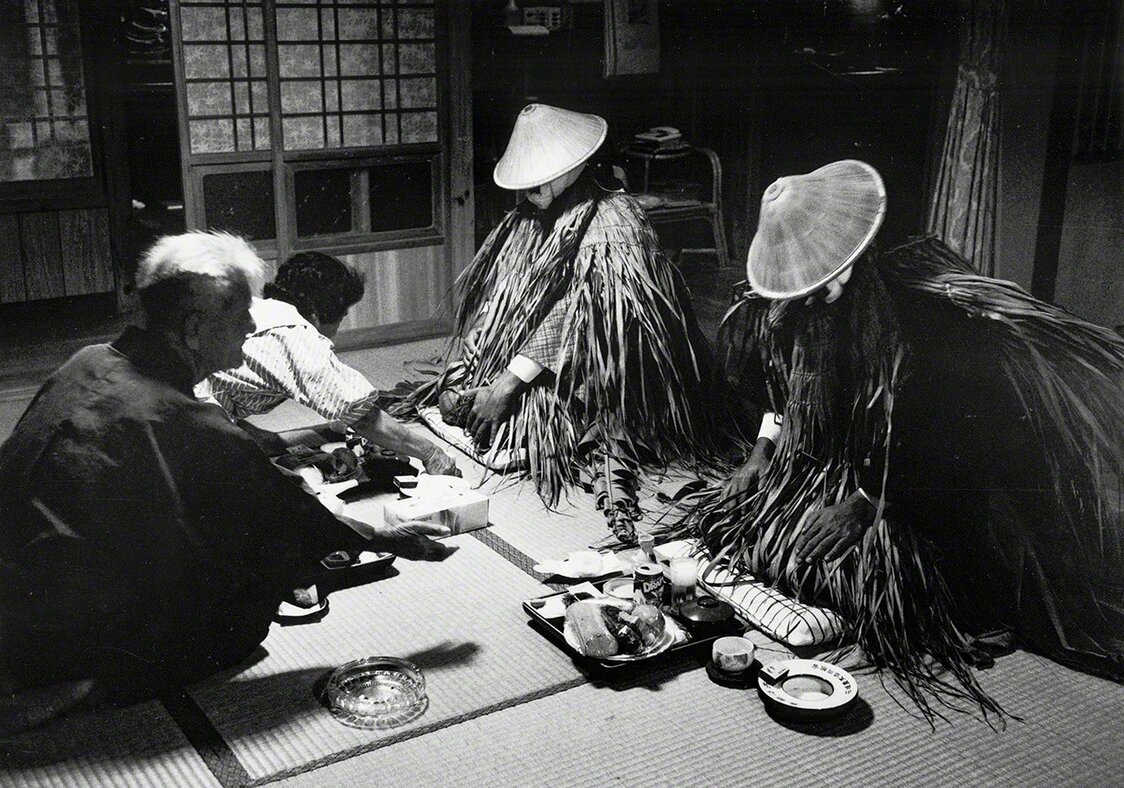
Mayunganashi: The mayunganashi rite in Ishigakijima. Villagers offer delicacies to the deities, which visit from Nirai, the land of the gods. This photo captures the intimate bond between the deities and their hosts. Okinawa Prefecture, 1988. (© Haga Hideo)
-
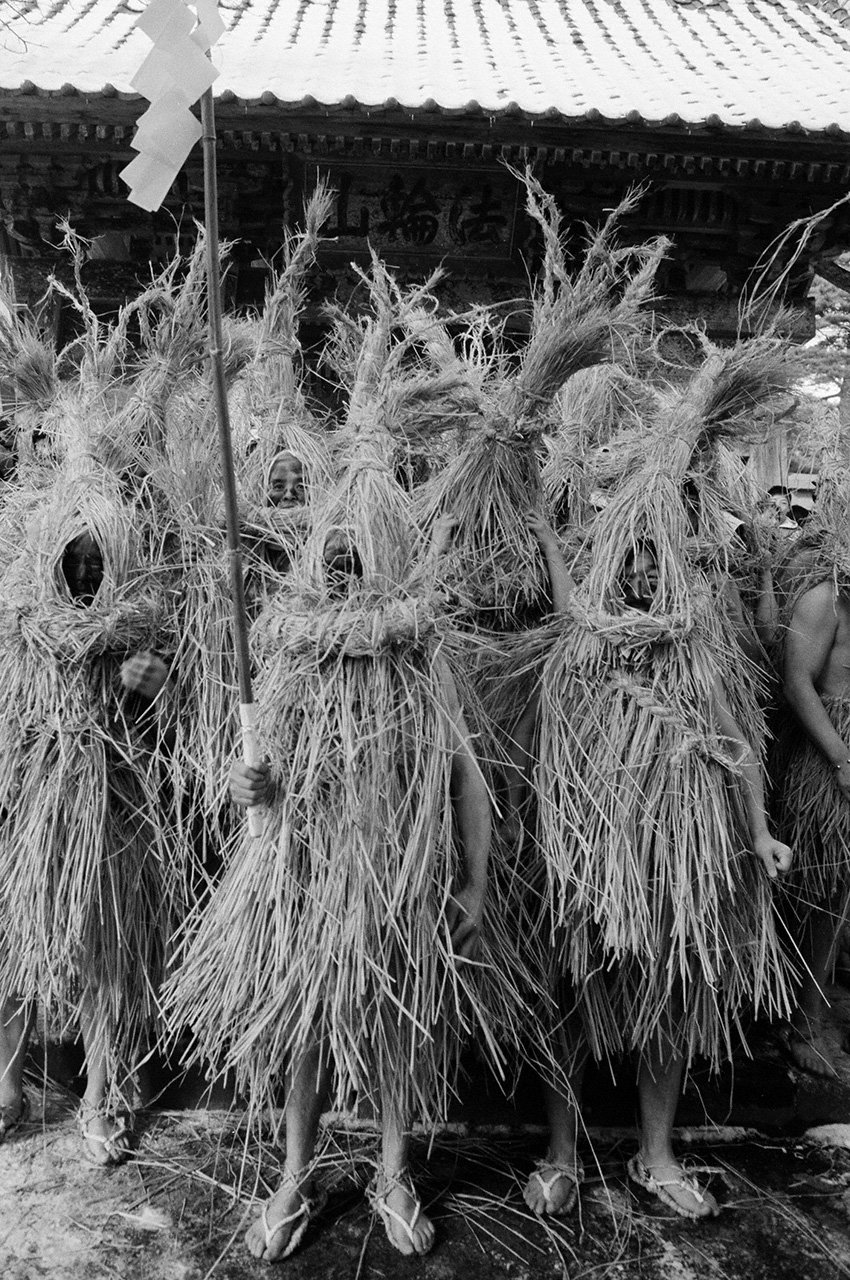
Hibuse no tsukai: Clad in straw costumes, men beginning a yakudoshi unlucky year carry gohei poles decorated with paper streamers. Emitting strange cries as they parade through the streets spraying water, they act as messengers of the deity. Miyagi Prefecture, 1996. (© Haga Hideo)
-
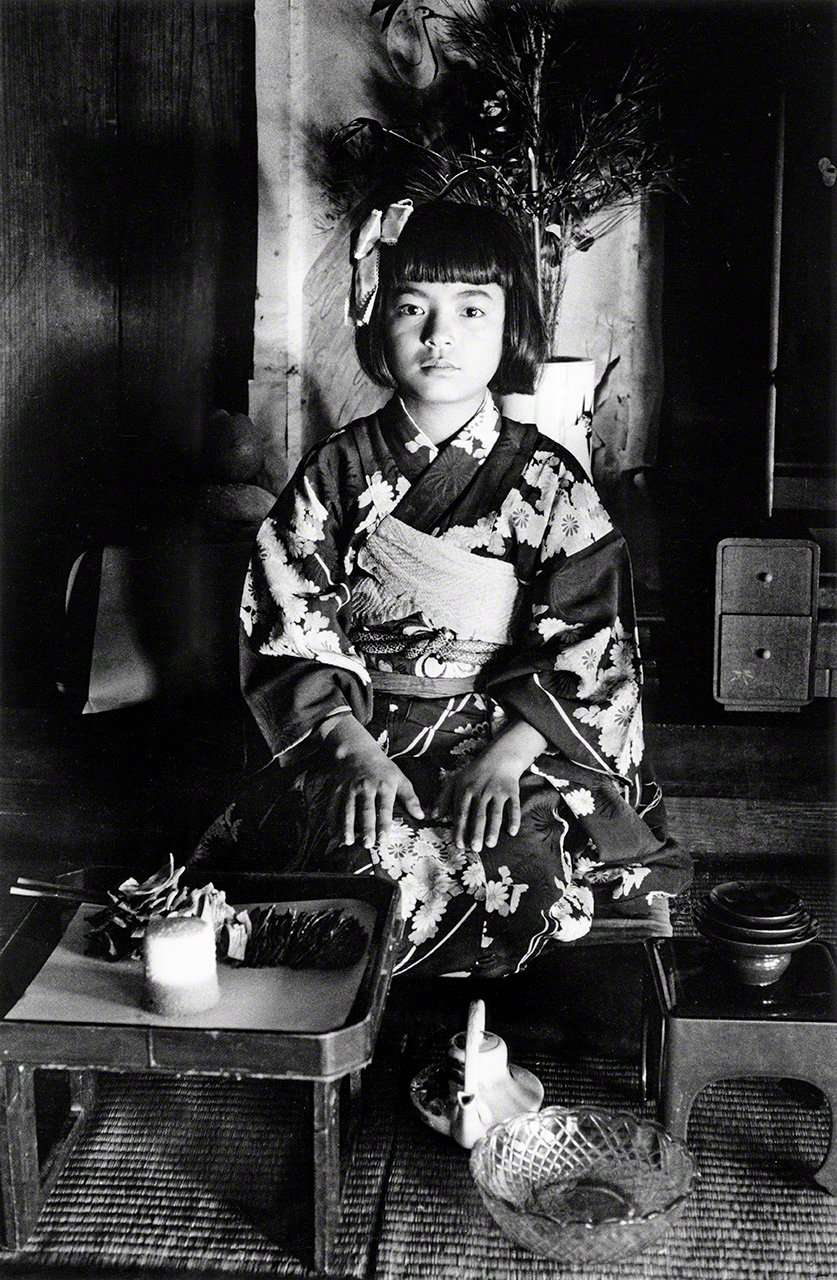
Jūsan iwai: The jūsan iwai takes place once a girl reaches the age of 13 according to the traditional count and is the one and only ceremony that will ever be conducted in her family home. This girl, dressed in a sumptuous new kimono, wears a tense expression that reflects the importance of the occasion. Okinoerabujima, Kagoshima Prefecture, 1957. (© Haga Hideo)
-
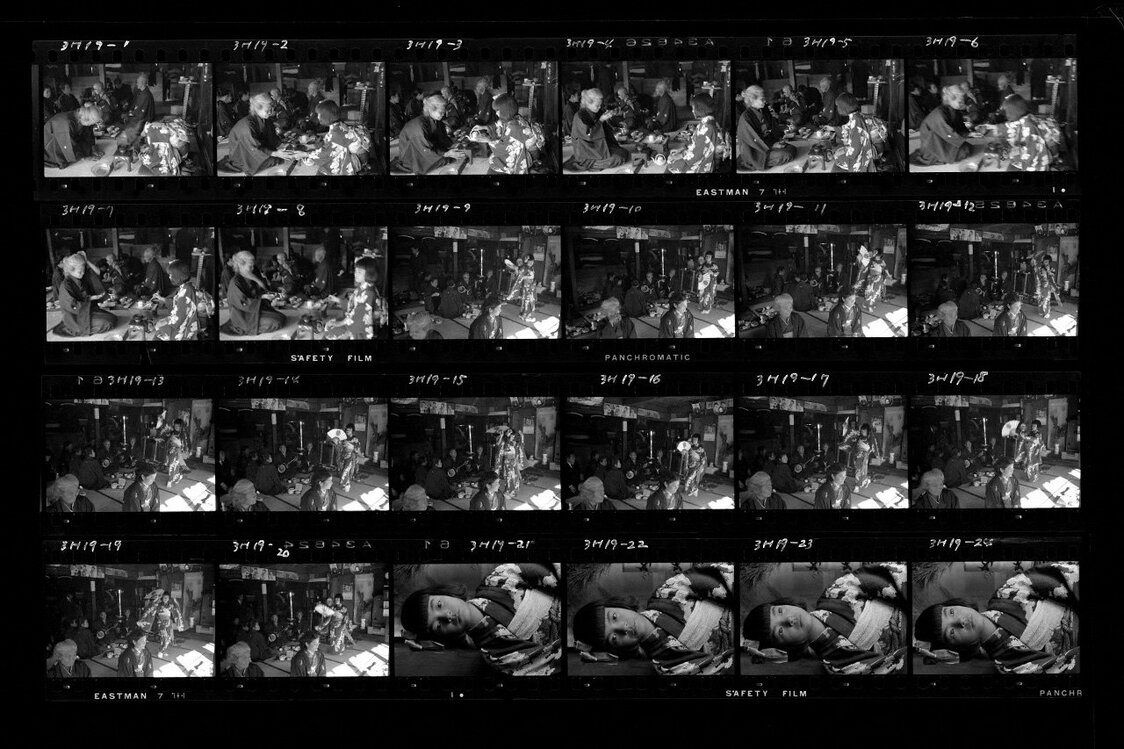
A film negative strip taken at the jūsan iwai. The photo sequence is a precious record of how the girl comported herself during the photo session. (© Haga Hideo)


 Read in other languages